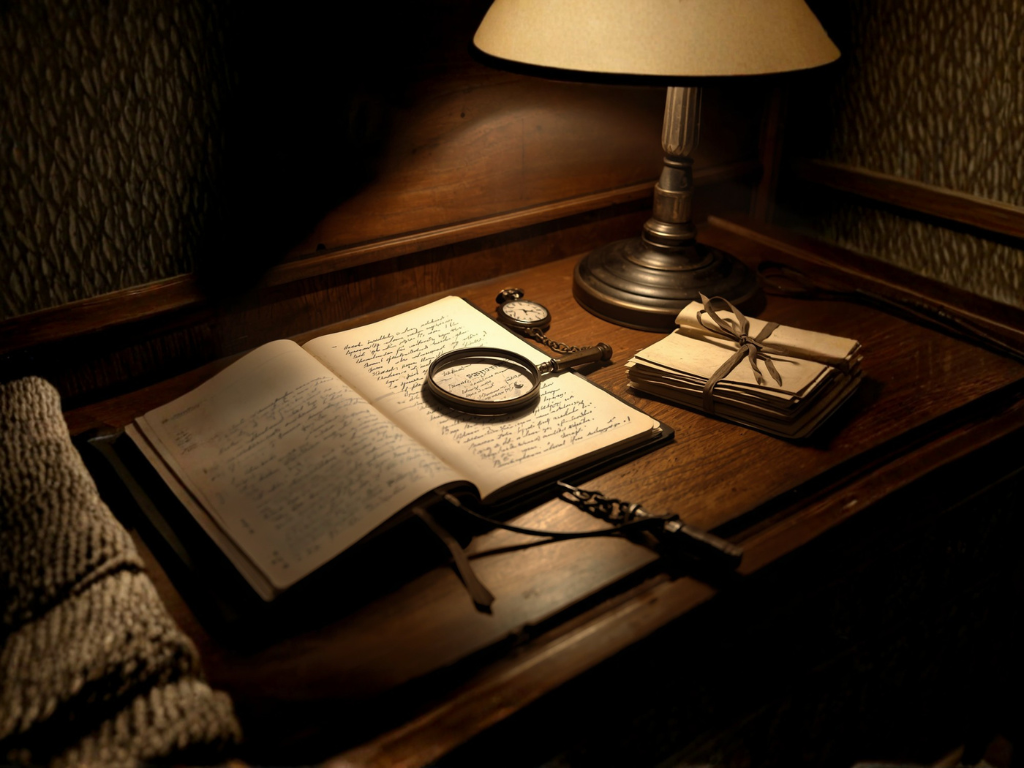
In many mystery stories, the solution comes from a dramatic discovery. In cozy mysteries, it is usually something much smaller. These cozy mystery clues may include:
- A misplaced object.
- A strange remark.
- A detail that does not quite fit.
They may seem unimportant at first, but they often lead to the truth.
Why Small Clues Matter More Than Big Revelations
Cozy mysteries are built on observation rather than action.
Instead of chasing suspects or uncovering shocking twists, the story unfolds through careful attention to detail.
A single clue might not mean much on its own. However, when combined with others, it begins to form a pattern.
This makes the reading experience more interactive. The reader is encouraged to notice details and think through the mystery.
Types of Cozy Mystery Clues
Not all clues are obvious. In fact, the best ones are often hidden in plain sight.
Some common types include:
- Physical clues
Objects that are out of place or used incorrectly - Behavioral clues
Small changes in how a character speaks or acts - Situational clues
Events that do not quite match the expected outcome
Each type plays a different role in the story. Together, they build a clearer picture.
How Writers Hide Clues in Plain Sight
One of the most effective techniques in cozy mysteries is subtlety.
Writers introduce clues early, but they do not draw attention to them. Instead, they allow them to blend into the story.
This means the reader may overlook them at first.
Later, when the truth is revealed, those same details suddenly make sense.
This creates a satisfying moment of realization.
The Role of Misdirection
Misdirection is just as important as the clues themselves.
A good mystery does not simply present the truth. It also guides the reader away from it.
This might involve:
- Drawing attention to the wrong detail
- Making an innocent action seem suspicious
- Allowing assumptions to take hold
When used carefully, misdirection keeps the reader engaged and curious.
Why Readers Enjoy Solving the Puzzle
Cozy mysteries invite readers to take part in the story.
They are not just watching events unfold. They are trying to solve the mystery alongside the main character.
Because the clues are subtle, the reader must pay attention.
This creates a deeper level of engagement. The story becomes a puzzle, rather than just a narrative.
How Clues Shape the Ending
A strong ending in a cozy mystery feels earned.
The solution does not come out of nowhere. Instead, it grows from the clues that have been present all along.
When readers look back, they can see how everything fits together.
This sense of completion is one of the most satisfying aspects of the genre.
Conclusion
Cozy mystery clues are rarely dramatic. They are small, quiet, and easy to miss. Yet they are the foundation of the entire story. By using subtle details and careful misdirection, cozy mysteries create puzzles that are both engaging and rewarding.
It is this attention to detail that makes the genre so enjoyable—and keeps readers coming back for more.
Leave a Reply