Author: admin

  • Building a Steampunk World in a Time Travel Mystery

    Building a Steampunk World in a Time Travel Mystery

    One of the great joys of writing a time travel mystery is the freedom to blend imagination with history. In The Clockwork Heir, I wanted to create a world that felt richly detailed and believable, while still offering readers the comfort and intrigue they expect from a cozy mystery. Steampunk provided the perfect bridge between these elements, allowing invention, atmosphere, and mystery to exist side by side.

    At its heart, a strong time travel mystery is not just about moving between eras. It is about consequences. When a character steps into another time, every choice matters. That idea shaped how the world of The Clockwork Heir came together, from its setting to its devices and hidden dangers.

    How a Time Travel Mystery Shapes Worldbuilding

    Writing a time travel mystery means thinking carefully about rules. How does time behave? What can be changed, and what resists change? In cozy and historical mystery fiction, readers value consistency as much as suspense. Once the rules are established, the world must follow them faithfully.

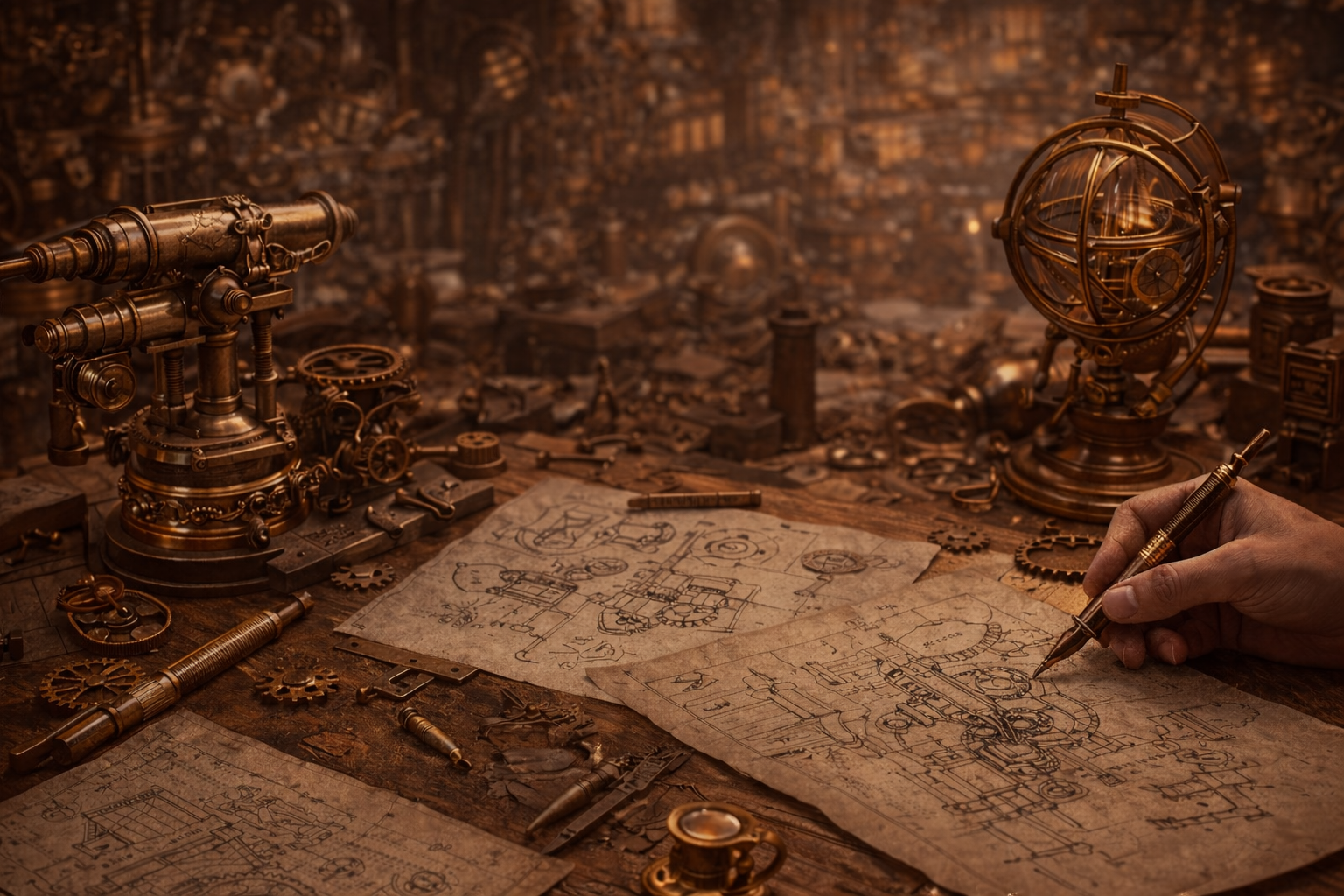
    For The Clockwork Heir, Vienna in 1873 became more than a backdrop. It was a living, breathing place shaped by invention, ambition, and secrecy. The steampunk elements were inspired by real Victorian era technology, then gently reimagined. Gears, mechanisms, and experimental devices reflect the optimism of the age, but they also hint at risks lurking beneath progress.

    This approach keeps the mystery grounded. Even when time bends, the emotional stakes remain familiar. Readers who enjoy a cozy mystery want puzzles they can follow, characters they can trust, and tension that intrigues rather than overwhelms. Steampunk allows complexity without chaos.

    Blending genres also opens creative doors. A historical mystery often relies on atmosphere and social detail, while time travel introduces urgency and uncertainty. When these elements are balanced carefully, they enhance each other. The result is a story where invention drives the mystery forward instead of distracting from it.

    Another key element is restraint. Not every invention needs an explanation. Sometimes suggestion is more powerful than detail. A half-finished blueprint or a strange ticking sound can spark curiosity far better than pages of technical description. This keeps the pacing smooth and the reading experience inviting.

    Ultimately, worldbuilding in a time travel mystery is about trust. Trusting the reader to connect the clues. Trusting the setting to carry mood and meaning. Trusting that even extraordinary ideas feel real when rooted in character and purpose.

    If you enjoy mysteries that combine history, imagination, and gentle suspense, The Clockwork Heir was written with you in mind. It is a story where time is fragile, invention is dangerous, and every secret has a cost.

  • Why Bones Tell the Best Stories: Exploring Clues in Cozy Mystery and Historical Mystery Fiction

    Why Bones Tell the Best Stories: Exploring Clues in Cozy Mystery and Historical Mystery Fiction

    Some bones should never be disturbed. In a cozy mystery or historical mystery, that simple truth often forms the heart of the story. From long-forgotten graves to skeletal remains uncovered by chance, bones act as silent witnesses to the past. They hold secrets, suggest motives, and invite the curious mind to uncover what history tried to hide.

    In cozy mystery fiction, bones provide intrigue without relying on graphic detail. They allow authors to explore crime and consequence gently, focusing instead on puzzles, relationships, and deduction. In historical mystery stories especially, bones connect the present to another time, offering clues that bridge decades or even centuries.

    Why Bones Work So Well in Cozy Mystery and Historical Mystery Stories

    Bones are powerful storytelling tools because they are both factual and mysterious. They are real, tangible evidence, yet they leave much open to interpretation. In a cozy mystery, this balance is essential. Readers want suspense and curiosity without excessive darkness, and skeletal clues deliver exactly that.

    In historical mystery fiction, bones often reveal truths that written records conceal. A grave in the wrong place, missing remains, or signs of an old injury can challenge official stories and expose long-buried secrets. This allows the mystery to unfold gradually, inviting readers to piece together the past alongside the protagonist.

    Bones also naturally raise questions. Who was this person. How did they die. Why was their resting place disturbed. These questions sit at the core of both cozy mystery and historical mystery narratives. They encourage thoughtful investigation rather than fast-paced shock, which is why they suit the cozy genre so well.

    Another reason bones resonate with readers is their quiet permanence. They remind us that actions echo long after lives have ended. In cozy mysteries, this often ties into themes of justice, closure, and truth. The mystery is not just about solving a crime but about setting something right.

    From Storytelling Tradition to Modern Fiction

    The use of bones as clues is not new. Classic mystery and historical mystery novels often relied on skeletal discoveries to trigger investigations. Today’s cozy mystery writers continue that tradition, adapting it for modern readers who enjoy atmosphere, character-driven stories, and clever puzzles.

    In my own cozy historical mystery, The Riddle of the Restless Bones, the discovery of long-hidden remains sets everything in motion. The bones themselves do not shout their story. They whisper it, leaving clues scattered for those willing to listen carefully.

    That is the magic of bones in cozy mystery fiction. They tell stories slowly, thoughtfully, and with just enough unease to keep readers turning pages.

    Some bones should never be disturbed. But in a good cozy mystery, we cannot resist uncovering the truth they leave behind.

  • Reflections on Time: The Mirror Motif in the Everhart Time Travel Mystery Series

    Reflections on Time: The Mirror Motif in the Everhart Time Travel Mystery Series

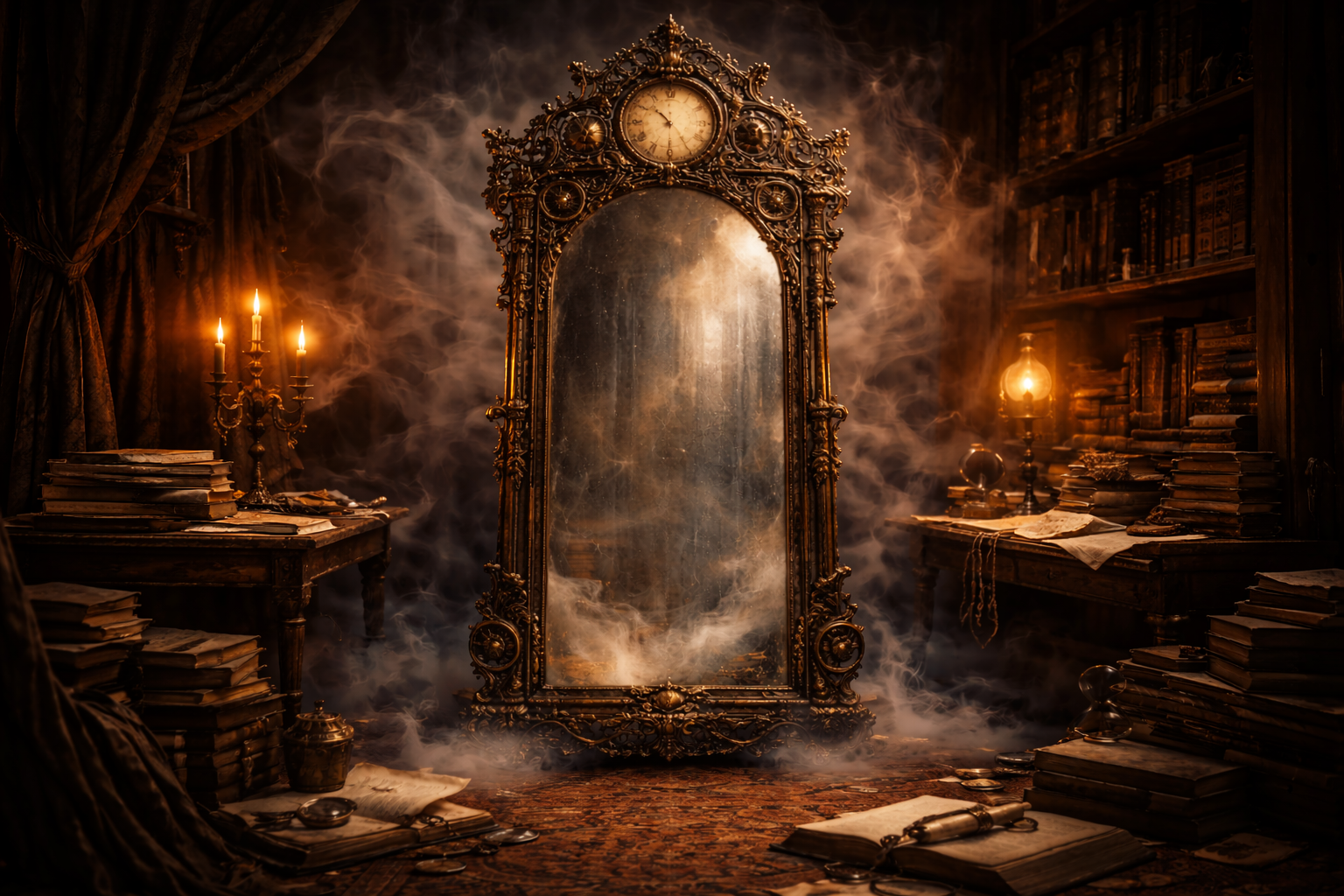
    In time travel mystery and historical fiction, symbolism often carries as much weight as plot. One of the most enduring symbols in the Everhart stories is the mirror, not merely as an object, but as a motif that reflects truth, memory, and consequence. Across the series, mirrors serve as reminders that time does not simply move forward; it looks back.

    This recurring imagery is especially significant in cozy mystery storytelling, where discovery is internal as well as external. The mirror motif reinforces the idea that every journey through time demands reflection before resolution.

    Mirrors as Thresholds in Time Travel Fiction

    In classic literature, mirrors have long symbolized thresholds between worlds. In time travel mystery narratives, they represent moments where the present and past confront one another directly. A mirror does not change what it reflects, it reveals it.

    In The Missing Manuscript, time is portrayed as something that responds to awareness. The phrase “Time reveals all” captures this principle perfectly. Truth is not forced into the open; it emerges when the conditions are right. Mirrors, whether literal or symbolic, become tools through which that revelation occurs.

    Rather than serving as portals, mirrors in the Everhart series function as witnesses. They observe quietly, reflecting choices back to the characters and reminding them that no action exists in isolation.

    Reflection Versus Revelation

    One of the defining traits of a cozy mystery is restraint. Answers are earned through patience, observation, and careful interpretation. The mirror motif supports this narrative pace. Reflection must come before revelation.

    In historical fiction, this is especially important. The past is not something to be reshaped impulsively. It must be understood on its own terms. Mirrors reinforce the idea that time travel is not about control, but about accountability. Characters are often forced to confront not only what happened, but why it mattered, and who paid the price for silence.

    This reflective structure allows readers to engage deeply with the story. Instead of racing toward answers, they are invited to pause and consider how truth surfaces over time.

    The Mirror Motif and Identity

    Mirrors also play a quiet role in shaping identity throughout the Everhart series. Time travel complicates self-perception. When a character stands between eras, they must reconcile who they are with who they were… and who they might become.

    In this way, mirrors symbolize continuity rather than division. They suggest that identity survives time intact, even as circumstances change. This is a powerful theme in historical fiction, where characters are often displaced from their familiar context.

    For readers of time travel mystery, this approach offers emotional grounding. The mystery is not only external, but personal. Reflection becomes a necessary step toward understanding both history and self.

    Why Readers Respond to This Symbolism

    Readers drawn to cozy mysteries and time travel stories often seek more than clever puzzles. They want meaning layered beneath the mystery. The mirror motif provides that depth. It connects time, memory, and consequence without heavy exposition.

    “Time reveals all” is not a promise of inevitability, but a reminder of patience. Truth emerges when it is ready to be seen. In the Everhart series, mirrors quietly reinforce this message, encouraging readers to trust the slow unfolding of discovery.

    In the end, the mirror motif reminds us that time does not hide the truth forever. It reflects it back—steadily, honestly, and without distortion, until we are ready to look.

  • Verdant Hall and the Secrets It Keeps: A Cozy Time Travel Mystery Rooted in Gothic History

    Verdant Hall and the Secrets It Keeps: A Cozy Time Travel Mystery Rooted in Gothic History

    In many time travel mystery and cozy mystery novels, the setting is more than a backdrop, it is a participant in the story. In The Vanishing at Verdant Hall, the manor itself becomes a keeper of secrets, a silent witness to generations of control, concealment, and forgotten truth. From its locked rooms to its hidden passages, Verdant Hall is not merely a place where a mystery occurs; it is the mystery.

    This blend of cozy mystery, historical fiction, and time travel creates a story where atmosphere and discovery take precedence over spectacle, drawing readers into a world where the past refuses to remain buried.

    A House Built to Remember

    Verdant Hall is introduced as an imposing Gothic estate, steeped in family legacy and quiet tension. Its architecture—clock towers, libraries, attics, and concealed chambers, reflects the layered nature of the mystery itself. As Nora Halewell begins her work cataloguing the estate, it becomes clear that the house has been designed to store more than books. It safeguards memory.

    Throughout the novel, Verdant Hall reveals itself piece by piece. Hidden drawers, secret tunnels, and mechanical devices serve as repositories for truths deliberately withheld. The manor’s design reinforces one of the core ideas of the time travel mystery genre: that history leaves traces, even when people attempt to erase them.

    Time Travel as Careful Intervention

    Unlike high-action time travel stories, The Vanishing at Verdant Hall treats movement through time as something fragile and deliberate. Nora’s journey into the past does not grant her power over events, but responsibility toward them. Her role is not to rewrite history, but to recover what was suppressed.

    This restraint aligns closely with the expectations of a cozy mystery. The story unfolds through observation, research, and careful deduction rather than confrontation. Documents, ledgers, letters, and mechanisms become clues, rewarding patience and attention to detail.

    Secrets, Silence, and Inheritance

    At the heart of the novel lies a disappearance tied to inheritance, control, and the manipulation of truth. Verdant Hall’s secrets are not isolated incidents; they are part of a system built over generations. The manor protects those in power while silencing those who threaten to disrupt the narrative they have constructed.

    This theme is central to the book’s emotional weight. The mystery is not simply who vanished, but why silence was enforced and who benefited from it. As Nora uncovers the truth, the house itself seems to respond, as though releasing what it has been holding all along.

    Why Verdant Hall Endures

    Readers drawn to historical fiction, cozy mystery, and time travel mystery often seek stories where setting and theme are inseparable. Verdant Hall offers that depth. It embodies the idea that places remember, even when people try to forget.

    In the end, The Vanishing at Verdant Hall reminds us that secrets may be hidden, but they are never erased. Sometimes, all it takes is the right witness, and the right moment, for a house to finally speak.

  • The Alchemy of Story: A Time Travel Mystery at the Heart of Cozy Historical Fiction

    The Alchemy of Story: A Time Travel Mystery at the Heart of Cozy Historical Fiction

    In the world of time travel mystery and cozy mystery fiction, some stories rely on spectacle, while others work quietly, layering meaning through atmosphere, character, and symbolic detail. The Chemist’s Refrain belongs firmly in the latter tradition. Rooted in historical fiction and guided by mood rather than momentum, it explores how knowledge, memory, and transformation shape both story and character.

    At its heart, this is not a tale about mastering time, but about understanding it.

    Paris, Chemistry, and the Language of Transformation

    Alchemy has long served as a metaphor in literature. It represents transformation, patience, and the belief that hidden order exists beneath apparent chaos. In time travel mystery fiction, this metaphor is especially powerful. Time itself becomes an alchemical force, capable of refining truth through pressure and delay.

    In The Chemist’s Refrain, Paris provides more than a backdrop. The city’s laboratories, narrow streets, and intellectual undercurrents create an environment where curiosity and danger coexist. Phials, formulas, and experiments echo the central question of the story: what happens when knowledge advances faster than wisdom?

    This careful balance between discovery and restraint is a hallmark of strong historical fiction, particularly within cozy mystery storytelling.

    Clara Everhart and the Weight of Knowledge

    Across the Clara Everhart novels, time travel never grants power without consequence. Clara is not portrayed as a conqueror of history, but as a participant shaped by it. In The Chemist’s Refrain, her journey is less about solving a single mystery and more about confronting the cost of understanding too much.

    This approach aligns with the core appeal of a cozy mystery. The emphasis is on reflection, observation, and moral choice rather than action or violence. Readers are invited to sit with uncertainty, to consider what should be preserved and what must be left behind.

    The chemistry motif reinforces this idea. Every experiment carries risk. Every reaction leaves residue.

    Time Travel as Alchemy

    In many time travel mystery novels, movement through time is mechanical or instantaneous. Here, it feels deliberate and fragile. The process mirrors alchemy itself—slow, precise, and dependent on balance. Time travel does not overwrite the past; it reacts to it.

    This perspective transforms time travel from a plot device into a philosophical tool. It allows the story to ask deeper questions: Is every truth meant to be revealed? Does progress always equal improvement? And what responsibility does the seeker carry?

    These questions place The Chemist’s Refrain firmly within the tradition of thoughtful cozy historical fiction.

    Why This Story Resonates

    Readers drawn to time travel mystery, cozy mystery, and historical fiction often seek stories that feel immersive rather than overwhelming. They want atmosphere, meaning, and characters shaped by internal change as much as external events.

    The Chemist’s Refrain offers exactly that. It treats story as an act of alchemy—combining place, memory, and restraint to create something lasting. In doing so, it reminds us that the most powerful transformations happen quietly, one careful choice at a time.

  • Whispers in the Margins: A Time Travel Mystery Rooted in Cozy Historical Fiction

    Whispers in the Margins: A Time Travel Mystery Rooted in Cozy Historical Fiction

    In the world of time travel mystery and cozy mystery fiction, some of the most powerful moments are not found in dramatic leaps through time, but in quiet discoveries made among forgotten pages. Historical fiction that blends mystery and time travel often turns to archives, manuscripts, and marginal notes as gateways into the past, places where memory lingers and truth quietly waits.

    This subtle approach is at the heart of many cozy time travel stories, including The Archivist’s Lament, where the past is not conquered, but carefully uncovered.

    Why Archives Matter in Time Travel Mysteries

    Archives represent order imposed on chaos. They are spaces where history is preserved, categorized, and protected, yet never fully controlled. In a time travel mystery, archives often function as liminal spaces, thresholds between what is known and what has been forgotten.

    Rather than relying on spectacle, cozy mysteries rooted in historical fiction use archives to slow the narrative. Readers are invited to observe alongside the protagonist, piecing together clues through fragments: damaged manuscripts, missing folios, or notes scribbled into margins long ago.

    This method reinforces one of the defining traits of the cozy mystery genre: discovery through patience rather than force.

    Manuscripts as Voices of the Past

    In historical fiction, manuscripts are more than objects. They act as voices, carrying emotion, intent, and warning across time. A single surviving page can reshape an entire narrative, especially when time travel allows a character to encounter the conditions under which that page was written.

    In The Archivist’s Lament, the physical state of books, their fragility, their vulnerability to damp and decay, becomes symbolic. Knowledge is not permanent. It must be cared for, protected, and understood within its historical context. This reinforces a key theme common to many time travel mystery novels: truth survives, but only when someone is willing to listen closely.

    Cozy Mystery Meets Historical Fantasy

    Blending cozy mystery with historical fiction allows authors to explore weighty ideas without overwhelming the reader. Violence and urgency give way to atmosphere and reflection. Candlelit rooms, aging parchment, and hushed libraries replace ticking clocks and high-speed chases.

    Time travel, when used sparingly, deepens this atmosphere. Characters are not granted power over history, but responsibility toward it. The question is never “How do we change the past?” but rather “What must we preserve?”

    This moral restraint is what distinguishes thoughtful time travel fiction from escapism.

    Why Readers Are Drawn to These Stories

    Readers who love cozy mysteries and historical fiction are often drawn to stories that respect both intellect and emotion. A time travel mystery rooted in archives and manuscripts offers a sense of intimacy, an invitation to step quietly into history rather than disrupt it.

    Whispers in the margins, half-erased notes, and fragile bindings remind us that the past is never silent. It speaks softly, and only to those willing to slow down and listen.

    In this way, time travel becomes not a spectacle, but a conversation across centuries, one carefully preserved page at a time.

  • Time, Memory, and Manuscripts: Crafting Historical Fantasy

    Time, Memory, and Manuscripts: Crafting Historical Fantasy

    In many of the most compelling time travel mystery stories, the past is not something to be changed, but something to be understood. When time travel is woven into a cozy mystery book or thoughtful historical fiction, it becomes a framework for exploring memory, responsibility, and the preservation of truth rather than a vehicle for spectacle.

    As explored in Time Travel in Fiction: A Tool for Truth, time travel works best not as a dramatic shortcut, but as a way to uncover meaning, consequence, and long-buried truths. This quieter approach is what gives historical fantasy its emotional depth.

    Time Travel as a Keeper of Memory

    In historical fantasy, time travel often brings characters face to face with the fragility of memory. What survives is rarely complete. Instead, the past leaves behind fragments, documents, artifacts, and stories that must be interpreted with care.

    This is where manuscripts play a powerful role. In many time travel mystery novels, written records act as vessels of memory. They preserve knowledge that was deliberately hidden, divided, or protected because it carried risk. A manuscript is never just a clue; it is evidence of intent.

    In The Missing Manuscript, history is not presented as a puzzle to be solved quickly. Florence exists as a living city shaped by politics, danger, and innovation. The truth embedded in its documents cannot be separated from the time and place that produced them. This grounding in historical reality is essential to strong historical fiction.

    Why Cozy Mysteries Benefit from Historical Fantasy

    Unlike fast-paced science fiction, a cozy mystery book thrives on atmosphere and reflection. When time travel is introduced into this genre, it slows the narrative in productive ways. Characters must observe, listen, and learn before they act.

    Historical fantasy allows mystery writers to explore questions beyond who committed a crime or what was hidden. It asks why something was concealed in the first place, and whether uncovering it will cause harm. This moral tension is what elevates cozy time travel stories beyond escapism.

    Themes of restraint, responsibility, and consequence are central to these narratives. Knowledge is powerful, but it is never neutral.

    Manuscripts as Truth and Warning

    Manuscripts in historical fantasy often serve a dual purpose. They reveal truth while simultaneously warning the reader. The act of dividing, hiding, or encoding information suggests that full knowledge may be dangerous without wisdom.

    This idea reinforces one of the defining traits of the time travel mystery genre: the past resists careless interference. Characters who cross time boundaries must decide what to preserve and what to leave untouched.

    These questions are closely connected to the ideas explored in Time Travel in Fiction: A Tool for Truth, where time travel functions not as control, but as confrontation.

    Why Readers Return to These Stories

    Readers drawn to historical fiction, cozy mystery books, and time travel narratives are often seeking stories with weight. They want immersion, but also meaning. Manuscripts, memory, and measured discovery provide that balance.

    Historical fantasy reminds us that the past is not silent. It speaks through what survives, and sometimes through what was deliberately hidden. When time travel is treated as a tool for understanding rather than power, it becomes one of fiction’s most effective ways to explore truth.

  • Time Travel in Fiction: A Tool for Truth

    Time Travel in Fiction: A Tool for Truth

    Time travel in fiction has long captured the imagination of readers, but in cozy mystery, time travel mystery, and historical fiction, it serves a deeper purpose than spectacle alone. Rather than focusing on paradoxes or futuristic technology, many modern stories use time travel as a narrative tool to uncover truth, explore responsibility, and reveal secrets hidden by time.

    In these genres, time travel is not about rewriting history. It is about understanding it.

    Why Time Travel Works in Cozy Mystery and Historical Fiction

    Mystery fiction is driven by unanswered questions. When combined with time travel, those questions gain depth and urgency. In a time travel mystery, the past is no longer distant or abstract, it becomes a living environment shaped by danger, consequence, and moral complexity.

    Cozy mystery readers, in particular, are drawn to thoughtful storytelling. Time travel allows authors to slow the pace, focus on atmosphere, and emphasize intellect over action. The mystery unfolds through observation, research, and discovery rather than violence or chaos.

    In historical fiction, time travel adds an additional layer: authenticity. The past must feel real, detailed, and unforgiving. A character cannot simply arrive and act freely. Survival depends on understanding social rules, language, and unspoken dangers.

    The Past as a Source of Truth

    One of the most compelling aspects of time travel in fiction is its treatment of the past as a keeper of truth rather than a romanticized setting. Secrets buried by time often exist for a reason, and uncovering them requires patience and humility.

    In The Missing Manuscript, time travel is initiated through an antique clock discovered among Renaissance artifacts. The mechanism does not grant control or certainty. Instead, it responds to alignment, intention, and knowledge. Clara Everhart’s journey into fifteenth-century Florence is not a triumph, but a test.

    Once there, Clara must learn to blend in, observe carefully, and listen more than she speaks. Florence is portrayed as a living, dangerous city shaped by power, secrecy, and innovation. The truth she seeks is inseparable from the world in which it was created.

    Time Travel as Responsibility

    A defining feature of strong time travel mystery stories is restraint. Knowledge is powerful, but it carries consequences. In The Missing Manuscript, Leonardo da Vinci’s work is not portrayed as a marvel meant for exploitation. It is knowledge that must be protected.

    The manuscript itself was deliberately divided and hidden, reinforcing a recurring theme in time travel fiction: some truths are too dangerous to exist without wisdom. The goal is not to change the past, but to prevent harm in both past and present.

    Why Readers Love Time Travel in Fiction

    Readers of cozy mystery, time travel mystery, and historical fiction are drawn to stories that invite reflection. These novels ask not only what happened, but why it mattered, and why it still matters now.

    When used thoughtfully, time travel in fiction becomes a tool for truth. It reminds us that the past is never truly gone. It waits, intact and patient, for those willing to approach it with care.

  • Secrets, Silence, and Suspicion in The Ashcombe Widow

    Secrets, Silence, and Suspicion in The Ashcombe Widow

    What happens when a village decides not to ask questions?

    In The Ashcombe Widow, Mandy Ludick takes us deep into the fog-wrapped lanes of Ashcombe Hollow, where superstition, grief, and buried confessions collide. This installment in the Arabella Grey Mystery Series blends sharp observation with unsettling silence, challenging both its heroine and its readers to question what happens when truth is left to rot beneath the surface.

    Grief That Refuses to Explain Itself

    When Arabella Grey arrives in Ashcombe Hollow, she’s met with quiet hostility and fearful glances. At the center of the village’s unease is Agnes Hewitt, a widow whose refusal to publicly mourn her husband’s death has sparked whispers of coldness, even cruelty.

    But as Arabella quickly discovers, Agnes’s silence is not simple. It is layered with history, secrecy, and a deep fear of judgment. The story doesn’t explore madness or instability, instead, it presents grief as something private, misunderstood, and potentially dangerous in the hands of a community eager to assign blame.

    A Village Bound by Secrets

    Ashcombe Hollow isn’t home to a haunted manor. It is the village itself that haunts. The Hollow is a place reluctant to change, where old beliefs still hold sway and outsiders are not to be trusted. The past clings to its residents, especially those tied to the mysterious “Order of the Broken Covenant”, a secretive group with a long-forgotten legacy of confessional letters and coded warnings.

    When Arabella is handed one such letter, scrawled in cipher and marked with a symbol from the Order’s old seal, she knows this mystery demands careful navigation. This isn’t about uncovering ghosts. It’s about unravelling guilt, reputation, and the consequences of silence.

    Arabella Grey: Logic in the Face of Fear

    Arabella remains as steady and observant as ever. She doesn’t doubt her senses or question reality. Instead, she relies on the same thoughtful reasoning and intuition readers have come to admire throughout the series. Her investigation draws her into the delicate spaces between what people fear and what they believe, and the truths they bury to protect themselves.

    Rather than indulging in overt gothic tropes, The Ashcombe Widow offers a more grounded suspense: the tension of unsaid things, the weight of a withheld confession, and the fear that exposing the truth could do more harm than good.

    A Quietly Powerful Mystery

    If you enjoy mysteries steeped in atmosphere and emotional nuance, The Ashcombe Widow is a must-read. It doesn’t shout, it whispers, drawing you in with careful tension and a protagonist who always knows how to listen.

    📖 Read The Ashcombe Widow now on Amazon and uncover the secrets Ashcombe Hollow would rather keep buried.

  • Edwardian Fashion in Cozy Mysteries: Dressing the Part with Arabella Grey

    Edwardian Fashion in Cozy Mysteries: Dressing the Part with Arabella Grey

    A well-dressed mystery is half-solved before the first clue is found. In cozy mystery books, especially those set in historical or vintage settings, fashion does more than look pretty – it helps create atmosphere. In Mandy Ludick’s Arabella Grey Mysteries, Edwardian style plays a key role in immersing readers in a world of refinement, routine, and underlying tension.

    The Power of Edwardian Style in a Cozy Mystery Series

    Set in a quiet English village, The Deadly Dinner Party brings vintage charm to life through details like Arabella Grey’s sensible tweed coat and hat. Her clothing reflects both her practicality and the conventions of the time, grounding her character in a specific period and place. The focus isn’t on glamour, but on the subtle elegance of a woman who is quietly observant and always composed.

    When Arabella receives a mysterious dinner invitation, the narrative shifts into the realm of formal wear, candlelit tables, and refined manners – the perfect setting for secrets to simmer beneath the surface. As the dinner unfolds, fashion becomes part of the mise-en-scène: gloves removed too quickly, brooches fastened with trembling hands, and the rustle of silk dresses echoing down darkened halls.

    Why Clothing Matters in Cozy Fiction

    Fashion in cozy fiction often doubles as character development. In The Deadly Dinner Party, guests’ outfits hint at their status, background, or even their guilt. One character’s extravagant shawl stands out in a room of muted tones, drawing Arabella’s notice long before any accusations fly.

    These details allow readers to play detective, using clues embedded in the narrative to stay one step ahead. A character overdressed for a simple meal? Perhaps they’re hiding something. A stain where there should be none? It might not just be from dinner.

    Historically Grounded, Fictionally Rich

    Mandy Ludick weaves historical accuracy into her storytelling with care. The early 20th-century wardrobe reflected in the book captures a moment in time when society was transitioning. Women like Arabella balanced tradition with independence, and their clothing mirrored this quiet evolution.

    The fashion in The Deadly Dinner Party helps set the tone for a mystery that is both atmospheric and intellectually satisfying. It invites readers not only to imagine the scene, but to feel a part of it.

    📖 Start reading today on Amazon and discover how a single evening gown might conceal more than a motive.