Author: admin

  • Cozy Mystery Red Herrings: How Misdirection Keeps Readers Guessing

    Cozy Mystery Red Herrings: How Misdirection Keeps Readers Guessing

    A good mystery does more than reveal the truth. It also hides it. In cozy mysteries, this happens through cozy mystery red herrings. These are clues that lead the reader in the wrong direction.

    At first, they seem important. However, later they prove misleading. Because of this, the story stays engaging.

    What Are Cozy Mystery Red Herrings?

    A red herring is a false clue.

    It distracts the reader from the real answer.

    For example, it may:

    • Point to the wrong suspect
    • Highlight the wrong detail
    • Suggest the wrong conclusion

    Each one feels believable. That is why it works.

    Why Cozy Mystery Red Herrings Work So Well

    Cozy mysteries rely on subtle storytelling.

    They do not depend on big action scenes. Instead, they focus on small details.

    As a result, red herrings fit naturally into the story.

    They do not feel forced. Instead, they blend in.

    Because of this, the mystery feels real and satisfying.

    Common Types of Cozy Mystery Red Herrings

    Not all red herrings look the same.

    Some are obvious. Others are harder to spot.

    Here are three common types:

    • The suspicious character
      Someone who seems guilty but is not
    • The misleading object
      An item that looks important but is not
    • The false pattern
      Clues that seem to connect but lead nowhere

    Each type shapes how the reader thinks.

    How Writers Use Misdirection Effectively

    Good misdirection feels natural.

    First, the clue must make sense. Then, it must fit the story.

    Writers often:

    • Use normal behavior
    • Connect clues to events
    • Avoid making clues too obvious

    If a clue stands out too much, it loses power.

    Instead, it should feel ordinary.

    Balancing Real Clues and False Clues

    A strong mystery needs balance.

    Too many false clues confuse the reader. On the other hand, too few make the story predictable.

    Therefore, the writer must guide the reader carefully.

    Readers should feel challenged. However, they should not feel lost.

    Why Readers Enjoy Being Misled

    Readers enjoy solving puzzles.

    Because of this, red herrings add excitement.

    They encourage readers to:

    • Form theories
    • Question what they see
    • Change their minds

    As a result, the reader becomes part of the story.

    When the truth appears, it feels rewarding.

    How Red Herrings Strengthen the Ending

    A strong ending feels fair.

    It does not come from nowhere.

    Instead, the real clues were always there.

    However, they were hidden among distractions.

    Because of this, everything makes sense in the end.

    Conclusion

    Cozy mystery red herrings are not mistakes. Instead, they are carefully placed clues. They guide the reader while hiding the truth. Because of this, the story stays engaging. This is why readers keep coming back for more.
  • Cozy Mystery Clues: How Small Details Solve Big Mysteries

    Cozy Mystery Clues: How Small Details Solve Big Mysteries

    In many mystery stories, the solution comes from a dramatic discovery. In cozy mysteries, it is usually something much smaller. These cozy mystery clues may include:

    They may seem unimportant at first, but they often lead to the truth.

    Why Small Clues Matter More Than Big Revelations

    Cozy mysteries are built on observation rather than action.

    Instead of chasing suspects or uncovering shocking twists, the story unfolds through careful attention to detail.

    A single clue might not mean much on its own. However, when combined with others, it begins to form a pattern.

    This makes the reading experience more interactive. The reader is encouraged to notice details and think through the mystery.

    Types of Cozy Mystery Clues

    Not all clues are obvious. In fact, the best ones are often hidden in plain sight.

    Some common types include:

    • Physical clues
      Objects that are out of place or used incorrectly
    • Behavioral clues
      Small changes in how a character speaks or acts
    • Situational clues
      Events that do not quite match the expected outcome

    Each type plays a different role in the story. Together, they build a clearer picture.

    How Writers Hide Clues in Plain Sight

    One of the most effective techniques in cozy mysteries is subtlety.

    Writers introduce clues early, but they do not draw attention to them. Instead, they allow them to blend into the story.

    This means the reader may overlook them at first.

    Later, when the truth is revealed, those same details suddenly make sense.

    This creates a satisfying moment of realization.

    The Role of Misdirection

    Misdirection is just as important as the clues themselves.

    A good mystery does not simply present the truth. It also guides the reader away from it.

    This might involve:

    • Drawing attention to the wrong detail
    • Making an innocent action seem suspicious
    • Allowing assumptions to take hold

    When used carefully, misdirection keeps the reader engaged and curious.

    Why Readers Enjoy Solving the Puzzle

    Cozy mysteries invite readers to take part in the story.

    They are not just watching events unfold. They are trying to solve the mystery alongside the main character.

    Because the clues are subtle, the reader must pay attention.

    This creates a deeper level of engagement. The story becomes a puzzle, rather than just a narrative.

    How Clues Shape the Ending

    A strong ending in a cozy mystery feels earned.

    The solution does not come out of nowhere. Instead, it grows from the clues that have been present all along.

    When readers look back, they can see how everything fits together.

    This sense of completion is one of the most satisfying aspects of the genre.

    Conclusion

    Cozy mystery clues are rarely dramatic. They are small, quiet, and easy to miss. Yet they are the foundation of the entire story. By using subtle details and careful misdirection, cozy mysteries create puzzles that are both engaging and rewarding.

    It is this attention to detail that makes the genre so enjoyable—and keeps readers coming back for more.

  • What Makes a Cozy Mystery Cozy: Key Elements Explained

    What Makes a Cozy Mystery Cozy: Key Elements Explained

    Cozy mysteries have a unique charm. They draw readers in with quiet tension, familiar settings, and carefully built suspense. But what exactly defines the genre? Understanding what makes a cozy mystery cozy helps explain why these stories feel both relaxing and engaging at the same time.

    What Makes a Cozy Mystery Cozy in Storytelling

    At the heart of every cozy mystery is balance.

    The story must create suspense, but it does so in a gentle way. Instead of fast-paced action, it relies on atmosphere, detail, and observation.

    Readers are not rushed. Instead, they are invited to slow down and experience the mystery as it unfolds.

    This approach is closely connected to the ideas explored in How Setting Creates Suspense in Cozy Mystery Novels, where environment plays a key role in shaping tension.

    The Importance of Setting

    Setting is one of the most important elements in a cozy mystery.

    These stories often take place in:

    • Small villages
    • Quiet towns
    • Historic homes

    These environments feel safe and familiar. However, they also create the perfect space for secrets to exist.

    As discussed in Victorian Homes and Hidden Secrets in Cozy Mystery Novels, the setting often holds clues that are revealed over time.

    The Role of Characters

    Strong characters are essential in cozy mysteries.

    The main character is usually observant and thoughtful. They notice small details that others might overlook.

    This focus on observation is what drives the story forward. As explored in Why Strong Characters Matter in Cozy Mystery Novels, it is often the character’s perspective that brings the mystery to life.

    Pacing and the Use of Time

    Pacing is another key element.

    Cozy mysteries do not rely on speed. Instead, they use time to build suspense slowly.

    Clues appear gradually. Details become more important as the story progresses.

    Atmosphere and Tone

    Atmosphere ties everything together.

    Soft lighting, quiet settings, and subtle tension create a mood that feels both calm and intriguing.

    Readers are drawn into this environment. They feel comfortable, yet curious about what might happen next.

    This combination of comfort and mystery is what makes the genre so appealing.

    Why Readers Keep Coming Back

    Cozy mysteries offer something different.

    They allow readers to:

    • Slow down
    • Notice details
    • Engage with the story

    At the same time, they provide the satisfaction of solving a mystery.

    This balance between calm and curiosity is what keeps readers returning to the genre again and again.

    Conclusion

    Understanding what makes a cozy mystery cozy reveals why these stories are so effective.

    Through setting, character, pacing, and atmosphere, cozy mysteries create a reading experience that feels both relaxing and engaging.

    It is this quiet form of suspense that defines the genre—and makes it so enjoyable.

  • Time in Cozy Mystery Novels: How It Shapes Suspense and Discovery

    Time in Cozy Mystery Novels: How It Shapes Suspense and Discovery

    In many mystery stories, everything moves quickly. Clues appear fast, and the story races toward the solution. Cozy mysteries take a different approach. Instead of rushing, they slow down. They allow moments to breathe. They give readers time to notice the small details. This is where time in cozy mystery novels becomes so powerful. It creates suspense in a quiet and steady way.

    How Time in Cozy Mystery Novels Builds Suspense

    Time is not just about when events happen. It also controls how information is revealed.

    In cozy mysteries, clues often appear slowly. At first, they may not seem important. Later, they take on new meaning.

    For example:

    • A small detail may be overlooked early on
    • A conversation may feel ordinary at first
    • A moment may only make sense much later

    Because of this, the reader stays engaged. They begin to watch more closely. They start to question what they have seen.

    This slower pace works closely with the ideas explored in How Setting Creates Suspense in Cozy Mystery Novels, where atmosphere helps shape the timing of each discovery.

    The Role of Memory in Solving the Mystery

    Memory plays a key role in many cozy mystery stories.

    Characters often rely on what they remember. A small detail from earlier in the story can become important later.

    They may notice:

    • A change in behavior
    • A detail that felt out of place
    • A moment that did not seem important at the time

    These memories connect over time. Piece by piece, they begin to reveal the truth.

    This works especially well in older settings. As explored in Victorian Homes and Hidden Secrets in Cozy Mystery Novels, the past often leaves clues behind.

    Time in Cozy Mystery Novels and Setting Work Together

    Time and setting are closely linked.

    The same place can feel very different depending on the time of day. A room that feels calm in the morning may feel tense at night.

    These small changes matter.

    They affect how the reader experiences the story. They create atmosphere without the need for dramatic action.

    This is one reason Victorian cozy mystery novels feel so immersive. As discussed in Why Readers Love Victorian Cozy Mystery Novels, the setting provides structure, while time adds depth.

    Why Slower Stories Create Stronger Suspense

    At first, slower pacing may seem less exciting.

    In reality, it often creates stronger suspense.

    When the story moves slowly, readers have time to think. They notice more. They begin to form their own ideas about what might happen next.

    This makes the mystery more engaging.

    Instead of being rushed, the reader becomes part of the process.

    Time as a Silent Guide

    In cozy mystery novels, time works quietly in the background.

    It shapes:

    • When clues appear
    • How characters respond
    • How the story unfolds

    It does not draw attention to itself. Yet it influences every part of the story.

    Conclusion

    Time in cozy mystery novels is more than a timeline. It is a tool that builds suspense through pacing, memory, and careful detail.

    By slowing down the story, cozy mysteries create a deeper and more immersive experience.

    This is what keeps readers engaged and why they return to the genre again and again.

  • Hidden Secrets and Victorian Homes in Cozy Mystery Novels

    There is something undeniably intriguing about Victorian homes in cozy mystery novels. With their grand architecture, quiet corridors, and long histories, they provide the perfect setting for mystery.

    In many Victorian homes in cozy mystery novels, the house itself becomes part of the story. It holds secrets, shapes the atmosphere, and often plays a role in revealing the truth.

    Why Victorian Homes Are Perfect for Cozy Mystery

    Victorian homes were designed with both beauty and structure in mind. Large rooms, detailed woodwork, and layered layouts create a sense of depth that is ideal for storytelling.

    More importantly, these homes often feel private and enclosed. This creates a natural sense of isolation. When something unusual happens, it stands out more clearly.

    This sense of place is also explored in our article on How Setting Creates Suspense in Cozy Mystery Novels, where we see how environment plays a key role in building tension.

    Hidden Spaces and Secret Details

    One of the most compelling features of Victorian homes is the possibility of hidden spaces.

    In cozy mystery novels, these might include:

    • Concealed doors
    • Locked rooms
    • Hidden drawers
    • Forgotten passages

    These elements allow the story to unfold gradually. Each discovery leads to another question, keeping the reader engaged.

    In stories such as The Echoes at Larkspur House, the home itself feels as though it is holding something back, revealing its secrets piece by piece.

    Atmosphere Inside the Home

    The atmosphere within a Victorian home is just as important as its structure.

    Soft lamplight, heavy curtains, and quiet rooms create a mood that is both calm and slightly unsettling. These details may seem small, but they influence how the reader experiences the story.

    This use of atmosphere can also be seen in A Haunting at Blackwood Grange, where the setting adds tension without relying on dramatic action.

    The Role of Observation in Discovering Secrets

    In cozy mystery novels, it is often the character who brings the setting to life.

    Characters who pay attention to detail can notice changes in a room, objects out of place, or subtle clues hidden within the environment.

    As discussed in Why Strong Characters Matter in Cozy Mystery Novels, these observations are what drive the story forward.

    Without a character who notices, the secrets of the home would remain hidden.

    Why Readers Are Drawn to These Settings

    Victorian homes offer a unique balance of comfort and mystery. They feel familiar, yet they hold the possibility of the unknown.

    Readers are drawn to:

    • The history of the setting
    • The sense of discovery
    • The quiet suspense

    This combination creates an experience that is both relaxing and engaging.

    How Victorian Homes in Cozy Mystery Novels Shape the Story

    In cozy mystery novels, the setting is never just a background.

    Victorian homes in cozy mystery influence:

    • The pacing of the story
    • The discovery of clues
    • The mood of each scene

    They create opportunities for tension while maintaining the calm tone that defines the genre.

    Conclusion

    Victorian homes in cozy mystery are more than beautiful settings. They are active participants in the story.

    Through hidden spaces, atmospheric details, and quiet tension, they help create the suspense that makes cozy mysteries so compelling.

    When combined with strong characters and careful observation, these settings become the perfect place for secrets to unfold.

  • Why Strong Characters Matter in Cozy Mystery Novels

    In many mystery stories, readers are drawn in by the puzzle. They want to solve the crime, follow the clues, and uncover the truth.

    But in cozy mysteries, something else often takes center stage—the characters.

    Well-developed cozy mystery characters do more than move the story forward. They shape how the mystery unfolds, how the setting is experienced, and how deeply the reader becomes invested in the story.

    How Cozy Mystery Characters Shape the Story

    Unlike fast-paced thrillers, cozy mysteries rely on observation, detail, and atmosphere. This means the main character plays a crucial role in how the story is told.

    Characters like Arabella Grey are not defined by dramatic action. Instead, they notice what others miss. They observe the small details, the quiet moments, and the subtle changes in their surroundings.

    This ability to observe is often closely tied to the setting. As explored in How Setting Creates Suspense in Cozy Mystery Novels, the environment itself can hold clues, but it takes the right character to recognize them.

    The Importance of Observation in Cozy Mystery Characters

    One of the defining traits of strong cozy mystery characters is their attention to detail.

    They notice:

    • A book slightly out of place
    • A hesitation in someone’s voice
    • A room that feels different from before

    These details may seem small, but they often lead to the biggest discoveries.

    In many ways, the character acts as a guide for the reader. Through their perspective, the reader learns what to pay attention to and what might matter later.

    Character and Setting Work Together

    In cozy mysteries, character and setting are deeply connected.

    A quiet village, a grand old house, or a softly lit room can feel completely different depending on who is experiencing it.

    This relationship between character and environment is also part of what makes Victorian cozy mystery novels so compelling. As discussed in Why Readers Love Victorian Cozy Mystery Novels, the setting provides the atmosphere, but it is the character who brings that atmosphere to life.

    Why Readers Connect with Cozy Mystery Characters

    Readers return to cozy mysteries not just for the story, but for the characters themselves.

    They want to:

    • Follow familiar personalities
    • See how characters grow over time
    • Experience new mysteries through a trusted perspective

    This sense of familiarity creates comfort, while the mystery itself provides intrigue.

    It is this balance that makes cozy mysteries so enjoyable. The reader feels at home in the world of the story, even as they are drawn deeper into the unknown.

    The Quiet Strength of Cozy Mystery Characters

    Cozy mystery characters do not rely on force or confrontation. Their strength lies in patience, observation, and understanding.

    They solve mysteries not by rushing forward, but by paying attention.

    By noticing what others overlook.

    And by trusting that even the smallest detail can lead to the truth.

  • Why Readers Love Victorian Cozy Mystery Novels

    Why Readers Love Victorian Cozy Mystery Novels

    There is something timeless about Victorian cozy mystery novels. From the quiet elegance of grand homes to the secrets hidden behind polite society, these stories draw readers into a world that feels both comforting and full of intrigue.

    For readers who enjoy character-driven mysteries, this connection between place and personality is especially clear in stories like the Arabella Grey series of cozy mystery novels, where the setting plays a central role in shaping both the narrative and the investigation.

    Unlike fast-paced thrillers, cozy mysteries rely on atmosphere, character, and subtle tension. When combined with a Victorian setting, these elements become even more powerful.

    What Makes Victorian Cozy Mystery Novels So Appealing

    One of the main reasons readers are drawn to Victorian cozy mystery novels is the setting itself. The Victorian era offers a rich backdrop filled with tradition, structure, and unspoken rules. Beneath this orderly surface, however, lies a world of secrets waiting to be uncovered.

    This contrast between appearance and reality creates the perfect environment for mystery. A well-kept home may hide a hidden room. A polite conversation may conceal deeper motives. These quiet layers of tension keep readers engaged without the need for dramatic action.

    This is particularly evident in stories such as The Echoes at Larkspur House, where the house itself feels alive with history, quietly influencing the unfolding mystery.

    Another reason readers love Victorian cozy mystery novels is the sense of immersion. The details matter. From clothing and social customs to the layout of a home, every element contributes to the experience.In atmospheric stories like A Haunting at Blackwood Grange, the setting is not simply described, it is experienced. The reader is drawn into the environment, where every shadow and sound carries meaning.

    The Role of Atmosphere in Victorian Mysteries

    Atmosphere is at the heart of every strong cozy mystery. In Victorian settings, it becomes even more important.

    The soft glow of lamplight, the quiet ticking of a clock, and the stillness of a late evening all contribute to a sense of anticipation. These moments may seem small, but they build tension gradually.

    This quiet suspense can also be seen in stories like The Ashcombe Widow, where the village itself creates a sense of watchfulness. Every interaction feels significant, and even ordinary moments carry weight.

    Character and Community in Victorian Cozy Mystery Novels

    Victorian cozy mystery novels also stand out because of their strong focus on character and community. Small social circles, strict expectations, and close-knit environments mean that every action has consequences.

    In these settings, relationships often hold the key to the mystery. Readers are invited to look beyond appearances and understand the deeper motivations of each character.

    This layered storytelling approach is one of the reasons the genre remains so engaging.

    Why These Stories Continue to Captivate Readers

    In a fast-paced world, Victorian cozy mystery novels offer something different. They allow readers to slow down, observe details, and become part of the story.

    The combination of rich settings, layered characters, and quiet suspense creates a reading experience that feels both relaxing and deeply engaging.

    Themes of memory, time, and atmosphere show how powerful setting can be, even beyond traditional mystery structures.

    This is why the genre continues to grow in popularity. Readers are not just looking for answers, they are looking for atmosphere, depth, and a sense of discovery.

  • How Setting Creates Suspense in Cozy Mystery Novels

    How Setting Creates Suspense in Cozy Mystery Novels

    When readers think of a cozy mystery, they often imagine charming villages, quiet streets, and peaceful routines. Yet beneath that calm exterior lies something far more compelling. A well-crafted cozy mystery setting does more than provide a backdrop, it quietly builds tension, shapes the story, and draws the reader deeper into the mystery.

    For readers who enjoy character-driven mysteries, the role of setting becomes even more apparent in stories such as those seen in Who Is Arabella Grey? A New Classic for Cozy Mystery Lovers, where environment and personality are closely intertwined. In many ways, the setting becomes a character of its own.

    How a Cozy Mystery Setting Builds Suspense

    A cozy mystery setting works best when it feels both familiar and slightly closed off. Small towns, countryside estates, and historic villages are ideal because they naturally limit the number of suspects. Everyone knows each other, secrets are harder to hide, and any disruption feels significant.

    This sense of contained space is especially effective in stories such as The Echoes at Larkspur House, where the house itself seems to hold onto its secrets, shaping the investigation in subtle but powerful ways.

    Isolation is one of the most important tools in creating suspense. A grand house set apart from the rest of the village, a fog-covered street, or even a quiet room late at night can introduce an undercurrent of unease. These spaces may appear safe at first glance, but as the story unfolds, they begin to reveal hidden layers.

    Atmosphere also plays a crucial role in shaping a cozy mystery setting. Weather, lighting, and time of day all contribute to the mood. A rainy afternoon can make a scene feel reflective or tense, while a flickering lamplight may suggest that something is not quite right. This careful use of atmosphere can be seen in A Haunting at Blackwood Grange, where the setting quietly intensifies the mystery without overwhelming the story.

    Historical settings, particularly those rooted in the Victorian era, offer even more opportunities for suspense. Older buildings often come with hidden passageways, locked rooms, and long-forgotten histories. These elements naturally lend themselves to mystery and discovery.

    In village-based stories like The Ashcombe Widow, the setting becomes more than just a backdrop. It creates a sense of watchfulness, where silence carries meaning and even ordinary places begin to feel uncertain.

    Another important aspect of a strong cozy mystery setting is contrast. The genre thrives on the balance between comfort and danger. A peaceful tea room becomes far more intriguing when secrets are whispered behind closed doors. A beautiful garden feels different when the reader senses that something may be hidden beneath its calm surface.

    This interplay between familiarity and disruption also appears in time-based narratives. In stories such as the Clara Everhart and Nora Halewell series, the shifting of time itself alters how settings are experienced, adding another layer of emotional and narrative tension.

    Details matter. Small, specific touches, such as the ticking of a clock, the creak of a staircase, or the arrangement of objects in a room, can all hint at something deeper. These elements invite the reader to observe carefully, just as the detective does.

    Ultimately, a cozy mystery setting is not just about where the story takes place. It shapes the investigation, influences the characters, and quietly builds suspense from the first page to the last. When done well, the setting becomes the silent keeper of secrets—waiting patiently for the truth to be uncovered.

  • Quiet Heroines in Cozy Mysteries: Why Gentle Courage Leaves a Lasting Impression

    Quiet Heroines in Cozy Mysteries: Why Gentle Courage Leaves a Lasting Impression

    Quiet heroines in cozy mysteries often stay with readers long after the final chapter. These are not characters driven by bravado or thrill seeking. They are thoughtful, observant, and deeply aware of the consequences of uncovering the truth. Their courage is not loud, but it is steady, and that is precisely what makes their stories so compelling.

    In cozy mystery fiction, danger rarely arrives with spectacle. Instead, it slips in quietly through unanswered questions, uncomfortable realizations, and moments when silence begins to feel wrong. A quiet heroine senses this shift. She may hesitate. She may wish things could remain undisturbed. But once she understands that something matters, she cannot simply turn away.

    This kind of courage feels authentic because it grows naturally from character rather than circumstance. Readers are not asked to believe in fearlessness. They are invited to recognize persistence, conscience, and resolve.

    In The Vanishing at Verdant Hall, the heroine’s strength lies in her restraint. The story allows uncertainty to linger. Questions surface gradually. The mystery unfolds through atmosphere and memory rather than urgency or force. This measured approach gives emotional weight to every choice that follows.

    Why Quiet Heroines in Cozy Mysteries Resonate with Readers

    Quiet heroines in cozy mysteries resonate because they reflect how many people experience courage in real life. Most of us do not rush toward conflict. We notice something feels off. We sit with that feeling. And eventually, we act because ignoring it would feel worse than confronting it.

    This kind of heroine listens carefully. She observes patterns others dismiss. She understands that the past leaves traces, and that places remember what people try to forget. When she begins asking questions, it is not because she wants disruption, but because truth demands attention.

    Historical and time-slip mysteries are especially suited to this approach. The past presses gently but persistently against the present. Secrets survive because they were never spoken aloud. When a heroine chooses to examine what has been left behind, she risks unsettling long-held assumptions and quiet agreements.

    Cozy mysteries handle this tension with grace. The danger is rarely physical. Instead, it is emotional and moral. What happens when a truth emerges? Who will be hurt? Who will be relieved? And who has been protected by silence for far too long?

    Readers who enjoy cozy mysteries often appreciate this thoughtful pacing. The story unfolds without haste, allowing space for reflection. The resolution satisfies not because it shocks, but because it restores balance and understanding.

    Quiet heroines also foster a strong connection with readers. Their doubts feel familiar. Their determination feels earned. They are not elevated above the world they inhabit, but grounded within it. This creates trust between reader and story.

    In The Vanishing at Verdant Hall, the mystery is shaped by memory, restraint, and consequence. The courage required is consistent rather than dramatic. By the end, what lingers is not just the solution, but the steadiness it took to uncover it.

    Quiet heroines in cozy mysteries remind us that bravery does not need to announce itself. Sometimes it is enough to keep paying attention when silence would be easier. Those are often the stories that stay with us longest.

  • Silence in Mystery Fiction: When What Is Unsaid Becomes the Clue

    Silence in Mystery Fiction: When What Is Unsaid Becomes the Clue

    Silence in mystery fiction is often more powerful than dialogue, confession, or confrontation. The moments when characters stop speaking, when rooms feel too still, or when answers fail to arrive are frequently the moments that matter most. In cozy and historical mysteries especially, silence is rarely empty. It is loaded with meaning, intention, and danger.

    Readers are trained to listen for noise. A raised voice, a slammed door, a ringing bell. But experienced mystery readers know that the absence of sound can be just as revealing. A missing reply, a conversation that ends too quickly, or a village that suddenly grows quiet can signal that something is being hidden.

    In The Silent Bell, silence is not simply an atmosphere. It is a warning. From the very beginning, the story treats quiet not as comfort, but as a sign that something is wrong.

    How Silence in Mystery Fiction Shapes Suspense

    Silence in mystery fiction works because it forces both the character and the reader to pay closer attention. When nothing is said, every small detail becomes louder. A glance held too long. A pause before an answer. A room that should be busy but is not.

    In cozy mysteries, this technique allows tension to build without relying on violence or shock. Silence keeps the tone gentle on the surface while creating unease underneath. It invites readers to participate, to fill in the gaps, and to ask questions before the detective does.

    Historical mysteries benefit especially from this approach. In many historical settings, speaking openly was dangerous. Social rules, class divisions, and unspoken expectations meant that truth often survived only in whispers or not at all. Silence was a form of protection, but it was also a form of control.

    When silence becomes a recurring pattern, it turns into a clue. Who refuses to speak, and why? What topics cause the room to grow still? What truths are never named aloud? These unanswered questions drive the mystery forward.

    Another strength of silence as a storytelling tool is pacing. Quiet moments give readers space to think. They slow the story just enough to deepen suspense without losing momentum. Instead of rushing from clue to clue, the narrative breathes, allowing tension to accumulate naturally.

    Silence also reveals character. Some characters remain silent out of fear. Others use silence to manipulate or punish. Still others believe that staying quiet will keep everyone safe. Understanding the reason behind the silence often leads directly to the heart of the mystery.

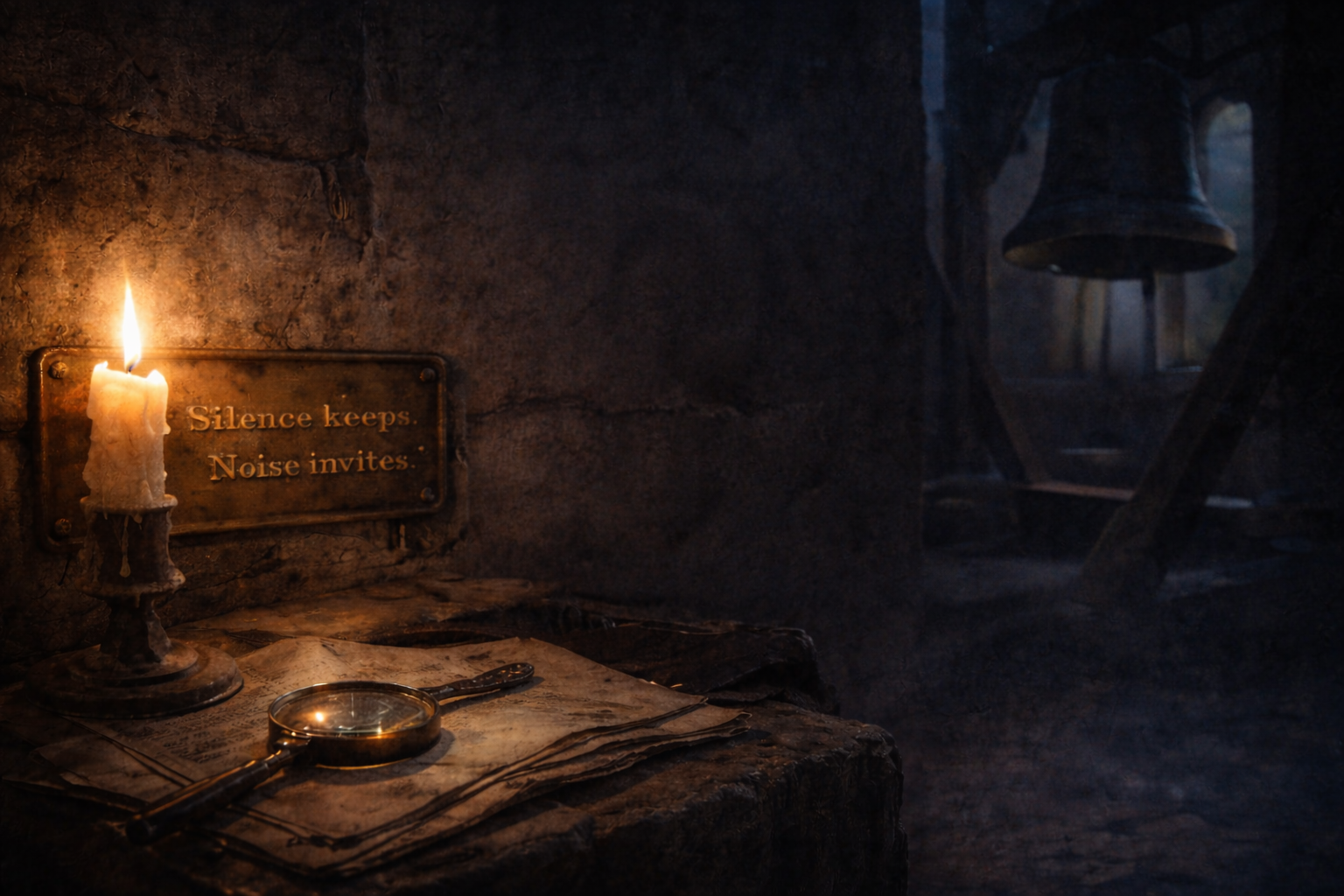
    In The Silent Bell, the central warning captures this idea perfectly. Silence may protect what is hidden, but noise has consequences. Speaking up draws attention. Ringing the bell changes everything. The mystery hinges on knowing when silence is safety and when it becomes a threat.

    For readers who love cozy mystery and historical mystery novels, this kind of tension feels earned. It respects the reader’s intelligence and rewards careful observation. The story does not shout its secrets. It waits for the reader to listen.

    Ultimately, silence in mystery fiction reminds us that not all clues are obvious. Some are felt rather than heard. Some are revealed only when we notice what is missing. And sometimes, the most dangerous moment is the one when the silence finally breaks.