Category: Nora Halewell

  • The Mystery of Old Archives: Why Nora Halewell’s Stories Feel So Atmospheric

    The Mystery of Old Archives: Why Nora Halewell’s Stories Feel So Atmospheric

    There is something strange about old archives. They look quiet at first. Rows of boxes. Dusty folders. Faded labels. Old records stacked in careful order. But open the wrong file, and the past may begin to stir.

    That is what makes Nora Halewell’s stories so atmospheric. Her world is not built on loud danger. It is built on silence, paper, shadows, and time.

    In a Nora Halewell mystery, an archive is never just a room full of records.

    It is a place where secrets wait.

    Why Old Archives Feel So Mysterious

    Old archives carry a special kind of tension. They are meant to preserve the truth. Yet they often raise more questions than they answer.

    Why is one file missing?
    Why was a name crossed out?
    Why does one date not match the others?
    Why was a letter hidden in the wrong folder?

    These are small things. But in a mystery, small things matter.

    An archive may seem still. Yet every drawer can hold a clue. Every document may point to a secret. Every label may hide a lie.

    That is why old archives work so well in Nora Halewell’s world.

    They feel calm on the outside.

    But underneath, they are full of unfinished stories.

    Nora Halewell and the Pull of the Past

    Nora Halewell is drawn to the past in a quiet but powerful way.

    She does not rush into danger. She follows the trail one record at a time.

    A page.
    A name.
    A date.
    A strange gap in the file.

    To someone else, these may look like dull details. To Nora, they are signs.

    She understands that records are never only facts. They are also choices. Someone chose what to keep. Someone chose what to hide. Someone chose what story would survive.

    That gives Nora’s mysteries their deep sense of atmosphere.

    The past is not dead in her stories.

    It is waiting to be read again.

    Archives Are Perfect for Time-Slip Mystery

    Nora Halewell’s stories often carry a time-slip mood. That means the past feels close. Sometimes, it feels too close. Old archives help create that feeling.

    When Nora opens an old file, she is not only reading about another time. She is reaching into it. The page becomes a doorway. The record becomes a warning. The missing detail becomes a thread that pulls her deeper into the mystery.

    This is why old archives are so powerful in time-slip mystery fiction.

    They blur the line between then and now.

    One moment, Nora is sitting at a desk.

    The next, she is facing a secret that should have stayed buried.

    The Beauty of Dust, Paper, and Silence

    Some mystery settings are dramatic.

    A stormy cliff.
    A locked tower.
    A dark alley.
    A lonely manor.

    But old archives create a different kind of mood.

    They are quiet. They are still. They ask the reader to lean in.

    There may be no scream. No chase. No sudden crash.

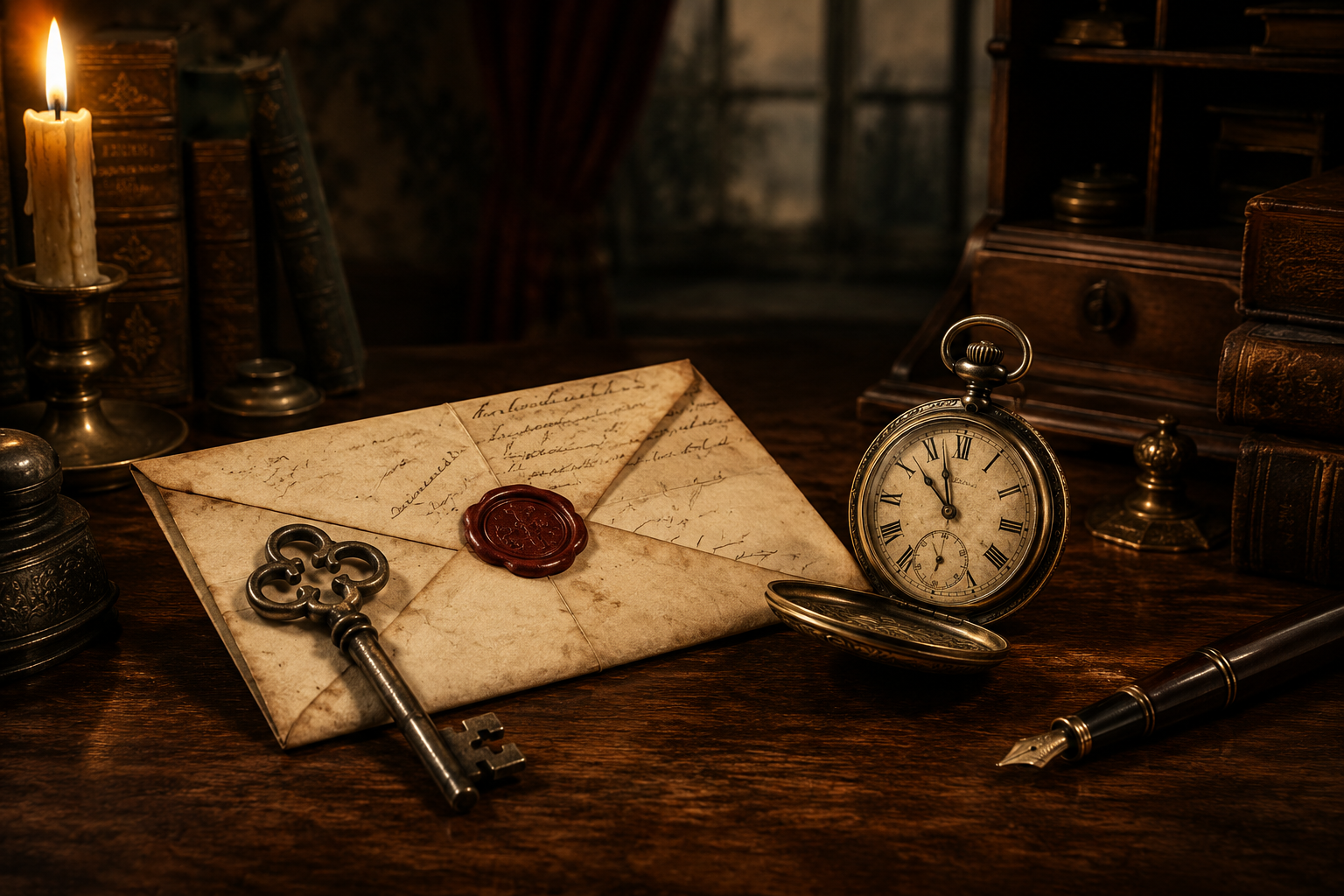
    Instead, there is the soft sound of paper. The smell of dust. The weight of a sealed envelope. The uneasy sense that one document has been waiting for the right person to find it.

    That is the beauty of Nora Halewell’s world.

    The suspense grows slowly.

    And because it grows slowly, it feels real.

    Why Hidden Records Make Strong Mystery Clues

    A hidden record is a wonderful mystery clue.

    It can change everything.

    One old document can reveal a lost name.
    One file can prove someone lied.
    One missing page can explain a family secret.
    One faded map can point to a place no one remembers.

    In Nora Halewell’s stories, records are not boring. They are dangerous. Not because they leap from the page, but because they tell the truth. And truth is often the one thing someone does not want found. That is why old archives create such strong suspense. The danger is not always in what Nora sees. Sometimes, it is in what someone tried to remove.

    The Atmosphere of Nora Halewell’s Mysteries

    Nora Halewell’s mysteries have a quiet, shadowed feel.

    They are built from old rooms, dusty shelves, strange clocks, hidden papers, and places that seem to remember more than they should.

    The setting matters.

    An archive room can feel safe. It can also feel trapped. Shelves rise on every side. Boxes crowd the walls. The air is still. The past presses close.

    That feeling is part of Nora’s appeal.

    Her stories are cozy, but they are not empty.

    They are gentle, but they are not simple.

    They invite readers into a world where time leaves marks, and old records may still have power.

    Why Readers Love Archive Mysteries

    Archive mysteries are perfect for readers who enjoy slow-burn suspense.

    They reward patience. They invite curiosity. They make the reader feel like a detective.

    Instead of asking, “Who ran away?” they ask:

    Who changed the record?
    Who hid the letter?
    Who erased the name?
    Who wanted the past to stay buried?

    These questions are rich with story.

    They suggest old grief, family secrets, lost places, and truths that have waited too long.

    For readers who love atmosphere, old archives offer the perfect setting.

    Every file may matter.

    Every silence may speak.

    Nora Halewell’s World of Time and Secrets

    Nora Halewell belongs in a world of clocks, records, and hidden doors into the past.

    She is not a loud heroine. She does not need to be.

    Her strength is her attention.

    She notices what others ignore. She follows what others dismiss. She takes old records seriously, because she knows the past can still shape the present.

    That makes her stories ideal for readers who love:

    Old archives
    Time-slip mystery
    Hidden documents
    Atmospheric settings
    Quiet suspense
    Clues buried in the past
    Heroines who follow the truth carefully

    Nora’s world is full of mystery, but it is also full of meaning.

    The past is not only a puzzle.

    It is a voice.

    Step Into the Mystery of Old Archives

    If you love old archives, hidden records, and time-slip secrets, Nora Halewell’s stories are a perfect place to begin.

    Her mysteries are full of quiet rooms, faded papers, strange dates, and clues that have waited years to be found.

    They remind us that history is never as still as it looks.

    A file can be moved.
    A name can be lost.
    A truth can be hidden.

    But sooner or later, someone like Nora Halewell may open the right drawer.

    And then the past begins to speak.
  • Three Cozy Mystery Series to Read This June: Arabella Grey, Clara Everhart, and Nora Halewell

    Three Cozy Mystery Series to Read This June: Arabella Grey, Clara Everhart, and Nora Halewell

    Three Cozy Mystery Series to Read This June: Arabella Grey, Clara Everhart, and Nora Halewell

    Three Cozy Mystery Series. Three Heroines. One Month of Secrets.

    June is the perfect month to settle in with a good mystery. The evenings are cooler, the kettle is always welcome, and there is something deeply satisfying about opening a book that promises secrets, clues, and a heroine who refuses to leave the truth buried. If you are looking for a new cozy mystery series to read this June, Mandy Ludick’s mystery worlds offer three very different paths into suspense.

    You can wander through Victorian village gardens with Arabella Grey. You can follow lost manuscripts and dangerous history with Clara Everhart. Or you can step into shadowed archives and time-worn secrets with Nora Halewell.

    Each series has its own atmosphere. Each heroine solves mysteries in her own way. And each one offers readers the pleasure of a puzzle wrapped in history, character, and mood.

    Why Choose a Cozy Mystery Series?

    A cozy mystery series gives readers something special.

    It is not only about solving one case. It is about returning to a world. You get to know the heroine. You learn her habits. You recognise the places she loves. You begin to understand how she thinks.

    A good cozy mystery series feels familiar and fresh at the same time.

    There is comfort in the setting, but danger in the secrets. There is charm in the details, but tension in the clues. There is usually tea, books, old houses, gardens, letters, or libraries. But beneath those gentle things, something has gone wrong.

    That is the magic of the genre.

    Cozy mysteries invite you in quietly, then keep you turning the pages.

    Arabella Grey: Victorian Village Secrets and Quiet Clues

    Arabella Grey is the heroine for readers who love quiet observation.

    Her mysteries are rooted in Victorian village life, old houses, gardens, grief, secrets, and the small details people often overlook. Arabella does not storm into a room demanding answers. She notices. She listens. She remembers what others dismiss.

    A cold cup of tea. A changed routine. A nervous glance. A garden gate left open. A servant who knows more than she says.

    In Arabella’s world, truth often hides in ordinary things.

    That makes her stories ideal for readers who enjoy atmospheric historical mysteries with a slower, more thoughtful sense of suspense. The tension comes from what is unsaid. The danger often sits behind polite manners and respectable curtains.

    Arabella Grey is a wonderful choice if you enjoy:

    • Victorian village settings
    • Old houses and family secrets
    • Garden imagery
    • Quiet but sharp heroines
    • Clues hidden in domestic details
    • Mysteries with emotional depth

    Her cases are not only about finding out what happened. They are about understanding why people hide things, what grief can do, and how silence can protect both the innocent and the guilty.

    Clara Everhart: Time Travel, Lost History, and Dangerous Knowledge

    Clara Everhart brings a different kind of energy to cozy mystery fiction.

    Her stories combine time travel, lost manuscripts, invention, history, science, and emotional courage. Clara’s mysteries often begin with something that should be safely in the past, but is not.

    A missing manuscript. A dangerous invention. A secret hidden inside history. A clue that does not belong in its own time.

    Clara is the perfect heroine for readers who like their mysteries with a sense of wonder. Her world has libraries, manuscripts, old ideas, and the thrilling possibility that history may not be as fixed as it seems.

    But Clara’s stories are not only about clever twists. They are also about loyalty, courage, and the cost of pursuing truth when the truth changes everything.

    Clara Everhart is a strong choice if you enjoy:

    • Time travel mysteries
    • Historical puzzles
    • Lost manuscripts
    • Inventions and science
    • Clever heroines
    • Stories where the past and present collide
    • Cozy suspense with a slightly adventurous edge

    Her mysteries ask a fascinating question: what happens when history refuses to stay behind us?

    Nora Halewell: Archives, Clocks, and Time-Slip Secrets

    Nora Halewell is the heroine for readers who love archives, old documents, clocks, vanished places, and secrets hidden in records.

    Her mysteries have a quieter, more shadowed feel. They often begin with a document, a file, a name, a date, or a place that does not quite make sense. Nora’s world is full of records that should be simple but are not.

    An archive is meant to preserve the past. But in Nora’s stories, the past is not always willing to be preserved neatly.

    Sometimes a file is missing for a reason. Sometimes a record was changed. Sometimes a clock stops at exactly the wrong moment. And sometimes a vanished place still has something to say.

    Nora Halewell is ideal for readers who enjoy:

    • Time-slip mysteries
    • Archive settings
    • Old documents and hidden records
    • Clocks and timekeeper imagery
    • Vanished places
    • Reluctant but brave heroines
    • Mysteries with a slightly eerie atmosphere

    Nora’s stories are perfect for anyone who has ever felt that old papers carry more than ink. They carry memory. They carry warning. And sometimes they carry danger.

    Which Cozy Mystery Series Should You Start With?

    Not sure where to begin? Choose the heroine who matches your reading mood.

    If you want a quiet, elegant, Victorian mystery full of village secrets, start with Arabella Grey.

    If you want time travel, lost manuscripts, and mysteries tangled in history, start with Clara Everhart.

    If you want archives, clocks, vanished places, and time-slip suspense, start with Nora Halewell.

    Each series offers a different doorway into mystery.

    Arabella’s doorway opens into a garden path and a village full of whispers.
    Clara’s doorway opens into a library where the past is not finished speaking.
    Nora’s doorway opens into an archive where one missing record can change everything.

    Why These Three Series Work So Well Together

    Arabella, Clara, and Nora are very different heroines, but they share something important.

    They all understand that truth is rarely obvious.

    Arabella finds it in the details of daily life. Clara finds it in the gaps of history. Nora finds it in the records others have ignored or hidden.

    Together, these three cozy mystery series create a rich reading world for anyone who loves historical atmosphere, intelligent heroines, and secrets that unfold slowly.

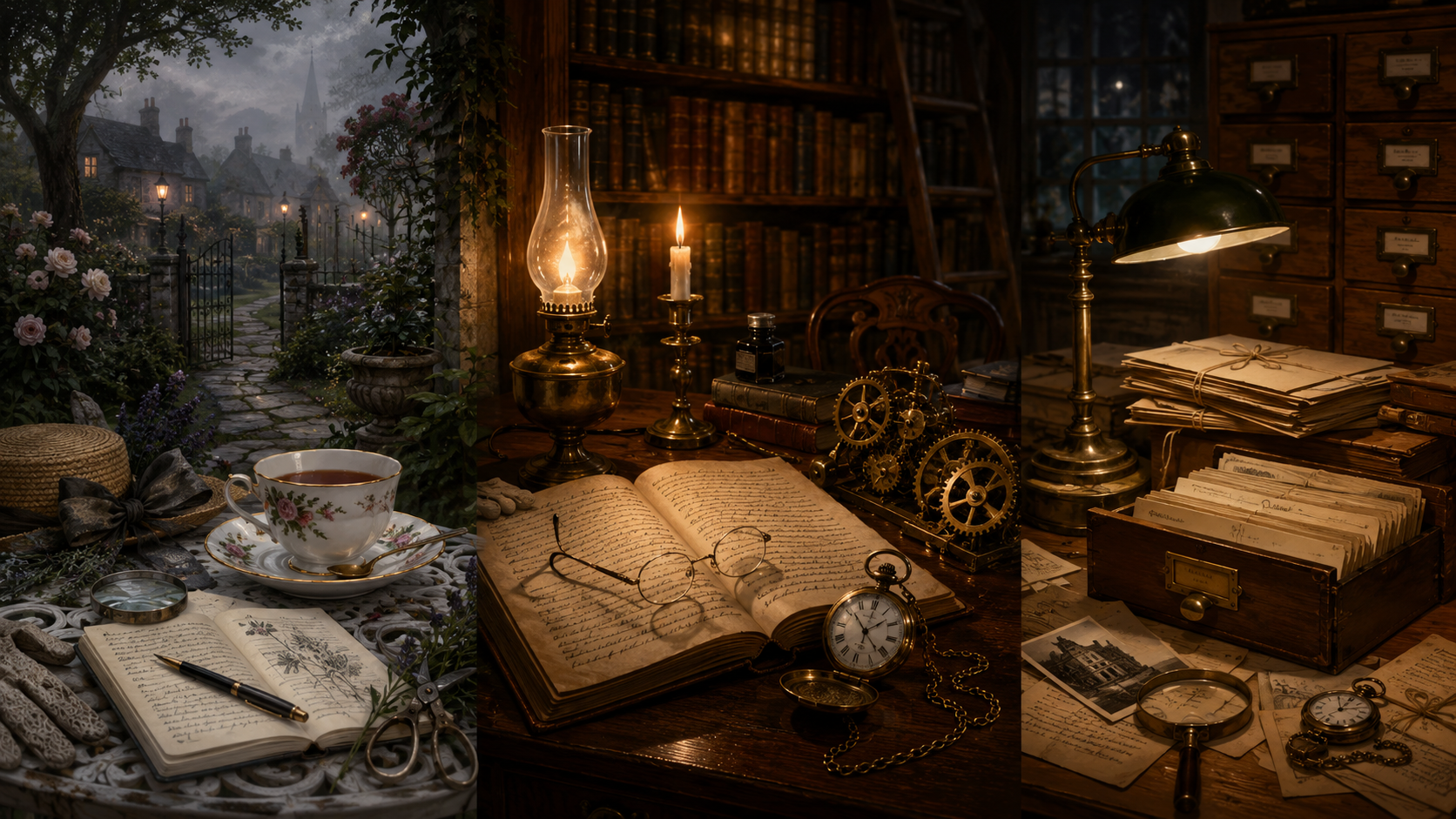
    They are mysteries for readers who enjoy clues with texture. A handwritten note. A faded map. A locked room. A garden path. A pocket watch. A manuscript no one was meant to find.

    Each series has its own tone, but all three offer the same promise: there is more going on than anyone admits.

    Make June a Mystery Reading Month

    If you have been looking for a new cozy mystery series to read, June is the perfect time to begin.

    Choose Arabella Grey if you want village secrets and Victorian atmosphere.
    Choose Clara Everhart if you want history, time travel, and lost manuscripts.
    Choose Nora Halewell if you want archives, clocks, and time-slip intrigue.

    Or, better yet, try all three.

    After all, one mystery is good. Three mystery worlds are even better.

    So make a cup of tea, choose your heroine, and follow the clues.

    This June, the secrets are waiting.

    Call to Action

    Explore Mandy Ludick’s cozy mystery series on Amazon and discover your next atmospheric read. Whether you begin with Arabella Grey, Clara Everhart, or Nora Halewell, there is always another clue waiting just beneath the surface.

  • Weekend Mystery Reads: Clara Everhart and Nora Halewell Books to Add to Your List

    Weekend Mystery Reads: Clara Everhart and Nora Halewell Books to Add to Your List

    Weekend mystery reads should feel like an invitation to step into another world.

    A cup of tea. A quiet room. A little more time than usual. And, of course, a mystery strong enough to carry you somewhere else for an afternoon or a whole weekend.

    That is one of the pleasures of reading historical mystery fiction. You do not only get a puzzle to solve. You get atmosphere, old secrets, hidden records, and the feeling that the past is never quite finished speaking.

    If you are looking for a new weekend read, Mandy Ludick’s Clara Everhart and Nora Halewell books offer two wonderful ways into that world. Both series are rich in mystery and atmosphere, but each has its own distinct flavor.

    So, if you are wondering what to add to your reading list this weekend, here is a gentle guide to which heroine might suit your mood best.

    Weekend Mystery Reads for Lovers of Clever Clues

    Some readers want a mystery built around careful details.

    They enjoy hidden papers, forgotten records, suspicious notes, missing pages, scientific clues, and inventions that carry more danger than they first appear to hold. They want a heroine who notices what others miss and keeps asking questions until the truth begins to take shape.

    If that sounds like your kind of read, Clara Everhart may be the perfect choice.

    Clara’s mysteries are thoughtful and clue-driven. Her world is filled with manuscripts, archives, inventions, formulas, and hidden truths. She is not drawn to loud drama for its own sake. Instead, she follows the quiet evidence. A strange date, a missing page, an altered record, or a small inconsistency may be enough to set her on the right path.

    That gives the Clara Everhart books a satisfying sense of discovery. The clues matter. The details matter. And the truth often lies in exactly the place most people failed to look.

    If your ideal weekend reading mood includes old libraries, manuscript mysteries, scientific intrigue, and lost legacies, Clara is a wonderful heroine to spend time with.

    Clara Everhart for Manuscript, Invention, and Science Mystery Readers

    One of the most appealing things about Clara Everhart is the kind of mystery she attracts.

    Her stories often revolve around hidden work, stolen credit, secret discoveries, and the fragile trail left behind by the past. A manuscript may not simply be missing. It may have been hidden for a reason. An invention may not only be clever. It may threaten someone’s reputation or legacy. A scientific clue may not just explain what happened. It may reveal who worked hardest to keep the truth buried.

    That gives Clara’s books a layered quality.

    They are historical mysteries, but they also carry a strong sense of intellectual intrigue. Readers who enjoy mysteries built around archives, chemistry, inventions, and careful observation will likely feel right at home in her world.

    Clara is a calm and intelligent guide through these stories. She does not rush. She pays attention. She understands that the smallest clue may carry the deepest truth.

    That makes her books excellent weekend reading for those moments when you want a mystery that feels both thoughtful and immersive.

    Weekend Mystery Reads for Lovers of Time, Place, and Hidden History

    Other readers want something slightly different.

    They still want atmosphere and suspense, but they also want the mystery to feel touched by time. They love old houses, quiet corridors, forgotten histories, strange discoveries, and the soft sense that the past is closer than it appears.

    If that sounds more like your reading mood, Nora Halewell may be the perfect choice.

    Nora’s stories are shaped by time-slip mystery, hidden history, and the emotional pull of old places. Her books often feel as if the past is pressing gently against the present. A room may hold more memory than anyone expected. A record may open a door to something older and deeper. A house may contain traces of a truth that never fully disappeared.

    This gives the Nora Halewell books a haunting, atmospheric charm.

    They are ideal for readers who love old houses, vanished stories, family secrets, and mysteries where time itself seems to become part of the puzzle.

    Nora Halewell for Time-Slip, Old House, and Hidden History Readers

    Nora Halewell’s appeal lies in the way her mysteries connect the present to the past.

    A mystery in Nora’s world is rarely only about one event. It is also about memory, place, and the way hidden truths can survive for years before the right person finally notices them.

    That makes her books especially appealing for readers who love old manor houses, strange archives, hidden maps, forgotten women, family stories, and the layered atmosphere of time-slip fiction.

    Nora is the kind of heroine who listens carefully to what a place is trying to say. She notices the quiet pull of history. She understands that a locked room, a watch, a letter, a map, or an old chart may be more than an object. It may be the beginning of the whole mystery.

    If your ideal weekend read includes a clocklit hallway, a hidden passage, an old estate, or a story waiting beneath the official version of events, Nora is a beautiful choice.

    Which Mystery Heroine Fits Your Weekend Mood?

    One of the joys of choosing a weekend read is choosing a mood.

    Sometimes you want a mystery that feels bookish, careful, and clue-rich. At other times, you want one that feels haunted by memory and full of old-house atmosphere.

    That is why Clara Everhart and Nora Halewell work so well side by side.

    Clara is ideal when you want:

    • manuscript mysteries
    • invention and science clues
    • hidden records and lost legacies
    • a thoughtful heroine who follows evidence

    Nora is ideal when you want:

    • time-slip mystery elements
    • old houses and hidden history
    • maps, watches, letters, and forgotten places
    • a heroine drawn toward the past and its unfinished truths

    Both series offer historical mystery fiction with heart and atmosphere. The difference is really in the flavor of the mystery.

    So the better question may not be which series is best.

    It may be which one suits your weekend.

    Why These Books Make Good Weekend Reads

    Weekend reading is a little different from weekday reading.

    During the week, many of us read in shorter bursts. A chapter here. A few pages there. But weekend reading allows a story to breathe. You have more room to settle into the atmosphere, follow the clues, and enjoy the world of the book.

    That is why historical mysteries work so beautifully as weekend reads.

    They offer escape, but they also offer structure. There is the setting to sink into, the heroine to follow, and the puzzle to solve. You get both comfort and curiosity at the same time.

    Clara Everhart and Nora Halewell both suit that rhythm well. Their stories invite you into a rich world and then gently keep you turning pages.

    That is exactly what many readers want from a weekend book.

    Start Your Weekend Reading with Clara or Nora

    If you are ready to add something atmospheric to your reading list, both Clara Everhart and Nora Halewell offer strong choices.

    If you love manuscripts, archives, science, inventions, and lost legacies, start with Clara Everhart.

    If you love time-slip mystery, hidden history, old houses, maps, and the quiet pull of the past, start with Nora Halewell.

    And if you love both kinds of stories, there is no reason not to keep both heroines close at hand for future weekends.

    Readers can browse Mandy Ludick’s Clara Everhart and Nora Halewell books on Amazon and choose the mystery mood that suits them best.

    Conclusion

    Weekend mystery reads should offer more than a story to pass the time.

    They should draw you in, stir your curiosity, and leave you feeling as though you have stepped through a door into another world.

    Clara Everhart offers manuscript mysteries, inventions, science, and hidden truths. Nora Halewell offers time-slip intrigue, old houses, hidden history, and a past that refuses to stay quiet.

    Both heroines bring atmosphere, intelligence, and mystery to the page.

    So, if your weekend reading mood calls for tea, a quiet room, and a story where the past still has secrets to reveal, Clara and Nora are both waiting.

  • Map Mysteries: Why Hidden Routes and Old Charts Make Great Clues

    Map mysteries begin with a wonderful promise: somewhere, hidden in lines and markings, there is a secret waiting to be found.

    A map may look simple at first. It may show roads, rivers, rooms, gardens, or coastlines. Yet in map mysteries, a map can do far more than guide someone from one place to another.

    It can hide a route.
    It can reveal a lie.
    It can point to a forgotten room.
    It can show that someone knew more than they admitted.

    That is why maps work so well in historical mystery fiction. They are practical, beautiful, and full of possibility. They also make the reader lean closer and ask the most important question in any mystery: what am I missing?

    Map Mysteries Make Readers Search the Page

    A good mystery invites the reader to investigate.

    A map does this almost naturally.

    When readers see a map in a story, they start looking for clues. A strange symbol may matter. A missing road may matter. A mark in the margin may matter. Even the places left blank can feel suspicious.

    This is part of what makes map mysteries so satisfying. They give readers something they can imagine clearly. We can picture the folded paper, the faded ink, the worn corners, and the small mark no one noticed at first.

    The map becomes more than an object.

    It becomes a puzzle.

    Old Charts Carry the Past

    Old charts have a special charm.

    They feel like they have survived something. They may have been passed from hand to hand, hidden in a drawer, tucked inside a book, or sealed away in a family archive.

    That history gives them weight.

    A new map tells someone where to go. An old map tells the reader that someone has gone there before.

    That single idea creates suspense.

    Who made the chart? Why was it kept? Why was it hidden? Did the maker want someone to follow it, or did they hope no one ever would?

    In historical mysteries, those questions matter. A map can connect the present case to an older secret. It can show that the truth was not lost by accident. Someone marked it down. Someone preserved it. Someone may even have risked something by doing so.

    Hidden Routes Create Natural Suspense

    A hidden route is a perfect mystery device.

    It suggests movement without being seen.

    A secret path through a garden, an old servants’ passage, a forgotten road across the moor, or a marked route through a village can change the whole story. Suddenly, a suspect may have gone somewhere they claimed they could not reach.

    That makes the mystery sharper.

    A hidden route can break an alibi. It can explain how a letter vanished. It can reveal how someone entered a locked place. It can also show that the official version of events never made sense.

    This kind of clue feels fair because the answer is physical. The route exists. The map shows it. The sleuth only has to understand what it means.

    In Map Mysteries A Map Can Lie

    Maps feel trustworthy.

    That is why they make such good clues.

    A reader expects a map to show the truth. Roads go where they go. Rivers run where they run. Rooms sit where they sit. Yet maps are made by people, and people can lie.

    A road can be left out.
    A boundary can be moved.
    A room can be missing.
    A symbol can be added later.

    In a mystery, that kind of false map can be very powerful.

    The sleuth may first believe the map. Then, little by little, she notices that something does not fit. A wall is too thick. A path should lead somewhere else. A landmark appears in the wrong place.

    That is when the map becomes suspicious.

    It is no longer only a guide.

    It is evidence.

    Maps Connect Place and Memory

    Historical mysteries often depend on memory.

    Families remember one version of the past. Villages remember another. Official records may say one thing, while local stories suggest something else.

    A map can sit between these versions.

    It shows place, but it also holds memory. It can preserve the name of a road no one uses anymore. It can mark a cottage that has fallen down. It can show an old boundary that explains a family dispute. It can reveal that a forgotten place once mattered very much.

    This makes maps emotionally rich.

    They do not only tell us where people went. They can show what people valued, feared, hid, or tried to claim.

    A map can make the past visible again.

    Maps Work Beautifully in Time-Slip Mysteries

    Maps are especially useful in time-slip mysteries.

    The present and the past may share the same place, but the place has changed. A garden may have been redesigned. A room may have been sealed. A road may have vanished. A building may have been renamed.

    A map can help the heroine compare then and now.

    That comparison can create wonderful tension. The modern layout may not make sense until the old map appears. A path that no longer exists may explain how someone moved unseen. A building that has disappeared may hold the key to a long-buried truth.

    This is one reason maps suit Nora Halewell so well.

    Nora’s mysteries often depend on the way time, memory, and hidden records overlap. A map is the perfect object for that kind of story. It gives her something concrete to follow while the past presses closer.

    The Mystery of the Mistlethwaite Map

    In The Mystery of the Mistlethwaite Map, Nora Halewell is drawn into exactly the kind of mystery where a map can change everything.

    The title alone suggests a puzzle of place, time, and hidden meaning. A map is never just a map in this kind of story. It may point toward a secret route, a lost location, a forgotten truth, or a danger someone hoped would stay buried.

    That makes it a natural fit for readers who enjoy old papers, hidden clues, and mysteries where the past refuses to stay still.

    Readers can follow Nora into this map-based mystery in The Mystery of the Mistlethwaite Map.

    Why Maps Make Strong Clues

    Maps make strong clues because they combine beauty and logic.

    They are visual, but they are also practical. They can create atmosphere while moving the plot forward. They can sit quietly in a desk drawer for years, then suddenly explain what no one else could.

    A map also gives the sleuth a reason to act.

    She can follow the route. Visit the marked place. Compare the old chart with the present landscape. Ask who had access to it. Search for the missing landmark.

    That keeps the mystery active.

    The map does not only reveal the secret. It sends the heroine toward it.

    Maps Give Mystery Readers a Sense of Discovery

    Readers love discovery.

    A map promises it.

    There is something deeply satisfying about a clue that says, in effect, “Go here.” The reader wants to know what waits at the marked place. A hidden room? A buried box? A missing record? A memory someone tried to erase?

    That sense of movement keeps the story alive.

    It also makes the final reveal feel earned. The heroine did not stumble on the truth. She followed a trail. She read the signs. She noticed what others ignored.

    In a map mystery, the path to the truth becomes part of the pleasure.

    Conclusion

    Map mysteries make powerful stories because they turn place into a puzzle.

    An old chart can carry the past. A hidden route can break an alibi. A missing landmark can reveal a lie. A small mark on a faded page can send the heroine toward a truth that has waited for years.

    Maps work so well because they are both beautiful and useful.

    They help readers see the world of the story. They help the sleuth move through it. Most of all, they remind us that secrets are often tied to place.

    Sometimes the truth is not only hidden in what people remember.

    Sometimes it is hidden in where they went.

    And sometimes, the only way to find it is to follow the map.

  • Time Slip Mysteries: What If Time Slipped?

    Time Slip Mysteries: What If Time Slipped?

    Time slip mysteries begin with a simple but thrilling question: what if time slipped?

    Not in a loud, dramatic way. Not always with a machine, a flash of light, or a clear explanation.

    Sometimes time slips quietly.

    A woman opens an old door and hears voices from another century. A letter appears where it should not be. A room feels different after midnight. A watch stops, and the past seems to press close.

    That is what makes this kind of mystery so powerful. It takes an ordinary moment and makes it feel strange. It suggests that the past is not as far away as we think.

    In a time slip mystery, the past does not stay still. It reaches forward.

    Time Slip Mysteries Make the Past Feel Close

    Historical mysteries already take readers into another time.

    But time slip mysteries do something even more interesting. They let two times touch.

    The heroine may live in the present, but she finds herself pulled toward an older story. It may begin with a house, a diary, a portrait, a clock, or a strange feeling she cannot explain.

    At first, she may not understand what is happening. That uncertainty creates suspense.

    Is she imagining it?
    Is the past truly breaking through?
    Is someone trying to send a warning?
    Or is an old mystery asking to be solved?

    These questions keep the story moving. They also make the setting feel alive. The past is not just background. It becomes part of the mystery itself.

    The Best Time Slips Start Small

    A time slip does not need to be huge to be exciting.

    In fact, it often works better when it starts with one small change.

    A hallway looks different for a moment. A name appears in an old record that should not be there. A garden path leads somewhere it did not lead before. A clock chimes at the wrong hour.

    These small shifts are unsettling because they almost make sense.

    The heroine can try to explain them away. So can the reader. Yet each strange detail adds pressure. Soon, the pattern becomes too clear to ignore.

    That is when the mystery deepens.

    The question is no longer only, “What happened?”

    It becomes, “When did it happen, and why is it reaching forward now?”

    Old Houses Are Perfect for Time Slip Mysteries

    Old houses are wonderful settings for this kind of story.

    They hold memory well.

    A manor house, cottage, library, archive, or forgotten room can feel like a place where time has gathered in layers. People lived there. They argued there. They kept secrets there. They left marks behind.

    A time slip mystery uses that atmosphere beautifully.

    A room may look ordinary in daylight, but at night it may feel changed. A locked door may seem to belong to one century, then another. A portrait may feel less like decoration and more like a witness.

    The house becomes more than a setting.

    It becomes a bridge.

    It allows the heroine to move closer to a truth that ordinary records may have failed to preserve.

    Time Slip Clues Feel Different

    In a normal mystery, clues often come from evidence.

    In a time slip mystery, clues may come from both evidence and experience.

    The heroine may find a letter, a key, a map, or a diary. Yet she may also hear a voice, see a room as it once was, or feel drawn to a place without knowing why.

    This makes the mystery feel more layered.

    The physical clues keep the plot grounded. The time slip adds wonder and unease. Together, they create a story that feels both practical and mysterious.

    That balance matters.

    If everything is too strange, the mystery can feel vague. If everything is too ordinary, the time slip loses its magic. The strongest stories keep both sides working together.

    The heroine still has to think, search, compare, and question.

    But she must also learn to listen when the past whispers.

    The Past Often Wants Something

    A good time slip mystery is not strange for no reason.

    The past usually has unfinished business.

    Someone was blamed unfairly. A secret was buried. A woman’s work was forgotten. A promise was broken. A death was misunderstood. A family story was altered to protect the wrong person.

    The time slip draws the heroine toward that hidden truth.

    This gives the story emotional depth. The mystery is not only about solving a puzzle. It is about setting something right.

    That is why readers love this theme. It suggests that truth can survive, even when people try to hide it. It suggests that the past may wait years, or even generations, for someone brave enough to look closely.

    Why Time Slip Mysteries Feel So Emotional

    Time slip mysteries often carry a quiet sadness.

    The heroine may see people from the past as real, living souls. She may learn what they feared, wanted, lost, or hoped for. She may know things that history forgot.

    That creates a deep emotional pull.

    A faded name in a register becomes a person. A portrait becomes a woman with a secret. A diary becomes a voice asking to be heard.

    Readers do not only want to know what happened. They want the forgotten person to matter again.

    This is where time slip mysteries become especially moving. They give the past a chance to speak.

    And sometimes, they give the present a chance to heal.

    Nora Halewell and the Pull of Time

    Nora Halewell fits naturally into the world of time slip mysteries.

    Her stories often explore time, memory, hidden records, and the strange way the past can press against the present. Nora is not only solving cases. She is listening for the truth beneath the official version.

    That makes her a strong heroine for this kind of mystery.

    She notices what others dismiss. She follows small clues. She understands that old objects can hold meaning. A watch, a letter, a chart, or a locked room may be the first sign that the past is not finished.

    In a Nora Halewell story, time is not only a setting.

    It is part of the mystery.

    It can hide the truth. It can distort the truth. And, when the right person is watching closely, it can reveal the truth.

    Why Readers Love the “What If?” Question

    The question “what if time slipped?” is so simple.

    That is why it works.

    It invites the reader to imagine something impossible happening in an ordinary place. What if you walked into a room and saw it as it was a hundred years ago? What if an old letter seemed to answer a question you had not yet asked? What if a mystery from the past reached out because no one in its own time could solve it?

    That kind of question opens a door.

    It makes the reader curious. It makes the world feel larger. It also gives a mystery a sense of wonder that ordinary clues alone cannot always create.

    Time slip mysteries are satisfying because they combine two pleasures.

    They give us the puzzle of a mystery and the magic of time touching time.

    Time Slip Mysteries and Historical Truth

    One of the strongest parts of time slip fiction is the way it questions official history.

    Records can be wrong. Families can lie. Villages can remember selectively. People with power can decide which stories survive.

    A time slip mystery can challenge all of that.

    The heroine may see what the record left out. She may uncover a truth hidden beneath a neat family story. She may learn that the past was more complicated than anyone wanted to admit.

    This makes the genre feel rich and meaningful.

    It reminds readers that history is not only made of dates and documents. It is made of people. Some were remembered. Some were forgotten. Some are still waiting for someone to notice the traces they left behind.

    Conclusion

    Time slip mysteries are powerful because they let the past and present touch.

    They turn old houses into bridges. They turn letters, watches, diaries, and portraits into clues. They make forgotten voices feel close again.

    Most of all, they ask a wonderful question.

    What if time slipped?

    What if the past was not gone?
    What if a secret could cross the years?
    What if an old mystery was still waiting for the right person to listen?

    That is the magic of this kind of story.

    The mystery begins with a clue.

    But it deepens when time itself starts to speak.

  • Mystery Objects: Why Keys, Letters, and Watches Make Great Clues

    Mystery Objects: Why Keys, Letters, and Watches Make Great Clues

    Mystery objects can turn the smallest detail in a room into the clue that changes everything.

    A key left on a desk may not look important at first. A folded letter may seem like ordinary paper. A watch in a pocket may feel like simple decoration. Yet in mystery fiction, these little things often carry the greatest weight.

    Objects are powerful because they feel real. A reader can picture them. They can imagine the cold metal of a key, the soft crackle of old paper, or the steady tick of a watch in a quiet room. These details make the mystery feel close enough to touch.

    They also create questions. Why was the key hidden? Why was the letter never sent? Why did the watch stop? Once an object raises a question, it becomes more than scenery. It becomes part of the puzzle.

    Mystery Objects Make Readers Pay Attention

    A good mystery teaches readers to look closely.

    At first, an object may seem ordinary because it belongs in the setting. A key belongs in a drawer. A letter belongs on a writing desk. A watch belongs in a pocket.

    But a mystery changes how we see these things. Suddenly, the reader wonders why that object was shown at all. Was it placed there by accident? Did someone move it? Did the sleuth notice something everyone else missed?

    That is why mystery objects work so well. They invite the reader into the story without shouting for attention. They sit quietly in the scene and wait for their meaning to unfold.

    When the truth is finally revealed, the reader can look back and think, “Of course. The clue was there all along.”

    Keys Suggest Locked Secrets

    A key is one of the most natural clues in mystery fiction because it promises access.

    It may open a door, a drawer, a locked box, a cabinet, a garden gate, or a hidden room. As soon as a key appears in a story, the reader wants to know what it unlocks.

    Yet the real mystery is not always about the lock. It is often about the person who had the key.

    A key can prove that someone entered a room when they claimed they could not. It can show that a trusted person had private access. It can also suggest betrayal, especially if a key has been copied, hidden, stolen, or returned too neatly.

    In historical mysteries, keys carry even more atmosphere. Old houses are full of locked studies, cellars, attics, trunks, and family chests. Each locked place feels as if it may hold something the past has tried to hide.

    That makes a key small, simple, and full of promise.

    Letters Carry Hidden Voices

    Letters are wonderful clues because they feel personal.

    A letter can carry fear, love, guilt, anger, longing, or warning. Even when the writer tries to hide the truth, emotion often slips through. A careful phrase may reveal more than the writer intended. A crossed-out word may matter. A missing page may matter even more.

    In historical mystery fiction, letters fit naturally into the world. Before instant messages and phone calls, people wrote things down. They folded letters, sealed them, posted them, hid them, burned them, or kept them for years.

    That gives a letter a kind of emotional life.

    It may have travelled across miles. It may have sat in a drawer for decades. It may have been read many times by someone who could not bear to throw it away. Or it may have been hidden because it revealed a truth that someone feared.

    A letter can become evidence, but it can also become a voice from the past. It allows someone who is gone, absent, or silenced to speak again.

    That is why letters often make a mystery feel deeper. They do not only reveal facts. They reveal people.

    Watches Bring Time into the Mystery

    A watch is more than a beautiful historical object. It brings time into the heart of the story.

    Time matters in almost every mystery. The sleuth needs to know when someone arrived, when someone left, when the crime took place, and when a lie began.

    A watch can help answer those questions, but it can also confuse them.

    A stopped watch may seem to mark the exact moment something happened. However, a clever mystery can make the reader doubt that. Was the watch broken by accident? Was it stopped on purpose? Was it set to the wrong time to protect someone?

    That uncertainty makes watches excellent clues.

    They look precise. They suggest order. They seem reliable. Yet, in the wrong hands, a watch can lie as neatly as any suspect.

    In a Nora Halewell-style mystery, a watch also carries a deeper mood. It hints at time, memory, and the strange pull of the past. A watch may mark an hour, but it can also mark a regret, a promise, or a secret that has waited too long.

    Ordinary Objects Can Hold Extraordinary Meaning

    The best mystery objects are often familiar.

    Readers understand keys, letters, and watches without needing long explanations. That makes them easy to use in a story. The writer can place them in a scene naturally, then slowly reveal why they matter.

    An ordinary object can also carry more than one meaning.

    A key may suggest secrecy, trust, access, or betrayal. A letter may suggest memory, confession, warning, or love. A watch may suggest time, pressure, delay, or deception.

    This gives the writer room to build layers. The object may seem to mean one thing early in the story, then something very different by the end.

    That is part of the pleasure of a mystery. The reader does not only ask what happened. The reader asks what everything means.

    Historical Mystery Fiction Makes Objects Feel Richer

    Historical settings are full of objects that feel meaningful.

    A Victorian study, old archive, manor house, garden room, or writing desk already suggests secrets. There may be ledgers, seals, lamps, gloves, calling cards, books, clockwork pieces, keys, and letters.

    These objects help build the world. They show how people lived, wrote, travelled, worked, and kept secrets. They also show what characters valued.

    A person may preserve a letter because it still hurts. Another may hide a key because they fear what it opens. Someone may wind a watch every day because it belonged to a person they lost.

    This is where objects become more than clues. They become character details.

    A mystery object can tell us what a person fears, loves, regrets, or refuses to release. That gives the story emotional depth without needing a long speech.

    Objects Can Reveal What People Try to Hide

    People lie. Objects often do not.

    Of course, objects can be planted, moved, or altered. That is part of the fun. But an object still leaves a trail. It has a place, a purpose, a history, and often a person attached to it.

    The way a character reacts to an object can reveal a great deal.

    Someone may look away too quickly when a letter is mentioned. Someone may touch a watch whenever they feel nervous. Someone may claim not to know about a key, even though their hand moves toward the pocket where it once sat.

    These small actions make a mystery feel alive.

    A character may control what they say, but they may not control what they reach for, protect, or avoid.

    That is why object-based clues are so satisfying. They connect the mystery to human behavior. They allow the sleuth to notice not only the object itself, but the emotion around it.

    Clara, Nora, and the Power of Hidden Clues

    In the Mandy Ludick mysteries, objects fit naturally into the worlds of Clara Everhart and Nora Halewell.

    Clara’s stories often involve manuscripts, archives, inventions, formulas, and old records. In her world, an object may carry proof of a lost legacy. It may show that someone’s work was hidden, stolen, or misunderstood.

    Nora’s mysteries often lean into time, memory, and the past pressing against the present. For Nora, a watch, key, or old letter can feel especially powerful. These objects suit stories where history has not quite finished speaking.

    Both heroines understand the value of attention.

    They do not dismiss small things. They know that a clue does not need to be dramatic to matter. Sometimes the smallest object in the room is the only surviving witness to the truth.

    Why Readers Love Object-Based Clues

    Readers enjoy object-based clues because they are easy to picture and satisfying to follow.

    A hidden key gives the reader a locked secret to imagine. A letter gives them words to question. A watch gives them time to test. Each object creates a thread that can run through the story.

    These clues also make the mystery feel fair. When an object appears early, the reader has a chance to notice it. Later, when its meaning becomes clear, the reveal feels earned.

    There is also something wonderfully atmospheric about these objects.

    A sealed letter on a desk feels secretive. A key in a drawer feels promising. A stopped watch in a quiet room feels eerie before anyone says a word.

    Mystery fiction thrives on that kind of quiet tension.

    Conclusion

    Mystery objects make great clues because they are small, familiar, and full of meaning.

    Keys suggest locked secrets. Letters carry hidden voices. Watches bring time, tension, and possible deception into the story.

    In historical mystery fiction, these objects become even richer. They belong naturally to the setting, but they also carry memory, motive, emotion, and atmosphere.

    A key can open more than a door. A letter can reveal more than a message. A watch can mark more than an hour.

    Sometimes, the smallest object in the room is the one that unlocks the whole mystery.

  • Archive Mysteries: Why Old Records Make Compelling Clues

    Archive Mysteries: Why Old Records Make Compelling Clues

    Old records may look dull at first. They sit in boxes, drawers, files, and dusty rooms. At a glance, they seem quiet. They may even seem safe. Yet in archive mysteries, one old record can change everything.

    A faded letter can expose a lie. A missing file can point to a cover-up. A forgotten name can reveal the truth.

    That is why archives work so well in mystery fiction. They hold small pieces of the past. Sometimes, those small pieces are the only clues left.

    Archive Mysteries Begin with Hidden Clues

    Every mystery needs clues. In archive mysteries, those clues often hide in old papers. A sleuth may find them in letters, diaries, maps, wills, ledgers, or newspaper cuttings.

    At first, the clue may look ordinary.

    It might be one wrong date. It might be one crossed-out name. It might be one missing page. Or it might be one note written in a different hand.

    Soon, that small clue begins to matter.

    A simple date can break an alibi. A missing page can suggest fear. A changed name can uncover a secret.

    Because of this, archive mysteries reward careful readers. Every file may matter. Every page may hold the truth.

    Old Records Make the Past Feel Real

    Archives make the past feel close.

    A record is not only paper. It proves that someone lived, wrote, signed, owned, lost, or hid something.

    For example, an old letter can still carry fear. A diary can still hold grief. A legal paper can still change a family story. Even a photograph can raise questions.

    These objects give the past a voice.

    In historical mysteries, this matters. The sleuth often has to understand something that happened years ago. So, old records help bring that buried story back into the light.

    They turn memory into evidence.

    A Missing File Can Be a Clue

    In archive mysteries, a missing file can matter as much as a found one.

    A gap in a record raises questions at once.

    Why is one letter gone? Why does the file stop there? Why does the list leave out one name? Why has someone removed a page?

    Those questions create quiet suspense.

    There may be no chase. There may be no argument. Even so, the empty space in the file feels tense.

    After all, missing papers often suggest a hidden hand. Someone may have removed the truth. Someone may have feared what the record would reveal.

    As a result, the reader starts to ask new questions.

    Who touched the file last? Who knew what it said? And who had the most to lose?

    Archives Make Wonderful Mystery Settings

    Archives make perfect settings for mystery stories.

    They are quiet places. People whisper. Papers rustle. Boxes open slowly. Lamps glow over old pages.

    However, that quiet can hide real tension.

    An archive may hold secrets about a powerful family. It may contain proof of an old crime. It may also show that a respected person lied.

    The setting adds mood as well.

    Picture tall shelves, dim lights, locked cabinets, old catalogues, and fragile papers. The truth feels close, but it does not come easily.

    Because of that, readers want to keep searching.

    Forgotten Names Add Heart

    Some of the best archive mysteries begin with a forgotten name.

    The name may appear only once. It may sit in a margin, a register, or a faded note. Still, it can change the whole case.

    Perhaps a woman vanished from a family record. Maybe a servant appears in one line and nowhere else. Or perhaps a child’s name hides in a parish register.

    These details add heart to the mystery.

    Now the case becomes more than a puzzle. It becomes a search for someone who was ignored, hidden, or forgotten.

    When the sleuth finds that person’s story, the mystery feels deeper.

    The truth does not only solve the case. It gives someone back their place in history.

    Old Papers Can Lie

    Archives can hold truth.

    Yet they can also hold lies.

    Someone can forge a document. Someone can change a date. A person can copy a signature. A report can leave out key facts. A file can also land in the wrong place on purpose.

    This makes archive mysteries even more interesting.

    The sleuth cannot trust every page at once. Instead, she must ask hard questions.

    Who wrote this? Why did someone save it? Who had access to it? And who wanted it hidden?

    Paper can speak, but it can also deceive.

    Why Readers Love Archive Mysteries

    Readers love archive mysteries because they feel layered.

    The truth comes out slowly. One document leads to another. Then one small fact changes the meaning of everything else.

    A letter may explain a photograph. A diary may change the meaning of a map. A will may reveal a motive. Meanwhile, a missing file may expose a secret.

    This kind of mystery invites readers to think with the heroine.

    It asks us to notice small things. It rewards patience. It also makes the final answer feel earned.

    Nora Halewell and Old Records

    Nora Halewell fits naturally into archive mysteries.

    She notices documents, hidden pages, and small details. She does not ignore a strange date or a missing file. Instead, she follows the quiet clue until it begins to speak.

    For Nora, old records are never just background.

    They carry memory. They carry motive. Sometimes, they even carry danger.

    A forgotten document may show who lied. A missing page may reveal who was afraid. Then a faded note may bring a hidden story back into the light.

    Nora understands that the past often leaves a paper trail.

    The real challenge is learning how to read it.

    Conclusion

    Archive mysteries turn old records into powerful clues.

    They show that truth can hide in quiet places. It can wait inside a box, a diary, a letter, a file, or a name written in fading ink.

    Archives also remind us that the past is not always gone. Sometimes it waits for someone to look closely.

    In a mystery, one old record can do more than solve a case.

    It can bring a forgotten story back into the light.

  • Quiet Heroines in Cozy Mysteries: Why Gentle Courage Leaves a Lasting Impression

    Quiet Heroines in Cozy Mysteries: Why Gentle Courage Leaves a Lasting Impression

    Quiet heroines in cozy mysteries often stay with readers long after the final chapter. These are not characters driven by bravado or thrill seeking. They are thoughtful, observant, and deeply aware of the consequences of uncovering the truth. Their courage is not loud, but it is steady, and that is precisely what makes their stories so compelling.

    In cozy mystery fiction, danger rarely arrives with spectacle. Instead, it slips in quietly through unanswered questions, uncomfortable realizations, and moments when silence begins to feel wrong. A quiet heroine senses this shift. She may hesitate. She may wish things could remain undisturbed. But once she understands that something matters, she cannot simply turn away.

    This kind of courage feels authentic because it grows naturally from character rather than circumstance. Readers are not asked to believe in fearlessness. They are invited to recognize persistence, conscience, and resolve.

    In The Vanishing at Verdant Hall, the heroine’s strength lies in her restraint. The story allows uncertainty to linger. Questions surface gradually. The mystery unfolds through atmosphere and memory rather than urgency or force. This measured approach gives emotional weight to every choice that follows.

    Why Quiet Heroines in Cozy Mysteries Resonate with Readers

    Quiet heroines in cozy mysteries resonate because they reflect how many people experience courage in real life. Most of us do not rush toward conflict. We notice something feels off. We sit with that feeling. And eventually, we act because ignoring it would feel worse than confronting it.

    This kind of heroine listens carefully. She observes patterns others dismiss. She understands that the past leaves traces, and that places remember what people try to forget. When she begins asking questions, it is not because she wants disruption, but because truth demands attention.

    Historical and time-slip mysteries are especially suited to this approach. The past presses gently but persistently against the present. Secrets survive because they were never spoken aloud. When a heroine chooses to examine what has been left behind, she risks unsettling long-held assumptions and quiet agreements.

    Cozy mysteries handle this tension with grace. The danger is rarely physical. Instead, it is emotional and moral. What happens when a truth emerges? Who will be hurt? Who will be relieved? And who has been protected by silence for far too long?

    Readers who enjoy cozy mysteries often appreciate this thoughtful pacing. The story unfolds without haste, allowing space for reflection. The resolution satisfies not because it shocks, but because it restores balance and understanding.

    Quiet heroines also foster a strong connection with readers. Their doubts feel familiar. Their determination feels earned. They are not elevated above the world they inhabit, but grounded within it. This creates trust between reader and story.

    In The Vanishing at Verdant Hall, the mystery is shaped by memory, restraint, and consequence. The courage required is consistent rather than dramatic. By the end, what lingers is not just the solution, but the steadiness it took to uncover it.

    Quiet heroines in cozy mysteries remind us that bravery does not need to announce itself. Sometimes it is enough to keep paying attention when silence would be easier. Those are often the stories that stay with us longest.

  • Verdant Hall and the Secrets It Keeps: A Cozy Time Travel Mystery Rooted in Gothic History

    Verdant Hall and the Secrets It Keeps: A Cozy Time Travel Mystery Rooted in Gothic History

    In many time travel mystery and cozy mystery novels, the setting is more than a backdrop, it is a participant in the story. In The Vanishing at Verdant Hall, the manor itself becomes a keeper of secrets, a silent witness to generations of control, concealment, and forgotten truth. From its locked rooms to its hidden passages, Verdant Hall is not merely a place where a mystery occurs; it is the mystery.

    This blend of cozy mystery, historical fiction, and time travel creates a story where atmosphere and discovery take precedence over spectacle, drawing readers into a world where the past refuses to remain buried.

    A House Built to Remember

    Verdant Hall is introduced as an imposing Gothic estate, steeped in family legacy and quiet tension. Its architecture—clock towers, libraries, attics, and concealed chambers, reflects the layered nature of the mystery itself. As Nora Halewell begins her work cataloguing the estate, it becomes clear that the house has been designed to store more than books. It safeguards memory.

    Throughout the novel, Verdant Hall reveals itself piece by piece. Hidden drawers, secret tunnels, and mechanical devices serve as repositories for truths deliberately withheld. The manor’s design reinforces one of the core ideas of the time travel mystery genre: that history leaves traces, even when people attempt to erase them.

    Time Travel as Careful Intervention

    Unlike high-action time travel stories, The Vanishing at Verdant Hall treats movement through time as something fragile and deliberate. Nora’s journey into the past does not grant her power over events, but responsibility toward them. Her role is not to rewrite history, but to recover what was suppressed.

    This restraint aligns closely with the expectations of a cozy mystery. The story unfolds through observation, research, and careful deduction rather than confrontation. Documents, ledgers, letters, and mechanisms become clues, rewarding patience and attention to detail.

    Secrets, Silence, and Inheritance

    At the heart of the novel lies a disappearance tied to inheritance, control, and the manipulation of truth. Verdant Hall’s secrets are not isolated incidents; they are part of a system built over generations. The manor protects those in power while silencing those who threaten to disrupt the narrative they have constructed.

    This theme is central to the book’s emotional weight. The mystery is not simply who vanished, but why silence was enforced and who benefited from it. As Nora uncovers the truth, the house itself seems to respond, as though releasing what it has been holding all along.

    Why Verdant Hall Endures

    Readers drawn to historical fiction, cozy mystery, and time travel mystery often seek stories where setting and theme are inseparable. Verdant Hall offers that depth. It embodies the idea that places remember, even when people try to forget.

    In the end, The Vanishing at Verdant Hall reminds us that secrets may be hidden, but they are never erased. Sometimes, all it takes is the right witness, and the right moment, for a house to finally speak.

  • Why The Clockmaker of Saint-Lazare Is the Time Travel Mystery You’ve Been Waiting For

    Why The Clockmaker of Saint-Lazare Is the Time Travel Mystery You’ve Been Waiting For

    Cozy Mystery Meets Historical Fiction in Mandy Ludick’s Stunning New Novel

    If you’re a fan of time travel mystery, cozy historical fiction, and atmospheric storytelling with a twist of conspiracy, then Mandy Ludick’s latest installment in the Nora Halewell Time-Travel Mystery series, The Clockmaker of Saint-Lazare, should be at the top of your reading list.

    In a literary landscape filled with historical thrillers and romanticized time slips, Ludick brings something fresh to the table: a quietly powerful protagonist, immersive historical detail, and a mystery that feels as intimate as it is epic. This eleventh book in the series takes readers to Paris in 1832, a city battling cholera, civil unrest, and now, a conspiracy to control time itself.


    A Unique Blend of Cozy Mystery and Historical Intrigue

    Unlike many time travel books that lean heavily into science fiction or fantasy, The Clockmaker of Saint-Lazare remains grounded in historical fiction. The tone is distinctly cozy, but with layers of suspense and philosophical weight that elevate it beyond the genre’s usual offerings.

    At the heart of the story is Nora Halewell, a modern-day archivist who time-travels through rare books hidden in her inherited library. Each novel in the series transports her to a different era via a new historical mystery—and this time, she lands in post-revolution Paris, where death records are being falsified and a mysterious timekeeping device called Concordia threatens to rewrite history.

    The plot unfolds through lush descriptions of gaslit alleyways, forgotten ossuaries, and bell towers, creating a setting that is not only visually rich but thematically resonant. Paris becomes a character in its own right, haunted, elegant, and on the brink of something transformative.

    A Mystery That Resonates

    What makes this book shine is its concept of truth as a ticking mechanism, something fragile, hidden, and prone to tampering. Nora doesn’t just solve a mystery; she fights to preserve memory itself, uncovering a hidden war between those who remember and those who rewrite.

    With elegant pacing and a steady layering of clues, Ludick offers both longtime fans and new readers a rewarding mystery that balances emotional depth with intellectual satisfaction. And while there’s no need to have read the previous books, those who do will appreciate Nora’s continued growth as she wrestles with the ethics of changing the past.

    Final Thoughts: A Must-Read for Time Travel Mystery Lovers

    If you enjoy time travel with purpose, historical fiction steeped in real events, or cozy mysteries with high stakes, The Clockmaker of Saint-Lazare delivers on every front. It’s thoughtful, thrilling, and deeply atmospheric, perfect for readers who love stories about women uncovering hidden histories and restoring what was lost.

    Mandy Ludick has once again proven herself a master of weaving together mystery, memory, and history.

    📘 Now available in paperback, hardcover, and Kindle editions.
    Grab your copy of The Clockmaker of Saint-Lazare on Amazon today and step into a mystery where time, truth, and memory collide.