Category: Nora Halewell

  • Time-Slip Mystery Books: Begin Nora Halewell’s Journey

    Time-Slip Mystery Books: Begin Nora Halewell’s Journey

    Time-slip mystery books give us two ways to escape. We can follow a puzzle. At the same time, we enter an earlier world. The Vanishing at Verdant Hall by Mandy Ludick begins Nora Halewell’s journey with an inherited manor and a library that invites a closer look.

    This post stays with the opening and the reading mood. You can meet Nora without learning how her case ends.

    Start with a house we do not know

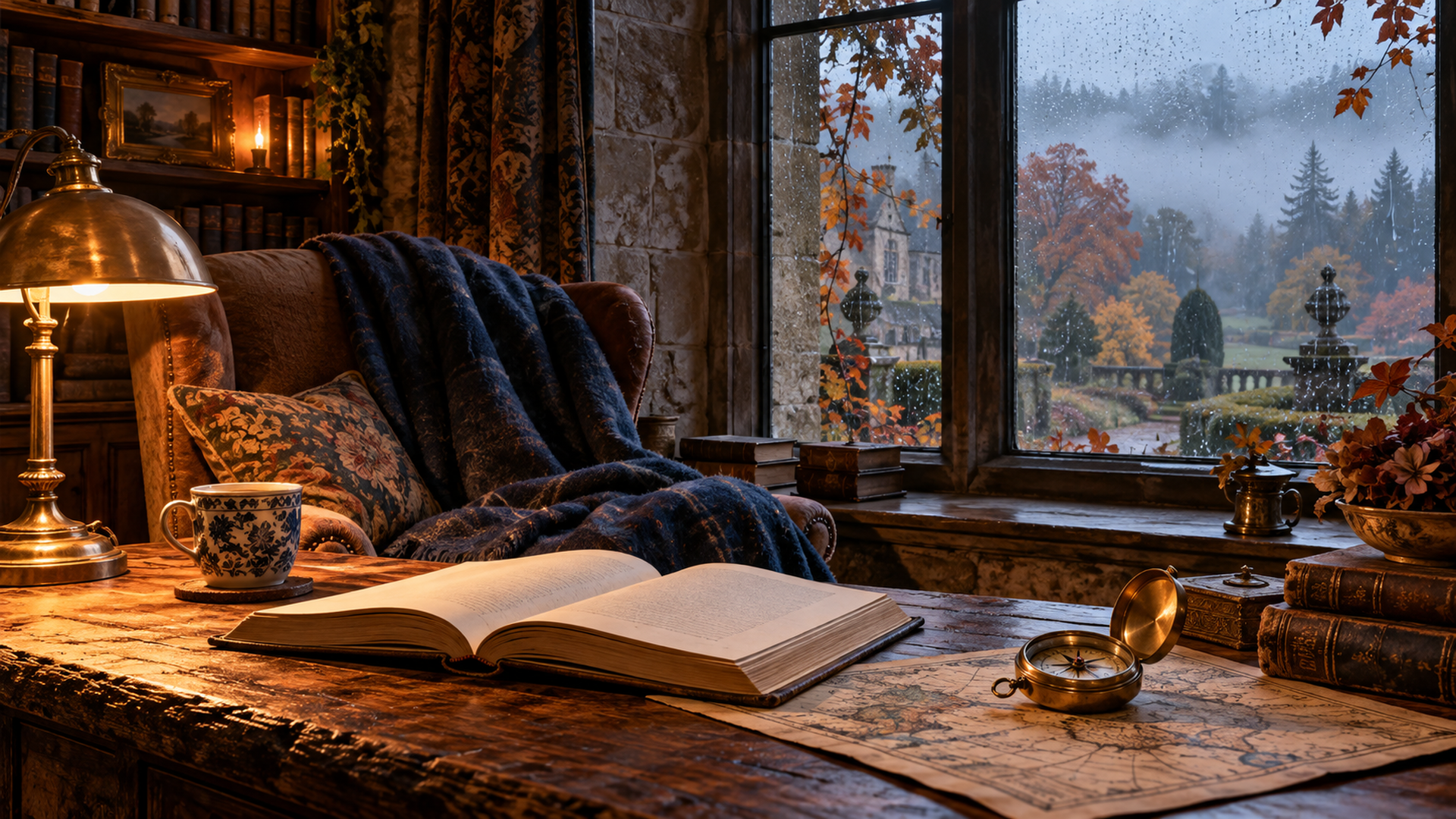
    Nora enters Greystone Manor after an unexpected inheritance. Rain, old paper, and a large library create a setting full of questions. A key may open the front door, but it does not explain what Nora has found.

    That is a strong starting point for a mystery. A new house gives Nora good reason to look closely. It gives us that same chance. We notice a doorway, a shelf, or an object since we do not yet know how it fits.

    The pleasure lies in that first act of looking. Instead of rushing toward an explanation, we can enjoy the sense that a quiet room may hold a surprise.

    Meet Nora Halewell at the beginning

    If you are new to Nora, this is the place to begin. The Vanishing at Verdant Hall is the first of her time-slip mysteries, so you can enter her reading journey from its starting point.

    There is no need to learn every later title before opening the book. Begin with Nora in the manor and let the story introduce its own questions. Her discovery draws the past closer than a history lesson ever could.

    A series opening can be especially inviting for that reason. It gives you room to meet a character before you know where the wider journey will lead.

    Why time-slip mystery books make the past feel close

    In a historical mystery, readers often watch events within an earlier setting. Time-slip stories add the experience of crossing into that setting. The past becomes a place to find your way through. It is no longer just a scene to view from afar.

    That change can make familiar details feel strange again. A room, a custom, or a new rule may ask for a second look. Meanwhile, the mystery gives those observations a purpose.

    These are broad reasons to enjoy the genre. They do not give away the book’s twists. They explain why a journey beyond the present can make a quiet setting feel charged with promise.

    Keep your first reading free of spoilers

    Before you begin, choose the question that interests you most. Perhaps it is the old house, the library, or the chance to meet a new mystery heroine. Then give the story space to answer in its own way.

    Afterward, think about which moments made the setting feel real. Did a small detail make you pause? Was there a view you had to change? Such questions can help a book stay with you. The final answer is only one part of the fun.

    Begin at Verdant Hall

    For readers exploring time-slip mystery books, The Vanishing at Verdant Hall lets you meet Nora Halewell and join her trip beyond the present. Bring your curiosity and let the first discovery lead you onward.

    Discover The Vanishing at Verdant Hall by Mandy Ludick on Amazon.

  • Cozy Mystery Books: Manor or Island?

    Cozy Mystery Books: Manor or Island?

    Cozy mystery books invite us to choose more than a puzzle. We also choose an atmosphere. Perhaps a quiet village appeals to you today. Alternatively, an island and its maps might be the setting you want to explore.

    Cozy mystery books: Begin with a village warning

    The Violet Cross Affair introduces Arabella Grey in Wethersby. An anonymous letter reaches her, sealed with a violet cross. Its warning points to the tenth hour at Thornwood Manor. Those opening details create questions without revealing the answers.

    If you enjoy following an observant investigator, this is a useful place to begin. Arabella loves puzzles and notices what others overlook. Read the opening slowly and consider which detail first catches your attention.

    Cozy mystery books: Follow maps and hidden boundaries

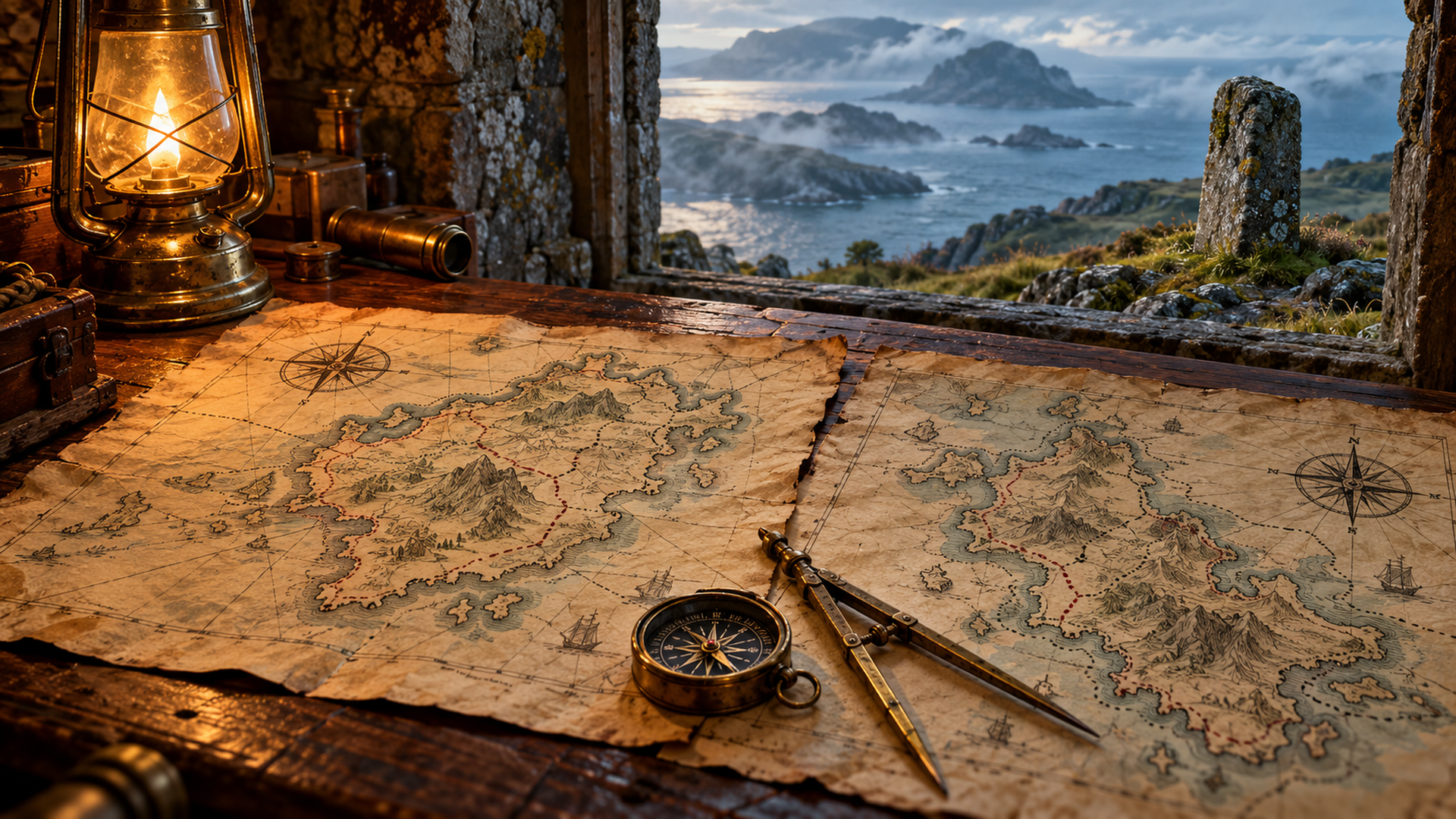
    The Cartographer of Stormglass Island offers another reading mood. This Nora Halewell mystery brings maps, hidden boundaries, a locked chart room and the island’s past into focus. These are invitations to curiosity, rather than answers to the mystery.

    Maps are especially appealing objects in fiction. We expect them to help us understand a place. However, their edges and boundaries can also encourage questions. A reader can enjoy that uncertainty without knowing where the story will lead.

    Choose by your reading mood

    When browsing cozy mystery books, consider what you want from your next reading session. Would you rather begin with a letter in a village or follow the questions surrounding an island map? Both starting points offer room to notice, wonder and reconsider.

    Try reading an opening before deciding. Pay attention to the setting, the investigator and the first unanswered question. You do not need a spoiler-filled summary to discover whether a story suits you.

    Your next mystery awaits

    Choose The Violet Cross Affair for Arabella Grey’s encounter with an anonymous warning. Turn to The Cartographer of Stormglass Island for Nora Halewell, maps and hidden boundaries. Look for the full titles by Mandy Ludick on Amazon, and enjoy discovering the answers for yourself.

  • Maps and Hidden Boundaries: When Lines Become Clues

    Maps and Hidden Boundaries: When Lines Become Clues

    A map promises to make a place easier to understand. Coastlines have edges, paths have direction, and a neat line seems to tell us where one piece of land ends and another begins.

    Yet maps and hidden boundaries can turn that promise into a compelling mystery. Who drew the line? What did they choose to show? Perhaps the land itself tells a different story.

    For readers of historical mysteries, those questions offer a quiet invitation to investigate. A chart can be beautiful, useful, and still deserve a second look.

    Why maps and hidden boundaries draw us in

    There is pleasure in tracing a route with your finger. Even before a character leaves the room, the reader can imagine a journey.

    An island map makes that experience especially vivid. A narrow inlet suggests a landing place, while a path across a headland hints at somewhere worth exploring. The page becomes a doorway into the landscape.

    However, a map is also a record of choices. Someone decided which features mattered and how to represent them. In a mystery, the reasons behind those decisions can be as interesting as the route itself.

    That gives readers two puzzles to enjoy. We want to understand the place, but we also want to understand the person who put it on paper.

    A boundary line can carry a human story

    A coastline describes the meeting of land and sea. Boundaries ask a different question: where does one claim end and another begin?

    On paper, the answer may look simple. Across a real landscape, it can be harder to see.

    Fiction can use that difference to create tension. A line might cross a familiar path or divide a place that people think of as a whole. Once characters begin to ask why it runs there, the setting gains another layer.

    The interest is not only in the shape of the line. We also wonder what it means to the people around it.

    Perhaps one character sees order and certainty. Another may see a reason to question the accepted account of the land. Their different views give the puzzle emotional weight without making the answer obvious.

    Look beyond the chart table

    Maps become especially satisfying clues when the investigation moves between paper and place. A character studies the chart, walks the ground, and then returns with a new question.

    Even a marker on a hill can make an abstract line feel solid. Weathered stone, uneven earth, and the distance between two landmarks give the reader something concrete to picture.

    Meanwhile, the journey tests an assumption. Does the route lead where the character expected? Which feature looks clear on the map but feels uncertain in the landscape?

    These are broad possibilities a mystery can explore. Their power comes from allowing observation to change an earlier idea.

    As readers, we share that movement. The map helps us form a theory, while the ground gives us a reason to examine it again.

    An island makes direction matter

    Island settings give maps an immediate purpose. The sea shapes the edge of the world the characters can explore, and the routes within it begin to feel important.

    A journey across open ground offers a different kind of suspense from a search inside a house. There may be room to move, yet little shelter and few easy ways to leave.

    Mist also changes how we imagine distance. A landmark that seems plain in clear light can become a faint shape beyond the path. Consequently, a chart may offer reassurance at the very moment a character needs to question it.

    That tension is part of the appeal. Readers want the map to help, but we also want the investigator to notice where confidence has become assumption.

    The landscape remains more than scenery. It takes part in the work of discovery.

    Small differences reward close attention

    A map clue does not have to be dramatic to matter. Sometimes a change in the way a line meets a landmark is enough to make someone pause.

    What matters is the connection the story builds around it. An isolated mark may mean little until another detail gives it context. Then the same shape can become worth following.

    This creates the pleasure of a mystery that rewards a careful reader. We are invited to notice, compare, and test rather than accept the first explanation.

    Importantly, a difference need not prove deceit. The investigator still has to ask what accounts for it and which explanation fits the evidence.

    That restraint makes the eventual answer more satisfying. A discovery feels earned when it grows from patient attention to the world on the page.

    Follow the lines into Stormglass Island

    The Cartographer of Stormglass Island brings Nora Halewell into a mystery shaped by old maps, hidden boundaries, and the island’s past. Its locked chart room and boundary stone make the relationship between a drawn landscape and a lived one especially inviting.

    For readers who enjoy maps and hidden boundaries, the appeal lies in that chance to look closer. Each line offers direction, while each landmark may give the journey new meaning.

    Discover The Cartographer of Stormglass Island by Mandy Ludick on Amazon, and follow Nora into a historical mystery where the land has a story of its own.

    Would you begin with the chart, or walk out to find the boundary stone?

  • Building an Atmospheric October Reading List

    Building an Atmospheric October Reading List

    A warm pool of lamplight. Rain against a window. A book that makes you glance twice at an ordinary door.

    An atmospheric October reading list begins with a feeling. Perhaps you want the hush of an old house, or the sound of waves beneath a lonely cliff. Either way, the right mystery can turn a quiet evening into a journey full of questions.

    You do not need cold weather to enjoy that mood. October brings spring to South Africa, while readers elsewhere may be watching leaves fall. The pleasure lies in the world on the page, not the forecast outside your own window.

    So how do you choose a reading list that offers both comfort and suspense? Start with the kind of secret you most want to uncover.

    Start your atmospheric October reading list with a setting

    A strong setting does more than provide a backdrop. It shapes what characters can see, where they can go, and whom they must trust.

    Think about the spaces that draw you in. A grand house offers rooms full of shared history. An island can make distance feel like part of the puzzle.

    Even familiar places become intriguing when their usual order changes. Someone is absent from a meal, a door stays closed, or a household routine no longer makes sense. Readers begin to notice those small gaps because the setting has taught them what to expect.

    For your list, choose books with places you want to explore slowly. The best reading mood often begins with the wish to stay for one more chapter.

    Choose a manor mystery for secrets close to home

    Old houses bring people together, but they do not make everyone equal. Family members, guests, and staff may share the same roof while seeing very different sides of life within it.

    That contrast creates rich ground for a mystery. One person knows the public story. Another notices the habits which never appear in polite conversation.

    “The Maid of Hawthorne House” belongs on the list for readers drawn to a grand-house setting. Its staircase and household world offer a different reading mood from an open landscape, where a clue might lie miles away.

    Meanwhile, “The Governess of Briarwood Hall” offers another doorway into historical mystery. A governess occupies an interesting place in a household: close enough to observe private life, yet not always free to speak.

    These are useful choices when you enjoy watching people as closely as you study clues. A room may seem calm, although the people inside it have reason to be careful.

    Add an island mystery for a change of pace

    After the close quarters of a manor, an island can make the world feel wider and more confined at once. There is space to walk, yet leaving may not be simple.

    Sea mist can soften a familiar landmark. Tides change the shape of the shore, while distance makes each journey a choice worth considering.

    “The Cartographer of Stormglass Island” brings Nora Halewell into a mystery shaped by maps, an island landscape, and hidden knowledge. It is a fitting choice if your ideal reading evening includes a chart to study and a coastline to imagine.

    Unlike a straightforward path, a map asks to be read. Its lines may look clear, but their meaning still depends on the person following them.

    That makes an island mystery a good partner for a household story. Both reward attention, although they guide it towards different kinds of detail.

    Look for clues that invite a second glance

    A memorable mystery often gives you something small to carry in your mind. Perhaps it is a recurring mark, an unusual phrase, or a detail that seems too neat.

    At first, you may barely notice it. Later, its return can change the way you read an earlier scene.

    This is part of the pleasure of a careful-reading mystery. The story invites you to form a view, then gives you a reason to test it.

    On your reading list, make room for books that leave space for that process. You do not have to solve the puzzle first to enjoy seeing how its pieces connect.

    Sometimes the most satisfying moment is the quiet realisation that a clue was there all along.

    Balance your list instead of making it longer

    A good reading list does not need to become a stack of obligations. Three well-chosen books can offer plenty of variety.

    Begin with the mood you want most. If household secrets appeal to you, open a manor mystery first. When you want a shift in scenery, move towards the island and its maps.

    Between books, notice what stayed with you. Was it a character’s restraint, a setting you could almost hear, or the way an overlooked detail gained meaning?

    Your answer can guide the next choice. Rather than choosing only by plot, you start to recognise the reading experiences that suit you.

    There is no need to hurry, either. A mystery that rewards close attention is a good reason to slow down.

    Settle into your next mystery

    For an atmospheric October reading list, consider “The Maid of Hawthorne House“, “The Governess of Briarwood Hall“, and “The Cartographer of Stormglass Island” by Mandy Ludick.

    Together, these choices offer grand houses, watchful observers, and the pull of an island puzzle. Each gives you a different place to begin asking questions.

    Choose the mood that calls to you, find a comfortable seat, and explore the books on Amazon.

    Would you start with a manor staircase, a governess’s view of a household, or an island chart room?

  • The Appeal of a Locked Chart Room Mystery

    The Appeal of a Locked Chart Room Mystery

    A locked door is an invitation to wonder. Place that door inside an old island manor, with sea mist pressing against the windows, and the questions begin to multiply. Who holds the key? What lies beyond it? Why does someone want the room to remain closed?

    A locked chart room mystery adds another layer to that intrigue. Within its walls, maps promise to explain the world outside. Yet those same maps may hide a route, conceal a boundary, or preserve a truth that someone has tried to erase.

    For readers who enjoy historical mysteries, this setting offers a rich blend of atmosphere and discovery. Every drawer might hold a clue, while each faded line could lead somewhere unexpected.

    Why a Locked Chart Room Mystery Draws Us In

    Locked rooms create an immediate sense of exclusion. Someone has decided who may enter and who must remain outside. As a result, even an ordinary room begins to feel important.

    A chart room makes that feeling stronger because its contents serve a clear purpose. Charts guide journeys, record coastlines, and mark hazards. We expect them to be useful and precise.

    But what happens when two maps disagree?

    Perhaps an older chart shows a path that has vanished from later versions. Another might give a familiar place a different name. A small change can raise a large question: was it a mistake, or did someone alter the record on purpose?

    The appeal lies in that uncertainty. Readers want the door opened, but they also want to understand what they find beyond it.

    Maps Turn Readers into Detectives

    There is something satisfying about a clue that we can picture. A missing letter in a diary may intrigue us, yet a narrow line winding towards an unmarked cove invites us to follow it.

    Maps make discovery feel active. Instead of simply hearing that a secret exists, readers can imagine tracing its shape.

    An ink mark might seem harmless at first. Later, a remark from a local resident could give it meaning. When those details come together, the reader shares in the pleasure of the discovery.

    Moreover, a map can be accurate without telling the whole truth. It may record the land while leaving out the people who lived there. Boundaries can appear tidy on paper even when their history is full of conflict.

    This gives a chart room mystery depth. The puzzle concerns both the landscape and the choices made by those who recorded it.

    An Isolated Setting Raises the Stakes

    A chart room feels especially compelling on an island. Beyond the house, tides shift, mist gathers, and the sea controls when people can arrive or leave.

    Isolation brings characters closer together. They share meals, cross paths in corridors, and notice one another’s habits. However, familiarity does not always lead to trust.

    The landscape also gives the charts real importance. A hidden route may offer a way forward, while a mistaken reading could send someone towards danger. Knowledge becomes useful in an immediate, practical way.

    Meanwhile, the room offers an apparent refuge from the weather. Its shelves and tables suggest order. That sense of control becomes uneasy when the maps themselves can no longer be trusted.

    Readers are drawn into the tension between a wild landscape and the careful lines meant to explain it.

    The Past Leaves Its Mark on the Paper

    Historical mysteries often begin with something unfinished. An old dispute, a broken promise, or a silence within a family can reach into the present.

    Charts are well suited to carrying those traces.

    A place name may preserve a memory long after people have stopped speaking about it. An altered boundary could point towards an old claim. Even a blank space might matter if earlier records show that something once stood there.

    Consequently, the investigation becomes more than a search for a hidden object. It can uncover how a version of history came to be accepted.

    That possibility gives each discovery emotional weight. Someone may have benefited from the record, while another person lost their home, reputation, or place in the story.

    As readers, we want to know what happened. We also care about what the truth will mean for those who uncover it.

    A Locked Door Does Not Always Mean an Impossible Crime

    Part of the charm of this setting is its range. A locked chart room mystery can include an impossible crime, but it can also centre on forbidden access or concealed evidence.

    The distinction changes the questions we ask.

    If something happens inside a room that no one could enter, we search for a flaw in the apparent facts. When a room has been deliberately kept closed, we begin to examine motives. Who controls access, and what might they fear?

    Both approaches create suspense. In one, the lock seems to defy reason. In the other, it reveals the power one person holds over everyone else.

    Either way, opening the door should deepen the mystery. The most intriguing discoveries give us something concrete to examine while making us rethink what we believed.

    The Pleasure of Slow Discovery

    A chart room invites a quieter kind of suspense. Papers must be unfolded with care. Names need to be compared, and details checked against the land.

    Yet quiet does not mean dull.

    A character may hear footsteps while studying a document they should never have seen. Someone could return a key moments before its owner notices it is missing. Meanwhile, a harmless question at dinner might reveal that another guest knows far more than they admit.

    These moments make attention feel urgent. Readers begin to watch for pauses, evasions, and small changes in behaviour.

    The strongest discoveries also reward what came before. A clue introduced early gains new meaning, and an overlooked detail finally falls into place. That connection makes the solution feel earned.

    Step into the Mystery of Stormglass Island

    These are some of the pleasures readers can explore in The Cartographer of Stormglass Island. Nora Halewell’s story brings together an island setting, a locked chart room, and the uneasy relationship between maps and the past.

    For those who enjoy historical mysteries shaped by hidden knowledge, the appeal is easy to understand. A chart offers the promise of direction, but someone must first decide whether to trust it.

    Beyond the locked door, the next discovery may change the meaning of everything outside.

    Discover The Cartographer of Stormglass Island by Mandy Ludick on Amazon, and follow Nora into a mystery where the landscape has its own story to tell.

  • Maps in Historical Mysteries: When a Map Becomes an Unreliable Witness

    Maps in Historical Mysteries: When a Map Becomes an Unreliable Witness

    A map promises to show us the way, so we often trust it before we question it. Roads lead to towns, lines mark borders, and names tell us where we stand. Yet maps in historical mysteries can offer something far more troubling, because the person who drew those lines may have chosen what we should see.

    In The Cartographer of Stormglass Island, Nora Halewell enters a mystery where charts, symbols, and old names demand a closer look. The island holds secrets, but a map does not simply point her towards the answers. Instead, it gives her reasons to ask who recorded the land, whose account they followed, and what they left out.

    That uneasy trust makes a map a compelling clue. Unlike a spoken account, it appears fixed and certain, although someone made every choice on the page. Once we remember the hand behind the drawing, even a neat line can raise a question.

    Why we trust a map at first glance

    Most of us reach for a map because we need help, and that need encourages us to believe it. A clear route offers comfort when the ground feels strange or the weather turns. Names and symbols also give the page a sense of order, which can make its claims seem stronger than they are.

    For a mystery reader, that trust creates an intriguing problem. We may study a marked path while ignoring the empty space beside it, or follow a familiar name without asking when people began to use it. Meanwhile, the detective must compare the drawing with the world beyond the page.

    Nora faces that challenge on Stormglass Island, where a chart can guide a search without explaining the whole story. Her task calls for more than finding the right spot. She must consider why one version of the island deserves belief, especially when other clues suggest a different view.

    What an empty space can tell us

    An omission can be easy to miss because there is nothing on the page to catch our eye. We tend to look for bold marks, strange symbols, or notes in the margin. However, a missing feature may matter just as much as a feature someone drew with great care.

    Imagine a path that local people know well but a map fails to show. Perhaps the route fell out of use, or the maker never walked that part of the land. Another possibility might emerge if someone benefits from keeping the path unknown, although a careful investigator must test that idea before accepting it.

    This is one reason maps in historical mysteries reward patient reading. An empty patch does not prove deceit, yet it can prompt the right question. By looking at what should be there, readers begin to see how absence can become evidence.

    Old names can change the direction of a search

    Place names carry stories, although those stories do not always survive on the latest map. A new owner may rename a house, while a formal survey may use a name that differs from local speech. Over time, people can forget that two names once described the same place.

    In The Cartographer of Stormglass Island, the words “Not north. By the old names.” suggest a different way to read the landscape. Direction alone may not solve the problem if Nora uses the wrong terms. Before she can follow the clue, she must consider how people understood the island in another time.

    That link between language and place gives a historical mystery depth. Readers explore a landscape through its past as well as its roads and shorelines. Each old name offers a chance to ask who lived there, what they valued, and which memories others chose to keep.

    A map reflects the person who made it

    Every map serves a purpose, and that purpose affects what its maker includes. A sailor needs details that a landowner may barely notice, while a boundary survey answers different questions from a traveller’s guide. None of those pages can show everything, even when their makers work with care.

    The mystery begins when a map’s purpose conflicts with the truth someone needs to find. A drawing may support a claim, protect an interest, or repeat an earlier error. Therefore, the detective must study its source as closely as its marks.

    For Nora, maps belong to a wider trail of clues, and she cannot judge them in isolation. Symbols, records, and the land itself help her weigh what the charts reveal. As those pieces come together, the reader gains the pleasure of seeing a familiar page take on a new meaning.

    Follow Nora to Stormglass Island

    Maps in historical mysteries invite us to read with curiosity rather than certainty. The route that looks clear may need checking, while the blank space may deserve our full attention. Sometimes the best clue appears only when we stop asking where a map leads and start asking why someone drew it that way.

    If you enjoy island secrets, old records, and mysteries that ask you to look twice, step into The Cartographer of Stormglass Island by Mandy Ludick. Join Nora Halewell as she follows a trail through the island’s past, where the lines on a chart may tell only part of the story.

    When you next look at an old map, which will draw your eye first: the places it names, or the spaces it leaves behind?

  • Bravery in Historical Mystery Heroines: Why Courage Does Not Mean Being Fearless

    Bravery in Historical Mystery Heroines: Why Courage Does Not Mean Being Fearless

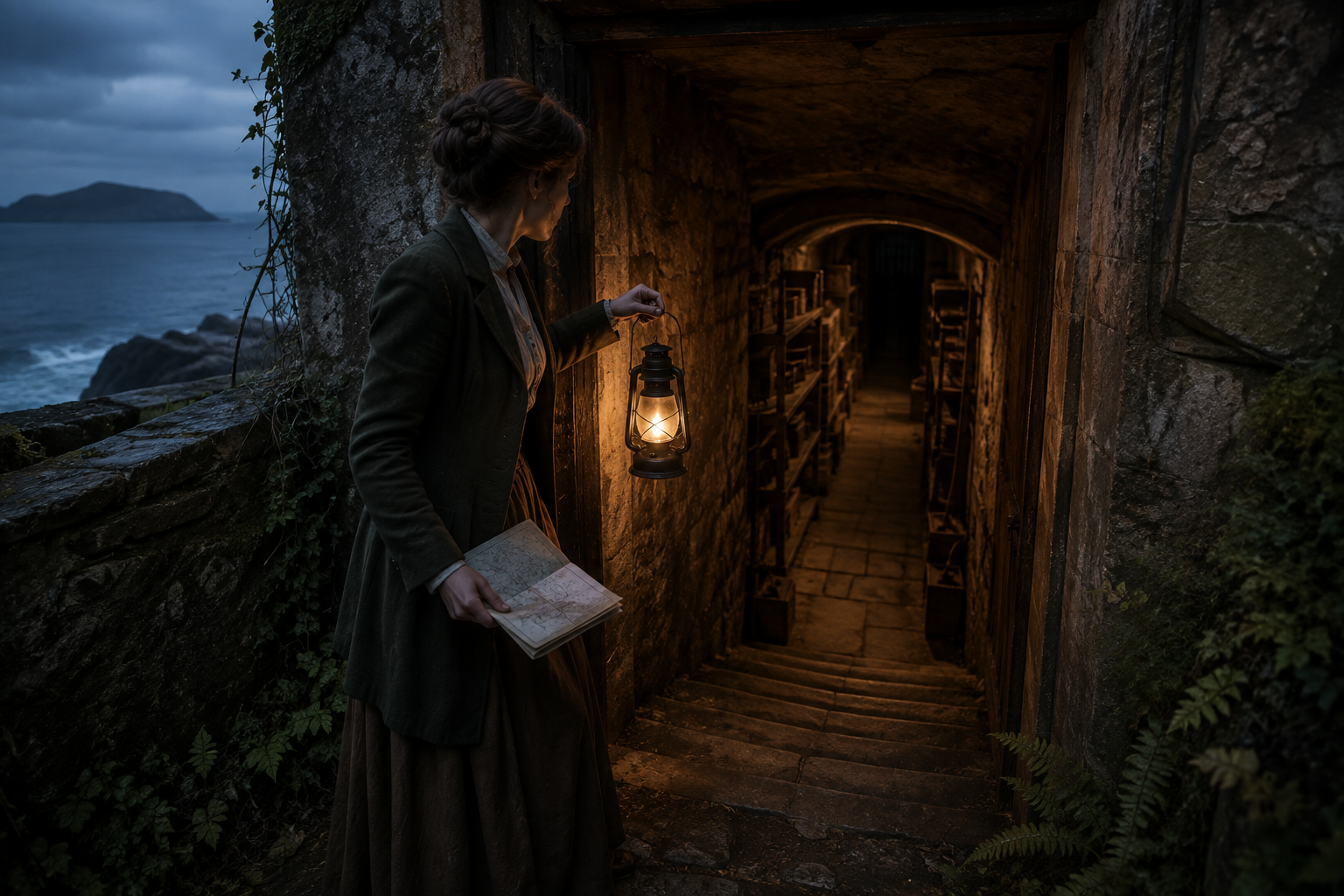
    A heroine stands at the entrance to a dark passage beneath an old house. She has a lantern in one hand and a map in the other. Everything she has discovered tells her that answers may lie ahead, but those same clues warn her that continuing could be dangerous.

    She is afraid.

    And she goes anyway.

    That moment captures something I find compelling about bravery in historical mystery heroines. Courage becomes far more interesting when a character feels fear rather than simply charging into danger without considering the consequences.

    A brave heroine does not need to be fearless. In fact, fear can make her courage more believable because she understands what might happen and still decides that discovering the truth matters enough to continue.

    Bravery Is Not the Absence of Fear

    We sometimes describe courageous characters as though fear never touches them.

    They walk into dark rooms without hesitation, confront dangerous suspects alone, and follow mysterious noises in the middle of the night. Nothing appears to unsettle them for long.

    Yet real courage works differently.

    Fear warns us that something matters. It tells us that we could lose something, suffer harm, or make a terrible mistake. Therefore, a character who recognises danger and continues despite it can feel much braver than one who never seems frightened at all.

    That distinction matters when writing bravery in historical mystery heroines because historical women often face risks beyond the mystery itself. Their choices may threaten their reputations, security, employment, or relationships as well as their physical safety.

    Continuing can require several different kinds of courage.

    Historical Heroines Face More Than Physical Danger

    A mystery heroine does not need to be running from a murderer to show bravery.

    Sometimes she simply needs to ask the question everyone wants her to leave unanswered.

    Historical settings make that especially powerful because social expectations can become obstacles of their own. A woman who challenges an influential man may face consequences even when she is correct. Someone who questions a respected family could find herself accused of gossip, disloyalty, or improper behaviour.

    Money and position can also affect how freely she acts.

    A wealthy woman may possess independence that a governess or servant does not. Meanwhile, a woman dependent upon an employer might recognise a lie but know that exposing it could cost her home and livelihood.

    As a result, courage can appear in quieter forms.

    Speaking becomes brave.

    Refusing to accept an obvious injustice becomes brave.

    Choosing to believe an overlooked witness can become brave too.

    Nora Halewell Does Not Go Looking for Danger

    Nora Halewell is a good example of the kind of courage I enjoy exploring.

    She does not seek danger because she enjoys it. Nor does she enter a mystery assuming that nothing bad can happen to her.

    Quite the opposite.

    Nora understands that some doors should make her nervous.

    She works with old books, records, maps, and archives, so her investigations often begin somewhere apparently safe. A strange detail in a document leads to another question, while an inconsistency in a map suggests that something has been forgotten or deliberately concealed.

    At first, the danger may seem distant.

    Then the past begins to reach into the present.

    By the time Nora realises how serious the situation has become, walking away is no longer simple. Someone has been forgotten, a truth has been buried, or an injustice remains hidden because people accepted the official version of events.

    Nora may wish she had never found the first clue.

    However, she cannot pretend she did not see it.

    Curiosity Can Become Responsibility

    This is where Nora’s curiosity changes.

    At the beginning of a mystery, she wants to understand something that does not make sense. Later, she often discovers that the unanswered question concerns real people whose stories have been altered, forgotten, or deliberately erased.

    Curiosity then becomes responsibility.

    That change is important because it gives Nora a reason to continue even when she feels frightened.

    She is no longer searching merely because she wants an answer. Someone may need that answer.

    Perhaps a name disappeared from a record. Maybe a map deliberately removed a settlement, or a document tells a version of history that contradicts what people remember.

    Once Nora understands what has been lost, turning away becomes difficult.

    Fear remains, but something else has become stronger.

    The Dark Passage Is More Frightening When You Understand the Risk

    Imagine Nora standing before a hidden passage.

    The sensible choice may seem obvious.

    Do not enter.

    The passage is dark, the structure is old, and Nora has no guarantee that it leads anywhere safe. Worse still, she may already suspect that someone does not want her investigating it.

    A fearless heroine might simply lift her lantern and march inside.

    Nora would probably hesitate.

    She might listen first. Perhaps she checks the map again, considers whether anyone knows where she is, and wonders whether she has made a terrible mistake.

    Then she enters.

    That hesitation does not weaken the scene. Instead, it strengthens it because the reader understands that Nora knows she has reason to be afraid.

    Her courage lies in the decision that follows.

    Courage Can Mean Admitting You Need Help

    Another interesting aspect of bravery in historical mystery heroines is the willingness to accept help.

    Fiction sometimes treats independence as though it requires doing everything alone. A heroine proves her strength by refusing assistance, keeping dangerous discoveries secret, and confronting threats without telling anyone where she is going.

    That approach can certainly create suspense, but it is not the only way to show courage.

    Asking for help can require humility.

    Trusting another person with important information can feel risky, especially if the heroine has previously been betrayed or dismissed. Likewise, admitting that a situation has become too dangerous to handle alone requires her to recognise her limits.

    Nora gradually learns that uncovering the past does not mean she must carry every burden herself.

    Other people may possess knowledge she lacks.

    Listening to them can move the investigation forward.

    Nora’s Strength Is Also Her Vulnerability

    Every useful character strength can create problems when pushed too far.

    Nora‘s determination helps her uncover truths that other people overlook, but that same determination can lead her deeper into danger. Her curiosity makes her a strong investigator, yet it can also make unanswered questions almost impossible for her to ignore.

    Once something does not fit, she wants to know why.

    That quality becomes particularly dangerous when someone else desperately wants the answer to remain hidden.

    However, removing Nora’s fear would remove much of the tension from those moments. If she never worried about the consequences, her determination would simply become recklessness.

    Instead, she must repeatedly decide whether the truth justifies another step.

    Sometimes it does.

    At other times, she needs to change her approach.

    That tension allows courage to become part of her character development rather than merely a convenient personality trait.

    Arabella Grey Shows Courage Differently

    Arabella Grey’s courage often emerges through confrontation.

    She watches people closely, and once she recognises that something is wrong, she can be remarkably difficult to silence. Social status does not automatically impress her, while respectability does not convince her that someone must be innocent.

    Yet Arabella also faces consequences for challenging people.

    A direct accusation can close doors. Asking the wrong question may alert a suspect, while pushing too hard can place another person at risk.

    Therefore, Arabella must learn when to confront and when to wait.

    Her courage lies not only in speaking but also in knowing when the truth needs patience.

    Clara Everhart Faces the Fear of Not Understanding

    Clara’s mysteries bring a different kind of uncertainty.

    Sometimes the evidence challenges her understanding of what should be possible. A memory, object, or connection may refuse to fit into the explanation she wants to accept.

    That creates its own fear.

    Physical danger is frightening, but so is realising that your understanding of reality may be incomplete.

    Clara must continue asking questions even when the answers unsettle her. Instead of running from what she cannot explain, she learns to examine it carefully.

    Her courage therefore grows through uncertainty.

    She does not always know where the next clue will lead, yet she keeps searching.

    Different Heroines Need Different Kinds of Courage

    This is why I enjoy exploring bravery in historical mystery heroines across different series.

    Arabella may need the courage to confront someone powerful.

    Clara may need the courage to accept something she cannot yet explain.

    Nora may need the courage to follow a forgotten trail into an uncertain place.

    Their fears differ because their personalities and mysteries differ.

    However, the principle remains the same.

    Courage becomes meaningful when something is at stake.

    Fear Can Help a Heroine Make Better Decisions

    Fear is not always an enemy.

    Sometimes it tells a heroine to look more carefully.

    A nervous feeling may make Nora check an old map again before entering a passage. Arabella might recognise that a suspect’s sudden friendliness should make her cautious, while Clara may hesitate before trusting a connection that appears too convenient.

    Those moments allow fear to become information rather than weakness.

    A strong heroine can listen to that warning without allowing it to control her.

    She prepares.

    She thinks.

    Then she decides.

    That process often creates a more believable investigator because bravery and good judgement can exist together.

    The Quietest Courage Can Matter Most

    Not every courageous moment needs a dramatic confrontation.

    Some of the strongest scenes occur when nobody else recognises what the heroine has risked.

    A woman quietly tells the truth after years of silence.

    Someone hands over a document that could threaten her family’s reputation.

    A servant contradicts her employer because an innocent person may otherwise suffer.

    Nora enters a forgotten place because a person erased from history deserves to be remembered.

    These actions may not involve weapons, chases, or dramatic rescues, yet they can carry enormous emotional weight.

    Historical mysteries work especially well with this quieter courage because so many secrets survive through silence.

    Breaking that silence can be dangerous.

    Why Fear Makes Mystery Heroines Stronger

    Readers do not need heroines who always know what to do.

    Often, we connect more deeply with characters who doubt themselves, make mistakes, feel frightened, and still find a way forward.

    That is why bravery in historical mystery heroines should not require the removal of fear.

    Fear gives the decision weight.

    When Nora raises her lantern before entering a dark passage, the important thing is not that she suddenly stops being afraid. She may still want to turn around. Every sensible instinct may tell her that whatever lies ahead could change everything.

    Yet somewhere beyond that darkness is a truth somebody tried to hide.

    So she tightens her grip on the map.

    She lifts the lantern.

    And she takes the next step.

    Because bravery is not always walking without fear.

    Sometimes it is simply refusing to let fear decide where the story ends.

  • Three Historical Mystery Heroines, Three Ways to Solve a Locked-Room Mystery

    Three Historical Mystery Heroines, Three Ways to Solve a Locked-Room Mystery

    A door is locked from the inside. The windows are secured, nobody admits to entering the room, and yet something impossible has happened within it. For a mystery reader, few situations are more tempting. Locked-room mysteries force investigators to look beyond the obvious. However, the clues they notice often depend on the kind of investigator they are. One heroine may question the people around her, while another searches for connections that stretch beyond the present. A third may turn to maps, records, and forgotten history.

    That difference lies at the heart of my three mystery series. Arabella Grey, Clara Everhart, and Nora Halewell are all determined to uncover the truth, but they approach a mystery in very different ways.

    So, what would happen if these three historical mystery heroines faced the same locked room?

    The Locked Room

    Imagine an old country house late in the evening. A gentleman has entered his private study and locked the door behind him. Several people hear him moving around inside, yet nobody sees him leave. An hour later, the household becomes concerned because he does not answer.

    Eventually, they force open the door.

    The room is empty.

    The windows remain fastened from within, while the key still sits in the lock. A fire burns low in the grate, and an unfinished cup of tea rests on the desk. Papers lie scattered across the floor, but there is no obvious hiding place and no second door.

    Three investigators enter the room.

    Each one sees something different.

    Arabella Grey Starts With the People

    Arabella would examine the study, but her attention would soon turn toward the people standing outside it.

    Who claims to have heard the gentleman moving around?

    Who brought the tea?

    Which family member insists that the windows were locked?

    More importantly, who seems unusually eager to explain what must have happened?

    Arabella understands that people often reveal more than they intend. A nervous glance, an unnecessary explanation, or a detail mentioned before anyone else knew about it can become as important as a fingerprint.

    Her investigation would therefore begin with conversation.

    Arabella might ask the same question in several different ways because she wants to hear whether the answer changes. She would also compare one person’s account with another, and she would pay close attention when somebody tries to direct suspicion elsewhere.

    For Arabella, the locked door is only part of the puzzle. The people surrounding it matter just as much.

    The Hidden Motive Matters to Arabella

    Among these three historical mystery heroines, Arabella is perhaps the most interested in motive.

    A seemingly impossible disappearance becomes easier to understand once she knows why someone wanted it to happen.

    Perhaps the missing gentleman planned to alter his will. Maybe he discovered that someone had been stealing from the estate, or he intended to reveal a scandal that could destroy a respectable reputation.

    Once Arabella finds the motive, people’s behaviour begins to look different.

    The nervous nephew may not simply be worried about his uncle. A servant who insists that she heard footsteps inside the study may have a reason for establishing a particular time. Even the person who broke down the door could have something to gain from everyone believing it had remained locked.

    Arabella would keep asking questions until the human story behind the impossible room began to emerge.

    Clara Everhart Looks for the Connection

    Clara would approach the same study differently.

    She has learned that the present does not always stand alone. Objects, places, and moments can carry connections that reach beyond what appears immediately visible.

    Her attention might settle on something everyone else considers ordinary.

    Perhaps an old pocket watch lies beside the teacup.

    Maybe a letter on the desk carries a date that should make no sense.

    A portrait hanging above the fireplace could show someone Clara recognises, although she has never seen the painting before.

    Where Arabella asks, “Who is lying?”, Clara is more likely to wonder, “What connects these things?”

    That question can lead her in an entirely different direction.

    Clara Notices When Time Does Not Fit

    Clocks are particularly interesting in a locked-room mystery because they appear to establish certainty.

    The mantel clock stopped at eleven minutes past nine.

    A witness heard movement at quarter past nine.

    Another person claims the missing man entered the study shortly before nine.

    Those facts appear to create a neat timeline, but Clara would not automatically trust it.

    She would examine whether the clock had actually stopped when everyone assumed it did. Then she might compare it with a pocket watch, a servant’s routine, or the time a candle had been lit.

    One small contradiction could change everything.

    Clara’s mysteries often ask what happens when the past and present refuse to remain neatly separated. As a result, she has learned to question connections that other people accept without hesitation.

    For her, time itself can become a clue.

    Nora Halewell Searches the Records

    Nora would probably begin by studying the room, yet sooner or later she would want to know something else.

    What was this room before it became a study?

    That question might seem irrelevant to everyone else.

    It would not seem irrelevant to Nora.

    She knows that buildings change. Doors are blocked up, passages disappear behind panelling, rooms receive new purposes, and later generations forget what once stood there.

    An impossible room may only be impossible if everyone is looking at the wrong version of it.

    So Nora would search the house records.

    She might request an old estate plan, compare it with a newer survey, and examine inventories from previous owners. If the dimensions of the study do not match the dimensions shown on an older plan, she has found something worth investigating.

    History has left a gap.

    Nora wants to know what disappeared into it.

    An Old Map Could Solve the Mystery

    This is where Nora’s particular strengths among my historical mystery heroines become clear.

    Suppose an estate map from fifty years earlier shows a narrow passage running behind the study fireplace.

    A later plan does not.

    Perhaps renovations supposedly sealed the passage, yet an old household account records payment for repairs rather than closure. Another document mentions a staircase that nobody in the present household remembers.

    Suddenly, the locked room is no longer quite so locked.

    Nora would still need to prove that the old route remained usable, but the historical record has given her a direction.

    She may notice scratches near a section of panelling or discover that the fireplace is shallower than it should be. What first appeared to be an impossible disappearance now becomes a forgotten piece of architecture.

    The building remembered something its inhabitants had forgotten.

    Three Historical Mystery Heroines Can See Three Different Clues

    Place Arabella, Clara, and Nora together in that study, and each woman might immediately focus on a different detail.

    Arabella notices that the butler claims the tea was untouched, although he should not have been able to see the cup before the door opened.

    Clara discovers that the mantel clock is twelve minutes slow, which changes the supposed timeline.

    Nora finds an old plan showing a concealed service passage behind the fireplace.

    None of those clues necessarily solves the case alone.

    Together, however, they transform it.

    The hidden passage explains how someone could enter or leave. Clara’s corrected timeline establishes when it happened, while Arabella’s questioning may reveal who used the passage and why.

    That is what makes different investigative styles so much fun to explore.

    Arabella Seeks the Hidden Motive

    Arabella’s greatest strength is her understanding that mysteries belong to people.

    Rooms do not lie.

    People do.

    She watches relationships and notices tensions that polite society tries to conceal. Victorian respectability can hide resentment, greed, jealousy, fear, and desperation beneath perfect manners.

    Therefore, Arabella rarely accepts the neatest explanation simply because everyone else finds it convenient.

    If a suspect seems too obvious, she asks who benefits from that assumption. When a witness volunteers information nobody requested, she wonders why. If an entire household agrees on one version of events, she considers whether they genuinely witnessed the same thing or merely repeated the same story.

    Her cases are puzzles, but they are also studies of human behaviour.

    Clara Seeks the Hidden Connection

    Clara’s strength lies in recognising patterns.

    An object may connect two moments. A familiar phrase may appear somewhere it should not, while a seemingly ordinary item can carry significance far beyond its appearance.

    She does not always know immediately what the connection means.

    That uncertainty is part of her journey.

    Clara must gather fragments and test possibilities until separate pieces begin to form a larger pattern. Her investigations can therefore feel like assembling a puzzle without knowing whether all the pieces belong to the same moment in time.

    Where Arabella digs deeper into people, Clara often looks outward for connections.

    Nora Seeks the Buried Record

    Nora approaches truth through what history has preserved and, just as importantly, what it has failed to preserve.

    Maps, estate papers, parish registers, handwritten notes, old books, household records, and forgotten place names can all become evidence.

    Yet Nora does not assume that an official record must be correct.

    Someone created every record.

    Someone decided what to include.

    Sometimes someone also decided what to leave out.

    That understanding makes Nora particularly alert to absences. A missing name can matter as much as a recorded one, while an altered boundary may reveal more than an entire page of explanation.

    For Nora, history is not simply background. It is part of the investigation.

    Why Different Investigative Styles Matter

    Mystery heroines become more memorable when their personalities shape the way they investigate.

    If every detective notices exactly the same clues and reaches conclusions in exactly the same way, changing the protagonist makes little difference. However, distinctive methods allow the same mystery to look completely different depending on who enters the room.

    That is why these three historical mystery heroines do not simply represent three different series.

    They represent three different ways of searching for truth.

    Arabella asks what people are hiding.

    Clara asks what connects the clues.

    Nora asks what history has forgotten.

    Each question can uncover something the others might initially miss.

    The Best Clue Depends on Who Finds It

    Return to our locked study one final time.

    Arabella stands near the doorway, listening while the household explains what happened. Clara examines the stopped clock and compares it with the watch on the desk. Nora runs her fingers along the edge of the fireplace before asking whether anyone still has the original plans for the house.

    All three historical mystery heroines are investigating the same mystery.

    Yet they are not really seeing the same room.

    That difference is one of the things I enjoy most about writing separate mystery series. Each heroine brings her own experience, instincts, weaknesses, and strengths to the search for truth.

    A locked door might challenge all three of them.

    Arabella would question the story surrounding it. Clara would search for the connection that does not fit. Nora would wonder whether the door was ever the only way into the room.

    And sooner or later, one of them would find what everyone else overlooked.

  • Mysterious Ships and Hidden Smuggling Routes in Island Fiction

    Mysterious Ships and Hidden Smuggling Routes in Island Fiction

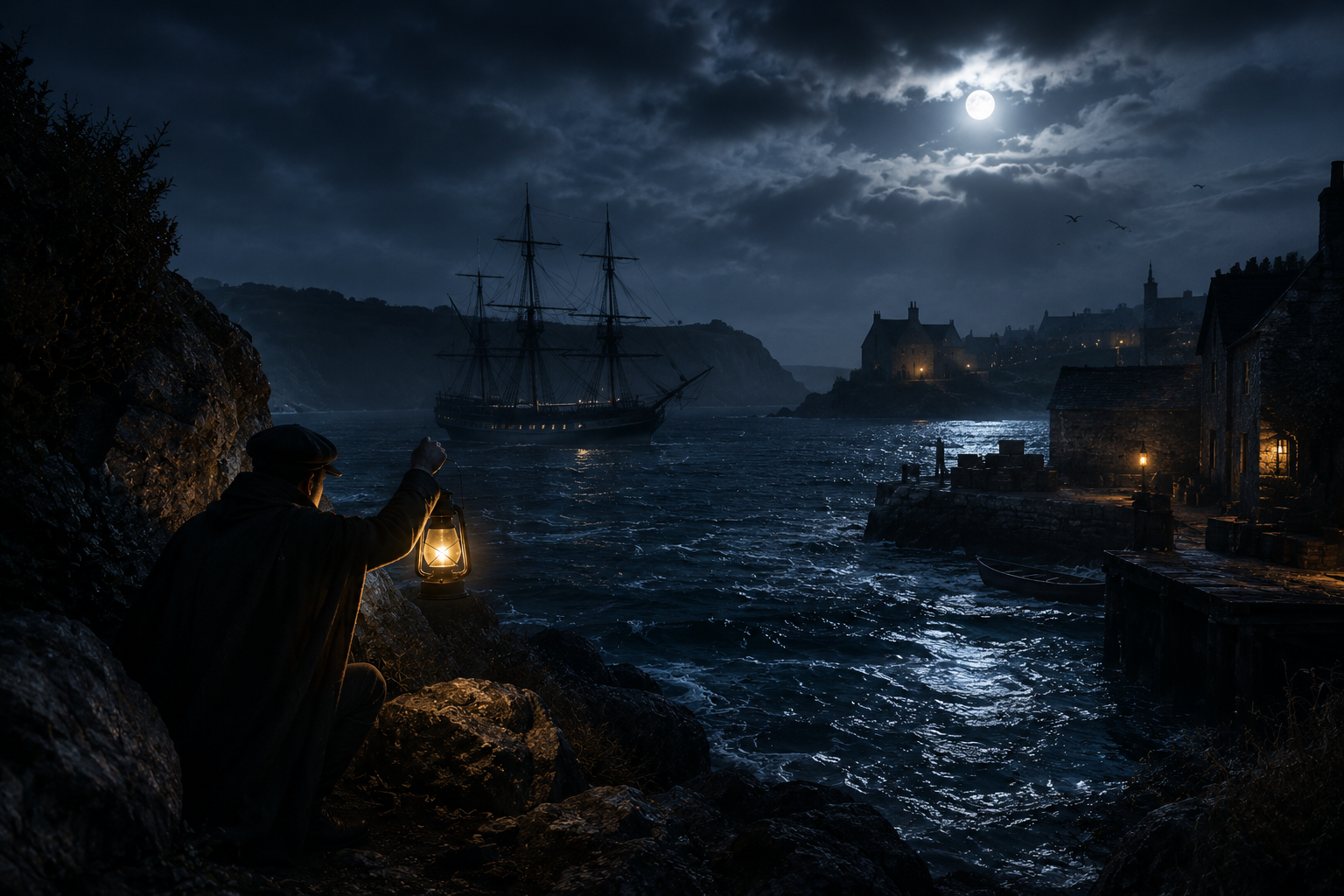
    A ship appears beyond the harbour after dark. It carries no welcoming lights, and nobody on shore admits to expecting it. Then, from a lonely point on the coast, a lantern flashes through the darkness. Few images create mystery quite as quickly. Smuggling routes in island fiction offer writers an ideal combination of secrecy, danger, and isolation. Islands already feel separated from the wider world, while hidden coves, dangerous reefs, and remote stretches of coast create natural places for secrets to flourish. Add an unidentified ship waiting offshore, and even a peaceful island can suddenly feel threatening.

    For readers of historical mysteries, these settings offer something else too. Before modern communications and surveillance, controlling the coastline could mean controlling who arrived, what they carried, and whether anyone ever discovered the truth.

    Why Islands Are Perfect for Secret Routes

    An island may appear contained on a map, but its coastline can be surprisingly difficult to control.

    Cliffs can hide narrow inlets, while caves may only become accessible at certain tides. Rocky channels can make navigation dangerous for outsiders, yet local sailors may know exactly how to pass through them. Even a small fishing harbour can have routes that visitors would struggle to recognise.

    That geography makes smuggling routes in island fiction feel believable because the landscape itself helps conceal them.

    A stranger might see an impassable reef, for example, while an islander knows about a narrow channel between the rocks. Likewise, a chart may show dangerous water where generations of local fishermen know a safe passage exists.

    The mystery becomes even more interesting when someone wants to keep that knowledge secret.

    The Ship Beyond the Harbour

    There is something deeply unsettling about a ship that refuses to enter port.

    Normally, a vessel arriving at an island has a clear purpose. It brings passengers, supplies, mail, or trade, and its arrival becomes part of everyday life. However, a ship that remains beyond the harbour raises immediate questions.

    Who is aboard? Why have they come? What are they waiting for?

    Perhaps the captain does not want harbour officials inspecting the cargo. Alternatively, someone on the island may need to signal when the coast is clear. A ship could even be waiting for a person rather than goods, which turns a possible smuggling operation into something far more personal.

    Historical mystery fiction thrives on questions like these because the reader sees something suspicious without yet knowing what it means.

    A Lantern Can Become a Language

    Before radios and mobile phones, people needed other ways to communicate across distances.

    Lantern signals work beautifully in historical fiction because they are simple enough to be believable but mysterious enough to create tension. One light from a cliff might appear innocent, yet three carefully timed flashes could carry a very different meaning.

    Someone watching from a house may think a fisherman is returning home. Another person, however, recognises the pattern.

    That possibility turns an ordinary object into evidence.

    Lanterns can tell a ship when to approach, warn smugglers that someone is watching, or identify the correct landing place. They can also create false information. A deliberately altered signal could send a vessel toward the wrong cove or convince its crew that danger has passed.

    For a detective, the important clue may not be the lantern itself. It may be the pattern in which someone uses it.

    Hidden Coves Make Natural Mystery Settings

    A secret landing place needs to be difficult to find but possible to reach.

    That makes hidden coves especially useful when creating smuggling routes in island fiction. High cliffs can conceal activity from the main settlement, while a narrow beach may disappear completely when the tide rises.

    Access from the land can be equally important.

    Perhaps an old path winds down the cliff but no longer appears on modern maps. A forgotten tunnel might connect the shore to an estate, or an abandoned watch station could overlook a channel that supposedly has no practical use.

    Each possibility creates another question for the investigator.

    Why was the path removed from the map? Who still knows about the tunnel? Why does someone maintain a watch station that everyone claims has been abandoned?

    Once the landscape begins contradicting the official story, the mystery deepens.

    Maps Can Hide Routes as Easily as They Reveal Them

    We often think of maps as reliable guides, but maps only show what their makers chose to record.

    That creates fascinating possibilities in historical mysteries.

    A harbour chart might mark a reef as dangerous even though a safe channel passes through it. Another map could omit a settlement, freshwater spring, cave, or landing place. Someone comparing several charts might even discover that a coastline has subtly changed from one version to another.

    Such differences do not always mean fraud, of course. Maps can contain mistakes, while coastlines and place names change over time. Yet deliberate alterations can become powerful clues.

    If someone removes a route from a map, the next question is obvious.

    Who benefits when nobody else knows it exists?

    Local Knowledge Can Be More Valuable Than a Chart

    Official records do not contain every kind of knowledge.

    A fisherman may know how waves behave around a particular reef because his family has sailed there for generations. Someone who gathers shellfish might know which caves remain accessible at low tide, while an island shepherd could recognise paths that disappeared from estate maps decades earlier.

    This contrast between written records and lived knowledge creates excellent tension.

    An outsider may arrive carrying an impressive chart and assume it contains everything necessary for safe navigation. Meanwhile, a local resident looks at the same chart and immediately sees what is missing.

    That difference can become crucial when exploring smuggling routes in island fiction. The secret route may never have been properly recorded because everyone who needed it already knew where it was.

    Then someone arrives who wants that knowledge for very different reasons.

    Smuggling Does Not Always Mean Treasure

    Mention smugglers, and it is easy to imagine barrels, contraband, and hidden treasure.

    Those elements certainly work in historical fiction, but smuggling can involve far more than valuable goods. People may secretly transport documents, maps, scientific discoveries, weapons, messages, or even other people.

    The cargo can also reveal the motive behind the mystery.

    A valuable object suggests profit, while hidden documents may point toward blackmail or political danger. Secretly moving a person could suggest escape, kidnapping, or protection. Likewise, transporting a map may indicate that the route itself has greater value than anything aboard the ship.

    That wider range of possibilities makes smuggling useful in mystery fiction because the reader cannot immediately assume what the smugglers want.

    The Coastline Becomes Part of the Puzzle

    The best mystery settings do more than provide scenery. They affect what characters can do.

    An island coastline can control movement through tides, storms, reefs, and changing visibility. A route that works at noon may become impossible by evening, while a cave that appears accessible can fill with seawater surprisingly quickly.

    Fog adds another layer because it can conceal both ships and signals.

    As a result, the investigator must understand the landscape rather than simply search it. She needs to know when the tide turns, which direction a ship could have travelled, and whether a witness could really have seen a lantern from where they claimed to stand.

    Geography becomes evidence.

    That makes smuggling routes in island fiction especially satisfying because solving the mystery may require understanding the island itself.

    When the Wrong Person Controls the Harbour

    A harbour represents more than a convenient place for ships to dock.

    Whoever controls access to it may influence trade, information, transport, and communication with the mainland. In an isolated community, that can create enormous power.

    Imagine one family owning the land around the safest harbour. Another person knows of a second channel that would allow boats to bypass it. Suddenly, a forgotten route is not merely a geographical curiosity.

    It threatens someone’s control.

    This is where historical mysteries can connect maps, property, inheritance, and maritime secrets. A dispute that appears to concern an old boundary may actually determine who controls access to the sea.

    Once money and influence become involved, people gain strong reasons to keep certain routes hidden.

    A Signal May Be a Diversion

    Mystery readers learn quickly not to trust the obvious explanation.

    A suspicious lantern signal may indeed guide a ship toward shore, but it could also draw attention away from something happening elsewhere. While everyone watches the harbour, someone might search an empty room, steal a document, or leave the island by another route.

    That possibility makes signals particularly useful as clues.

    The investigator must ask not only what the signal means, but also who was expected to see it.

    Perhaps the mysterious ship is less important than the person watching from the house. Someone may deliberately create activity offshore because they know exactly how the household will respond.

    The sea provides the spectacle, while the real crime happens quietly behind closed doors.

    Stormglass Island and the Mystery Beyond the Reefs

    These ideas lie close to the heart of The Cartographer of Stormglass Island, a Nora Halewell mystery in which maps, coastal knowledge, hidden routes, and an unexplained ship become tangled together.

    Stormglass Island is a place where geography matters. Its reefs, channels, old place names, and maps hold clues, yet not everyone agrees about what those clues mean.

    Nora must therefore do more than examine what appears on paper. She has to consider what has been omitted. A map can tell her where someone claims a route exists, but the island’s people remember older names and older paths. Meanwhile, activity beyond the harbour raises uncomfortable questions about who has been communicating with whom.

    The mystery grows because several versions of the island seem to exist at once: the island shown on official maps, the island remembered by its inhabitants, and the island someone wants outsiders to believe is real.

    Why Nora Halewell Fits an Island Mystery

    Nora is particularly suited to mysteries where documents and physical evidence disagree.

    Her instinct is to examine records carefully, yet experience has taught her that archives can preserve mistakes as easily as truths. A document may look official and still tell only part of the story.

    On an island, that lesson becomes especially important.

    Nora can study maps, compare handwriting, examine dates, and trace ownership, but she also has to listen. Local knowledge can explain something that a chart cannot, while an old name may preserve information that disappeared from official records.

    Her courage does not come from believing that danger cannot touch her. Instead, she continues because an unanswered question refuses to leave her alone.

    And on an island where someone has altered the story of the coastline, there are plenty of unanswered questions.

    Why Readers Love Maritime Secrets

    Mysteries involving ships carry a natural sense of possibility.

    A road tells us roughly where someone came from, but a ship emerging from fog feels different. It has crossed a space we cannot easily follow, and until it enters harbour, its purpose remains unknown.

    Is it bringing someone?

    Is it waiting for someone?

    Does its captain possess information that the people on shore desperately want to conceal?

    Combine those questions with hidden coves, altered maps, lantern signals, and dangerous reefs, and the sea becomes much more than a backdrop. It becomes an active part of the mystery.

    When the Map and the Coast Disagree

    Perhaps the most compelling feature of smuggling routes in island fiction is the tension between what appears to be known and what actually exists.

    A chart says there is no safe passage.

    The islanders say otherwise.

    An official record says a place was abandoned years ago, yet someone still uses the path leading toward it. A harbour appears to be the only possible landing point, but a mysterious ship waits beyond the reefs as though its captain knows another way in.

    Somebody knows more than they are saying.

    That is when an island mystery becomes irresistible. The detective is no longer simply searching for a criminal. She is trying to understand a landscape that has been edited, renamed, and perhaps deliberately misunderstood.

    Because sometimes the most important route is the one somebody removed from the map.

  • Personal Objects in History: What They Reveal That History Books Leave Out

    Personal Objects in History: What They Reveal That History Books Leave Out

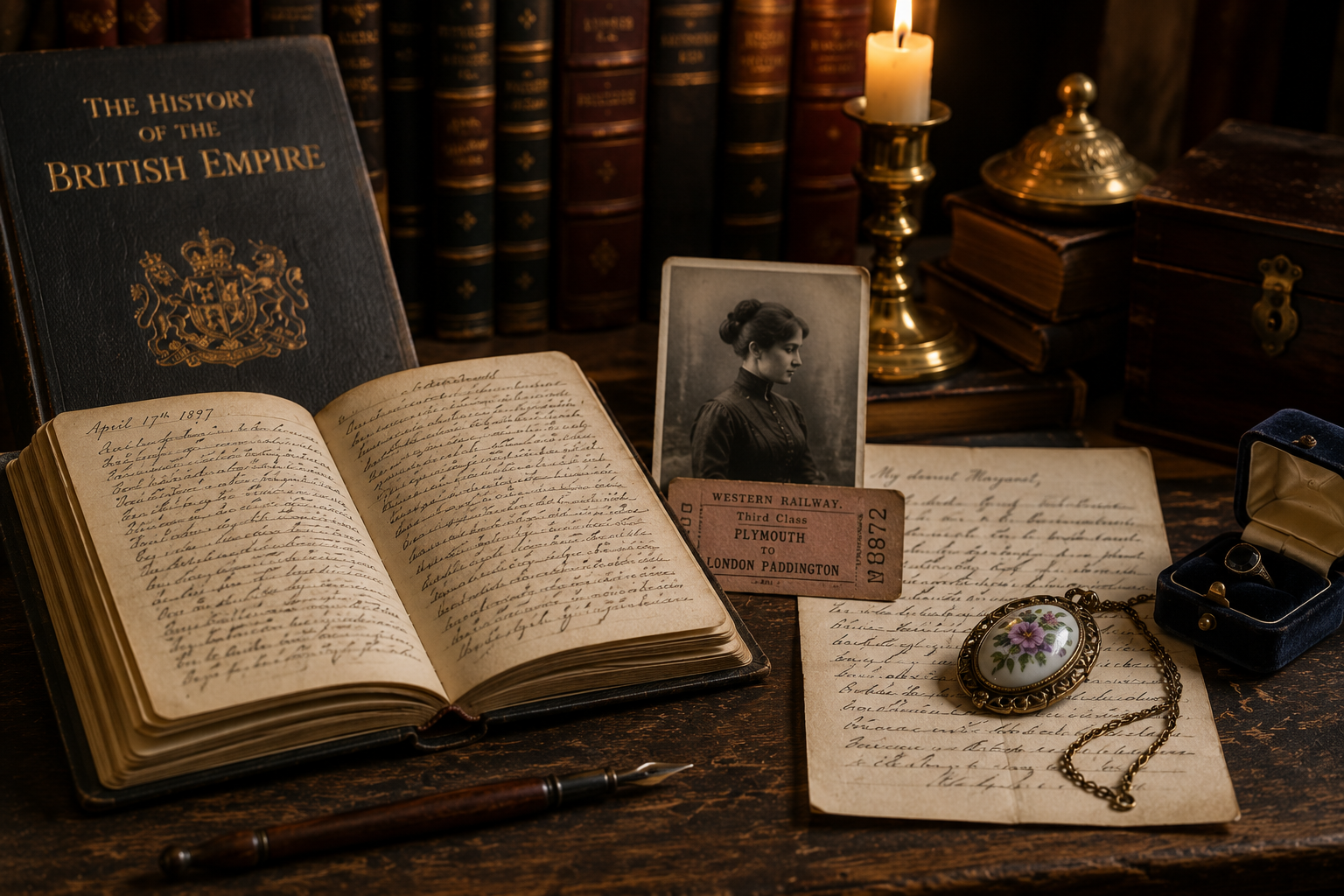
    History books give us dates, names, battles, discoveries, and major events. They help us understand what happened and when it happened, but they cannot always show us what ordinary life felt like. A history book might tell us that a woman lived in a particular town during the Victorian era, for example, yet it cannot easily tell us what she carried in her pocket, what she treasured in a drawer, or which letter she kept hidden for thirty years. That is where personal objects in history become so fascinating. A small object can preserve a private story that never made it into an official record. A worn photograph, a handwritten recipe, an old key, or a piece of jewellery may tell us something about a person’s relationships, fears, habits, hopes, and choices. These objects bring the past closer because they allow us to see history through the lives of individuals rather than only through major events.

    Why Personal Objects in History Matter

    Official records usually focus on information that institutions considered important. Governments recorded taxes, births, deaths, marriages, property, and legal disputes, while newspapers reported events that editors believed would interest the public. Personal experiences, however, often disappeared into private homes and family memories.

    A diary might record an ordinary Tuesday that nobody else considered important. A bundle of letters could preserve a friendship that never appeared in a newspaper, while a child’s toy might reveal how a family spent its limited money. These details may seem small, but together they create a much richer picture of the past.

    The value of personal objects in history lies partly in this intimacy. An object does not simply tell us that someone existed. It can give us clues about how that person lived.

    A Letter Can Reveal More Than a Biography

    Letters are among the most revealing personal objects because people often wrote things in private that they would never have said publicly.

    A formal biography might tell us that two people knew each other, but a collection of letters can reveal affection, disagreement, disappointment, humour, and even resentment. The handwriting itself can add another layer, because changes in the writing may reflect illness, age, haste, or emotion.

    Even the physical letter can provide clues. Someone may have folded it repeatedly, kept it inside another book, or carried it for years. Perhaps the envelope has been opened and resealed, suggesting that someone else once read it. Such details may never appear in an official account, yet they can completely change our understanding of a relationship.

    For a mystery writer, that makes an old letter particularly useful because it can reveal both what someone wanted to say and what someone desperately wanted to keep private.

    Jewellery Can Tell a Hidden Family Story

    Jewellery often survives because people value it emotionally as well as financially.

    A history book may record a marriage, but a particular brooch can tell us who actually remembered that marriage and how they felt about it. An engraved ring might carry a date that does not match the official family story, while a pendant passed from mother to daughter could preserve a name that has disappeared from written records.

    Sometimes the object itself raises questions.

    Why did someone keep a particular piece of jewellery when they sold everything else? Why does an inscription use a different surname? Who gave the object to its owner, and why did it matter enough to preserve?

    These questions show how personal objects in history can challenge the neat version of the past that later generations have created.

    Clothing Shows How People Really Lived

    Paintings and photographs can show us what people wore, but surviving clothing can tell us much more.

    A carefully preserved dress may reveal how expensive certain materials were, while repairs can show that the owner wore the garment for years. Alterations can tell us that a person changed size, adapted an older garment, or followed a changing fashion. A child’s coat with carefully mended sleeves can reveal something about family finances that a census record never could.

    Even pockets can become fascinating clues.

    A pocket might contain a receipt, a theatre ticket, a folded photograph, or a tiny handwritten note. Each item provides another fragment of the owner’s life, and together they create a picture that is far more personal than a list of dates and occupations.

    Everyday Objects Reveal Ordinary Lives

    Some of the most interesting personal objects in history are not valuable at all.

    A kitchen utensil, sewing box, fountain pen, walking stick, spectacles case, or tobacco tin may seem completely ordinary. Yet ordinary objects tell us what people actually used every day, and that matters because history often concentrates on extraordinary people and extraordinary events.

    Consider an old sewing box. Its contents might reveal what a woman repaired, what fabrics she worked with, and how carefully she reused materials. A small collection of buttons could suggest that clothing was regularly altered rather than discarded. Even a handwritten list tucked inside the box might reveal who she was making something for.

    Such evidence gives us the texture of everyday life.

    Personal Objects in History Can Reveal What People Valued

    People do not preserve everything.

    When someone keeps an object for decades, that decision can itself become meaningful. Perhaps the object has financial value, but often its importance lies somewhere else. A faded photograph may have little monetary worth, yet someone might protect it carefully because it represents a person they loved.

    Likewise, a child’s drawing, a pressed flower, or a simple handwritten note can survive because somebody considered it irreplaceable.

    The object therefore tells us something about memory. It shows what one person believed was worth keeping, and that can differ dramatically from what historians later decide was important.

    Personal Objects in History Can Challenge the Official Story

    History is often written from surviving records, but records can be incomplete or biased.

    An official document might present a family as prosperous, while household objects reveal that they repaired clothing and reused everyday goods. A newspaper might describe a marriage as happy, while private letters suggest serious conflict. A family tree may omit a person, yet a photograph or inscription could prove that the individual played an important role in the family’s life.

    That does not mean every object automatically proves a hidden truth. Objects can be misunderstood, mislabelled, or separated from their original context. Instead, they provide evidence that historians and researchers can compare with other sources.

    The most interesting discoveries often happen when several pieces of evidence begin to agree.

    A Photograph Can Hide a Mystery

    Old photographs are particularly powerful because they capture people at a specific moment.

    A photograph might show who stood together, where they lived, what they wore, and which objects surrounded them. Yet sometimes the most important clue appears in the background. A sign, building, letter, piece of jewellery, or familiar piece of furniture can provide information that the people in the photograph never intended to preserve.

    Even the back of the photograph can matter.

    Someone may have written a date, location, or name there, while another person later crossed it out. A photograph with two different sets of handwriting can therefore preserve a small history of its own. The image shows one moment, but the writing reveals how later generations remembered or changed that moment.

    Diaries Preserve the Details History Often Misses

    Diaries offer something that many official records cannot: a person’s own voice.

    A diary can tell us what someone feared, what excited them, who annoyed them, and which apparently ordinary events mattered deeply to them. It may also reveal uncertainty because people often wrote about events before they knew how those events would end.

    That makes diaries particularly valuable when studying personal objects in history. They capture the past as people experienced it rather than as later generations understood it.

    A person writing about a difficult decision does not know what historians will eventually say about that decision. They only know what they see at that moment, and that perspective can make the past feel surprisingly immediate.

    The Object’s Condition Can Become Evidence

    Sometimes the most useful clue is not the object itself, but its condition.

    A book with a damaged spine may have been read repeatedly. A photograph with worn edges may have been carried in a pocket. A silver cup with a scratched inscription may have been used rather than displayed. Such wear can tell us how an object moved through someone’s life.

    Repairs can also reveal choices.

    Someone may have replaced a broken clasp rather than throw away a piece of jewellery, or carefully restored a damaged book instead of buying another copy. These decisions show attachment, practicality, or both.

    For a historical mystery, the condition of an object can even help establish a timeline. A newly repaired item may indicate that an event happened more recently than someone claims, while fresh damage can suggest that an object was handled during a particular incident.

    Personal Objects in History Can Follow People Through Time

    One of the most compelling aspects of personal objects in history is that they can travel.

    A pocket watch might pass from father to son, then move to another country with a granddaughter. A letter could be carried from one house to another, while a family Bible might gather inscriptions from several generations.

    Each new owner can add another layer to the object.

    That journey creates a kind of physical family history. The object survives even when memories become uncertain, and its marks, inscriptions, and repairs can sometimes reveal how it moved from one person to another.

    What Objects Reveal About Women

    Personal objects can be especially valuable when studying women whose lives received little attention in official records.

    A woman’s letters, sewing materials, recipes, books, photographs, and jewellery can provide evidence about her education, work, friendships, family responsibilities, and interests. These objects can help researchers see her as an individual rather than simply someone’s wife, daughter, mother, or sister.

    That distinction matters.

    For much of history, women’s lives were recorded through their relationships to other people. Personal objects can restore some of the individuality that official records leave out, because they preserve choices that women made for themselves.

    The Mystery Writer’s Treasure Trove

    For writers of historical mysteries, personal objects in history offer endless possibilities.

    A character might discover a photograph inside an old book, only to realise that one person in the picture has been deliberately removed from the family story. Another might find a ring with an unfamiliar inscription, while a diary contains a reference to someone who supposedly never existed.

    A locked drawer could contain something insignificant at first glance, yet that object might become the key to understanding an entire family. Perhaps a faded railway ticket proves that someone travelled somewhere they denied visiting, or an old receipt reveals that a supposedly penniless character secretly bought something expensive.

    The beauty of these clues is that they feel believable. People leave traces of themselves behind without realising that someone else may one day examine them.

    Nora Halewell and the Stories Objects Preserve

    This fascination with forgotten evidence fits naturally into the world of Nora Halewell.

    Nora’s mysteries often place her among old houses, historical records, maps, letters, and objects that have survived long after the people who owned them. She understands that history does not live only in archives because it also survives in the things people touched, carried, treasured, and sometimes tried to hide.

    For Nora, an old object is rarely just an old object.

    A map can reveal a forgotten place, while a letter can expose a relationship. A personal belonging may connect two people who supposedly never met, and a seemingly ordinary item can provide the missing link between a historical event and a present-day mystery.

    Why Personal Objects Make History Feel Real

    Dates can tell us when something happened, but objects can help us imagine the people who lived through it.

    A worn pair of gloves suggests hands that used them. A handwritten recipe suggests someone standing in a kitchen and preparing food. A child’s toy suggests a child who once held it, while a faded photograph reminds us that the people in it once had ordinary hopes and worries.

    That emotional connection makes history easier to understand because it moves the subject from the distant past into something tangible.

    We are no longer looking only at an event. We are looking at something someone owned.

    What History Books Cannot Always Tell Us

    History books remain essential because they help us understand the larger picture. However, the larger picture can sometimes hide the small details that make individual lives meaningful.

    Personal objects in history help fill those gaps. They can show how people spent their days, what they valued, whom they loved, what they feared, and what they chose to remember.

    An object may never appear in a textbook, yet it can still tell a powerful story. Sometimes it tells us something that an official document could not, because it preserves a private decision rather than a public event.

    That is why the next time you encounter an old object, it is worth asking a few simple questions. Who owned it? Why did they keep it? How did it survive? What does it tell us that the written record does not?

    The answers may be more revealing than expected.

    The Past Leaves More Behind Than Records

    History does not survive only in archives and textbooks. It survives in cupboards, attics, jewellery boxes, writing desks, bookshelves, and family collections, where ordinary objects quietly carry traces of the people who once owned them.

    A small object can therefore become a doorway into a much larger story. It may reveal a forgotten relationship, challenge an accepted version of events, or simply remind us that people in the past had the same need to love, remember, protect, and belong that we have today.

    Perhaps that is the greatest value of personal objects in history. They bring the past down to human scale.

    And sometimes, when a mystery asks us to discover what really happened, the most important clue is not written in a history book at all.

    It is waiting in someone’s old drawer.