Author: admin

  • Personal Objects in History: What They Reveal That History Books Leave Out

    Personal Objects in History: What They Reveal That History Books Leave Out

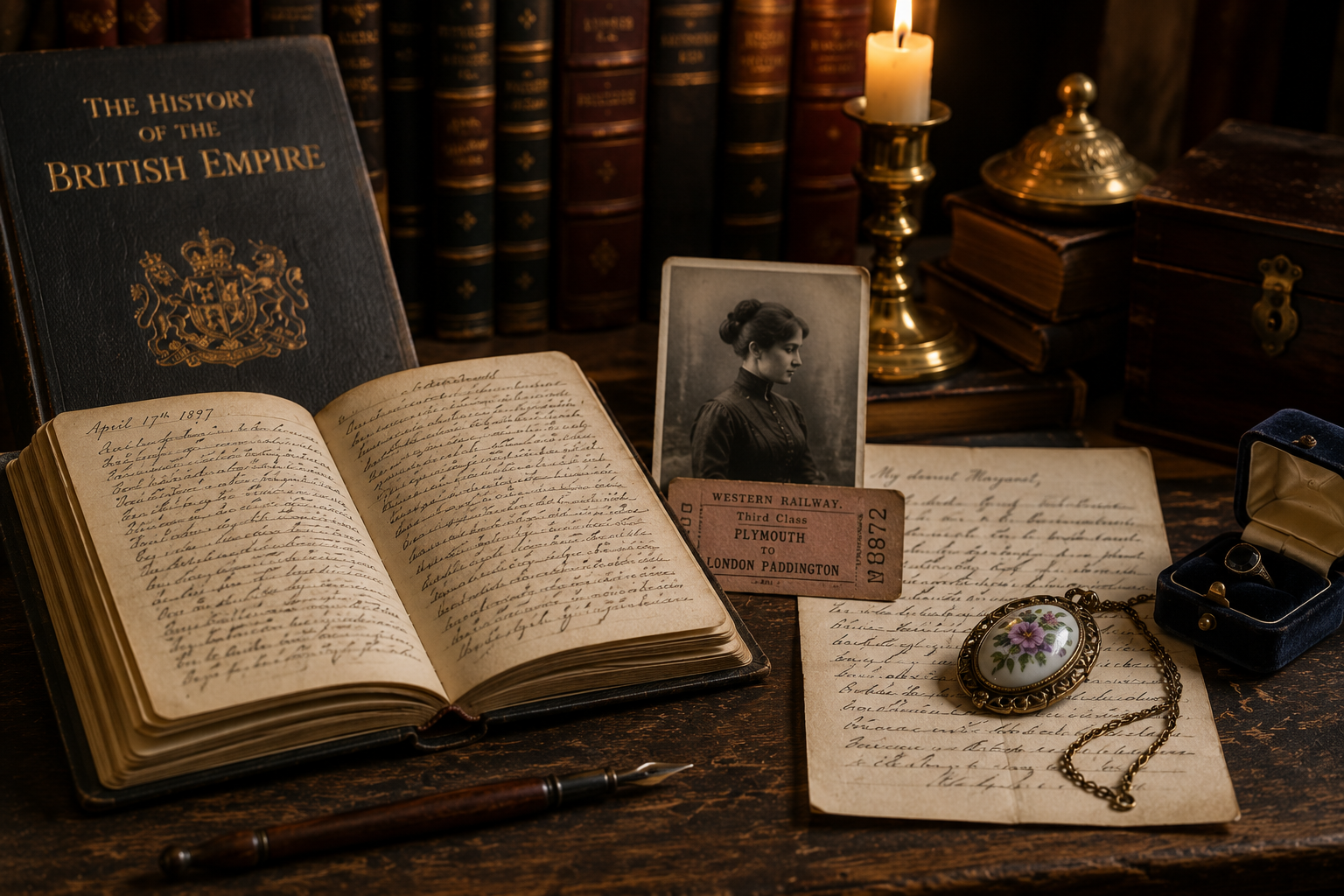
    History books give us dates, names, battles, discoveries, and major events. They help us understand what happened and when it happened, but they cannot always show us what ordinary life felt like. A history book might tell us that a woman lived in a particular town during the Victorian era, for example, yet it cannot easily tell us what she carried in her pocket, what she treasured in a drawer, or which letter she kept hidden for thirty years. That is where personal objects in history become so fascinating. A small object can preserve a private story that never made it into an official record. A worn photograph, a handwritten recipe, an old key, or a piece of jewellery may tell us something about a person’s relationships, fears, habits, hopes, and choices. These objects bring the past closer because they allow us to see history through the lives of individuals rather than only through major events.

    Why Personal Objects in History Matter

    Official records usually focus on information that institutions considered important. Governments recorded taxes, births, deaths, marriages, property, and legal disputes, while newspapers reported events that editors believed would interest the public. Personal experiences, however, often disappeared into private homes and family memories.

    A diary might record an ordinary Tuesday that nobody else considered important. A bundle of letters could preserve a friendship that never appeared in a newspaper, while a child’s toy might reveal how a family spent its limited money. These details may seem small, but together they create a much richer picture of the past.

    The value of personal objects in history lies partly in this intimacy. An object does not simply tell us that someone existed. It can give us clues about how that person lived.

    A Letter Can Reveal More Than a Biography

    Letters are among the most revealing personal objects because people often wrote things in private that they would never have said publicly.

    A formal biography might tell us that two people knew each other, but a collection of letters can reveal affection, disagreement, disappointment, humour, and even resentment. The handwriting itself can add another layer, because changes in the writing may reflect illness, age, haste, or emotion.

    Even the physical letter can provide clues. Someone may have folded it repeatedly, kept it inside another book, or carried it for years. Perhaps the envelope has been opened and resealed, suggesting that someone else once read it. Such details may never appear in an official account, yet they can completely change our understanding of a relationship.

    For a mystery writer, that makes an old letter particularly useful because it can reveal both what someone wanted to say and what someone desperately wanted to keep private.

    Jewellery Can Tell a Hidden Family Story

    Jewellery often survives because people value it emotionally as well as financially.

    A history book may record a marriage, but a particular brooch can tell us who actually remembered that marriage and how they felt about it. An engraved ring might carry a date that does not match the official family story, while a pendant passed from mother to daughter could preserve a name that has disappeared from written records.

    Sometimes the object itself raises questions.

    Why did someone keep a particular piece of jewellery when they sold everything else? Why does an inscription use a different surname? Who gave the object to its owner, and why did it matter enough to preserve?

    These questions show how personal objects in history can challenge the neat version of the past that later generations have created.

    Clothing Shows How People Really Lived

    Paintings and photographs can show us what people wore, but surviving clothing can tell us much more.

    A carefully preserved dress may reveal how expensive certain materials were, while repairs can show that the owner wore the garment for years. Alterations can tell us that a person changed size, adapted an older garment, or followed a changing fashion. A child’s coat with carefully mended sleeves can reveal something about family finances that a census record never could.

    Even pockets can become fascinating clues.

    A pocket might contain a receipt, a theatre ticket, a folded photograph, or a tiny handwritten note. Each item provides another fragment of the owner’s life, and together they create a picture that is far more personal than a list of dates and occupations.

    Everyday Objects Reveal Ordinary Lives

    Some of the most interesting personal objects in history are not valuable at all.

    A kitchen utensil, sewing box, fountain pen, walking stick, spectacles case, or tobacco tin may seem completely ordinary. Yet ordinary objects tell us what people actually used every day, and that matters because history often concentrates on extraordinary people and extraordinary events.

    Consider an old sewing box. Its contents might reveal what a woman repaired, what fabrics she worked with, and how carefully she reused materials. A small collection of buttons could suggest that clothing was regularly altered rather than discarded. Even a handwritten list tucked inside the box might reveal who she was making something for.

    Such evidence gives us the texture of everyday life.

    Personal Objects in History Can Reveal What People Valued

    People do not preserve everything.

    When someone keeps an object for decades, that decision can itself become meaningful. Perhaps the object has financial value, but often its importance lies somewhere else. A faded photograph may have little monetary worth, yet someone might protect it carefully because it represents a person they loved.

    Likewise, a child’s drawing, a pressed flower, or a simple handwritten note can survive because somebody considered it irreplaceable.

    The object therefore tells us something about memory. It shows what one person believed was worth keeping, and that can differ dramatically from what historians later decide was important.

    Personal Objects in History Can Challenge the Official Story

    History is often written from surviving records, but records can be incomplete or biased.

    An official document might present a family as prosperous, while household objects reveal that they repaired clothing and reused everyday goods. A newspaper might describe a marriage as happy, while private letters suggest serious conflict. A family tree may omit a person, yet a photograph or inscription could prove that the individual played an important role in the family’s life.

    That does not mean every object automatically proves a hidden truth. Objects can be misunderstood, mislabelled, or separated from their original context. Instead, they provide evidence that historians and researchers can compare with other sources.

    The most interesting discoveries often happen when several pieces of evidence begin to agree.

    A Photograph Can Hide a Mystery

    Old photographs are particularly powerful because they capture people at a specific moment.

    A photograph might show who stood together, where they lived, what they wore, and which objects surrounded them. Yet sometimes the most important clue appears in the background. A sign, building, letter, piece of jewellery, or familiar piece of furniture can provide information that the people in the photograph never intended to preserve.

    Even the back of the photograph can matter.

    Someone may have written a date, location, or name there, while another person later crossed it out. A photograph with two different sets of handwriting can therefore preserve a small history of its own. The image shows one moment, but the writing reveals how later generations remembered or changed that moment.

    Diaries Preserve the Details History Often Misses

    Diaries offer something that many official records cannot: a person’s own voice.

    A diary can tell us what someone feared, what excited them, who annoyed them, and which apparently ordinary events mattered deeply to them. It may also reveal uncertainty because people often wrote about events before they knew how those events would end.

    That makes diaries particularly valuable when studying personal objects in history. They capture the past as people experienced it rather than as later generations understood it.

    A person writing about a difficult decision does not know what historians will eventually say about that decision. They only know what they see at that moment, and that perspective can make the past feel surprisingly immediate.

    The Object’s Condition Can Become Evidence

    Sometimes the most useful clue is not the object itself, but its condition.

    A book with a damaged spine may have been read repeatedly. A photograph with worn edges may have been carried in a pocket. A silver cup with a scratched inscription may have been used rather than displayed. Such wear can tell us how an object moved through someone’s life.

    Repairs can also reveal choices.

    Someone may have replaced a broken clasp rather than throw away a piece of jewellery, or carefully restored a damaged book instead of buying another copy. These decisions show attachment, practicality, or both.

    For a historical mystery, the condition of an object can even help establish a timeline. A newly repaired item may indicate that an event happened more recently than someone claims, while fresh damage can suggest that an object was handled during a particular incident.

    Personal Objects in History Can Follow People Through Time

    One of the most compelling aspects of personal objects in history is that they can travel.

    A pocket watch might pass from father to son, then move to another country with a granddaughter. A letter could be carried from one house to another, while a family Bible might gather inscriptions from several generations.

    Each new owner can add another layer to the object.

    That journey creates a kind of physical family history. The object survives even when memories become uncertain, and its marks, inscriptions, and repairs can sometimes reveal how it moved from one person to another.

    What Objects Reveal About Women

    Personal objects can be especially valuable when studying women whose lives received little attention in official records.

    A woman’s letters, sewing materials, recipes, books, photographs, and jewellery can provide evidence about her education, work, friendships, family responsibilities, and interests. These objects can help researchers see her as an individual rather than simply someone’s wife, daughter, mother, or sister.

    That distinction matters.

    For much of history, women’s lives were recorded through their relationships to other people. Personal objects can restore some of the individuality that official records leave out, because they preserve choices that women made for themselves.

    The Mystery Writer’s Treasure Trove

    For writers of historical mysteries, personal objects in history offer endless possibilities.

    A character might discover a photograph inside an old book, only to realise that one person in the picture has been deliberately removed from the family story. Another might find a ring with an unfamiliar inscription, while a diary contains a reference to someone who supposedly never existed.

    A locked drawer could contain something insignificant at first glance, yet that object might become the key to understanding an entire family. Perhaps a faded railway ticket proves that someone travelled somewhere they denied visiting, or an old receipt reveals that a supposedly penniless character secretly bought something expensive.

    The beauty of these clues is that they feel believable. People leave traces of themselves behind without realising that someone else may one day examine them.

    Nora Halewell and the Stories Objects Preserve

    This fascination with forgotten evidence fits naturally into the world of Nora Halewell.

    Nora’s mysteries often place her among old houses, historical records, maps, letters, and objects that have survived long after the people who owned them. She understands that history does not live only in archives because it also survives in the things people touched, carried, treasured, and sometimes tried to hide.

    For Nora, an old object is rarely just an old object.

    A map can reveal a forgotten place, while a letter can expose a relationship. A personal belonging may connect two people who supposedly never met, and a seemingly ordinary item can provide the missing link between a historical event and a present-day mystery.

    Why Personal Objects Make History Feel Real

    Dates can tell us when something happened, but objects can help us imagine the people who lived through it.

    A worn pair of gloves suggests hands that used them. A handwritten recipe suggests someone standing in a kitchen and preparing food. A child’s toy suggests a child who once held it, while a faded photograph reminds us that the people in it once had ordinary hopes and worries.

    That emotional connection makes history easier to understand because it moves the subject from the distant past into something tangible.

    We are no longer looking only at an event. We are looking at something someone owned.

    What History Books Cannot Always Tell Us

    History books remain essential because they help us understand the larger picture. However, the larger picture can sometimes hide the small details that make individual lives meaningful.

    Personal objects in history help fill those gaps. They can show how people spent their days, what they valued, whom they loved, what they feared, and what they chose to remember.

    An object may never appear in a textbook, yet it can still tell a powerful story. Sometimes it tells us something that an official document could not, because it preserves a private decision rather than a public event.

    That is why the next time you encounter an old object, it is worth asking a few simple questions. Who owned it? Why did they keep it? How did it survive? What does it tell us that the written record does not?

    The answers may be more revealing than expected.

    The Past Leaves More Behind Than Records

    History does not survive only in archives and textbooks. It survives in cupboards, attics, jewellery boxes, writing desks, bookshelves, and family collections, where ordinary objects quietly carry traces of the people who once owned them.

    A small object can therefore become a doorway into a much larger story. It may reveal a forgotten relationship, challenge an accepted version of events, or simply remind us that people in the past had the same need to love, remember, protect, and belong that we have today.

    Perhaps that is the greatest value of personal objects in history. They bring the past down to human scale.

    And sometimes, when a mystery asks us to discover what really happened, the most important clue is not written in a history book at all.

    It is waiting in someone’s old drawer.

  • Respectability and Secrecy in Victorian Mystery Fiction

    Respectability and Secrecy in Victorian Mystery Fiction

    A polished drawing room can hide a great deal. Behind the shining brass, carefully arranged flowers, and flawless manners of a respectable Victorian household, secrets could thrive. People guarded their reputations because social standing mattered deeply, and a whisper could damage a family just as surely as a public accusation. That tension makes respectability in Victorian mysteries such a compelling theme.

    At first glance, a respectable house appears safe. Its occupants follow the rules, dress correctly, entertain the right people, and know exactly what behaviour society expects from them. Yet the more carefully everyone protects that appearance, the more interesting the question becomes: what are they trying so hard to hide?

    When Respectability Becomes a Disguise

    Respectability does not necessarily mean innocence. A person can behave perfectly in public while concealing a completely different life behind closed doors. Likewise, a family can spend years protecting its good name while quietly ignoring an uncomfortable truth. In a Victorian mystery, that contrast creates fertile ground for suspicion because appearances can become part of the deception.

    The grander the house, the greater the pressure to maintain its image. A wealthy family might fear scandal, while a respected professional could lose everything if a private secret became public. Even an apparently harmless piece of gossip might threaten a carefully constructed reputation.

    That is why respectability in Victorian mysteries works so well as both a theme and a source of conflict. The detective is not simply asking who committed the crime. She is also asking who has the most to lose if the truth comes out.

    The House as a Symbol of Reputation

    Victorian houses often make wonderful settings for mysteries because the building itself can reflect the family living inside it.

    A spotless entrance suggests order, while polished furniture and carefully maintained gardens create an impression of stability. Behind that beautiful exterior, however, relationships may be strained, debts may be hidden, and old grievances may still influence the present.

    Even small imperfections can therefore become meaningful.

    A damaged lock, a misplaced letter, or an object hidden where it should not be can disturb the illusion of perfection. Once the detective notices that first crack in the surface, she begins to wonder what else has been concealed.

    The house may look immaculate, but appearances do not tell the whole story.

    Why Reputation Matters So Much

    Reputation carries particular weight in a Victorian mystery because society placed strong expectations on behaviour.

    People were judged not only by what they did, but by how their actions looked to others. A respectable woman could face harsh judgement for behaviour that might seem insignificant today, while a wealthy man’s misconduct could sometimes remain hidden because his position gave him protection.

    Such double standards create interesting complications for a detective.

    Someone may lie because they fear scandal rather than imprisonment. Another person might protect a guilty relative because exposing the truth would destroy the family’s name. Meanwhile, an innocent character could appear suspicious simply because she refuses to explain something deeply personal.

    This makes respectability in Victorian mysteries more complicated than a simple battle between good and evil. People can make questionable choices for understandable reasons, and the detective must work out which secrets actually matter.

    The Fear of Scandal

    Scandal can become almost as dangerous as the crime itself.

    Imagine a family discovering that one of its members has been involved in something that could destroy its social standing. The natural reaction might not be to call for help. Instead, they could attempt to contain the problem, hide the evidence, or quietly remove the person responsible from public view.

    Unfortunately, secrecy rarely makes a mystery disappear.

    One hidden letter can lead to another. A missing person can raise questions that the family cannot answer, while an unexplained death may force outsiders to look more closely at the household. The harder people work to protect the family name, the more suspicious their behaviour can become.

    Eventually, the attempt to preserve respectability may create the very evidence that exposes the truth.

    The Difference Between Privacy and Deception

    Not every secret is a crime.

    That distinction matters because a good historical mystery should allow its characters to have private lives without making every hidden detail evidence of guilt. Someone may conceal a romantic disappointment, a family quarrel, or a financial difficulty simply because they do not want other people to know.

    The detective must therefore decide which secrets have genuine significance.

    Perhaps one character refuses to discuss an old friendship because it is embarrassing, while another hides a letter because it proves where she was on the night of the crime. Both characters are keeping secrets, but only one secret may have anything to do with the mystery.

    This is where respectability in Victorian mysteries becomes especially interesting. The detective has to look beyond the secret itself and understand the reason for keeping it.

    The Polite Suspect

    Victorian mystery fiction also gives us a wonderfully unsettling type of suspect: the person who is unfailingly polite.

    She smiles at the correct moment.

    He offers the detective tea.

    Everyone speaks in measured voices, and nobody appears to lose their temper. Yet beneath those perfect manners, someone may be carefully controlling the conversation.

    Politeness can become a form of camouflage.

    A suspect does not need to threaten anyone when a carefully chosen sentence can redirect suspicion. A gracious host can move a conversation away from an uncomfortable subject, while a concerned family member can quietly suggest another person’s guilt without making a direct accusation.

    The detective must therefore learn to listen to what people avoid saying as carefully as she listens to their words.

    The Danger of Protecting the Family Name

    Family loyalty can complicate a mystery even further.

    A character might know that a relative has lied, yet remain silent because exposing the truth would bring disgrace. Another could destroy evidence because she believes she is protecting an innocent family member. Someone else might accept blame for an action she did not commit simply because she thinks the truth would hurt the people she loves.

    These choices create moral questions rather than simple clues.

    What would you protect if the truth could destroy your family? Would you tell the truth if doing so ruined an innocent person’s future? Could you forgive someone who lied to protect another person?

    Historical mysteries become richer when characters have to make these difficult choices. The detective is then solving not only a crime, but also a web of loyalty, fear, pride, and responsibility.

    Why Arabella Grey Fits This World

    Arabella Grey is particularly well suited to mysteries built around reputation because she understands the importance of observing rather than judging too quickly.

    Her world is one of gardens, drawing rooms, village gossip, and carefully maintained appearances. People often expect her to notice the obvious things, but Arabella pays attention to the small details that others dismiss.

    A misplaced object may interest her more than an angry accusation.

    One unusual reaction can tell her more than a carefully prepared statement. Likewise, a pause before an apparently innocent answer may make her wonder what the speaker has chosen not to say.

    Arabella does not need to break through the walls of a household by force. She watches, listens, and allows people to reveal themselves.

    Respectability Has a Lock

    There is something wonderfully appropriate about the idea that respectability has a lock.

    A lock protects something, but it also tells us that someone believes there is something worth protecting. In a Victorian mystery, that can be a useful question to ask: what lies behind the locked door, and why does everyone insist that nobody should look?

    The lock might protect a physical object, such as a letter, diary, photograph, or legal document. Sometimes, however, the real thing being protected is a reputation.

    Arabella’s task is not simply to find the key.

    She must discover who locked the door, what they feared, and whether the person who appears most respectable is actually the one who has the most to hide.

    Small Clues Can Break a Perfect Image

    A mystery does not always need dramatic evidence to expose a carefully protected secret.

    A broken key beneath a doormat might suggest that someone entered a house in a hurry. A letter hidden behind a picture could reveal an unexpected relationship, while a muddy shoe might place a supposedly respectable guest somewhere they claimed never to have visited.

    These clues become powerful because they contradict the story people are telling.

    The drawing room may still look perfect, but the evidence says otherwise. Once the detective finds one inconsistency, she can begin looking for others, and the entire appearance of respectability may start to crumble.

    When Reputation Becomes More Important Than Truth

    Perhaps the most disturbing aspect of respectability in Victorian mysteries is what happens when people value reputation more than truth.

    A family may know that something terrible happened, yet decide that silence is safer. A community might suspect the wrong person because believing a respectable story feels more comfortable than confronting an unpleasant reality.

    Meanwhile, the person who tells the truth may become the one everyone distrusts.

    That reversal creates excellent mystery tension because the detective has to challenge the assumptions of the people around her. She cannot simply accept the person with the finest manners as trustworthy or dismiss the person with the worst reputation as guilty.

    Truth rarely cares about social rank.

    The Detective Must Look Beneath the Surface

    Solving a Victorian mystery therefore requires more than collecting physical clues.

    The detective must understand the social world in which those clues exist. She needs to know why a person might lie, why a family might hide evidence, and why someone would risk protecting a secret that seems less important than the crime itself.

    Once she understands those motives, apparently unrelated details begin to connect.

    A whispered conversation might explain a missing letter. A family disagreement might reveal a false alibi, while a carefully guarded reputation could explain why someone went to extraordinary lengths to conceal the truth.

    The detective is not merely uncovering what happened. She is uncovering why everyone wanted the story to remain hidden.

    Why Readers Find This Theme So Satisfying

    Readers enjoy mysteries because they want to discover what is hidden. Victorian settings add another layer because the characters live within a world where appearances often carry enormous social weight.

    That contrast creates an irresistible question: what happens when the truth threatens the image everyone has worked so hard to maintain?

    For fans of respectability in Victorian mysteries, the answer can be more interesting than the crime itself. The mystery becomes a study of reputation, social pressure, family loyalty, and the quiet courage required to challenge a story that everyone else accepts.

    Arabella Grey belongs in that world because she does not need to make the most noise to uncover the truth. She simply needs to notice what does not belong.

    Respectability Can Hide the Darkest Secrets

    A spotless house can still contain a locked room.

    A perfect family can still have something to hide.

    Behind the polished silver, formal manners, and carefully arranged flowers, someone may be protecting a secret that could change everything. The detective’s challenge is to look past the appearance and find the small details that reveal what lies beneath it.

    That is the enduring appeal of respectability in Victorian mysteries. The world may insist that everything is proper, orderly, and respectable, but the clues tell a different story.

    And sometimes, the most dangerous person in the house is not the one behaving badly.

    It is the one who has mastered the art of appearing innocent.

  • Should Dangerous Knowledge Ever Be Destroyed? Fiction and Forbidden Secrets

    Should Dangerous Knowledge Ever Be Destroyed? Fiction and Forbidden Secrets

    Should Dangerous Knowledge Ever Be Destroyed?

    A locked box sits on an old desk. Inside, someone has hidden a manuscript, a map, or perhaps a strange set of instructions that no one was meant to read. The story gives us an immediate question: what could possibly be so dangerous that someone would go to such lengths to hide it? Fiction has long been fascinated by dangerous knowledge. From forbidden books and mysterious manuscripts to secret inventions and ancient discoveries, stories often place their characters in front of information that could change everything. Sometimes that knowledge promises power. At other times, it threatens to expose a terrible truth.

    Yet fiction rarely gives us an easy answer. Should a character destroy the knowledge before someone can misuse it, or should they preserve it because truth deserves to survive? That tension creates some of the most compelling mysteries because the real danger may not lie in the knowledge itself. Instead, the danger may lie in what people choose to do with it.

    What Is Dangerous Knowledge in Fiction?

    Dangerous knowledge gives someone the power to cause harm, manipulate others, or disturb a fragile balance. A secret formula might create something devastating, while a hidden historical record could destroy a powerful person’s reputation. Even an apparently harmless map might reveal a place that someone desperately wants to find.

    In mystery fiction, dangerous knowledge often begins with something small. A character discovers a handwritten note, notices a missing page, or finds a symbol hidden beneath an ordinary illustration. The discovery seems insignificant at first, but each new clue reveals that somebody wanted the information concealed.

    That gradual revelation makes forbidden knowledge particularly effective in fiction. Readers understand that the information matters before they fully understand why. As the mystery develops, curiosity pulls us forward even while the story warns us that some doors should perhaps remain closed.

    The Forbidden Book

    Few objects represent dangerous knowledge as effectively as a forbidden book. Books preserve ideas across generations, so destroying one can feel like destroying part of history itself. When a fictional character discovers a volume that someone has deliberately hidden, the book immediately becomes more than an object. It becomes evidence.

    A forbidden book can contain almost anything. It might describe an unexplained event, record a forgotten crime, reveal the location of something valuable, or preserve an idea that powerful people want erased. Therefore, the question becomes more complicated than simply asking whether the book contains dangerous information.

    The better question is often this: who decided that the knowledge was dangerous?

    That distinction matters because people sometimes label information dangerous when it threatens their own interests. A corrupt official may want evidence destroyed because it exposes a crime. A wealthy family might suppress an old diary because it challenges its carefully protected reputation. Meanwhile, an innocent person could mistake a forgotten secret for something far more sinister.

    When Destruction Seems Justified

    Fiction sometimes presents a convincing case for destroying dangerous knowledge. Imagine a manuscript containing instructions for a destructive invention. If the information could easily fall into the wrong hands, preserving it might create a greater risk than destroying it.

    Characters may also face knowledge that could cause immediate harm. A secret identity, a hidden location, or a vulnerable person’s private information could become a weapon once exposed. In such stories, destruction can represent protection rather than censorship.

    The strongest fictional examples usually make the decision painful. A character who destroys the information does not simply throw away a troublesome document. Instead, they must accept that they may also be destroying evidence, history, or an opportunity to understand the past.

    That sacrifice creates moral weight. The reader may agree with the decision while still wondering whether anyone should have the authority to make it.

    When Destruction Becomes the Greater Crime

    On the other hand, fiction often shows how easily the destruction of dangerous knowledge can become a tool for controlling the truth. Once someone decides that information should disappear, another question immediately follows: who gets to decide what counts as dangerous?

    History provides plenty of examples of people attempting to control information, and mystery fiction turns that idea into a powerful plot device. A missing journal may point toward a hidden crime. A burned archive may suggest that someone feared what investigators would discover. Even a single destroyed letter can become evidence because its destruction tells us that somebody had something to hide.

    For this reason, the destruction of knowledge can create a mystery all by itself. The absence of information becomes a clue.

    A detective may not know what a missing document contained, yet the effort to remove it can reveal its importance. Someone who destroys a record may believe they have eliminated the evidence, but they have actually created a new question: what was so important that someone wanted it gone?

    The Dangerous Knowledge Trope in Historical Mysteries

    Historical mysteries make particularly good use of dangerous knowledge because the past already contains gaps. Records disappear, buildings change, family stories become distorted, and forgotten events leave fragments behind. A fictional detective can therefore piece together a truth that previous generations tried to bury.

    Old maps work especially well in this role. A map can reveal a forgotten estate, an altered boundary, a vanished village, or a location that someone deliberately removed from later editions. The object may look innocent, yet its details can completely change our understanding of a mystery.

    Likewise, an old diary can become a dangerous object because it preserves a private version of events. A respectable family might have spent decades protecting its public image, only for one diary to reveal that the accepted story was never true.

    That is where historical mystery becomes especially intriguing. The investigator is not simply solving a crime. They are deciding how much of the past deserves to come back into the light.

    Dangerous Knowledge and the Fear of Truth

    At the heart of many stories lies a simple fear: what if the truth changes everything?

    Characters often fear knowledge because they understand its consequences. Learning the truth may destroy a relationship, overturn an inheritance, expose a respected figure, or force someone to admit that their entire understanding of the past was wrong.

    Consequently, the knowledge itself does not always create the danger. Sometimes the danger comes from the emotional and social consequences of accepting it.

    A character might spend years protecting a family secret because they believe the truth would hurt innocent people. Another person might hide the same secret because they fear losing money or status. Both characters can argue that they are protecting others, yet their motives remain very different.

    Fiction becomes fascinating when the reader has to work out which explanation is true.

    Is Ignorance Ever Safer?

    Stories about dangerous knowledge also challenge the comforting idea that ignorance always protects us. Sometimes not knowing the truth allows a community to remain peaceful. However, that peace may depend on a lie.

    Consider a fictional village built around an old legend. Everyone believes that a particular house stands empty because of a tragic curse. When an investigator discovers evidence that contradicts the legend, the discovery creates a problem. Should the truth be revealed if doing so could destroy the story that holds the community together?

    Perhaps the legend protects people from returning to a dangerous place. Perhaps, however, it exists only because someone committed a crime generations ago and wanted everyone to stop asking questions.

    The investigator must then decide whether truth matters more than comfort.

    Who Owns the Truth?

    One of the most interesting questions surrounding dangerous knowledge is whether knowledge can belong to anyone at all. A fictional character might discover an old document in a private collection, but does possession give them the right to destroy it?

    The answer becomes even more difficult when the information concerns other people. A diary may reveal secrets about individuals who never agreed to have their private lives exposed. A scientific discovery may belong to its creator, yet its consequences could affect thousands of people.

    Therefore, fiction can use forbidden knowledge to explore questions about responsibility, privacy, power, and truth. The mystery may begin with a hidden document, but it eventually becomes a question about human choices.

    The Temptation to Read the Forbidden

    Of course, there is another reason writers love dangerous knowledge: readers are naturally curious about forbidden things.

    Tell someone that they must not open a particular door, and suddenly the door becomes irresistible. Hide a manuscript, and we want to know what it contains. Place a locked box in the centre of a mystery, and we immediately begin imagining what might be inside.

    That instinct gives forbidden knowledge enormous narrative power. The reader becomes emotionally involved because the same curiosity that drives the protagonist drives us too.

    Yet good mystery fiction does not reveal the secret too quickly. Instead, it lets the tension build. A character may find one fragment today and another several chapters later, while each discovery raises more questions than it answers.

    By the time the truth finally emerges, we understand why someone wanted it hidden.

    Sometimes Dangerous Knowledge in Fiction Should Survive

    Perhaps the most satisfying answer to the question is that dangerous knowledge should not automatically be destroyed. Instead, characters should consider why it is dangerous, who might misuse it, and what would be lost if it disappeared.

    A fictional detective might choose to preserve a manuscript but secure it carefully. Another protagonist might reveal the truth only to people who can be trusted. Someone else may destroy the instructions but preserve the historical record surrounding them.

    These choices allow fiction to avoid a simple battle between truth and secrecy. Knowledge can carry genuine danger, yet destroying it can also erase the evidence needed to understand how that danger came about.

    The wisest character may therefore be neither the person who reveals everything nor the person who destroys everything. Instead, wisdom may belong to the person who understands the difference between hiding the truth and protecting people from harm.

    What Dangerous Knowledge Reveals About Us

    Ultimately, stories about dangerous knowledge are rarely just about books, maps, inventions, or secrets. They are about power.

    Who controls information? Who decides what people are allowed to know? Who benefits when a truth disappears? More importantly, what happens when someone finally discovers what others worked so hard to conceal?

    Those questions make forbidden knowledge such a powerful theme for historical mysteries. A mysterious object can serve as the first clue, while the deeper mystery concerns the people who feared what that object could reveal.

    Perhaps that is why the old locked box remains such a compelling image. We do not know what lies inside, but we know that someone considered it important enough to hide. The box creates a question, and the question creates the story.

    So, Should Dangerous Knowledge Ever Be Destroyed?

    There may be times when destroying dangerous knowledge seems wise. If information could cause immediate and catastrophic harm, protecting people may matter more than preserving every detail. Fiction gives us plenty of situations where a character must make that difficult choice.

    Still, destruction should never become the automatic answer. Once knowledge disappears, we cannot easily recover it, and someone else may have decided to destroy it for selfish reasons rather than genuine protection.

    The most interesting mysteries leave us somewhere between those two possibilities. They ask us to value truth without pretending that truth has no consequences. They remind us that secrecy can protect, but it can also manipulate. They show that knowledge can become dangerous, yet ignorance can become dangerous too.

    Perhaps the real lesson is that dangerous knowledge deserves careful stewardship rather than an automatic sentence of destruction. In fiction, the most powerful secret is rarely the information itself. It is the reason someone was so afraid that we might discover it.

    And once the reader starts asking that question, the mystery has already begun.

  • Maps as Mystery Clues: When Maps Become Evidence in Historical Mysteries

    Maps as Mystery Clues: When Maps Become Evidence in Historical Mysteries

    A map seems like a simple thing. It shows us where places are, how roads connect, and where rivers, buildings, coastlines, and borders can be found. Yet in a historical mystery, a map can become much more than a guide. It can reveal what people knew, what they believed, and even what someone wanted to keep hidden. That is what makes maps as mystery clues so fascinating. A seemingly ordinary map can become important when a detective notices that something does not quite fit. Perhaps a road is missing, a village has a different name, or a building appears on one map but disappears from another. The map may not solve the mystery at once, but it can ask the question that leads the detective closer to the truth.

    Why Maps Make Such Good Mystery Clues

    Every mystery depends on information. The detective needs to know where people were, where they could have gone, and how long it would have taken them to get there. A map can help answer all of these questions, while also revealing details that witnesses may have forgotten or chosen not to mention.

    That makes maps as mystery clues especially useful in historical mysteries. A suspect might claim that a particular road did not exist, but an old map could prove otherwise. Someone might say that two places were too far apart to reach in time, yet the map could show a shorter route. When the physical landscape disagrees with someone’s story, the detective has a reason to look more closely.

    A Map Can Tell the Truth Without Speaking

    Witnesses can lie, and memories can change over time. Even an honest witness may remember an event incorrectly, especially when many years have passed. A map, however, is a physical record created at a particular time and usually for a particular purpose.

    That does not mean every map is completely accurate. In fact, an error can sometimes make a map even more interesting because the mistake may tell the detective something about the person who created it. A missing road could be the result of an old surveying problem, but it could also have been left out for a reason. The detective must therefore ask not only what the map shows, but why it shows it.

    What Is Missing Can Matter More Than What Is There

    One of the most useful clues on an old map may be the thing that is not marked at all.

    Imagine finding a detailed coastal chart that shows every harbour, lighthouse, and settlement along a particular stretch of coastline. One small village, however, is completely absent. At first, that might seem unimportant, especially if the village was small or later disappeared.

    Then the detective discovers evidence that people were living there when the map was made. Suddenly, the missing village becomes much more interesting. Perhaps it was known by another name, or perhaps someone had a reason for keeping it off the official record. What first looked like a blank space can therefore become the beginning of the real investigation.

    Changes Between Maps Can Reveal a Secret

    Comparing two maps can be even more revealing than studying one.

    An older map might show a building that disappears from a later edition, while a road could suddenly change direction. A small settlement might be renamed, or a landmark that once seemed important might vanish from the newer version. Each change gives the detective another question to investigate.

    Of course, there may be a perfectly ordinary explanation. Buildings are demolished, roads are moved, and places change their names. However, when the change connects with another clue in the mystery, it can take on a very different meaning. The detective then has to discover what happened between the two maps and who knew about it.

    Maps Can Expose False Alibis

    A good mystery needs a believable timeline, and maps can be extremely helpful when testing one. Suppose a suspect claims to have walked from a manor to a harbour in ten minutes. That might sound reasonable until an old map shows that the road followed a much longer route. Perhaps a bridge had not yet been built, or a wall forced travellers to take a path around a hill.

    The physical landscape can therefore challenge a carefully prepared alibi. When the journey described by a suspect could not have happened within the available time, the detective has discovered something important. The map has become evidence rather than background detail.

    Old Maps Can Reveal Forgotten Places

    Places disappear over time, villages are abandoned, roads fall out of use, and buildings are demolished or swallowed by changes in the landscape. A person standing in an empty field today may see nothing unusual, while an old map could show that the same field once contained a farmhouse, chapel, railway siding, or small settlement.

    For a detective, that discovery can open an entirely new line of inquiry. Perhaps a missing person was last seen near the forgotten location, or maybe an old crime took place there. The lost place could even explain why someone went to such great lengths to change a map.

    The Cartographer Can Become Part of the Mystery

    Maps also introduce another intriguing possibility: the person who created the map may have known more than anyone realised.

    A cartographer could have travelled through places that outsiders rarely visited, and they might have recorded information that was valuable, sensitive, or dangerous. Their private notes may contain details that never appeared on the finished map, while a discarded sketch could reveal something that the official version carefully leaves out.

    The detective may therefore need to investigate the mapmaker as well as the map. Who commissioned the survey? Who paid for it, and who checked the finished work? Most importantly, who decided which details should appear and which should remain hidden?

    A Map Can Reveal Who Had Knowledge

    Knowledge itself can become a clue. Imagine that a secret path appears on a private map but nowhere else. Later, someone uses that path to reach a location that is supposed to be inaccessible. The detective now has an important question to answer: how did that person know the path existed?

    Perhaps only a few people had access to the map. One of them may have copied it, while another could have hidden the original. In that situation, the map is doing more than showing geography. It is helping the detective discover who possessed a particular piece of information. That can be just as valuable as finding a physical fingerprint.

    Maps Can Be Deliberately Wrong

    Not every strange map is the result of an innocent mistake. Someone can deliberately alter a map to mislead another person. A dangerous reef might be marked in the wrong place, a private road could be left out, or a boundary might be drawn to make one person’s property appear larger than it really is.

    For a historical mystery, this creates a wonderful problem for the detective. She may trust the map because it appears to be an official and reliable document, only to notice one small detail that does not make sense. Once that detail is investigated, other inconsistencies may begin to appear as well.

    Eventually, she may realise that the map was never meant to tell the whole truth.

    Maps and Hidden Motives

    Once a map has been altered, the next question is obvious: why?

    Someone might want to protect a secret location, hide valuable land, or prevent outsiders from discovering a particular resource. A family could be trying to conceal an old boundary dispute, while someone involved in a crime might use a false map to send another person in the wrong direction.

    The motive behind the altered map can therefore become part of the larger mystery. When the detective discovers why someone changed the map, she may also discover why the crime happened in the first place.

    Maps Create a Different Kind of Mystery

    There is something particularly satisfying about solving a mystery through geography. A witness can change their story, and a suspect can deny everything, but a map allows the detective to step back and examine the whole situation.

    Where were the buildings? Which roads existed at the time? What could someone see from a particular window? How long would it really take to reach the harbour? Could a suspect have travelled between two locations before being seen again?

    These questions turn the landscape into part of the investigation. Instead of simply providing a setting for the mystery, the landscape becomes evidence that the detective can test.

    Maps Can Connect the Past and Present

    Historical mysteries often depend on a connection between two periods. Something happened in the past, and years later a new discovery changes what people thought they knew about it.

    Maps are perfect for creating that connection. An old chart might preserve a location that no longer exists, while a modern character recognises the same area from the present-day landscape. By comparing the old map with what remains, the detective can begin to understand what time has erased. The landscape may have changed, but the evidence left behind can still point towards the truth.

    Nora Halewell and the Secrets Hidden in Maps

    Maps fit naturally into the Nora Halewell mysteries because Nora is drawn to historical records and the stories hidden within them. A map gives her something especially valuable: a record of how people understood a place at a particular point in time.

    Yet maps can contain contradictions. An island may appear differently on two charts, a settlement could disappear from one edition, or a handwritten note might point towards something that the official map does not acknowledge.

    For Nora, these details are difficult to ignore. Once she notices that something has been left out, she wants to know why, and that question can lead her into a much larger mystery.

    The Cartographer of Stormglass Island

    In The Cartographer of Stormglass Island, the map itself becomes part of the mystery’s atmosphere.

    Stormglass Island is surrounded by water, history, and unanswered questions. Its charts are therefore more than decorative objects because they can help establish what was known about the island and what may have been deliberately forgotten.

    For Nora, examining a map means examining the decisions behind it. Why was one place carefully recorded while another was ignored? Why does one version differ from another? Who had the knowledge needed to create the map, and what might happen if the missing information is finally uncovered? Those questions turn cartography into detective work.

    A Handwritten Note Can Change Everything

    Historical maps often contain more than printed information. Someone may have written a name in the margin, marked a route by hand, or added an unfamiliar symbol beside a coastal feature.

    Even a small question mark can become significant when the detective discovers who wrote it.

    The handwriting might belong to someone connected to the mystery. Perhaps the note refers to a location that no longer appears on later maps, or maybe it points towards something that someone desperately wanted forgotten.

    Suddenly, the map is no longer just a record of geography. It has become a personal document, and someone may have been trying to communicate through it.

    When a Map Becomes Evidence

    A map becomes a true mystery clue when it answers one question and creates another.

    It might prove that a road existed, which then makes the detective ask who knew about it. It could reveal a missing building, leading her to wonder why it disappeared. Perhaps it shows that a suspect’s journey was impossible, causing an entire alibi to fall apart.

    That is the real strength of maps as mystery clues. The map does not need to solve the mystery by itself. Instead, it needs to make the wrong story harder to maintain and give the detective a reason to keep looking.

    What Readers Can Look For

    The next time you read a historical mystery involving maps, pay attention to the details. Notice the places that are marked, but also look for the places that are missing. Watch for changes between old and new maps, handwritten notes, unusual boundaries, and routes that seem strangely complicated.

    Then ask yourself why the map was created and who had access to it. Consider whether the map is simply recording the landscape or whether someone may have had another purpose in drawing it.

    Sometimes the most important clue is hiding in plain sight.

    The Map Is Never Just a Map

    A map can be a record, but it can also be a memory. It may preserve a place that no longer exists, expose an impossible journey, or reveal knowledge that someone desperately wanted to keep hidden.

    That is why maps as mystery clues work so well in historical mysteries. They give the detective something solid to examine, while also opening the door to questions about people, motives, history, and deception.

    For Nora Halewell, a map is never merely a way to find somewhere. It is a way to discover what someone wanted forgotten.

    And sometimes, the blank space on the page is where the real mystery begins.

  • Why Islands Make Perfect Settings for Locked-Room Mysteries

    Why Islands Make Perfect Settings for Locked-Room Mysteries

    An island already feels like a locked room. There is water in every direction, a limited number of roads, and usually only a handful of ways to arrive or leave. When something goes wrong, everyone notices. When someone disappears, the question is not simply where did they go? but how could they have gone anywhere at all?That is why islands make such effective settings for locked-room mysteries.

    An island can isolate suspects, intensify suspicion, and make ordinary geography part of the puzzle. It also creates a wonderfully atmospheric setting where fog, storms, cliffs, old houses, and abandoned buildings can all become part of the mystery.

    For a historical mystery, the possibilities become even richer.

    Without modern communication or transport, an isolated island can become almost completely cut off from the outside world.

    And once everyone is trapped together, secrets have nowhere to hide.

    An Island Creates a Natural Locked Room

    The best locked-room mysteries need some form of limitation.

    The detective cannot simply leave the scene and return with new information. The suspects cannot disappear whenever questioning becomes uncomfortable. Most importantly, the possible explanations must remain within a defined space.

    An island provides that limitation naturally.

    The sea forms a boundary that everyone can see.

    A house on an island creates another boundary within it. If that house is reached by one boat, has only one road, or becomes inaccessible during a storm, the mystery becomes even tighter.

    Suddenly, the investigator knows something important.

    The culprit is probably still there.

    That changes the atmosphere immediately.

    The Sea Becomes Part of the Puzzle

    On the mainland, a suspect can claim to have travelled somewhere else.

    An island makes that explanation harder to accept.

    If there is only one ferry, the detective can ask who was aboard. If private boats are available, she can investigate which vessel moved and when. Even a short journey across water can leave evidence.

    Weather matters too.

    Strong winds can prevent boats from sailing. Heavy rain can erase tracks, while fog can make navigation dangerous.

    A storm therefore does more than create dramatic scenery.

    It can physically change the boundaries of the mystery.

    A character who could have escaped yesterday may be trapped today.

    Everyone Becomes a Suspect

    Isolation changes the relationship between characters.

    On a large estate, someone can disappear into another wing of the house. In a city, a suspect can vanish into a crowd.

    An island offers fewer hiding places.

    That means everyone begins watching everyone else.

    The gardener knows when the boat arrived. The innkeeper remembers who ordered supper. A fisherman knows which paths are passable after rain.

    Even apparently ordinary people can become important witnesses.

    However, suspicion works both ways.

    A person who knows the island well may know where evidence can be hidden. Someone unfamiliar with the landscape may accidentally reveal that they have been somewhere they claimed never to visit.

    Geography becomes evidence.

    An Island Can Make an Alibi More Interesting

    A strong mystery depends on believable timelines.

    Islands make those timelines wonderfully complicated.

    Suppose someone claims to have been on the western side of the island at nine o’clock.

    Could they really have reached the house by nine-thirty?

    The answer depends on the terrain.

    Perhaps the shortest path crosses a cliff that becomes dangerous in the rain. Maybe a bridge has washed out. A supposedly twenty-minute journey might actually take an hour.

    The detective must therefore understand the island before she can understand the alibis.

    A map can become as important as a witness.

    Storms Can Change Everything

    There is something particularly effective about a storm in a locked-room mystery.

    The wind rises.

    The sea becomes dangerous.

    The last boat leaves, or perhaps it cannot leave at all.

    Then the lights go out.

    Suddenly, the characters are not simply trapped by circumstance. They are trapped together.

    A storm also provides opportunities for deception.

    Footprints may disappear beneath rain. A boat could move without being noticed. A noise from outside may be mistaken for something happening inside the house.

    Meanwhile, fear makes people behave differently.

    Someone who seemed calm in the afternoon may become desperate by nightfall.

    That desperation can reveal secrets.

    Historical Islands Are Even More Isolated

    Modern technology has made many islands feel less remote.

    A mobile phone can connect someone to the outside world. A helicopter can arrive quickly, while satellite navigation can make travel easier.

    Historical mysteries do not have those advantages.

    A nineteenth-century island might depend on a small sailing boat, a lighthouse keeper, a local fisherman, or an infrequent ferry.

    If the weather turns bad, communication can stop.

    Letters may take days to arrive. Telegraph access might be limited or nonexistent. Even basic medical assistance could be far away.

    This gives the mystery genuine isolation rather than simply the appearance of it.

    The characters cannot call for help.

    They have to solve the problem themselves.

    Old Island Houses Are Full of Possibilities

    An island becomes even more intriguing when the mystery takes place inside an old house.

    Imagine a weather-beaten manor overlooking the sea.

    The windows rattle during storms. Corridors lead to unused rooms, while servants know which doors stick and which floorboards creak.

    Perhaps there is an old cellar beneath the house.

    Maybe a disused boathouse stands at the edge of the property.

    An attic could contain maps and journals belonging to a previous owner, while a sealed room has not been opened for decades.

    Every space offers another possibility.

    More importantly, the house can contain its own history.

    The present mystery may be connected to something that happened there generations earlier.

    The Island Itself Can Hold a Secret

    One of the greatest strengths of an island setting is that the mystery does not have to remain inside the house.

    The landscape can contain clues.

    A ruined lighthouse might hold an old record. A sea cave could conceal evidence, while a forgotten burial ground may reveal a family connection.

    Even the shoreline can become important.

    Something washed ashore may seem meaningless until the detective understands where it came from.

    A broken piece of wood could belong to a boat. A bottle might contain a message. A strange object found among the rocks could connect the island to someone who supposedly never visited.

    The possibilities are almost endless.

    Maps Become Especially Important

    Islands and maps belong together.

    A map shows what people believe about a place.

    That does not necessarily mean the map is correct.

    An old chart may omit a settlement. A dangerous reef could be deliberately marked incorrectly. A path may have disappeared, while another route may have been created after the map was drawn.

    For a mystery investigator, these differences matter.

    A map can reveal what someone knew.

    It can also reveal what someone wanted others not to know.

    This makes islands particularly well suited to mysteries involving cartographers, explorers, surveyors, and historical records.

    Everyone Knows Everyone’s Business

    Small communities create another layer of tension.

    On an island, privacy can be difficult to maintain.

    People notice visitors.

    They remember which boat arrived and who was seen at the harbour. They know who has argued with whom, which families dislike each other, and which old stories are never discussed.

    That knowledge can help the detective.

    It can also create false assumptions.

    A local person may be considered trustworthy simply because everyone knows them. An outsider may be viewed with suspicion because no one understands their reason for visiting.

    The detective must therefore separate familiarity from truth.

    Knowing someone for twenty years does not mean knowing what they are capable of hiding.

    Isolation Makes Old Secrets More Powerful

    Some secrets become dangerous because they have remained hidden for a long time.

    An island community may preserve its own stories.

    Perhaps everyone knows that something happened at the old lighthouse, although no one agrees about what. Maybe an entire family left the island decades ago, and the reason was never discussed.

    A newcomer might begin asking questions.

    Suddenly, old memories become relevant.

    One elderly resident remembers a detail that was never written down. Another insists that the story is nonsense.

    The disagreement itself becomes a clue.

    Why Islands Work So Well for Nora Halewell

    Nora Halewell is particularly suited to island mysteries because her investigations often involve records, maps, vanished places, and forgotten histories.

    An island gives all of those elements somewhere to converge.

    A missing settlement could have been removed from an old chart. A coastal survey might contain a deliberate omission. A lighthouse keeper’s journal could contradict the official record.

    Then Nora discovers that the missing information is not merely historical.

    It matters now.

    That is when a map stops being a piece of background research and becomes evidence.

    The Cartographer of Stormglass Island

    This is exactly the kind of atmosphere that makes The Cartographer of Stormglass Island so compelling.

    Stormglass Island is not simply a picturesque location.

    Its isolation becomes part of the mystery.

    The sea surrounds it. Its maps contain questions, and its history refuses to remain neatly in the past.

    For Nora, discovering what happened means understanding the island itself.

    Who mapped it?

    What was left out?

    Which records can be trusted?

    And why would someone want part of the island’s story to disappear?

    The setting does not merely contain the mystery.

    It helps create it.

    An Island Makes Escape Difficult

    There is another reason islands work so well for locked-room mysteries.

    Escape is visible.

    If someone leaves a house in a city, they can disappear into streets and traffic.

    On an island, leaving may require a boat.

    That makes every departure significant.

    Who had access to the boat? Who knew how to sail? Was the tide suitable? Did anyone see the vessel leave?

    If no boat departed, then the suspect may still be on the island.

    That simple fact can create enormous suspense.

    But Islands Also Offer Places to Hide

    Being trapped does not mean being easy to find.

    An island can contain surprisingly isolated spaces.

    There may be caves beneath cliffs, abandoned buildings, dense woodland, marshes, old mines, or paths known only to locals.

    A person can therefore disappear without actually leaving.

    This creates a useful contradiction.

    The characters are trapped together, yet the island is large enough to conceal something.

    The detective must determine where the boundaries really are.

    The Weather Can Become an Unreliable Witness

    Weather affects physical evidence.

    Rain changes footprints. Wind moves objects, while waves erase marks from the shore.

    Fog affects visibility.

    Someone who claims to have seen a person across the harbour may have been mistaken. A figure in the mist could be a person, a tree, or something else entirely.

    That uncertainty creates opportunities for both the detective and the culprit.

    The detective must ask not only what a witness saw, but whether the conditions made that sight possible.

    Isolation Increases Emotional Pressure

    A locked-room mystery is not only about physical confinement.

    It is also about emotional pressure.

    When people cannot leave, disagreements become harder to escape.

    Old resentments surface.

    Accusations become personal, while alliances shift.

    Someone who trusted another character in the morning may begin doubting them by evening.

    That emotional pressure can produce mistakes.

    A frightened person may reveal something they intended to keep secret. An angry witness may say too much. Meanwhile, someone who remains unusually calm may attract suspicion.

    The island turns every relationship into part of the investigation.

    The Perfect Island Mystery Has Layers

    The strongest island mysteries usually have more than one secret.

    There may be the obvious mystery.

    Then there is the hidden history beneath it.

    Perhaps someone is hiding a family secret. Another person knows why the old map is wrong. Someone else is afraid of what the detective will discover.

    The final truth may connect all three.

    That layered structure makes the setting feel alive.

    The island has its own history, while the people living there have histories of their own.

    The mystery becomes a question of which past is finally going to surface.

    Why Readers Love Isolated Settings

    There is something irresistible about a place from which there is no easy escape.

    An island offers mystery before the crime even happens.

    The sea creates distance. Fog hides the horizon, while old houses suggest stories that have been waiting for someone to uncover them.

    Readers also understand the rules.

    The setting is contained.

    We can imagine the map, the harbour, the house, and the paths between them. As a result, when the detective discovers that something is impossible, the reader can test the geography too.

    That makes the puzzle more satisfying.

    The Island Is the Locked Room

    Perhaps that is the greatest reason islands make perfect settings for locked-room mysteries.

    The locked room does not have to be a single chamber.

    It can be an entire island.

    The sea becomes the walls.

    The harbour becomes the door.

    The weather becomes the lock.

    And the people trapped inside become both witnesses and suspects.

    For a historical mystery, that combination is especially powerful because the outside world may be far beyond reach.

    When the last boat disappears into the fog, there is nowhere else to go.

    Only the truth remains.

  • Courage in Historical Mystery Heroines

    Courage in Historical Mystery Heroines

    Courage in a mystery does not always arrive with a dramatic confrontation. Sometimes it appears in a woman who asks one more question when everyone else wants the matter closed. At other times, it is found in the choice to enter a dark room, challenge an accepted story, or keep searching after fear has already provided every reason to stop. That quieter bravery is at the heart of courage in historical mystery heroines.

    Arabella Grey, Clara Everhart, and Nora Halewell are very different women. However, each one shows that courage does not need to be loud to be convincing.

    Their bravery grows from patience, curiosity, loyalty, and the refusal to look away.

    Why Courage in Historical Mystery Heroines Feels Different

    Historical mystery settings often place women inside strict social rules.

    A heroine may know that something is wrong, yet she cannot simply force her way into every room or demand answers from anyone she chooses. Instead, she must consider reputation, class, family influence, and the expectations placed upon women.

    Those limits create a different kind of tension.

    Bravery becomes less about physical action and more about persistence.

    A woman may need courage to contradict a respected gentleman. Another might risk her position by asking about a missing document. Someone else could continue an investigation even after a household has made it clear that her questions are unwelcome.

    This is why courage in historical mystery heroines can be so compelling.

    Their bravery often works quietly against the rules of the world around them.

    Arabella Grey: Courage Through Steadiness

    Arabella Grey rarely needs to dominate a room.

    Her strength lies in remaining calm long enough to notice what everyone else is trying to hide.

    A respectable family may insist that an explanation is obvious. Servants might repeat the same account, while influential relatives expect the matter to end quickly.

    Arabella does not argue simply for the sake of it.

    Instead, she watches.

    Perhaps the timing does not fit. A witness may answer too quickly, or a familiar routine may suddenly change.

    Once Arabella sees the inconsistency, she keeps following it.

    That persistence is one of her strongest forms of courage.

    She understands that powerful people may prefer silence. Nevertheless, she does not confuse social confidence with truth.

    It Takes Courage to Distrust the Easy Answer

    Mysteries often offer an obvious suspect early.

    The governess had access. A servant was seen nearby. An outsider behaved strangely.

    Accepting that explanation would make life easier for everyone.

    Arabella’s courage appears in her refusal to do so.

    She asks who benefits from the accusation and why suspicion settled so quickly. Moreover, she notices whether the evidence truly points toward guilt or merely toward someone with less power.

    This approach is not dramatic.

    Yet it can be dangerous.

    Challenging a convenient solution means challenging the people who created it.

    For Arabella, quiet courage means trusting observation over reputation.

    Clara Everhart: Courage Through Questioning

    Clara Everhart faces a different kind of fear.

    Her mysteries involve history, science, memory, invention, and events that do not always behave as they should.

    A strange document may contradict the official record. An invention might appear too early, while a familiar name can surface in the wrong century.

    Clara’s courage begins when she refuses to dismiss the impossible.

    That does not mean she believes every strange explanation.

    Quite the opposite.

    She questions more carefully.

    When accepted history no longer fits the evidence, Clara is willing to consider that the accepted version may be incomplete.

    Knowledge Can Be Frightening

    Discovery is often treated as exciting.

    However, new knowledge can also be deeply unsettling.

    What happens if a scientific breakthrough should never have existed? Should dangerous information be preserved simply because it is true?

    Clara’s mysteries can place her in situations where learning more may make the problem worse.

    Still, she continues.

    Her bravery does not come from being certain that everything will end well.

    Instead, it comes from accepting that uncertainty cannot be solved by pretending the evidence does not exist.

    That makes her courage intellectual as well as emotional.

    Clara Must Also Risk Being Wrong

    Questioning history carries another danger.

    Clara may be mistaken.

    She could misread a document, trust the wrong theory, or assume that one impossible clue explains too much.

    That possibility matters.

    True courage is not the same as absolute confidence.

    Clara must be willing to investigate while knowing that her own interpretation may fail.

    As a result, she keeps testing her assumptions.

    This is another strong example of courage in historical mystery heroines because bravery here includes humility.

    She does not only ask, “What if I am right?”

    Clara must also ask, “What if I am wrong?”

    Nora Halewell: Courage Through Reluctance

    Nora Halewell may show quiet courage most clearly because she often understands exactly why she should walk away.

    An old archive is supposed to be safe.

    Maps should be records. Catalog cards should be dull, while forgotten documents should remain quietly forgotten.

    Nora knows better.

    A missing file can change the meaning of an entire collection. Likewise, an altered map may expose a decision someone intended to hide.

    Her discoveries often begin with something small.

    Then the implications grow.

    Nora may be frightened long before she reaches the most dangerous part of the mystery.

    Still, she continues.

    Fear Does Not Cancel Bravery

    Readers sometimes imagine a courageous heroine as someone who rarely feels afraid.

    Nora challenges that idea.

    She may hesitate before entering a hidden room or following a suspicious trail. Furthermore, she often considers every sensible reason to stop.

    That hesitation does not weaken her.

    It makes the next step more meaningful.

    Bravery becomes a choice rather than a personality trait.

    Nora moves forward because unanswered questions matter to her.

    A forgotten person, erased settlement, or deliberately hidden record deserves to be found.

    Her fear remains present, yet it does not make the final decision.

    Courage in Historical Mystery Heroines Often Protects Others

    Another reason quiet courage works so well in historical mysteries is that the heroine is often acting for someone who has less power.

    Arabella may defend the person everyone has already decided to blame.

    Clara could protect knowledge from being misused, while Nora may uncover the story of someone history deliberately removed.

    Their investigations therefore become more than puzzles.

    Truth has consequences.

    Solving the mystery may restore a reputation, expose wrongdoing, or give a forgotten person back a place in the record.

    That responsibility makes the danger more personal.

    Speaking Can Be an Act of Courage

    Modern readers may underestimate how risky a direct question could be in some historical settings.

    Class and gender influenced who was expected to speak.

    A woman who challenged an influential man could be described as rude or unstable. Likewise, a servant who accused an employer might lose more than a position.

    Because of this, speech itself can carry danger.

    Arabella understands when politeness is being used to shut down an investigation.

    Clara recognizes when authority is hiding behind certainty.

    Meanwhile, Nora sees how official records can silence people without anyone needing to speak at all.

    Each heroine must decide when silence is wise and when it becomes cooperation with the lie.

    Courage Can Look Like Patience

    Mystery fiction often rewards action.

    Yet patience can require just as much courage.

    A heroine may know that pushing too hard will make a witness retreat. Therefore, she waits.

    Someone else may recognize that an accusation cannot yet be proved. Rather than rushing forward, she gathers one more piece of evidence.

    This restraint matters.

    Arabella is particularly skilled at allowing people to reveal themselves.

    Nora may spend hours following the history of one missing record.

    Clara can test a theory repeatedly before accepting it.

    Their courage includes the ability to resist the easy drama of a premature conclusion.

    Courage Can Look Like Changing Your Mind

    A detective often begins with a theory.

    Sometimes that theory is wrong.

    Admitting the mistake can be difficult, especially after other people have accepted the conclusion.

    Strong historical mystery heroines must be willing to change direction.

    Arabella may realize that the nervous witness she suspected is hiding a different secret.

    Clara can discover that the impossible explanation is not the correct one after all.

    Nora might learn that a missing document was removed for reasons she did not expect.

    The search for truth demands flexibility.

    Courage therefore includes letting go of a comforting answer.

    Quiet Bravery Creates Stronger Characters

    A heroine who never doubts, hesitates, or fears anything can feel distant.

    By contrast, quiet courage allows readers to understand the cost of each decision.

    Arabella knows that confronting a respected household can make her unwelcome.

    Clara understands that some discoveries change the person who finds them.

    Nora recognizes danger and would often prefer not to enter it.

    Their bravery feels believable because fear is not missing.

    It is simply not in charge.

    Why Readers Connect With This Kind of Courage

    Many readers will never chase a suspect through a dark mansion.

    Still, they understand what it means to speak when remaining silent would be easier.

    People know the feeling of questioning a confident explanation or continuing with something difficult despite uncertainty.

    That is why quiet courage can feel more personal than dramatic heroics.

    It reflects ordinary bravery.

    A person notices something is wrong.

    She considers looking away.

    Then she chooses not to.

    Three Heroines, Three Forms of Courage

    Arabella Grey’s courage is steady.

    She refuses to let status, manners, or appearances replace evidence.

    Clara Everhart’s bravery is curious.

    She questions history, science, and even her own assumptions when the facts demand it.

    Nora Halewell’s courage is reluctant but persistent.

    She may fear the next discovery, yet she cannot leave an erased truth buried once she knows it is there.

    These differences help each series feel distinct.

    At the same time, all three women share the same essential strength.

    They continue searching.

    The Courage to Look Again

    A good mystery often depends on the moment when the investigator decides the first explanation is not enough.

    Someone else may have accepted it.

    The household might want the matter finished, while the official record appears complete.

    Still, something does not fit.

    Quiet courage begins there.

    Arabella looks again at the people.

    Clara examines the timeline.

    Nora returns to the records.

    None of them needs to be fearless.

    They only need enough courage for the next question.

    That may be the most powerful thing about courage in historical mystery heroines.

    Their bravery is not built on never being afraid.

    It is built on deciding that the truth matters more than the comfort of looking away.

  • Which Cozy Mystery Series Should You Read First?

    Which Cozy Mystery Series Should You Read First?

    Choosing a new mystery series can be surprisingly difficult. You may want atmosphere, clever clues, strong heroines, and enough suspense to keep you turning pages. At the same time, different readers are drawn to very different kinds of mysteries. Some prefer quiet Victorian households filled with secrets. Others enjoy impossible history, lost manuscripts, and time-travel twists. Meanwhile, many readers love archives, maps, vanished places, and the slow discovery of truths that someone tried to erase. If you are looking for cozy mystery series to read, Arabella Grey, Clara Everhart, and Nora Halewell each offer a different way into the mystery.

    The question is not which series is best.

    It is which one suits your reading mood.

    Start With Arabella Grey If You Love Quiet Victorian Suspense

    Arabella Grey is a strong choice for readers who enjoy subtle clues and carefully observed behavior.

    Her mysteries often unfold in Victorian homes, villages, and country estates where respectability matters almost as much as truth. People speak politely, but they do not always speak honestly.

    Arabella notices what others ignore.

    A cold teacup, a moved chair, an avoided name, or an object left in the wrong place may matter more than a dramatic confession. Because of that, her investigations reward patient readers who enjoy watching small clues gather meaning.

    The tension often comes from the household itself.

    Family members protect reputations. Servants know more than they admit, while outsiders may be blamed because they are easier to accuse.

    Arabella does not rush to accept the obvious explanation. Instead, she studies routines and compares what people say with how they actually behave.

    That makes her series ideal for readers who prefer intelligence over spectacle.

    Arabella Grey Is for Readers Who Enjoy Social Secrets

    Victorian society gives Arabella’s mysteries much of their tension.

    Class, reputation, inheritance, and family loyalty can all shape the way a crime is investigated. A wealthy household may care deeply about solving a murder, yet it may care just as much about avoiding scandal.

    Those competing priorities create layers.

    A witness can tell the truth about one thing while hiding something else. Another person may lie for a reason that has nothing to do with the crime.

    Arabella must therefore separate guilt from fear.

    This style works especially well if you enjoy mysteries where everyone seems to be hiding something, although only one secret leads to the final answer.

    Her cases are often intimate rather than explosive.

    The danger comes from being inside a house where the polite version of events no longer fits the evidence.

    Start With Clara Everhart If You Want History With an Impossible Twist

    Clara Everhart offers a very different reading experience.

    Her mysteries mix historical settings with time travel, science, memory, invention, and lost knowledge. Because of that, the central question is not always simply who committed the crime. Sometimes the mystery begins with something that should not exist.

    A manuscript may contain information written too early. A scientific idea can appear before its time, while a document may record an event that history remembers differently.

    Clara must work out whether the evidence is wrong or whether the timeline itself has changed.

    That adds a wider sense of danger.

    The past is not only a setting. It can become part of the puzzle.

    Clara Everhart Is for Readers Who Like Big Questions

    Some mystery readers want more than a hidden letter and a suspicious alibi. They want questions about memory, knowledge, history, and consequence.

    Clara’s world asks what happens when a discovery appears before society is ready for it. Her cases can also explore whether knowledge should always be preserved or whether some secrets were buried for good reason.

    Yet these ideas still depend on clues.

    Clara compares documents, dates, scientific evidence, and personal accounts. Although the mystery may involve impossible events, she still relies on reason.

    That balance makes her series a good fit for readers who enjoy historical fiction but want something unusual added to it.

    You still get old libraries, manuscripts, laboratories, and period streets.

    However, any one of them may contain something that should not be there.

    Start With Nora Halewell If You Love Archives, Maps, and Missing Records

    Nora Halewell is likely to appeal to readers who enjoy quieter forms of discovery.

    Her mysteries often begin with records.

    An archive card has been filed incorrectly. A name disappears from a register, or an old map does not match the place it claims to describe.

    At first, these errors can seem small.

    Then Nora begins asking why they exist.

    Her investigations explore the difference between something being forgotten and something being deliberately removed.

    That distinction can lead to vanished people, disputed land, hidden rooms, and places that official history no longer acknowledges.

    Nora Halewell Is for Readers Who Love the Mystery of What Is Missing

    Nora’s greatest clues are often absences.

    A missing document may be more important than the papers that survive. Likewise, a blank place on a map may reveal more than a detailed harbor.

    This makes her series especially satisfying for readers who enjoy archives, old houses, maps, and historical records.

    There is something wonderfully mysterious about evidence that looks ordinary until the right person notices it.

    Nora also brings a different kind of courage to the story.

    She is not always eager to enter danger. Instead, she often understands exactly how sensible it would be to walk away.

    Then she finds one more unexplained record.

    That is usually enough to keep her searching.

    Three Cozy Mystery Series to Read for Three Different Moods

    The easiest way to choose between these series may be to think about the mood you want.

    If you want Victorian households, quiet observation, and social secrets, start with Arabella Grey.

    For time travel, impossible evidence, scientific puzzles, and altered history, Clara Everhart may suit you better.

    When maps, archives, lost records, and vanished places sound irresistible, Nora Halewell is likely to be your best entry point.

    Each heroine follows clues differently.

    That means the series feel distinct even though all three center on intelligent women trying to uncover the truth.

    Choose Arabella Grey for Character-Driven Mysteries

    Arabella’s stories are often strongest when the people around her insist that everything is perfectly normal.

    A respectable household may present a careful explanation. The servants may repeat it, while the family expects the matter to be closed.

    Arabella looks at what does not fit.

    Her skill lies in watching ordinary behavior closely enough to see when it stops being ordinary.

    Readers who love character motives will find plenty to enjoy.

    Why is someone lying? Who are they protecting? Which secret is connected to the crime, and which one is only a distraction?

    Those questions give her cases depth.

    Choose Clara Everhart for Mysteries Where History Becomes a Clue

    Clara’s investigations can turn an entire historical setting into evidence.

    The date matters. So does the technology available at the time.

    A machine appearing too early can be suspicious. An expression used before it entered common speech might become a clue, while a person who knows too much about the future raises immediate questions.

    This gives Clara’s mysteries a special kind of tension.

    She must understand both what happened and when it should have happened.

    If you enjoy stories where the rules of the mystery stretch beyond one room or household, Clara is a natural choice.

    Choose Nora Halewell for Slow-Burn Discovery

    Nora’s mysteries often reward curiosity.

    The first clue may not look dangerous at all.

    Perhaps a folder sits in the wrong box. A map leaves out a settlement, or a photograph shows a building that supposedly never existed.

    Those small discoveries lead somewhere larger.

    Readers who enjoy piecing together documents and following traces through history may find Nora especially satisfying.

    Her stories also carry a strong sense of place.

    Archives, old estates, isolated landscapes, and forgotten rooms create an atmosphere where the past always feels close.

    What If You Like All Three?

    Fortunately, you do not have to choose only one.

    Your favorite series may change according to your mood.

    On one weekend, you may want Arabella’s Victorian drawing rooms and careful questioning. Another time, Clara’s impossible timelines may feel more exciting.

    Then there are the days when nothing sounds better than following Nora into an archive filled with maps and half-forgotten names.

    That variety is part of the fun.

    Each heroine offers a different kind of mystery while still delivering the atmosphere, clues, and secrets that cozy mystery readers enjoy.

    Why Strong Heroines Matter in Cozy Mystery Series

    A mystery is more satisfying when the detective has a clear way of seeing the world.

    Arabella notices behavior.

    Clara challenges accepted history.

    Nora studies records and omissions.

    Those differences make their investigations feel personal rather than interchangeable.

    The mystery may begin with a body, a missing person, a strange document, or an impossible clue. Yet the heroine determines how the truth will be uncovered.

    That is often what keeps readers returning to a series.

    You are not only following the next case.

    You are returning to a familiar way of thinking.

    Which Cozy Mystery Series Should You Read First?

    If you are searching for cozy mystery series to read, begin with the kind of clue that excites you most.

    Choose Arabella Grey if you love the moment when a perfectly respectable explanation begins to collapse.

    Try Clara Everhart when you want history to become uncertain and the impossible to leave evidence behind.

    Follow Nora Halewell if an old map, missing file, or forgotten place is enough to make you want answers.

    There is no wrong door.

    Each one leads to a different world of secrets.

    The only real question is which mystery you want to enter first.

  • What Would Really Feel Different If You Entered Another Century?

    What Would Really Feel Different If You Entered Another Century?

    Entering another century would not feel like stepping onto a film set.

    The buildings might look familiar. Streets could still seem busy, while shops would continue to open and close. People would laugh, argue, hurry, and complain just as they do now.

    Yet almost everything beneath that surface would feel different.

    The air would carry unfamiliar smells. Silence would fall in places where we expect noise. Ordinary tasks would take longer, and many modern comforts would simply vanish.

    For Clara Everhart, entering another century is never only about finding the correct date. She must understand how people live, what they fear, and which details do not belong.

    That is where the real mystery begins.

    Entering Another Century Would Change the Meaning of Time

    Modern life is ruled by exact time.

    Phones, clocks, alarms, calendars, and digital reminders divide the day into small, measured pieces. Even a delay of ten minutes can feel important.

    Earlier centuries often moved at a different pace.

    Public clocks existed, but not everyone carried a reliable timepiece. Appointments could depend on bells, daylight, meals, or local custom. Travel delays were common, while messages might take hours or days to arrive.

    As a result, time could feel less exact and more connected to place.

    A person might say an event happened after church bells rang or before the lamps were lit. Another witness could describe the time by the position of the sun.

    For a mystery investigator, that creates problems.

    A timeline may appear precise when it is not. Witnesses can honestly disagree because they measured the moment in different ways. However, one person may also take advantage of that uncertainty.

    Clara cannot assume that “half past seven” means everyone understood the hour in the same way.

    The Streets Would Sound Completely Different

    One of the first shocks would probably be sound.

    Modern cities contain engines, aircraft, electronic alarms, traffic signals, and constant mechanical noise. Even quiet neighborhoods carry the distant hum of electricity and vehicles.

    A historical street would not be silent, but its sounds would have another rhythm.

    Horse hooves would strike stone. Wheels would rattle across uneven roads, while vendors called out their goods. Bells might announce the hour, a service, a warning, or the arrival of news.

    Footsteps would matter more too.

    Without engines covering every movement, someone approaching in a corridor or crossing a courtyard could be heard much sooner.

    That detail is useful in a mystery.

    If a witness claims no one entered the room, would footsteps have been noticed? Could a carriage arrive without drawing attention? Would the closing of a heavy door echo through the house?

    Entering another century means learning which sounds are normal and which ones should raise suspicion.

    Darkness Would Feel Much Darker

    Electric light has changed the way people experience night.

    Modern rooms can remain bright long after sunset. Streets are lit, vehicles carry headlights, and a phone screen can provide instant light.

    Earlier periods depended on candles, lamps, fireplaces, and gaslight.

    Those sources created small circles of brightness rather than evenly lit spaces. Corners remained shadowed, while hallways could become almost completely dark.

    A person carrying a candle would also be visible from a distance.

    The moving light beneath a door or across a window might reveal where someone had gone. Meanwhile, an extinguished lamp could become an important clue.

    Darkness affected behavior as well.

    People planned tasks around daylight. Letters were easier to read near a window, and travel became more dangerous after nightfall.

    For Clara, the absence of electric light changes how she reads a scene.

    A witness may say they saw a face clearly, yet the room may have contained only one weak candle. Another person could claim to have read a note in a corridor where there was not enough light.

    The setting itself can challenge the story.

    Smell Would Be Impossible to Ignore

    Historical fiction often focuses on what a place looks like. However, smell would probably be one of the strongest differences.

    Coal smoke, horses, cooking fires, damp clothes, open drains, leather, wood polish, perfume, and unwashed streets would mix together.

    Inside a house, each room could have its own scent.

    A kitchen would carry food, ash, and grease. The library might smell of paper, dust, leather, and ink. Bedrooms could contain lavender, candle wax, medicine, or damp fabric.

    These smells would become part of the evidence.

    A person who had visited the stables might carry the scent of horses. Smoke on a coat could place someone near a fire. Strong perfume might hide the smell of chemicals or medicine.

    Clara must notice what belongs to the period, although she must also recognize what feels wrong.

    A strange scent in a laboratory may be expected. The same odor in a nursery could be alarming.

    Clothing Would Shape Every Movement

    Historical clothing was not simply decorative.

    It affected how people sat, walked, worked, and entered a room.

    Long skirts could brush against furniture. Corsets changed posture, while stiff collars restricted movement. Gloves, hats, coats, and layers also took time to remove.

    These details matter because movement leaves traces.

    A muddy hem can show where someone walked. Torn lace may reveal a struggle, while missing gloves could suggest haste.

    Clothing also reflects class and occupation.

    A servant’s garments would differ from those of a wealthy visitor. A woman dressed incorrectly for the hour or setting might attract attention immediately.

    Clara cannot move through another century exactly as she would through her own.

    Her posture, pace, and clothing must fit the world around her. Otherwise, people may notice her before she has learned enough to remain safe.

    Privacy Would Mean Something Different

    Modern people often expect private bedrooms, locked devices, and personal correspondence.

    Earlier households could be far more crowded.

    Servants entered bedrooms, carried letters, lit fires, cleaned clothing, and prepared baths. Family members shared rooms, while visitors moved through spaces according to strict social rules.

    That meant privacy depended less on being alone and more on knowing who was permitted to notice what.

    A hidden letter could pass through several hands before reaching its reader. Someone might overhear a conversation while standing just outside a door.

    Secrets still existed, but they had to survive within busy households.

    This makes historical mysteries especially rich.

    The question is not only who had access. It is who could enter without being remembered.

    A maid carrying linen might pass unnoticed. A governess entering the schoolroom would appear perfectly ordinary. Meanwhile, a family member in the servants’ corridor could seem highly suspicious.

    Entering another century requires understanding those invisible boundaries.

    Social Rank Would Be Present in Every Conversation

    Class and status shaped daily behavior.

    People knew who should speak first, who could sit, who must wait, and which questions were considered improper.

    A modern visitor might find these rules frustrating or confusing.

    Someone could know the truth but feel unable to accuse a social superior. Another witness might lie because honesty would cost them employment.

    Tone would matter as much as the words themselves.

    A servant’s hesitation could reflect fear rather than guilt. A wealthy man’s calm manner might come from confidence that no one would challenge him.

    Clara must read these exchanges carefully.

    She cannot judge every reaction by modern standards. Instead, she must ask what the person risks by speaking.

    That difference can change the entire investigation.

    Information Would Move Slowly

    Today, people expect instant answers.

    A name can be searched within seconds. News travels quickly, while records are often available online.

    Earlier centuries depended on letters, newspapers, official registers, word of mouth, and personal contacts.

    Verifying a fact could take days.

    A train schedule might be printed, but delays were not always recorded. A distant relative could not be contacted immediately. Furthermore, official records might be incomplete or difficult to reach.

    That delay creates both tension and opportunity.

    A false story can survive longer when no one can quickly test it. By the time the truth arrives, evidence may have disappeared.

    Clara’s knowledge gives her an advantage, yet it can also mislead her.

    She may remember what history eventually recorded, although the people around her do not yet know how events will end.

    The future offers context. Still, it does not always explain what is happening in the present.

    Ordinary Medicine Would Feel Risky

    Healthcare has changed greatly across the centuries.

    A historical doctor might rely on treatments that seem strange or unsafe today. Medicines could contain powerful ingredients, while doses were not always measured with modern precision.

    Even common illness carried greater danger.

    An infection could become serious quickly. Childbirth, fever, and injuries often had uncertain outcomes.

    People also kept many medicines in the home.

    Sleeping draughts, tonics, powders, and tinctures could sit beside ordinary household items. That makes them useful tools in mystery fiction.

    Was a dose given correctly? Did someone switch a bottle? Could an accidental treatment hide deliberate harm?

    Clara’s scientific knowledge may help her notice danger. However, she must be careful not to reveal understanding that appears impossible for the period.

    Knowing too much can attract attention.

    Travel Would Feel Slower and Less Certain

    A journey across town could take far longer than expected.

    Road conditions, weather, horses, railway schedules, and local transport all affected movement. Distance was not only measured in miles but also in effort.

    Travel also left clues.

    Mud from one road might differ from soil found elsewhere. A train ticket could place someone in another town, while a missing carriage might expose a secret meeting.

    However, alibis were harder to verify.

    Someone could claim to have missed a train or taken a different road. Without modern tracking, the investigator would need witnesses and physical evidence.

    Entering another century changes the meaning of being “far away.”

    A location that seems close on a map may still take hours to reach. Therefore, Clara must test every journey against the real conditions of the time.

    Women’s Freedom Would Be More Restricted

    A woman traveling alone, entering a tavern, questioning a stranger, or visiting certain places could attract attention.

    Social expectations varied by time and class, yet many women had fewer legal and practical freedoms than they do now.

    That would shape every part of an investigation.

    Clara might know exactly where she needs to go, but reaching the place could be difficult. Asking direct questions might damage her reputation or place her in danger.

    She must often find another route.

    A visit can be presented as social courtesy. Research may be disguised as curiosity, while an interview can take place during tea.

    These limits do not make her powerless.

    Instead, they force her to become more strategic.

    Clara learns when to speak openly and when to let someone underestimate her. The restriction becomes part of the mystery because solving the case also means navigating the society around it.

    Historical Knowledge Would Not Always Help

    It is tempting to imagine that a modern person would enter the past with a great advantage.

    Sometimes that would be true.

    Clara may recognize a future event, a scientific idea, or the importance of a person who is not yet famous.

    Still, historical knowledge can create false confidence.

    Books simplify events. They often focus on major figures and leave out ordinary people. Official history also records outcomes more clearly than confusion.

    Living through an event would feel very different from reading about it.

    People would not know which rumor mattered or which decision would later become famous. Many choices that seem obvious in hindsight would remain uncertain.

    Clara must therefore separate what she knows from what she assumes.

    The past is not a completed story to the people inside it.

    Small Mistakes Could Reveal a Time Traveler

    A modern visitor might prepare carefully, yet tiny errors could expose them.

    Words change over time. So do gestures, manners, handwriting, money, and everyday knowledge.

    Someone may use a phrase that does not yet exist. Another person might handle an object too easily or fail to understand a common custom.

    Even silence can be suspicious.

    A visitor who does not react to a famous local event may seem strange. Likewise, knowing something before it becomes public could cause alarm.

    Clara must watch herself as closely as she watches the suspects.

    Every answer carries risk.

    The challenge is not only finding the truth. It is doing so without becoming the mystery everyone else wants to solve.

    Entering Another Century Means Losing Familiar Certainty

    The greatest difference may not be clothing, streets, or technology.

    It may be the loss of certainty.

    Modern life teaches us to expect quick answers. We assume that help can be called, records can be checked, and time can be measured.

    Another century would remove many of those supports.

    The world would still feel human, yet the rules would be unfamiliar. Every ordinary action could require thought.

    That uncertainty is what makes Clara Everhart’s mysteries so compelling.

    She does not simply visit history. Instead, she enters a living world where the future has not yet been decided.

    What Would You Notice First?

    Perhaps the darkness would surprise you.

    Maybe the noise of carriage wheels would feel strange, or the smell of smoke and horses would become impossible to ignore.

    You might notice how long everything takes. Then again, the hardest difference could be the way people treat one another according to rank, gender, and reputation.

    For Clara, entering another century begins with observation.

    She studies the clocks, the streets, the language, and the people. Most importantly, she looks for the detail that does not belong.

    A wrong date can expose an altered timeline. An unfamiliar object may reveal another traveler. Meanwhile, one impossible memory could change everything she believes about the past.

    History may look settled from a distance.

    Once you step inside it, nothing is certain.

  • How Body Language in Mystery Fiction Helps Reveal Lies

    How Body Language in Mystery Fiction Helps Reveal Lies

    Words can be rehearsed. Body language is often harder to control. That is one reason body language in mystery fiction can be so revealing. A witness may answer every question correctly, yet a glance toward the door, a tightened hand, or an untouched cup can tell a different story.

    Historical mysteries make these clues even more important because investigators cannot rely on modern technology. Instead, they must observe people closely and decide which small movements matter.

    A clever detective listens to what is said. However, she also notices what the speaker’s body reveals.

    Why Body Language in Mystery Fiction Matters

    A lie is rarely shown through one dramatic gesture. Instead, tension often appears in small changes. Someone may sit too stiffly, avoid eye contact, or touch the same object again and again. Another person might answer calmly while gripping a handkerchief so tightly that the fabric twists.

    These details create suspense because they suggest that something is wrong before the truth is known.

    Readers begin to ask questions. Why did the witness look at the window? Why was the teacup never lifted? What caused the sudden pause before a name was spoken?

    Such clues are useful because they do not prove guilt by themselves. Nevertheless, they can guide the investigator toward the next question.

    Historical Detectives Must Read the Room

    A modern detective may use recordings, digital records, or forensic tests. By contrast, a historical investigator often works with conversation, memory, and close observation.

    That makes the room itself part of the evidence.

    The position of a chair may show who feels welcome. A closed door can suggest secrecy, while an open one may be intended to make an interview appear harmless. Even the distance between two people can reveal trust, fear, or hostility.

    In a Victorian drawing room, manners can hide a great deal.

    Guests are expected to sit properly, speak carefully, and avoid emotional scenes. Because everyone is trying to remain controlled, the smallest break in that control becomes more noticeable.

    A detective who understands social rules can see when someone is performing them too carefully.

    An Untouched Teacup Can Become a Clue

    Tea appears often in historical mysteries because it is part of daily life.

    A cup may seem unimportant. Yet the way a person handles it can reveal tension.

    Someone who usually drinks tea quickly may leave it untouched. Another person might lift the cup repeatedly without taking a sip. Perhaps the spoon rattles against the saucer when a certain subject is mentioned.

    These actions can show nervousness, although nervousness does not always mean guilt.

    A witness may be frightened for many reasons. She could be protecting someone, hiding a private shame, or simply afraid of being blamed.

    Therefore, the detective must compare the behavior with the person’s usual habits.

    The clue is not that the tea was untouched. Rather, the clue is that this particular person behaved differently from normal.

    Body Language in Mystery Fiction Often Reveals What Words Conceal

    People pay close attention to their faces when they are trying to lie. However, they may forget about their hands.

    A man can smile politely while tapping one finger against the chair. A woman may speak calmly while crushing her gloves in her lap. Another witness might keep touching a ring, key, or pocket whenever a certain question arises.

    These repeated movements can show discomfort.

    They may also connect a person to a clue.

    For example, someone who keeps checking a pocket may be worried about an object hidden there. A witness who rubs ink from her fingers could have handled a letter she denies seeing.

    The movement does not solve the case. Still, it gives the detective a reason to look more closely.

    Silence Has Its Own Body Language

    Silence is not always empty.

    A person who stops speaking may still communicate through posture, breathing, and movement.

    Perhaps the witness leans back as soon as a name is mentioned. Another person may turn toward a family member before answering. Someone else might straighten suddenly, as though preparing to defend a rehearsed story.

    That brief pause can be more revealing than the answer that follows.

    In historical households, people often look to those with higher status before speaking. A servant may glance toward a butler. A daughter might check her mother’s expression. Meanwhile, a governess could hesitate because she knows that the wrong answer may cost her position.

    These reactions show where power lies.

    They also help the detective understand who is afraid of whom.

    Body Language in Mystery Fiction Can Mislead the Investigator

    Many people believe that liars avoid eye contact. Sometimes they do. Yet a practiced liar may hold eye contact too steadily because he knows what others expect.

    That is why body language in mystery fiction works best when it is subtle.

    One clue should not decide the case.

    A person may look away because of grief, shyness, class differences, or fear. Another may stare directly because she is angry rather than honest.

    The investigator must consider the whole pattern.

    Did the witness avoid one question but answer the others easily? Was the change linked to a certain person, place, or object? Did the reaction happen before or after the question was fully asked?

    Context matters more than any single gesture.

    Body Language in Mystery Fiction Can Reveal Confidence or Fear

    The way a character sits or stands can change during an interview.

    At first, someone may appear relaxed. Then a certain topic causes the shoulders to tighten or the body to turn away.

    That shift matters because it marks the moment when the conversation became uncomfortable.

    A witness who leans forward may be eager to persuade. In contrast, someone who moves back may feel threatened or trapped.

    Still, posture must be read carefully.

    Victorian clothing could restrict movement, while class and etiquette shaped how people were expected to sit. A maid standing before her employer would naturally appear tense, even if she had done nothing wrong.

    For that reason, a skilled investigator compares behavior across different situations.

    How does the person act when speaking to family? What changes when a servant enters? Does confidence disappear when money, inheritance, or reputation is mentioned?

    These comparisons reveal more than one isolated interview.

    Respectability Creates Perfect Cover

    Victorian society placed great value on self-control.

    A respectable person was expected to remain calm, polite, and dignified. Because of that pressure, characters often hide fear behind good manners.

    This creates ideal tension for historical mystery fiction.

    A household may serve tea while quietly accusing one another. Family members can discuss death in careful voices because scandal seems almost as frightening as murder.

    The detective must look beneath that polished surface.

    A perfectly arranged room may contain a chair placed too far from the group. A hostess may smile while keeping one hand pressed against a locked drawer. Even a polite refusal can become suspicious when it arrives too quickly.

    Respectability does not remove emotion. It teaches people how to disguise it.

    When Several People Share the Same Reaction

    One person’s movement can be meaningful. A shared reaction may reveal even more.

    Suppose three family members glance toward the same desk when a missing letter is mentioned. Perhaps the servants all fall silent when one name is spoken.

    These group reactions suggest shared knowledge.

    However, they may not mean that everyone is involved in the crime.

    A household can share a secret without sharing guilt. Family members may be hiding a scandal, while servants protect one another from unfair punishment.

    The detective must separate the hidden truth from the central crime.

    That distinction often drives the mystery forward.

    A secret discovered through body language may look like the solution. Instead, it can lead to a deeper and more dangerous question.

    Arabella Grey and the Art of Quiet Observation

    Arabella Grey is especially skilled at reading people.

    She does not depend on dramatic confrontations. Instead, she notices routines, pauses, and changes in behavior.

    Someone may claim to be calm, but Arabella sees the untouched tea. A witness might insist that a name means nothing, while his hand tightens around the chair.

    These observations help her decide which answers deserve further attention.

    Arabella also understands that fear and guilt are not the same.

    A governess may appear nervous because she is accused. A servant might lie to protect a child. Another witness could hide a personal secret that has nothing to do with the crime.

    Because of that, Arabella rarely treats one reaction as proof.

    She watches, compares, and waits for the pattern to become clear.

    How Writers Use Body Language in Mystery Fiction Without Making It Obvious

    Good body-language clues should feel natural. If every nervous character wipes sweat from his forehead, the mystery becomes predictable. Instead, small actions should fit the person and the setting.

    A proud character may become overly formal. Someone practical might begin rearranging objects. A nervous servant could polish the same silver tray twice.

    The clue works best when readers notice it without being told exactly what it means.

    Later, the significance becomes clear.

    Perhaps the witness was not rearranging flowers from habit. She was hiding the corner of a letter. Maybe the man checked his watch because the stated timeline was false.

    When the truth is revealed, readers should be able to look back and recognize the clue.

    Body Language Can Point to Innocence Too

    Suspicious behavior does not always identify the culprit.

    Sometimes it reveals who is innocent.

    A falsely accused person may show genuine confusion when evidence is described. Another character could react with fear before learning the seriousness of the accusation, which suggests that a different secret is involved.

    These reactions can help the investigator avoid an easy conclusion.

    They also add depth to the story because every nervous character does not become guilty.

    Historical households are filled with reasons for secrecy.

    Money, romance, social position, family history, and reputation can all cause fear. The murder may be only one of several hidden problems.

    Therefore, body language can expose many truths before it exposes the right one.

    Why Readers Enjoy These Subtle Clues

    Body-language clues invite readers to investigate alongside the detective.

    A reader may notice the trembling hand, shifted chair, or sudden glance and begin forming a theory.

    That participation makes the mystery more satisfying.

    The clues are visible, but their meaning remains uncertain.

    Was the witness afraid? Was she lying? Did she recognize the object? Perhaps she was protecting someone else.

    Each possibility keeps the story moving.

    Unlike a hidden document that appears near the end, body language can be present from the first conversation. Readers have the same opportunity as the detective to notice it.

    The challenge lies in understanding it correctly.

    The Truth Often Appears Before It Is Spoken

    In historical mystery fiction, people may guard their words carefully.

    Their bodies are not always as obedient.

    A tightened hand, a turned chair, or a glance toward a locked door can reveal where the real pressure lies. Although these details do not prove guilt, they guide the investigator through the household’s secrets.

    That is why body language in mystery fiction remains so effective.

    It allows the truth to appear before anyone is willing to speak it.

    For Arabella Grey and other observant historical detectives, the most important clue may not be hidden in a drawer or written in a letter.

    Sometimes it is sitting quietly in the room.

  • Why Governesses Make Compelling Suspects in Victorian Mysteries

    Why Governesses Make Compelling Suspects in Victorian Mysteries

    Victorian mysteries are filled with characters who live between worlds. Few fit that description better than the governess. She is educated, yet she is not treated as an equal. She lives inside the household, although she does not truly belong to it. Because of that uneasy position, governesses in Victorian mysteries make especially compelling suspects.

    They see the family at its most private. At the same time, the family rarely sees them as fully present.

    That combination creates tension, secrecy, and uncertainty. It also gives mystery writers the perfect character to place near the centre of a crime.

    Why Governesses in Victorian Mysteries Stand Apart

    A governess occupies an unusual place in the household.

    She is not a servant in the usual sense, yet she is expected to obey. Her education may be equal to that of the family, but her social standing is not. Therefore, she must move carefully through a world where manners matter almost as much as truth.

    This uncertain status makes her difficult to classify.

    Family members may trust her with their children, their routines, and their private spaces. However, they may still exclude her from important conversations.

    Servants may see her as distant or proud. Meanwhile, guests may treat her as nearly invisible.

    As a result, the governess often knows more than anyone expects.

    She hears arguments through thin walls. She notices changes in the children. Perhaps she sees letters hidden too quickly or watches family members behave differently when they think no one important is present.

    That knowledge makes her useful in a mystery. It also makes her dangerous.

    Governesses in Victorian Mysteries: Close Enough to Know the Truth

    A governess is often closer to the family than many relatives.

    She spends long hours with the children, so she may understand their fears, habits, and secrets. In addition, she may witness the strain between parents and children before the rest of the household admits that anything is wrong.

    Because children often speak freely, a governess can learn things no adult intended to reveal.

    A child may repeat part of an argument. Another might mention a visitor who arrived after dark. One small comment can expose a lie that the adults have worked hard to maintain.

    The governess also moves through private rooms with a natural reason for being there.

    She may enter the schoolroom, nursery, library, or bedroom without causing immediate suspicion. Consequently, she has access to places where clues can be hidden.

    Yet access creates suspicion as easily as opportunity.

    When an object disappears or a secret is exposed, the governess becomes an obvious person to blame. She knew the routine. She understood the household. Most importantly, she was close enough to act.

    An Insider Who Remains an Outsider

    One reason governesses in Victorian mysteries work so well is that they are both insiders and outsiders.

    A governess knows the family’s private life, although she does not share its protection. If trouble begins, the household may close ranks around itself.

    She has no family name to defend her. Nor does she have the same support as a long-serving housekeeper or butler.

    That leaves her exposed.

    Even when she is innocent, suspicion can settle on her quickly because she is easier to accuse than a respected member of the family.

    Victorian society placed great weight on class, reputation, and position. Therefore, an accusation against a governess could appear more believable than one against a wealthy relative.

    The household might not need proof. It may need only a story that protects the family.

    A governess fits that story very well.

    Education Makes Her More Suspicious

    A governess is often educated enough to read several languages, understand history, teach music, and manage correspondence.

    Those skills make her more independent than many other women in the household. They also give her access to information.

    She may recognise a false signature. Perhaps she understands a coded note or identifies a reference in an old book.

    Because she can read, compare, and reason, she may discover truths that others miss.

    However, intelligence can make a woman seem threatening in a Victorian setting.

    A clever governess may be described as secretive when she is simply observant. Her confidence might be mistaken for pride, while her questions may be seen as improper.

    This creates a useful mystery tension.

    Readers understand that her intelligence could help her solve the crime. Yet the same intelligence could also allow her to plan one.

    Governesses in Victorian Mysteries Have a Motive Built into Her Position

    A strong mystery suspect needs a believable motive.

    Governesses often arrive with several possible sources of conflict already built into their role.

    She may resent the family’s treatment of her. Perhaps she has become attached to one of the children and fears being dismissed. A member of the household may have promised her something and then withdrawn it.

    Sometimes the governess knows that her employer has behaved badly. In other cases, she may be protecting someone more vulnerable.

    Money can also create pressure.

    A governess usually depends on her position for income and security. Losing that place could leave her with few choices, especially if her references are damaged.

    Therefore, a threat of dismissal carries real weight.

    Even so, a believable motive does not prove guilt. It only gives the household a convenient explanation.

    That distinction is important in Victorian mysteries, where the easiest suspect is often the person with the least power.

    Reputation Can Become Evidence

    In a Victorian household, character and reputation often stand in for proof.

    If the governess is considered cold, ambitious, or overly private, people may treat those traits as evidence of guilt.

    A quiet woman becomes secretive. An educated one becomes calculating. Someone who defends herself strongly may be described as insolent.

    These judgments can shape the entire investigation.

    Once the household decides what kind of woman she is, every action may be interpreted against her.

    Her locked drawer looks suspicious. A letter from an unknown man becomes scandalous. Even a private grief may be turned into motive.

    Because of this, the governess is not only judged by what she did. She is judged by what others believe a woman in her position might do.

    That makes her a compelling suspect, although it also makes her a sympathetic one.

    Children Complicate the Mystery

    The relationship between a governess and her pupils can add deep emotional tension.

    She may be the person who knows the children best. At the same time, she has no legal claim to them.

    If danger enters the household, she may try to protect them. However, that protection can look like interference.

    Perhaps she removes a letter before a child can see it. She might give a sleeping draught under instruction, then later fear that the dose was wrong. Another possibility is that she lies about a child’s whereabouts because she believes the truth would cause greater harm.

    These actions can appear guilty when taken out of context.

    Children also make unreliable witnesses.

    They may misunderstand what they saw or repeat a phrase without knowing its meaning. Nevertheless, their observations can reveal the detail that breaks the case open.

    A governess stands at the centre of that uncertainty. She understands what the children mean, yet others may not trust her interpretation.

    Why Readers Suspect the Governess

    Readers are naturally drawn to characters who are close to the crime but emotionally difficult to read.

    A governess may appear calm because she has learned to control herself. Still, that restraint can make her seem as though she is hiding something.

    Her private life is often unknown. Therefore, any letter, visitor, or former employment can suggest a hidden past.

    Mystery stories thrive on unanswered questions.

    Why did she leave her last position? Who writes to her? What happened between her and the master of the house? Why does one child trust her while another seems afraid?

    Each question adds pressure.

    Even when the governess is innocent, she may still be concealing something. That secret could involve love, shame, loyalty, or fear rather than murder.

    Such layers make her more interesting than a simple false suspect.

    Why the Household Wants Her to Be Guilty

    A family may have practical reasons for blaming the governess.

    If she is guilty, then the household remains respectable.

    The crime can be explained as the act of an unstable outsider. Family secrets remain protected, and social order is restored.

    By contrast, if the true culprit belongs to the family, the consequences become much more serious.

    Inheritance, reputation, and marriage prospects may all be threatened. Therefore, the household has every reason to accept an easy solution.

    This makes the governess a perfect shield.

    She is near enough to the family to know its secrets, but distant enough to sacrifice.

    A good Victorian mystery uses that imbalance carefully. The question is not only whether the governess committed the crime. It is also who benefits when everyone believes she did.

    The Governess Can Be Both Suspect and Detective

    One of the most interesting features of governesses in Victorian mysteries is that they can occupy both roles.

    A governess may be under suspicion while quietly investigating the truth herself.

    She has access, education, and reason to ask questions. In addition, she may understand the household more clearly than the official investigator.

    However, she must work carefully.

    Too much curiosity can increase suspicion. Asking the wrong question may cost her position, while accusing a family member could destroy her reputation.

    This creates a tense form of detection.

    The governess cannot act freely, so each discovery must be weighed against the risk of being noticed.

    Her investigation becomes not only a search for truth but also a fight for survival.

    A Perfect Character for Victorian Suspense

    Governesses bring many of the strongest elements of Victorian mystery fiction together.

    They have access without belonging. They possess knowledge without power. Their education allows them to see more, while their status makes others trust them less.

    These contradictions make them ideal suspects.

    A governess may be innocent, guilty, frightened, loyal, or secretly determined. Whatever the truth, her position guarantees conflict.

    That is why she continues to fascinate readers.

    She stands inside the house but outside the family. She cares for the children, yet she can be dismissed without warning. Most of all, she sees what happens behind closed doors.

    In a mystery, that is never a safe place to stand.

    Why Governesses in Victorian Mysteries Still Fascinate Us

    Modern readers remain interested in governess characters because their struggles still feel understandable.

    They must prove themselves in spaces where they are not fully accepted. Their work is intimate, but their position is insecure.

    Furthermore, they are judged by standards they did not create.

    This makes them more than convenient suspects. They become characters caught between truth and reputation.

    A compelling governess mystery asks readers to look beyond the accusation.

    Did she have the opportunity? Yes, perhaps she did.

    Could she have a motive? Certainly.

    Yet the most important question is often different: why was everyone so ready to believe the worst of her?

    That question lies at the heart of many powerful Victorian mysteries.