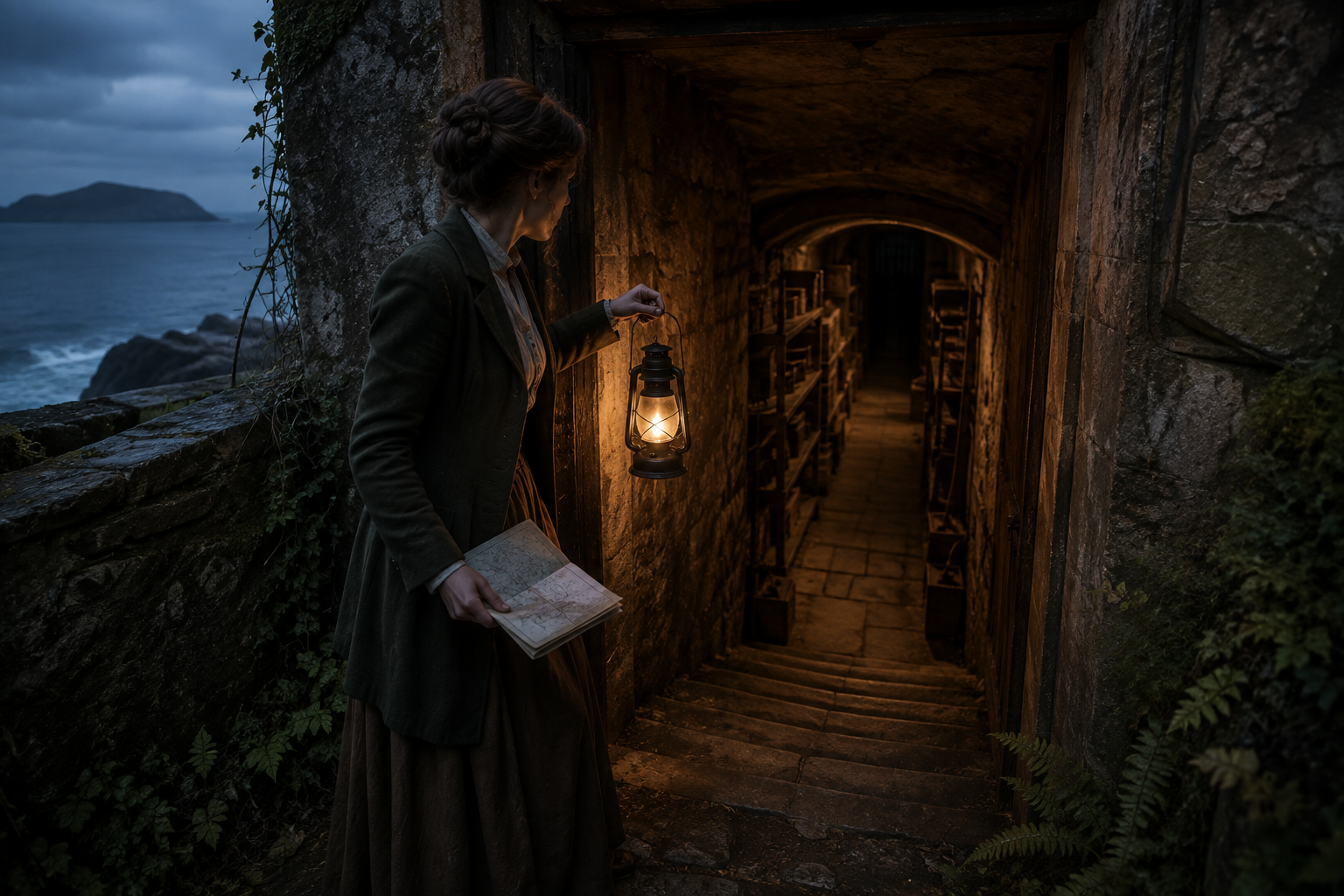
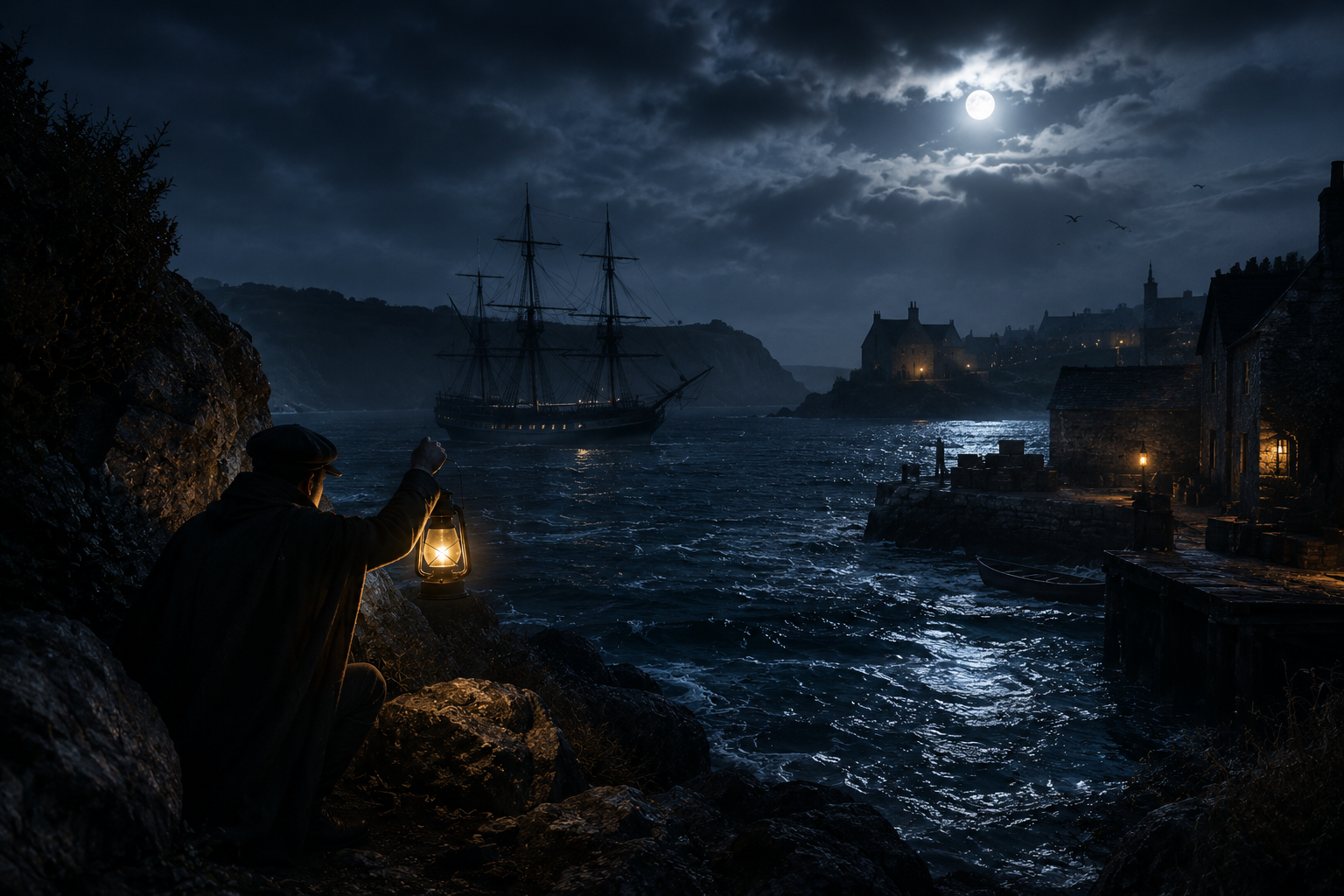
An island already feels like a locked room. There is water in every direction, a limited number of roads, and usually only a handful of ways to arrive or leave. When something goes wrong, everyone notices. When someone disappears, the question is not simply where did they go? but how could they have gone anywhere at all?That is why islands make such effective settings for locked-room mysteries.
An island can isolate suspects, intensify suspicion, and make ordinary geography part of the puzzle. It also creates a wonderfully atmospheric setting where fog, storms, cliffs, old houses, and abandoned buildings can all become part of the mystery.
For a historical mystery, the possibilities become even richer.
Without modern communication or transport, an isolated island can become almost completely cut off from the outside world.
And once everyone is trapped together, secrets have nowhere to hide.
An Island Creates a Natural Locked Room
The best locked-room mysteries need some form of limitation.
The detective cannot simply leave the scene and return with new information. The suspects cannot disappear whenever questioning becomes uncomfortable. Most importantly, the possible explanations must remain within a defined space.
An island provides that limitation naturally.
The sea forms a boundary that everyone can see.
A house on an island creates another boundary within it. If that house is reached by one boat, has only one road, or becomes inaccessible during a storm, the mystery becomes even tighter.
Suddenly, the investigator knows something important.
The culprit is probably still there.
That changes the atmosphere immediately.
The Sea Becomes Part of the Puzzle
On the mainland, a suspect can claim to have travelled somewhere else.
An island makes that explanation harder to accept.
If there is only one ferry, the detective can ask who was aboard. If private boats are available, she can investigate which vessel moved and when. Even a short journey across water can leave evidence.
Weather matters too.
Strong winds can prevent boats from sailing. Heavy rain can erase tracks, while fog can make navigation dangerous.
A storm therefore does more than create dramatic scenery.
It can physically change the boundaries of the mystery.
A character who could have escaped yesterday may be trapped today.
Everyone Becomes a Suspect
Isolation changes the relationship between characters.
On a large estate, someone can disappear into another wing of the house. In a city, a suspect can vanish into a crowd.
An island offers fewer hiding places.
That means everyone begins watching everyone else.
The gardener knows when the boat arrived. The innkeeper remembers who ordered supper. A fisherman knows which paths are passable after rain.
Even apparently ordinary people can become important witnesses.
However, suspicion works both ways.
A person who knows the island well may know where evidence can be hidden. Someone unfamiliar with the landscape may accidentally reveal that they have been somewhere they claimed never to visit.
Geography becomes evidence.
An Island Can Make an Alibi More Interesting
A strong mystery depends on believable timelines.
Islands make those timelines wonderfully complicated.
Suppose someone claims to have been on the western side of the island at nine o’clock.
Could they really have reached the house by nine-thirty?
The answer depends on the terrain.
Perhaps the shortest path crosses a cliff that becomes dangerous in the rain. Maybe a bridge has washed out. A supposedly twenty-minute journey might actually take an hour.
The detective must therefore understand the island before she can understand the alibis.
A map can become as important as a witness.
Storms Can Change Everything
There is something particularly effective about a storm in a locked-room mystery.
The wind rises.
The sea becomes dangerous.
The last boat leaves, or perhaps it cannot leave at all.
Then the lights go out.
Suddenly, the characters are not simply trapped by circumstance. They are trapped together.
A storm also provides opportunities for deception.
Footprints may disappear beneath rain. A boat could move without being noticed. A noise from outside may be mistaken for something happening inside the house.
Meanwhile, fear makes people behave differently.
Someone who seemed calm in the afternoon may become desperate by nightfall.
That desperation can reveal secrets.
Historical Islands Are Even More Isolated
Modern technology has made many islands feel less remote.
A mobile phone can connect someone to the outside world. A helicopter can arrive quickly, while satellite navigation can make travel easier.
Historical mysteries do not have those advantages.
A nineteenth-century island might depend on a small sailing boat, a lighthouse keeper, a local fisherman, or an infrequent ferry.
If the weather turns bad, communication can stop.
Letters may take days to arrive. Telegraph access might be limited or nonexistent. Even basic medical assistance could be far away.
This gives the mystery genuine isolation rather than simply the appearance of it.
The characters cannot call for help.
They have to solve the problem themselves.
Old Island Houses Are Full of Possibilities
An island becomes even more intriguing when the mystery takes place inside an old house.
Imagine a weather-beaten manor overlooking the sea.
The windows rattle during storms. Corridors lead to unused rooms, while servants know which doors stick and which floorboards creak.
Perhaps there is an old cellar beneath the house.
Maybe a disused boathouse stands at the edge of the property.
An attic could contain maps and journals belonging to a previous owner, while a sealed room has not been opened for decades.
Every space offers another possibility.
More importantly, the house can contain its own history.
The present mystery may be connected to something that happened there generations earlier.
The Island Itself Can Hold a Secret
One of the greatest strengths of an island setting is that the mystery does not have to remain inside the house.
The landscape can contain clues.
A ruined lighthouse might hold an old record. A sea cave could conceal evidence, while a forgotten burial ground may reveal a family connection.
Even the shoreline can become important.
Something washed ashore may seem meaningless until the detective understands where it came from.
A broken piece of wood could belong to a boat. A bottle might contain a message. A strange object found among the rocks could connect the island to someone who supposedly never visited.
The possibilities are almost endless.
Maps Become Especially Important
Islands and maps belong together.
A map shows what people believe about a place.
That does not necessarily mean the map is correct.
An old chart may omit a settlement. A dangerous reef could be deliberately marked incorrectly. A path may have disappeared, while another route may have been created after the map was drawn.
For a mystery investigator, these differences matter.
A map can reveal what someone knew.
It can also reveal what someone wanted others not to know.
This makes islands particularly well suited to mysteries involving cartographers, explorers, surveyors, and historical records.
Everyone Knows Everyone’s Business
Small communities create another layer of tension.
On an island, privacy can be difficult to maintain.
People notice visitors.
They remember which boat arrived and who was seen at the harbour. They know who has argued with whom, which families dislike each other, and which old stories are never discussed.
That knowledge can help the detective.
It can also create false assumptions.
A local person may be considered trustworthy simply because everyone knows them. An outsider may be viewed with suspicion because no one understands their reason for visiting.
The detective must therefore separate familiarity from truth.
Knowing someone for twenty years does not mean knowing what they are capable of hiding.
Isolation Makes Old Secrets More Powerful
Some secrets become dangerous because they have remained hidden for a long time.
An island community may preserve its own stories.
Perhaps everyone knows that something happened at the old lighthouse, although no one agrees about what. Maybe an entire family left the island decades ago, and the reason was never discussed.
A newcomer might begin asking questions.
Suddenly, old memories become relevant.
One elderly resident remembers a detail that was never written down. Another insists that the story is nonsense.
The disagreement itself becomes a clue.
Why Islands Work So Well for Nora Halewell
Nora Halewell is particularly suited to island mysteries because her investigations often involve records, maps, vanished places, and forgotten histories.
An island gives all of those elements somewhere to converge.
A missing settlement could have been removed from an old chart. A coastal survey might contain a deliberate omission. A lighthouse keeper’s journal could contradict the official record.
Then Nora discovers that the missing information is not merely historical.
It matters now.
That is when a map stops being a piece of background research and becomes evidence.
The Cartographer of Stormglass Island
This is exactly the kind of atmosphere that makes The Cartographer of Stormglass Island so compelling.
Stormglass Island is not simply a picturesque location.
Its isolation becomes part of the mystery.
The sea surrounds it. Its maps contain questions, and its history refuses to remain neatly in the past.
For Nora, discovering what happened means understanding the island itself.
Who mapped it?
What was left out?
Which records can be trusted?
And why would someone want part of the island’s story to disappear?
The setting does not merely contain the mystery.
It helps create it.
An Island Makes Escape Difficult
There is another reason islands work so well for locked-room mysteries.
Escape is visible.
If someone leaves a house in a city, they can disappear into streets and traffic.
On an island, leaving may require a boat.
That makes every departure significant.
Who had access to the boat? Who knew how to sail? Was the tide suitable? Did anyone see the vessel leave?
If no boat departed, then the suspect may still be on the island.
That simple fact can create enormous suspense.
But Islands Also Offer Places to Hide
Being trapped does not mean being easy to find.
An island can contain surprisingly isolated spaces.
There may be caves beneath cliffs, abandoned buildings, dense woodland, marshes, old mines, or paths known only to locals.
A person can therefore disappear without actually leaving.
This creates a useful contradiction.
The characters are trapped together, yet the island is large enough to conceal something.
The detective must determine where the boundaries really are.
The Weather Can Become an Unreliable Witness
Weather affects physical evidence.
Rain changes footprints. Wind moves objects, while waves erase marks from the shore.
Fog affects visibility.
Someone who claims to have seen a person across the harbour may have been mistaken. A figure in the mist could be a person, a tree, or something else entirely.
That uncertainty creates opportunities for both the detective and the culprit.
The detective must ask not only what a witness saw, but whether the conditions made that sight possible.
Isolation Increases Emotional Pressure
A locked-room mystery is not only about physical confinement.
It is also about emotional pressure.
When people cannot leave, disagreements become harder to escape.
Old resentments surface.
Accusations become personal, while alliances shift.
Someone who trusted another character in the morning may begin doubting them by evening.
That emotional pressure can produce mistakes.
A frightened person may reveal something they intended to keep secret. An angry witness may say too much. Meanwhile, someone who remains unusually calm may attract suspicion.
The island turns every relationship into part of the investigation.
The Perfect Island Mystery Has Layers
The strongest island mysteries usually have more than one secret.
There may be the obvious mystery.
Then there is the hidden history beneath it.
Perhaps someone is hiding a family secret. Another person knows why the old map is wrong. Someone else is afraid of what the detective will discover.
The final truth may connect all three.
That layered structure makes the setting feel alive.
The island has its own history, while the people living there have histories of their own.
The mystery becomes a question of which past is finally going to surface.
Why Readers Love Isolated Settings
There is something irresistible about a place from which there is no easy escape.
An island offers mystery before the crime even happens.
The sea creates distance. Fog hides the horizon, while old houses suggest stories that have been waiting for someone to uncover them.
Readers also understand the rules.
The setting is contained.
We can imagine the map, the harbour, the house, and the paths between them. As a result, when the detective discovers that something is impossible, the reader can test the geography too.
That makes the puzzle more satisfying.
The Island Is the Locked Room
Perhaps that is the greatest reason islands make perfect settings for locked-room mysteries.
The locked room does not have to be a single chamber.
It can be an entire island.
The sea becomes the walls.
The harbour becomes the door.
The weather becomes the lock.
And the people trapped inside become both witnesses and suspects.
For a historical mystery, that combination is especially powerful because the outside world may be far beyond reach.
When the last boat disappears into the fog, there is nowhere else to go.
Only the truth remains.