Smart Heroines in Historical Mystery Fiction Invite Readers to Think
Smart heroines in historical mystery fiction give readers more than a puzzle to solve.
They invite us to think with them.
A clever heroine does not only follow footprints, read letters, or question suspects. She studies patterns. She notices what has been left out. She listens to what people say, but she also pays attention to what they avoid saying.
That is part of Clara Everhart’s appeal.
Clara belongs in a world of lost manuscripts, time travel, invention, history, science, and emotional courage. Her stories are not only about danger or discovery. They are about a woman using her mind in places where others may prefer easy answers.
For readers who enjoy mystery with atmosphere and intelligence, Clara offers a satisfying kind of heroine. She is curious, thoughtful, and brave enough to follow a clue even when it leads somewhere strange.
Why Intelligence Matters in a Historical Mystery
Historical mysteries often place heroines inside worlds filled with rules.
There are social rules, family rules, academic rules, and rules about what women should know or say. Because of that, intelligence becomes more than a useful trait. It becomes a quiet form of resistance.
A smart heroine may not always have power in the obvious sense. She may not control the room, own the house, or command the men who dismiss her. Even so, she can observe, reason, and remember. She can connect one small fact to another until the truth begins to form.
That kind of intelligence makes a mystery feel rich.
It also makes the heroine more compelling. We do not simply watch Clara move through a plot. We watch her weigh evidence, test ideas, and decide whether a clue is fact, fear, or distraction.
Because of this, Clara’s intelligence feels active. It moves the story forward, but it also reveals who she is.
Smart Heroines in Historical Mystery Fiction Need More Than Facts
Facts matter in a mystery, but facts alone are not enough.
A heroine must know what to do with them.
Clara Everhart’s strength is not only that she gathers information. She asks better questions. Why is this manuscript missing? Who benefits if this invention is misunderstood? What part of history has been carefully hidden? Which detail has everyone accepted too quickly?
These questions show the difference between knowledge and wisdom.
A character may know many things and still miss the truth. Clara’s appeal comes from the way she combines learning with judgment. She can follow logic, but she also understands loyalty, grief, fear, and ambition. That emotional awareness gives her intelligence depth.
In historical mystery fiction, this matters because secrets rarely live only in documents. They live in people too.
Clara Everhart and the Courage to Be Curious
Curiosity can be dangerous in a mystery.
A missing manuscript may seem like a bookish problem at first. Yet one lost page can lead to a hidden truth, a dangerous invention, or a secret someone has protected for years. Clara’s curiosity pushes her past the simple explanation and into the deeper question.
That does not mean she is reckless.
Good mystery heroines need discipline as well as courage. Clara must decide which clue matters, which lead may be false, and which danger is worth facing. Her curiosity has shape. It does not scatter in every direction. Instead, it draws her toward the question that refuses to stay quiet.
This is why she works so well as a heroine.
She is not clever in a cold or distant way. Her mind is tied to purpose. She wants to understand because the truth matters, and because history can be changed by what people choose to hide.
Why Clara Everhart’s Intelligence Feels Human
A truly smart heroine should still feel human.
Clara does not need to be perfect to be compelling. In fact, perfection would make her less interesting. Readers connect with heroines who think carefully, make mistakes, learn from them, and keep going.
Clara’s intelligence feels believable because it includes growth.
She may see one part of a mystery clearly while missing another. She may follow a clue with confidence, then discover that the truth is more complicated than she expected. Because she is willing to revise her thinking, she becomes stronger as the story unfolds.
That is a key part of her appeal.
Her intelligence is not a fixed decoration. It is a living part of the story. She learns, adjusts, and keeps asking better questions.
Smart Heroines in Historical Mystery Fiction Challenge Easy Answers
Easy answers can be tempting.
A missing document may look like theft. A strange invention may seem like a simple machine. A warning from the past may be dismissed as superstition. In a weaker mystery, the obvious explanation might be enough for everyone.
Clara does not stop there.
She understands that history often becomes tidy because someone has made it tidy. Records can be altered. Manuscripts can be hidden. Inventions can be misused. A clever lie may survive for years if no one has the courage to question it.
This is where smart heroines in historical mystery fiction become especially powerful.
They challenge the story everyone else has accepted. Clara does this by combining logic with patience. She does not reject an answer simply because it is convenient, but she refuses to accept it until the evidence holds.
That kind of careful doubt creates wonderful suspense.
The Appeal of a Bookish Mystery Heroine
Many readers love Clara because her world feels bookish and atmospheric.
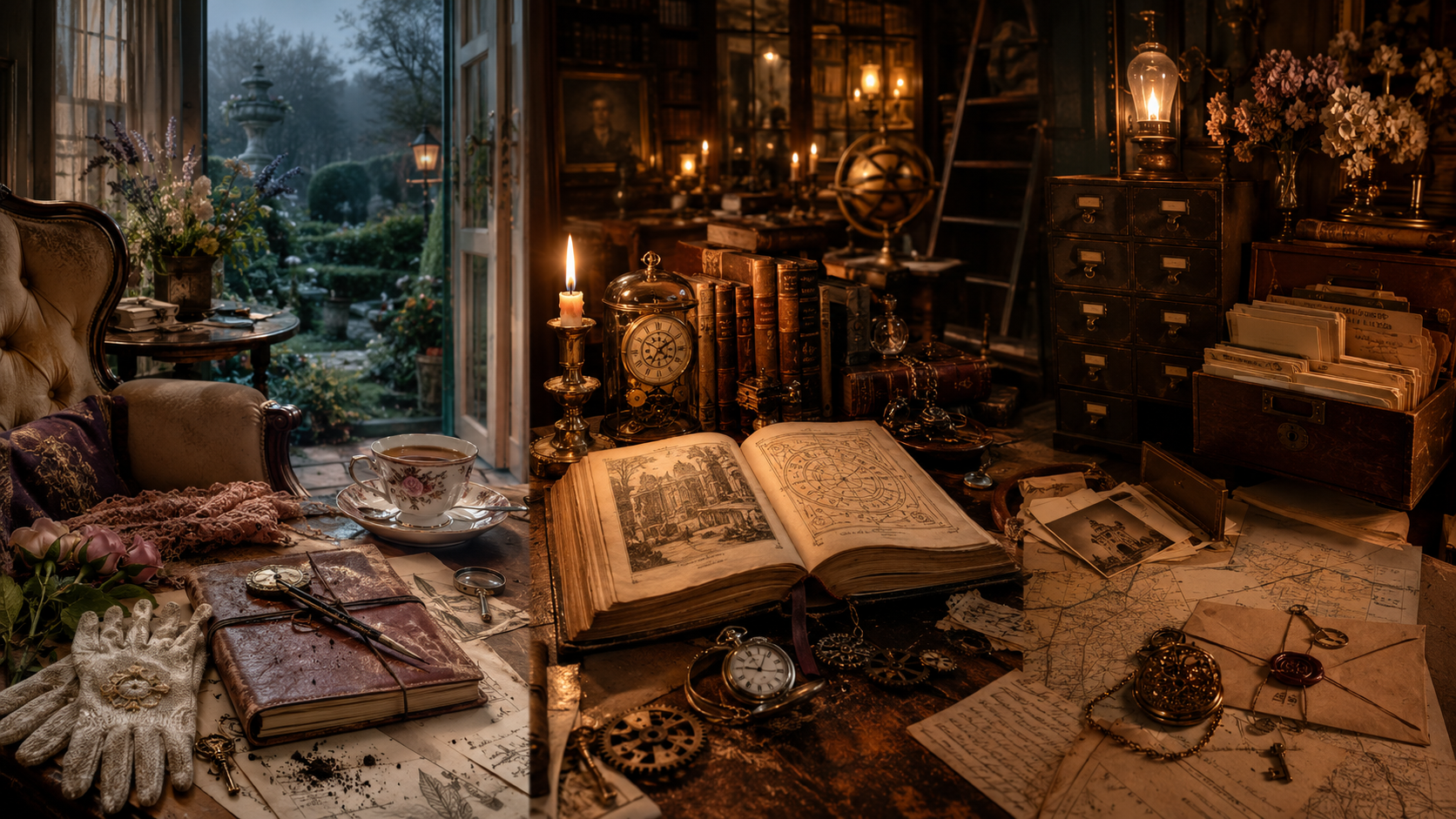
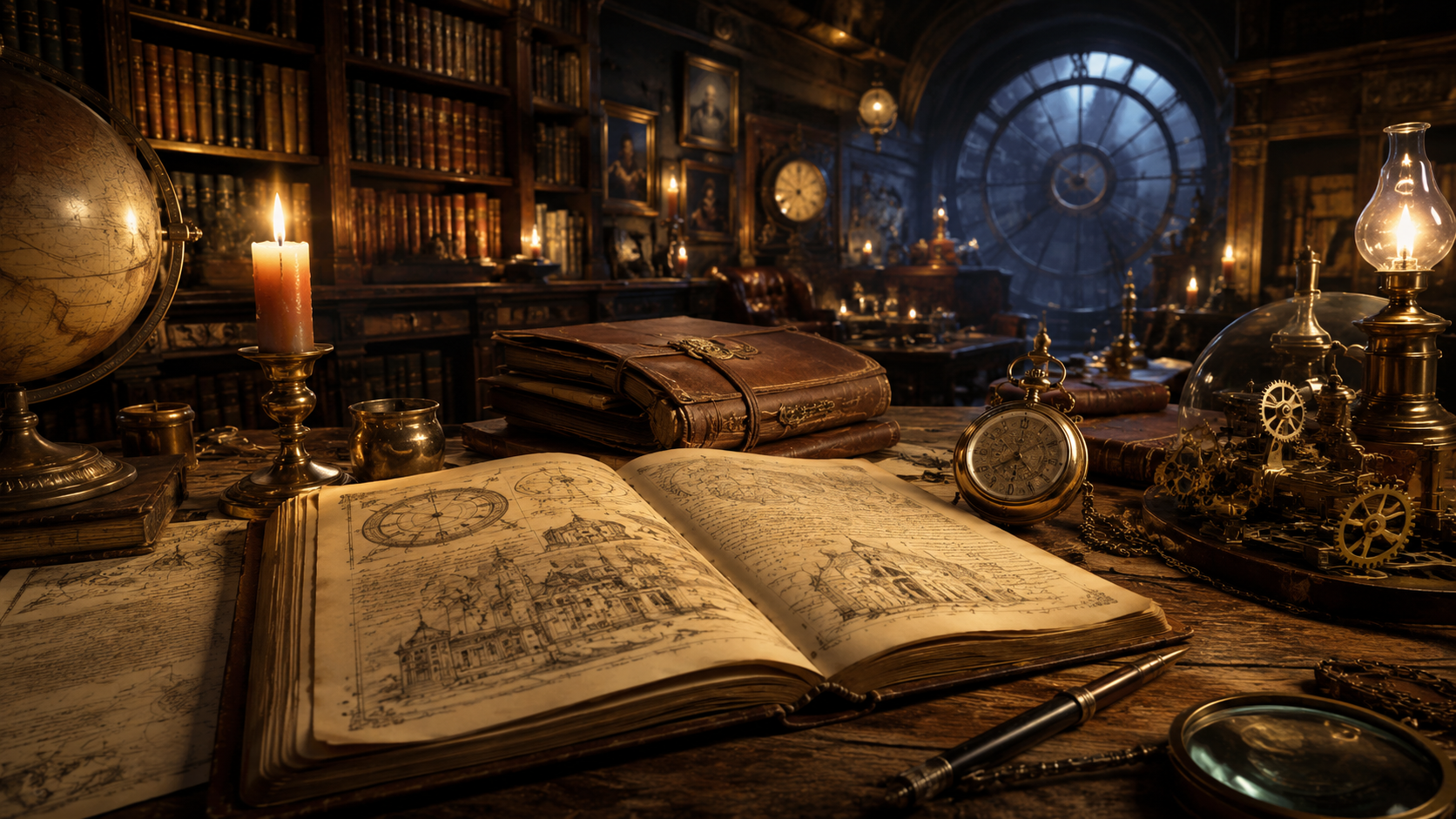
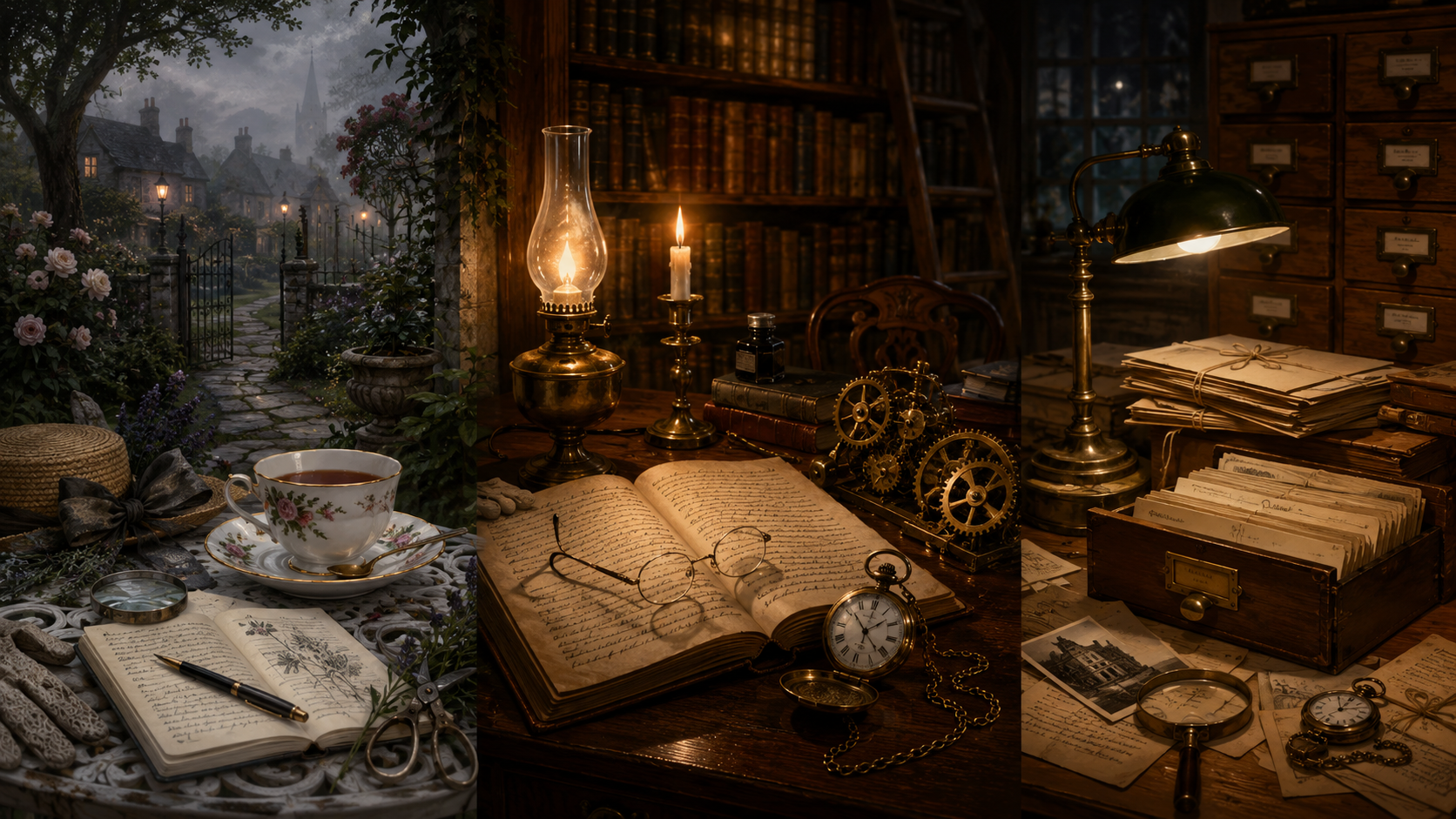
Old libraries, manuscripts, notes, maps, and research all create a rich setting for mystery. These objects feel quiet, but they are full of possibility. A manuscript can hide a message. A margin note can change a timeline. A diagram can reveal that an invention was never meant to do what people believed.
Clara fits naturally in this world.
She treats books and records as living evidence. They are not dusty props placed in the background. They are part of the mystery itself. Every page may hold a clue, and every missing page may matter even more.
For readers who love historical mystery, that is deeply satisfying.
A bookish heroine gives the story texture. She turns reading, research, and careful thought into acts of courage.
Intelligence and Emotional Courage Work Together
Clara’s appeal does not come from intelligence alone.
Her stories also need emotional courage.
A heroine can solve a puzzle and still avoid the truth if the answer hurts too much. Clara has to face not only what happened, but what it means. She may uncover betrayal, loss, danger, or a hidden choice that shaped someone’s life.
That is where her character becomes richer.
She follows facts, but she does not treat people as puzzles. Her intelligence helps her reach the truth, while her courage helps her face the human cost of it. This balance gives her mysteries warmth.
Readers want a heroine who can think clearly, but they also want one who cares.
Clara offers both.
Why Historical Settings Make Smart Heroines Shine
Historical settings create special challenges for intelligent heroines.
Information may be hard to find. Travel may be difficult. Social rules may limit who can speak, study, or investigate. Even a simple question can become bold if the wrong person thinks it should not be asked.
These limits make Clara’s intelligence shine.
She cannot rely on modern tools, quick searches, or instant answers. Instead, she must observe, read, compare, remember, and reason. That slower process suits cozy mystery because it gives the reader time to notice clues alongside her.
The historical setting also raises the stakes.
When Clara follows a lost manuscript or a dangerous invention, she is not only solving a private puzzle. She may be uncovering something that changes how people understand the past.
Clara Everhart’s Appeal for Cozy Mystery Readers
Clara Everhart appeals to cozy mystery readers because she brings together several pleasures at once.
Her stories have history, mystery, and atmosphere. They also have clever clues, lost knowledge, and the sense that truth may be hidden in a place everyone else has overlooked. Because Clara is thoughtful and determined, readers can trust her to follow the mystery with care.
She does not need to be loud to be strong.
Her strength sits in her attention, her questions, and her refusal to turn away when a clue becomes difficult. That kind of heroine is rewarding because she respects the reader’s intelligence too.
The best mysteries do not simply reveal the truth to us. They let us take part in finding it.
Clara’s stories do exactly that.
Why We Keep Reading Smart Heroines in Historical Mystery Fiction
Smart heroines in historical mystery fiction endure because they make stories feel deeper.
They remind us that intelligence can be brave. They show that curiosity can challenge silence. They prove that old records, lost manuscripts, and strange inventions can still matter when a determined heroine is willing to read them properly.
Clara Everhart’s appeal lies in this quiet power.
She follows the facts, but she also follows the human meaning behind them. She questions what others accept, and she keeps searching even when history becomes difficult. Through her, the mystery becomes more than a case. It becomes a search for truth across time, memory, and hidden knowledge.
For readers who love clever heroines, historical atmosphere, and mysteries with thoughtful suspense, Clara Everhart belongs on the reading list.
She does not only solve mysteries.
She thinks her way through them.