Tag: Clara Everhart

  • Clockwork Mysteries: Explore Vienna in 1873

    Clockwork Mysteries: Explore Vienna in 1873

    Clockwork mysteries ask us to look past the face of the clock. We can see the hands move, but the reason for that motion stays out of sight. That gap between what we see and what we know is part of the pleasure of a mystery.

    The Clockwork Heir by Mandy Ludick takes readers to Vienna in 1873. If you like a mystery with a strong sense of place, the city offers a good starting point. The clockwork theme also gives you something small to look for in a world that can feel very large.

    Why Vienna in 1873 draws the eye

    Vienna hosted a world exhibition in 1873. An exhibition invites people to look at things they might never see at home. For a reader, that setting offers a chance to think about what it feels like to see a new machine in motion for the first time.

    Picture the difference between hearing someone describe a mechanism and watching it work. A small movement can make more sense once you see where it starts. In the same way, historical fiction can make a period easier to picture through a few well-chosen details.

    What makes clockwork mysteries so satisfying?

    A clock has a face we can read at a glance. Inside, however, gears and other parts work together in ways we may never stop to think about. A mystery has a similar appeal. Early on, you see what is happening, but you may need time to see how it all fits.

    That is why the image of a clock can do so much with so little. Its steady motion seems familiar. Take a closer look, though, and you find a series of small actions that depend on one another. As a reader, you get a similar reward when a detail you noticed earlier takes on a fresh meaning.

    Bring one question to your reading

    As you start the book, ask what catches your eye first. Perhaps it is Vienna itself. Maybe it is the thought of the parts hidden behind a clock face. Either way, you can enjoy the setting and follow your curiosity at the same time.

    On your next reading break, try recalling one detail that stuck with you. It need not be a clue. Sometimes a small image is simply the thing that makes you want to return to the story.

    Ready to visit Vienna in 1873? Look for The Clockwork Heir by Mandy Ludick on Amazon.

  • Time-Travel Prophecy Mystery: Why Predictions Make the Past and Future More Dangerous

    Time-Travel Prophecy Mystery: Why Predictions Make the Past and Future More Dangerous

    A woman discovers a letter written decades before she was born. At first, its contents seem strange rather than frightening. Then she reaches a line describing something that has not happened yet. The place is correct. The circumstances are correct. Perhaps even her name appears on the page. Suddenly, she is no longer asking who wrote the prediction. She is wondering whether she can stop it. That uncertainty makes the time-travel prophecy mystery such a powerful form of speculative fiction. Time travel already challenges our ideas about cause and effect, while prophecy adds another unsettling question. If someone knows what will happen, does that knowledge make the future easier to change, or does trying to prevent it actually help bring it about?

    For a mystery writer, the possibilities are deliciously complicated.

    A Prophecy Is a Clue From the Wrong Direction

    Most mystery clues point backwards. A detective finds a muddy footprint because someone already crossed the garden. She discovers a torn letter because somebody wrote and damaged it earlier. Even when the investigator does not understand the evidence, she usually knows that the event which created it has already happened.

    A prediction reverses that pattern. Now the evidence may point towards something that has not happened yet. That makes a prophecy an unusual clue because the investigator cannot simply reconstruct the past. She must decide whether the predicted event is genuine, whether she has interpreted it correctly, and whether her own actions could change the outcome.

    In a time-travel prophecy mystery, those questions become even more complicated because information can move between different periods. The future can leave evidence in the past.

    Knowing the Future Creates a New Kind of Suspense

    Traditional suspense often comes from not knowing what will happen.

    Prophecy can create suspense by doing almost the opposite.

    Tell the reader that something terrible will happen at midnight, and the question changes from What will happen? to How will it happen?

    That distinction can create enormous tension.

    Characters may spend the entire story trying to prevent the predicted event. Every decision then matters because the reader keeps wondering whether this action will save them or move them one step closer to the very future they fear. The prophecy does not remove uncertainty, it simply relocates it.

    Can the Future Be Changed?

    This question sits at the heart of many time-travel stories.

    If the future is fixed, then a prophecy may describe something that must happen. Characters can struggle against it, but their actions may already form part of the chain of events that creates the predicted outcome.

    Alternatively, time may remain flexible.

    A prophecy could reveal one possible future rather than an unavoidable one. Knowledge then becomes powerful because characters can make different choices.

    Both approaches can work, although each creates a different kind of mystery.

    A fixed timeline encourages the reader to search for hidden meanings. Perhaps the prophecy comes true exactly as written but not in the way anyone expected.

    A changeable timeline creates another problem. If the characters prevent the predicted future, what happens to the prophecy that warned them?

    Trying to Prevent a Prophecy May Fulfil It

    This is one of the most satisfying possibilities in a time-travel prophecy mystery.

    Imagine a prediction stating that a woman will disappear from a railway station on a particular evening.

    Her friends decide she must never go near the station.

    Then something happens.

    Perhaps a child goes missing, and evidence leads there. Maybe the woman discovers that someone she loves will be endangered unless she intervenes. She travels to the station precisely because the prophecy frightened everyone into taking actions that eventually send her there.

    The attempt to prevent the future has helped create it.

    Suddenly, cause and effect become tangled together.

    Did the prophecy predict the event?

    Or did knowledge of the prophecy cause it?

    That question can remain with readers long after the mystery ends.

    Predictions Can Be Misunderstood

    Prophecies become especially effective when the words are accurate but the interpretation is wrong.

    A character reads that someone will “die before dawn” and naturally assumes physical death. Yet the prediction may refer to a false identity disappearing, a legal declaration of death, or even a name being removed from a historical record.

    The wording does not need to cheat. Instead, the characters bring their own assumptions to it.

    That approach works particularly well in mystery fiction because readers can examine the same information as the characters. When the truth finally emerges, the ideal reaction is not, “There was no way I could have known that.”

    It is, “Of course. It was there all along.”

    A well-written prediction should therefore reveal enough to create questions without explaining so much that the mystery collapses.

    Who Made the Prediction?

    The content of a prophecy matters, but its source can create an entirely separate mystery.

    Suppose Clara Everhart discovers a note predicting something that will happen to her.

    Her first question may concern the event itself.

    The second should be more disturbing.

    Who wrote this?

    If the handwriting belongs to someone living decades earlier, how did that person know Clara’s name? Perhaps the paper comes from the correct historical period, so a modern forgery seems unlikely.

    Then another possibility emerges.

    What if Clara recognises the handwriting?

    What if it is her own?

    A time-travel prophecy mystery becomes particularly compelling when discovering the source of the prediction is as important as understanding what it means.

    What If the Prophet Has Already Seen the Future?

    Time travel creates an elegant alternative to supernatural prophecy.

    Perhaps nobody actually predicts anything, they remember it.

    A character travels forward, witnesses an event, and later returns to an earlier period. From the perspective of everyone around them, their knowledge appears prophetic.

    Yet the traveller is not seeing the future through supernatural means. They have simply experienced events in a different order.

    This possibility creates fascinating problems of trust.

    The traveller may know that something happens without understanding why. Their memory could also be incomplete, while the context surrounding the event may remain unknown.

    Seeing the future does not necessarily mean understanding it.

    That distinction leaves plenty of room for mystery.

    A Prediction Can Turn an Ordinary Object Into Evidence

    Time-travel mysteries often become most intriguing when extraordinary ideas hide inside ordinary objects.

    A photograph.

    A diary.

    A pocket watch.

    A newspaper clipping.

    A handwritten note tucked inside an old book.

    None of these objects needs to appear unusual at first. Their significance emerges when something about them does not belong.

    Perhaps a photograph shows a person who should not have been alive when the picture was taken. A newspaper describes an event that has not yet occurred, or a diary records a conversation word for word several days before the characters have it.

    Such objects make predictions tangible.

    The heroine can hold the impossible evidence in her hands.

    Prophecy Changes the Meaning of Free Will

    The emotional heart of a time-travel prophecy mystery often lies beyond the mechanics of time travel.

    It lies in choice.

    Imagine discovering that you will betray someone you love.

    Would you avoid that person?

    Would you tell them?

    Perhaps you would deliberately behave differently, yet every effort to prove the prophecy wrong could change your relationship until the predicted betrayal becomes possible.

    Now the mystery becomes personal.

    The heroine is no longer simply investigating time.

    She is investigating herself.

    Does knowing what she might become change who she is? Can a future version of a person be blamed for choices the present version has not yet made?

    Those questions give time-travel mysteries emotional depth.

    Clara Everhart and the Problem of Impossible Knowledge

    Clara Everhart’s world is particularly suited to mysteries involving knowledge that appears where it should not.

    Her investigations can force her to question whether an object belongs to the moment in which she finds it, whether memory can be trusted, and whether apparently impossible connections have a rational explanation within the strange rules she is discovering.

    A prediction would challenge Clara in a very personal way.

    She is naturally curious, so she wants answers. However, knowing too much about the future can become dangerous.

    Imagine finding a description of a decision you have not yet made.

    Does reading it influence your eventual choice?

    If you deliberately choose the opposite, have you escaped the prediction, or was your rebellion always part of what happened?

    Clara cannot solve that problem merely by collecting more information.

    At some point, she must decide what she believes about choice.

    The Most Dangerous Prophecy May Be the One You Believe

    Predictions influence behaviour.

    That fact remains true even when the prediction itself is false.

    A forged prophecy could manipulate someone into visiting a certain place, avoiding a particular person, hiding an object, or accusing an innocent suspect. If the victim believes the prediction came from the future, they may obey it more readily than an ordinary warning.

    Now prophecy becomes a weapon.

    A clever antagonist does not need genuine knowledge of future events.

    They only need someone else to believe they have it.

    That possibility adds another layer to the mystery because the heroine must ask whether she is investigating a temporal paradox or an elaborate deception.

    Perhaps the impossible clue is not impossible at all.

    Prophecy Can Create a Mystery Across Generations

    Time travel allows one decision to echo through decades.

    A warning written in 1880 might not make sense until someone discovers it in 1920. Another character could carry that information into a different period, where it influences an event that eventually causes the original warning to be written.

    Suddenly, several generations become participants in the same mystery.

    One person hides the clue.

    Another misunderstands it.

    Someone else preserves it without knowing why.

    Finally, the heroine discovers enough of the chain to understand what everyone else only saw in fragments.

    This structure can make a time-travel prophecy mystery feel much larger than a conventional puzzle because the investigation is not limited to one crime scene or one moment.

    Time itself becomes the crime scene.

    Good Prophecies Reveal Less Than They Seem To

    A prediction should create questions rather than answer them.

    Too much detail can weaken suspense. If the heroine learns exactly who will commit the crime, where it will happen, why they will do it, and how to stop them, she has received instructions rather than a mystery.

    The strongest prophecies leave gaps.

    Perhaps the heroine knows the location but not the victim. She might know the date without understanding the event, or she may receive one sentence whose meaning changes completely once she discovers who wrote it.

    Readers can then form theories alongside her.

    Each new clue changes the meaning of the original prediction until something that appeared clear at the beginning becomes far more complicated.

    The Future Can Become a Suspect

    Most mysteries ask whether we can trust people.

    Time-travel mysteries can ask whether we can trust events.

    A heroine may know that something happened because she witnessed it in the future, yet travelling into the past could alter the circumstances that produced that future.

    Does her memory still count as evidence?

    Perhaps she returns to a familiar place and discovers that details have changed. Someone who once remembered an event now insists it never happened.

    Even more unsettling, she may possess an object from a future that no longer exists.

    The investigator now has evidence without a history.

    That is exactly the sort of contradiction that makes time-travel mysteries so irresistible.

    The Prediction Is Only the Beginning

    The most interesting prophecy does not tell the heroine what to do.

    It forces her to decide.

    She may discover the date of a coming tragedy, yet preventing it could endanger someone else. A warning might tell her never to enter a particular house, but every clue she needs waits behind its doors.

    Perhaps she even receives a message from her future self.

    Do not change what happens.

    Would she obey?

    Could she?

    A compelling time-travel prophecy mystery keeps returning to that tension between knowledge and choice. Knowing the future sounds like an advantage until the heroine realises that every decision she makes may become part of the future she already knows.

    When Tomorrow Leaves Evidence Behind

    Mystery fiction normally asks investigators to reconstruct what has already happened.

    Time travel allows the puzzle to run in both directions.

    A clue can come from yesterday, but it can also come from tomorrow. A warning may prevent an event, cause it, or survive from a future that no longer exists. Meanwhile, a prediction may prove completely accurate even though everyone misunderstood what it meant.

    That is why prophecy and time travel fit together so naturally.

    Both challenge certainty.

    The heroine wants to know what will happen because knowledge feels safer than uncertainty. Yet once she receives that knowledge, she discovers that certainty carries dangers of its own.

    Perhaps the real question in a time-travel prophecy mystery is not whether we would want to know the future.

    It is what we would do after the future answered back.

  • Bravery in Historical Mystery Heroines: Why Courage Does Not Mean Being Fearless

    Bravery in Historical Mystery Heroines: Why Courage Does Not Mean Being Fearless

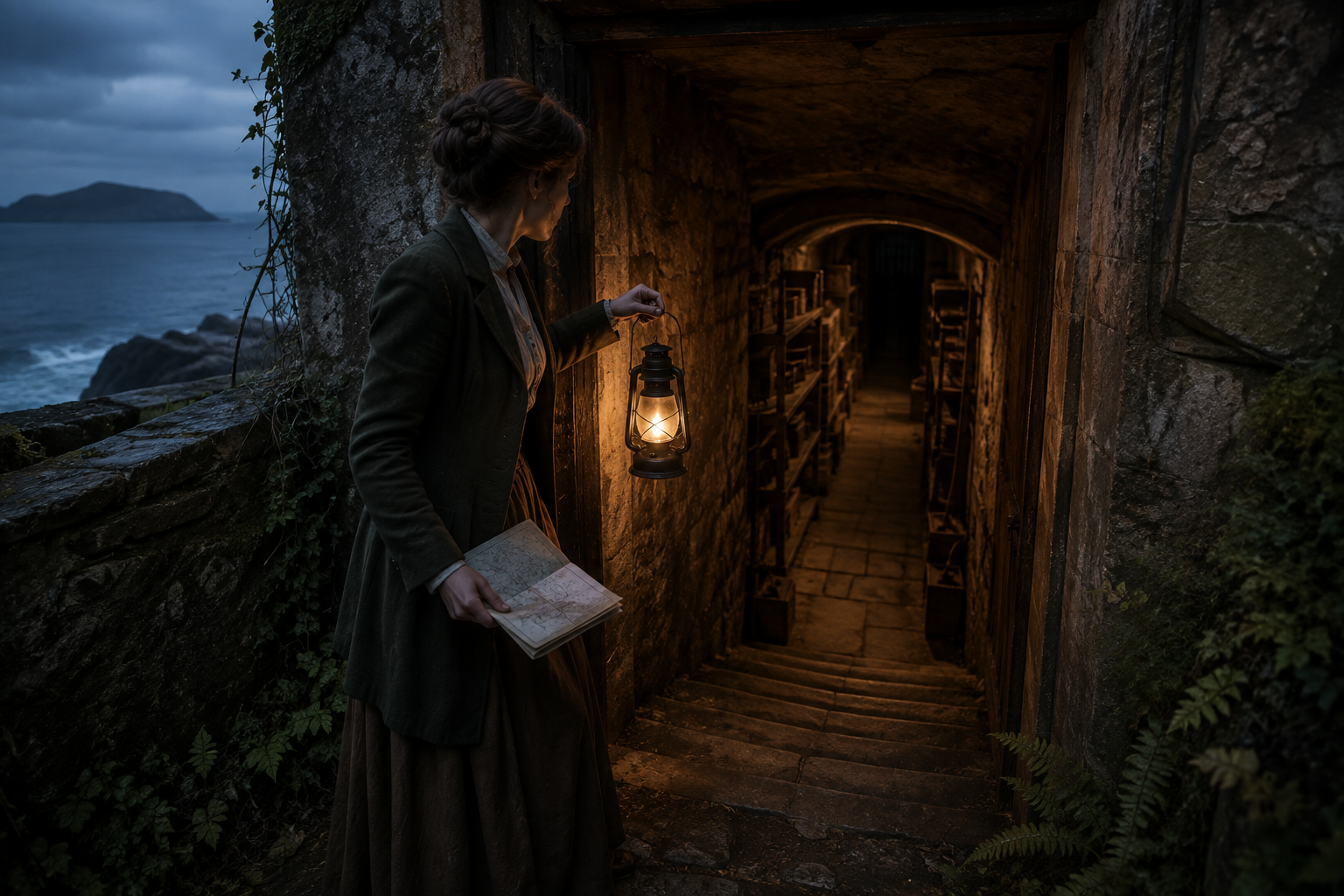
    A heroine stands at the entrance to a dark passage beneath an old house. She has a lantern in one hand and a map in the other. Everything she has discovered tells her that answers may lie ahead, but those same clues warn her that continuing could be dangerous.

    She is afraid.

    And she goes anyway.

    That moment captures something I find compelling about bravery in historical mystery heroines. Courage becomes far more interesting when a character feels fear rather than simply charging into danger without considering the consequences.

    A brave heroine does not need to be fearless. In fact, fear can make her courage more believable because she understands what might happen and still decides that discovering the truth matters enough to continue.

    Bravery Is Not the Absence of Fear

    We sometimes describe courageous characters as though fear never touches them.

    They walk into dark rooms without hesitation, confront dangerous suspects alone, and follow mysterious noises in the middle of the night. Nothing appears to unsettle them for long.

    Yet real courage works differently.

    Fear warns us that something matters. It tells us that we could lose something, suffer harm, or make a terrible mistake. Therefore, a character who recognises danger and continues despite it can feel much braver than one who never seems frightened at all.

    That distinction matters when writing bravery in historical mystery heroines because historical women often face risks beyond the mystery itself. Their choices may threaten their reputations, security, employment, or relationships as well as their physical safety.

    Continuing can require several different kinds of courage.

    Historical Heroines Face More Than Physical Danger

    A mystery heroine does not need to be running from a murderer to show bravery.

    Sometimes she simply needs to ask the question everyone wants her to leave unanswered.

    Historical settings make that especially powerful because social expectations can become obstacles of their own. A woman who challenges an influential man may face consequences even when she is correct. Someone who questions a respected family could find herself accused of gossip, disloyalty, or improper behaviour.

    Money and position can also affect how freely she acts.

    A wealthy woman may possess independence that a governess or servant does not. Meanwhile, a woman dependent upon an employer might recognise a lie but know that exposing it could cost her home and livelihood.

    As a result, courage can appear in quieter forms.

    Speaking becomes brave.

    Refusing to accept an obvious injustice becomes brave.

    Choosing to believe an overlooked witness can become brave too.

    Nora Halewell Does Not Go Looking for Danger

    Nora Halewell is a good example of the kind of courage I enjoy exploring.

    She does not seek danger because she enjoys it. Nor does she enter a mystery assuming that nothing bad can happen to her.

    Quite the opposite.

    Nora understands that some doors should make her nervous.

    She works with old books, records, maps, and archives, so her investigations often begin somewhere apparently safe. A strange detail in a document leads to another question, while an inconsistency in a map suggests that something has been forgotten or deliberately concealed.

    At first, the danger may seem distant.

    Then the past begins to reach into the present.

    By the time Nora realises how serious the situation has become, walking away is no longer simple. Someone has been forgotten, a truth has been buried, or an injustice remains hidden because people accepted the official version of events.

    Nora may wish she had never found the first clue.

    However, she cannot pretend she did not see it.

    Curiosity Can Become Responsibility

    This is where Nora’s curiosity changes.

    At the beginning of a mystery, she wants to understand something that does not make sense. Later, she often discovers that the unanswered question concerns real people whose stories have been altered, forgotten, or deliberately erased.

    Curiosity then becomes responsibility.

    That change is important because it gives Nora a reason to continue even when she feels frightened.

    She is no longer searching merely because she wants an answer. Someone may need that answer.

    Perhaps a name disappeared from a record. Maybe a map deliberately removed a settlement, or a document tells a version of history that contradicts what people remember.

    Once Nora understands what has been lost, turning away becomes difficult.

    Fear remains, but something else has become stronger.

    The Dark Passage Is More Frightening When You Understand the Risk

    Imagine Nora standing before a hidden passage.

    The sensible choice may seem obvious.

    Do not enter.

    The passage is dark, the structure is old, and Nora has no guarantee that it leads anywhere safe. Worse still, she may already suspect that someone does not want her investigating it.

    A fearless heroine might simply lift her lantern and march inside.

    Nora would probably hesitate.

    She might listen first. Perhaps she checks the map again, considers whether anyone knows where she is, and wonders whether she has made a terrible mistake.

    Then she enters.

    That hesitation does not weaken the scene. Instead, it strengthens it because the reader understands that Nora knows she has reason to be afraid.

    Her courage lies in the decision that follows.

    Courage Can Mean Admitting You Need Help

    Another interesting aspect of bravery in historical mystery heroines is the willingness to accept help.

    Fiction sometimes treats independence as though it requires doing everything alone. A heroine proves her strength by refusing assistance, keeping dangerous discoveries secret, and confronting threats without telling anyone where she is going.

    That approach can certainly create suspense, but it is not the only way to show courage.

    Asking for help can require humility.

    Trusting another person with important information can feel risky, especially if the heroine has previously been betrayed or dismissed. Likewise, admitting that a situation has become too dangerous to handle alone requires her to recognise her limits.

    Nora gradually learns that uncovering the past does not mean she must carry every burden herself.

    Other people may possess knowledge she lacks.

    Listening to them can move the investigation forward.

    Nora’s Strength Is Also Her Vulnerability

    Every useful character strength can create problems when pushed too far.

    Nora‘s determination helps her uncover truths that other people overlook, but that same determination can lead her deeper into danger. Her curiosity makes her a strong investigator, yet it can also make unanswered questions almost impossible for her to ignore.

    Once something does not fit, she wants to know why.

    That quality becomes particularly dangerous when someone else desperately wants the answer to remain hidden.

    However, removing Nora’s fear would remove much of the tension from those moments. If she never worried about the consequences, her determination would simply become recklessness.

    Instead, she must repeatedly decide whether the truth justifies another step.

    Sometimes it does.

    At other times, she needs to change her approach.

    That tension allows courage to become part of her character development rather than merely a convenient personality trait.

    Arabella Grey Shows Courage Differently

    Arabella Grey’s courage often emerges through confrontation.

    She watches people closely, and once she recognises that something is wrong, she can be remarkably difficult to silence. Social status does not automatically impress her, while respectability does not convince her that someone must be innocent.

    Yet Arabella also faces consequences for challenging people.

    A direct accusation can close doors. Asking the wrong question may alert a suspect, while pushing too hard can place another person at risk.

    Therefore, Arabella must learn when to confront and when to wait.

    Her courage lies not only in speaking but also in knowing when the truth needs patience.

    Clara Everhart Faces the Fear of Not Understanding

    Clara’s mysteries bring a different kind of uncertainty.

    Sometimes the evidence challenges her understanding of what should be possible. A memory, object, or connection may refuse to fit into the explanation she wants to accept.

    That creates its own fear.

    Physical danger is frightening, but so is realising that your understanding of reality may be incomplete.

    Clara must continue asking questions even when the answers unsettle her. Instead of running from what she cannot explain, she learns to examine it carefully.

    Her courage therefore grows through uncertainty.

    She does not always know where the next clue will lead, yet she keeps searching.

    Different Heroines Need Different Kinds of Courage

    This is why I enjoy exploring bravery in historical mystery heroines across different series.

    Arabella may need the courage to confront someone powerful.

    Clara may need the courage to accept something she cannot yet explain.

    Nora may need the courage to follow a forgotten trail into an uncertain place.

    Their fears differ because their personalities and mysteries differ.

    However, the principle remains the same.

    Courage becomes meaningful when something is at stake.

    Fear Can Help a Heroine Make Better Decisions

    Fear is not always an enemy.

    Sometimes it tells a heroine to look more carefully.

    A nervous feeling may make Nora check an old map again before entering a passage. Arabella might recognise that a suspect’s sudden friendliness should make her cautious, while Clara may hesitate before trusting a connection that appears too convenient.

    Those moments allow fear to become information rather than weakness.

    A strong heroine can listen to that warning without allowing it to control her.

    She prepares.

    She thinks.

    Then she decides.

    That process often creates a more believable investigator because bravery and good judgement can exist together.

    The Quietest Courage Can Matter Most

    Not every courageous moment needs a dramatic confrontation.

    Some of the strongest scenes occur when nobody else recognises what the heroine has risked.

    A woman quietly tells the truth after years of silence.

    Someone hands over a document that could threaten her family’s reputation.

    A servant contradicts her employer because an innocent person may otherwise suffer.

    Nora enters a forgotten place because a person erased from history deserves to be remembered.

    These actions may not involve weapons, chases, or dramatic rescues, yet they can carry enormous emotional weight.

    Historical mysteries work especially well with this quieter courage because so many secrets survive through silence.

    Breaking that silence can be dangerous.

    Why Fear Makes Mystery Heroines Stronger

    Readers do not need heroines who always know what to do.

    Often, we connect more deeply with characters who doubt themselves, make mistakes, feel frightened, and still find a way forward.

    That is why bravery in historical mystery heroines should not require the removal of fear.

    Fear gives the decision weight.

    When Nora raises her lantern before entering a dark passage, the important thing is not that she suddenly stops being afraid. She may still want to turn around. Every sensible instinct may tell her that whatever lies ahead could change everything.

    Yet somewhere beyond that darkness is a truth somebody tried to hide.

    So she tightens her grip on the map.

    She lifts the lantern.

    And she takes the next step.

    Because bravery is not always walking without fear.

    Sometimes it is simply refusing to let fear decide where the story ends.

  • Three Historical Mystery Heroines, Three Ways to Solve a Locked-Room Mystery

    Three Historical Mystery Heroines, Three Ways to Solve a Locked-Room Mystery

    A door is locked from the inside. The windows are secured, nobody admits to entering the room, and yet something impossible has happened within it. For a mystery reader, few situations are more tempting. Locked-room mysteries force investigators to look beyond the obvious. However, the clues they notice often depend on the kind of investigator they are. One heroine may question the people around her, while another searches for connections that stretch beyond the present. A third may turn to maps, records, and forgotten history.

    That difference lies at the heart of my three mystery series. Arabella Grey, Clara Everhart, and Nora Halewell are all determined to uncover the truth, but they approach a mystery in very different ways.

    So, what would happen if these three historical mystery heroines faced the same locked room?

    The Locked Room

    Imagine an old country house late in the evening. A gentleman has entered his private study and locked the door behind him. Several people hear him moving around inside, yet nobody sees him leave. An hour later, the household becomes concerned because he does not answer.

    Eventually, they force open the door.

    The room is empty.

    The windows remain fastened from within, while the key still sits in the lock. A fire burns low in the grate, and an unfinished cup of tea rests on the desk. Papers lie scattered across the floor, but there is no obvious hiding place and no second door.

    Three investigators enter the room.

    Each one sees something different.

    Arabella Grey Starts With the People

    Arabella would examine the study, but her attention would soon turn toward the people standing outside it.

    Who claims to have heard the gentleman moving around?

    Who brought the tea?

    Which family member insists that the windows were locked?

    More importantly, who seems unusually eager to explain what must have happened?

    Arabella understands that people often reveal more than they intend. A nervous glance, an unnecessary explanation, or a detail mentioned before anyone else knew about it can become as important as a fingerprint.

    Her investigation would therefore begin with conversation.

    Arabella might ask the same question in several different ways because she wants to hear whether the answer changes. She would also compare one person’s account with another, and she would pay close attention when somebody tries to direct suspicion elsewhere.

    For Arabella, the locked door is only part of the puzzle. The people surrounding it matter just as much.

    The Hidden Motive Matters to Arabella

    Among these three historical mystery heroines, Arabella is perhaps the most interested in motive.

    A seemingly impossible disappearance becomes easier to understand once she knows why someone wanted it to happen.

    Perhaps the missing gentleman planned to alter his will. Maybe he discovered that someone had been stealing from the estate, or he intended to reveal a scandal that could destroy a respectable reputation.

    Once Arabella finds the motive, people’s behaviour begins to look different.

    The nervous nephew may not simply be worried about his uncle. A servant who insists that she heard footsteps inside the study may have a reason for establishing a particular time. Even the person who broke down the door could have something to gain from everyone believing it had remained locked.

    Arabella would keep asking questions until the human story behind the impossible room began to emerge.

    Clara Everhart Looks for the Connection

    Clara would approach the same study differently.

    She has learned that the present does not always stand alone. Objects, places, and moments can carry connections that reach beyond what appears immediately visible.

    Her attention might settle on something everyone else considers ordinary.

    Perhaps an old pocket watch lies beside the teacup.

    Maybe a letter on the desk carries a date that should make no sense.

    A portrait hanging above the fireplace could show someone Clara recognises, although she has never seen the painting before.

    Where Arabella asks, “Who is lying?”, Clara is more likely to wonder, “What connects these things?”

    That question can lead her in an entirely different direction.

    Clara Notices When Time Does Not Fit

    Clocks are particularly interesting in a locked-room mystery because they appear to establish certainty.

    The mantel clock stopped at eleven minutes past nine.

    A witness heard movement at quarter past nine.

    Another person claims the missing man entered the study shortly before nine.

    Those facts appear to create a neat timeline, but Clara would not automatically trust it.

    She would examine whether the clock had actually stopped when everyone assumed it did. Then she might compare it with a pocket watch, a servant’s routine, or the time a candle had been lit.

    One small contradiction could change everything.

    Clara’s mysteries often ask what happens when the past and present refuse to remain neatly separated. As a result, she has learned to question connections that other people accept without hesitation.

    For her, time itself can become a clue.

    Nora Halewell Searches the Records

    Nora would probably begin by studying the room, yet sooner or later she would want to know something else.

    What was this room before it became a study?

    That question might seem irrelevant to everyone else.

    It would not seem irrelevant to Nora.

    She knows that buildings change. Doors are blocked up, passages disappear behind panelling, rooms receive new purposes, and later generations forget what once stood there.

    An impossible room may only be impossible if everyone is looking at the wrong version of it.

    So Nora would search the house records.

    She might request an old estate plan, compare it with a newer survey, and examine inventories from previous owners. If the dimensions of the study do not match the dimensions shown on an older plan, she has found something worth investigating.

    History has left a gap.

    Nora wants to know what disappeared into it.

    An Old Map Could Solve the Mystery

    This is where Nora’s particular strengths among my historical mystery heroines become clear.

    Suppose an estate map from fifty years earlier shows a narrow passage running behind the study fireplace.

    A later plan does not.

    Perhaps renovations supposedly sealed the passage, yet an old household account records payment for repairs rather than closure. Another document mentions a staircase that nobody in the present household remembers.

    Suddenly, the locked room is no longer quite so locked.

    Nora would still need to prove that the old route remained usable, but the historical record has given her a direction.

    She may notice scratches near a section of panelling or discover that the fireplace is shallower than it should be. What first appeared to be an impossible disappearance now becomes a forgotten piece of architecture.

    The building remembered something its inhabitants had forgotten.

    Three Historical Mystery Heroines Can See Three Different Clues

    Place Arabella, Clara, and Nora together in that study, and each woman might immediately focus on a different detail.

    Arabella notices that the butler claims the tea was untouched, although he should not have been able to see the cup before the door opened.

    Clara discovers that the mantel clock is twelve minutes slow, which changes the supposed timeline.

    Nora finds an old plan showing a concealed service passage behind the fireplace.

    None of those clues necessarily solves the case alone.

    Together, however, they transform it.

    The hidden passage explains how someone could enter or leave. Clara’s corrected timeline establishes when it happened, while Arabella’s questioning may reveal who used the passage and why.

    That is what makes different investigative styles so much fun to explore.

    Arabella Seeks the Hidden Motive

    Arabella’s greatest strength is her understanding that mysteries belong to people.

    Rooms do not lie.

    People do.

    She watches relationships and notices tensions that polite society tries to conceal. Victorian respectability can hide resentment, greed, jealousy, fear, and desperation beneath perfect manners.

    Therefore, Arabella rarely accepts the neatest explanation simply because everyone else finds it convenient.

    If a suspect seems too obvious, she asks who benefits from that assumption. When a witness volunteers information nobody requested, she wonders why. If an entire household agrees on one version of events, she considers whether they genuinely witnessed the same thing or merely repeated the same story.

    Her cases are puzzles, but they are also studies of human behaviour.

    Clara Seeks the Hidden Connection

    Clara’s strength lies in recognising patterns.

    An object may connect two moments. A familiar phrase may appear somewhere it should not, while a seemingly ordinary item can carry significance far beyond its appearance.

    She does not always know immediately what the connection means.

    That uncertainty is part of her journey.

    Clara must gather fragments and test possibilities until separate pieces begin to form a larger pattern. Her investigations can therefore feel like assembling a puzzle without knowing whether all the pieces belong to the same moment in time.

    Where Arabella digs deeper into people, Clara often looks outward for connections.

    Nora Seeks the Buried Record

    Nora approaches truth through what history has preserved and, just as importantly, what it has failed to preserve.

    Maps, estate papers, parish registers, handwritten notes, old books, household records, and forgotten place names can all become evidence.

    Yet Nora does not assume that an official record must be correct.

    Someone created every record.

    Someone decided what to include.

    Sometimes someone also decided what to leave out.

    That understanding makes Nora particularly alert to absences. A missing name can matter as much as a recorded one, while an altered boundary may reveal more than an entire page of explanation.

    For Nora, history is not simply background. It is part of the investigation.

    Why Different Investigative Styles Matter

    Mystery heroines become more memorable when their personalities shape the way they investigate.

    If every detective notices exactly the same clues and reaches conclusions in exactly the same way, changing the protagonist makes little difference. However, distinctive methods allow the same mystery to look completely different depending on who enters the room.

    That is why these three historical mystery heroines do not simply represent three different series.

    They represent three different ways of searching for truth.

    Arabella asks what people are hiding.

    Clara asks what connects the clues.

    Nora asks what history has forgotten.

    Each question can uncover something the others might initially miss.

    The Best Clue Depends on Who Finds It

    Return to our locked study one final time.

    Arabella stands near the doorway, listening while the household explains what happened. Clara examines the stopped clock and compares it with the watch on the desk. Nora runs her fingers along the edge of the fireplace before asking whether anyone still has the original plans for the house.

    All three historical mystery heroines are investigating the same mystery.

    Yet they are not really seeing the same room.

    That difference is one of the things I enjoy most about writing separate mystery series. Each heroine brings her own experience, instincts, weaknesses, and strengths to the search for truth.

    A locked door might challenge all three of them.

    Arabella would question the story surrounding it. Clara would search for the connection that does not fit. Nora would wonder whether the door was ever the only way into the room.

    And sooner or later, one of them would find what everyone else overlooked.

  • Courage in Historical Mystery Heroines

    Courage in Historical Mystery Heroines

    Courage in a mystery does not always arrive with a dramatic confrontation. Sometimes it appears in a woman who asks one more question when everyone else wants the matter closed. At other times, it is found in the choice to enter a dark room, challenge an accepted story, or keep searching after fear has already provided every reason to stop. That quieter bravery is at the heart of courage in historical mystery heroines.

    Arabella Grey, Clara Everhart, and Nora Halewell are very different women. However, each one shows that courage does not need to be loud to be convincing.

    Their bravery grows from patience, curiosity, loyalty, and the refusal to look away.

    Why Courage in Historical Mystery Heroines Feels Different

    Historical mystery settings often place women inside strict social rules.

    A heroine may know that something is wrong, yet she cannot simply force her way into every room or demand answers from anyone she chooses. Instead, she must consider reputation, class, family influence, and the expectations placed upon women.

    Those limits create a different kind of tension.

    Bravery becomes less about physical action and more about persistence.

    A woman may need courage to contradict a respected gentleman. Another might risk her position by asking about a missing document. Someone else could continue an investigation even after a household has made it clear that her questions are unwelcome.

    This is why courage in historical mystery heroines can be so compelling.

    Their bravery often works quietly against the rules of the world around them.

    Arabella Grey: Courage Through Steadiness

    Arabella Grey rarely needs to dominate a room.

    Her strength lies in remaining calm long enough to notice what everyone else is trying to hide.

    A respectable family may insist that an explanation is obvious. Servants might repeat the same account, while influential relatives expect the matter to end quickly.

    Arabella does not argue simply for the sake of it.

    Instead, she watches.

    Perhaps the timing does not fit. A witness may answer too quickly, or a familiar routine may suddenly change.

    Once Arabella sees the inconsistency, she keeps following it.

    That persistence is one of her strongest forms of courage.

    She understands that powerful people may prefer silence. Nevertheless, she does not confuse social confidence with truth.

    It Takes Courage to Distrust the Easy Answer

    Mysteries often offer an obvious suspect early.

    The governess had access. A servant was seen nearby. An outsider behaved strangely.

    Accepting that explanation would make life easier for everyone.

    Arabella’s courage appears in her refusal to do so.

    She asks who benefits from the accusation and why suspicion settled so quickly. Moreover, she notices whether the evidence truly points toward guilt or merely toward someone with less power.

    This approach is not dramatic.

    Yet it can be dangerous.

    Challenging a convenient solution means challenging the people who created it.

    For Arabella, quiet courage means trusting observation over reputation.

    Clara Everhart: Courage Through Questioning

    Clara Everhart faces a different kind of fear.

    Her mysteries involve history, science, memory, invention, and events that do not always behave as they should.

    A strange document may contradict the official record. An invention might appear too early, while a familiar name can surface in the wrong century.

    Clara’s courage begins when she refuses to dismiss the impossible.

    That does not mean she believes every strange explanation.

    Quite the opposite.

    She questions more carefully.

    When accepted history no longer fits the evidence, Clara is willing to consider that the accepted version may be incomplete.

    Knowledge Can Be Frightening

    Discovery is often treated as exciting.

    However, new knowledge can also be deeply unsettling.

    What happens if a scientific breakthrough should never have existed? Should dangerous information be preserved simply because it is true?

    Clara’s mysteries can place her in situations where learning more may make the problem worse.

    Still, she continues.

    Her bravery does not come from being certain that everything will end well.

    Instead, it comes from accepting that uncertainty cannot be solved by pretending the evidence does not exist.

    That makes her courage intellectual as well as emotional.

    Clara Must Also Risk Being Wrong

    Questioning history carries another danger.

    Clara may be mistaken.

    She could misread a document, trust the wrong theory, or assume that one impossible clue explains too much.

    That possibility matters.

    True courage is not the same as absolute confidence.

    Clara must be willing to investigate while knowing that her own interpretation may fail.

    As a result, she keeps testing her assumptions.

    This is another strong example of courage in historical mystery heroines because bravery here includes humility.

    She does not only ask, “What if I am right?”

    Clara must also ask, “What if I am wrong?”

    Nora Halewell: Courage Through Reluctance

    Nora Halewell may show quiet courage most clearly because she often understands exactly why she should walk away.

    An old archive is supposed to be safe.

    Maps should be records. Catalog cards should be dull, while forgotten documents should remain quietly forgotten.

    Nora knows better.

    A missing file can change the meaning of an entire collection. Likewise, an altered map may expose a decision someone intended to hide.

    Her discoveries often begin with something small.

    Then the implications grow.

    Nora may be frightened long before she reaches the most dangerous part of the mystery.

    Still, she continues.

    Fear Does Not Cancel Bravery

    Readers sometimes imagine a courageous heroine as someone who rarely feels afraid.

    Nora challenges that idea.

    She may hesitate before entering a hidden room or following a suspicious trail. Furthermore, she often considers every sensible reason to stop.

    That hesitation does not weaken her.

    It makes the next step more meaningful.

    Bravery becomes a choice rather than a personality trait.

    Nora moves forward because unanswered questions matter to her.

    A forgotten person, erased settlement, or deliberately hidden record deserves to be found.

    Her fear remains present, yet it does not make the final decision.

    Courage in Historical Mystery Heroines Often Protects Others

    Another reason quiet courage works so well in historical mysteries is that the heroine is often acting for someone who has less power.

    Arabella may defend the person everyone has already decided to blame.

    Clara could protect knowledge from being misused, while Nora may uncover the story of someone history deliberately removed.

    Their investigations therefore become more than puzzles.

    Truth has consequences.

    Solving the mystery may restore a reputation, expose wrongdoing, or give a forgotten person back a place in the record.

    That responsibility makes the danger more personal.

    Speaking Can Be an Act of Courage

    Modern readers may underestimate how risky a direct question could be in some historical settings.

    Class and gender influenced who was expected to speak.

    A woman who challenged an influential man could be described as rude or unstable. Likewise, a servant who accused an employer might lose more than a position.

    Because of this, speech itself can carry danger.

    Arabella understands when politeness is being used to shut down an investigation.

    Clara recognizes when authority is hiding behind certainty.

    Meanwhile, Nora sees how official records can silence people without anyone needing to speak at all.

    Each heroine must decide when silence is wise and when it becomes cooperation with the lie.

    Courage Can Look Like Patience

    Mystery fiction often rewards action.

    Yet patience can require just as much courage.

    A heroine may know that pushing too hard will make a witness retreat. Therefore, she waits.

    Someone else may recognize that an accusation cannot yet be proved. Rather than rushing forward, she gathers one more piece of evidence.

    This restraint matters.

    Arabella is particularly skilled at allowing people to reveal themselves.

    Nora may spend hours following the history of one missing record.

    Clara can test a theory repeatedly before accepting it.

    Their courage includes the ability to resist the easy drama of a premature conclusion.

    Courage Can Look Like Changing Your Mind

    A detective often begins with a theory.

    Sometimes that theory is wrong.

    Admitting the mistake can be difficult, especially after other people have accepted the conclusion.

    Strong historical mystery heroines must be willing to change direction.

    Arabella may realize that the nervous witness she suspected is hiding a different secret.

    Clara can discover that the impossible explanation is not the correct one after all.

    Nora might learn that a missing document was removed for reasons she did not expect.

    The search for truth demands flexibility.

    Courage therefore includes letting go of a comforting answer.

    Quiet Bravery Creates Stronger Characters

    A heroine who never doubts, hesitates, or fears anything can feel distant.

    By contrast, quiet courage allows readers to understand the cost of each decision.

    Arabella knows that confronting a respected household can make her unwelcome.

    Clara understands that some discoveries change the person who finds them.

    Nora recognizes danger and would often prefer not to enter it.

    Their bravery feels believable because fear is not missing.

    It is simply not in charge.

    Why Readers Connect With This Kind of Courage

    Many readers will never chase a suspect through a dark mansion.

    Still, they understand what it means to speak when remaining silent would be easier.

    People know the feeling of questioning a confident explanation or continuing with something difficult despite uncertainty.

    That is why quiet courage can feel more personal than dramatic heroics.

    It reflects ordinary bravery.

    A person notices something is wrong.

    She considers looking away.

    Then she chooses not to.

    Three Heroines, Three Forms of Courage

    Arabella Grey’s courage is steady.

    She refuses to let status, manners, or appearances replace evidence.

    Clara Everhart’s bravery is curious.

    She questions history, science, and even her own assumptions when the facts demand it.

    Nora Halewell’s courage is reluctant but persistent.

    She may fear the next discovery, yet she cannot leave an erased truth buried once she knows it is there.

    These differences help each series feel distinct.

    At the same time, all three women share the same essential strength.

    They continue searching.

    The Courage to Look Again

    A good mystery often depends on the moment when the investigator decides the first explanation is not enough.

    Someone else may have accepted it.

    The household might want the matter finished, while the official record appears complete.

    Still, something does not fit.

    Quiet courage begins there.

    Arabella looks again at the people.

    Clara examines the timeline.

    Nora returns to the records.

    None of them needs to be fearless.

    They only need enough courage for the next question.

    That may be the most powerful thing about courage in historical mystery heroines.

    Their bravery is not built on never being afraid.

    It is built on deciding that the truth matters more than the comfort of looking away.

  • Which Cozy Mystery Series Should You Read First?

    Which Cozy Mystery Series Should You Read First?

    Choosing a new mystery series can be surprisingly difficult. You may want atmosphere, clever clues, strong heroines, and enough suspense to keep you turning pages. At the same time, different readers are drawn to very different kinds of mysteries. Some prefer quiet Victorian households filled with secrets. Others enjoy impossible history, lost manuscripts, and time-travel twists. Meanwhile, many readers love archives, maps, vanished places, and the slow discovery of truths that someone tried to erase. If you are looking for cozy mystery series to read, Arabella Grey, Clara Everhart, and Nora Halewell each offer a different way into the mystery.

    The question is not which series is best.

    It is which one suits your reading mood.

    Start With Arabella Grey If You Love Quiet Victorian Suspense

    Arabella Grey is a strong choice for readers who enjoy subtle clues and carefully observed behavior.

    Her mysteries often unfold in Victorian homes, villages, and country estates where respectability matters almost as much as truth. People speak politely, but they do not always speak honestly.

    Arabella notices what others ignore.

    A cold teacup, a moved chair, an avoided name, or an object left in the wrong place may matter more than a dramatic confession. Because of that, her investigations reward patient readers who enjoy watching small clues gather meaning.

    The tension often comes from the household itself.

    Family members protect reputations. Servants know more than they admit, while outsiders may be blamed because they are easier to accuse.

    Arabella does not rush to accept the obvious explanation. Instead, she studies routines and compares what people say with how they actually behave.

    That makes her series ideal for readers who prefer intelligence over spectacle.

    Arabella Grey Is for Readers Who Enjoy Social Secrets

    Victorian society gives Arabella’s mysteries much of their tension.

    Class, reputation, inheritance, and family loyalty can all shape the way a crime is investigated. A wealthy household may care deeply about solving a murder, yet it may care just as much about avoiding scandal.

    Those competing priorities create layers.

    A witness can tell the truth about one thing while hiding something else. Another person may lie for a reason that has nothing to do with the crime.

    Arabella must therefore separate guilt from fear.

    This style works especially well if you enjoy mysteries where everyone seems to be hiding something, although only one secret leads to the final answer.

    Her cases are often intimate rather than explosive.

    The danger comes from being inside a house where the polite version of events no longer fits the evidence.

    Start With Clara Everhart If You Want History With an Impossible Twist

    Clara Everhart offers a very different reading experience.

    Her mysteries mix historical settings with time travel, science, memory, invention, and lost knowledge. Because of that, the central question is not always simply who committed the crime. Sometimes the mystery begins with something that should not exist.

    A manuscript may contain information written too early. A scientific idea can appear before its time, while a document may record an event that history remembers differently.

    Clara must work out whether the evidence is wrong or whether the timeline itself has changed.

    That adds a wider sense of danger.

    The past is not only a setting. It can become part of the puzzle.

    Clara Everhart Is for Readers Who Like Big Questions

    Some mystery readers want more than a hidden letter and a suspicious alibi. They want questions about memory, knowledge, history, and consequence.

    Clara’s world asks what happens when a discovery appears before society is ready for it. Her cases can also explore whether knowledge should always be preserved or whether some secrets were buried for good reason.

    Yet these ideas still depend on clues.

    Clara compares documents, dates, scientific evidence, and personal accounts. Although the mystery may involve impossible events, she still relies on reason.

    That balance makes her series a good fit for readers who enjoy historical fiction but want something unusual added to it.

    You still get old libraries, manuscripts, laboratories, and period streets.

    However, any one of them may contain something that should not be there.

    Start With Nora Halewell If You Love Archives, Maps, and Missing Records

    Nora Halewell is likely to appeal to readers who enjoy quieter forms of discovery.

    Her mysteries often begin with records.

    An archive card has been filed incorrectly. A name disappears from a register, or an old map does not match the place it claims to describe.

    At first, these errors can seem small.

    Then Nora begins asking why they exist.

    Her investigations explore the difference between something being forgotten and something being deliberately removed.

    That distinction can lead to vanished people, disputed land, hidden rooms, and places that official history no longer acknowledges.

    Nora Halewell Is for Readers Who Love the Mystery of What Is Missing

    Nora’s greatest clues are often absences.

    A missing document may be more important than the papers that survive. Likewise, a blank place on a map may reveal more than a detailed harbor.

    This makes her series especially satisfying for readers who enjoy archives, old houses, maps, and historical records.

    There is something wonderfully mysterious about evidence that looks ordinary until the right person notices it.

    Nora also brings a different kind of courage to the story.

    She is not always eager to enter danger. Instead, she often understands exactly how sensible it would be to walk away.

    Then she finds one more unexplained record.

    That is usually enough to keep her searching.

    Three Cozy Mystery Series to Read for Three Different Moods

    The easiest way to choose between these series may be to think about the mood you want.

    If you want Victorian households, quiet observation, and social secrets, start with Arabella Grey.

    For time travel, impossible evidence, scientific puzzles, and altered history, Clara Everhart may suit you better.

    When maps, archives, lost records, and vanished places sound irresistible, Nora Halewell is likely to be your best entry point.

    Each heroine follows clues differently.

    That means the series feel distinct even though all three center on intelligent women trying to uncover the truth.

    Choose Arabella Grey for Character-Driven Mysteries

    Arabella’s stories are often strongest when the people around her insist that everything is perfectly normal.

    A respectable household may present a careful explanation. The servants may repeat it, while the family expects the matter to be closed.

    Arabella looks at what does not fit.

    Her skill lies in watching ordinary behavior closely enough to see when it stops being ordinary.

    Readers who love character motives will find plenty to enjoy.

    Why is someone lying? Who are they protecting? Which secret is connected to the crime, and which one is only a distraction?

    Those questions give her cases depth.

    Choose Clara Everhart for Mysteries Where History Becomes a Clue

    Clara’s investigations can turn an entire historical setting into evidence.

    The date matters. So does the technology available at the time.

    A machine appearing too early can be suspicious. An expression used before it entered common speech might become a clue, while a person who knows too much about the future raises immediate questions.

    This gives Clara’s mysteries a special kind of tension.

    She must understand both what happened and when it should have happened.

    If you enjoy stories where the rules of the mystery stretch beyond one room or household, Clara is a natural choice.

    Choose Nora Halewell for Slow-Burn Discovery

    Nora’s mysteries often reward curiosity.

    The first clue may not look dangerous at all.

    Perhaps a folder sits in the wrong box. A map leaves out a settlement, or a photograph shows a building that supposedly never existed.

    Those small discoveries lead somewhere larger.

    Readers who enjoy piecing together documents and following traces through history may find Nora especially satisfying.

    Her stories also carry a strong sense of place.

    Archives, old estates, isolated landscapes, and forgotten rooms create an atmosphere where the past always feels close.

    What If You Like All Three?

    Fortunately, you do not have to choose only one.

    Your favorite series may change according to your mood.

    On one weekend, you may want Arabella’s Victorian drawing rooms and careful questioning. Another time, Clara’s impossible timelines may feel more exciting.

    Then there are the days when nothing sounds better than following Nora into an archive filled with maps and half-forgotten names.

    That variety is part of the fun.

    Each heroine offers a different kind of mystery while still delivering the atmosphere, clues, and secrets that cozy mystery readers enjoy.

    Why Strong Heroines Matter in Cozy Mystery Series

    A mystery is more satisfying when the detective has a clear way of seeing the world.

    Arabella notices behavior.

    Clara challenges accepted history.

    Nora studies records and omissions.

    Those differences make their investigations feel personal rather than interchangeable.

    The mystery may begin with a body, a missing person, a strange document, or an impossible clue. Yet the heroine determines how the truth will be uncovered.

    That is often what keeps readers returning to a series.

    You are not only following the next case.

    You are returning to a familiar way of thinking.

    Which Cozy Mystery Series Should You Read First?

    If you are searching for cozy mystery series to read, begin with the kind of clue that excites you most.

    Choose Arabella Grey if you love the moment when a perfectly respectable explanation begins to collapse.

    Try Clara Everhart when you want history to become uncertain and the impossible to leave evidence behind.

    Follow Nora Halewell if an old map, missing file, or forgotten place is enough to make you want answers.

    There is no wrong door.

    Each one leads to a different world of secrets.

    The only real question is which mystery you want to enter first.

  • What Would Really Feel Different If You Entered Another Century?

    What Would Really Feel Different If You Entered Another Century?

    Entering another century would not feel like stepping onto a film set.

    The buildings might look familiar. Streets could still seem busy, while shops would continue to open and close. People would laugh, argue, hurry, and complain just as they do now.

    Yet almost everything beneath that surface would feel different.

    The air would carry unfamiliar smells. Silence would fall in places where we expect noise. Ordinary tasks would take longer, and many modern comforts would simply vanish.

    For Clara Everhart, entering another century is never only about finding the correct date. She must understand how people live, what they fear, and which details do not belong.

    That is where the real mystery begins.

    Entering Another Century Would Change the Meaning of Time

    Modern life is ruled by exact time.

    Phones, clocks, alarms, calendars, and digital reminders divide the day into small, measured pieces. Even a delay of ten minutes can feel important.

    Earlier centuries often moved at a different pace.

    Public clocks existed, but not everyone carried a reliable timepiece. Appointments could depend on bells, daylight, meals, or local custom. Travel delays were common, while messages might take hours or days to arrive.

    As a result, time could feel less exact and more connected to place.

    A person might say an event happened after church bells rang or before the lamps were lit. Another witness could describe the time by the position of the sun.

    For a mystery investigator, that creates problems.

    A timeline may appear precise when it is not. Witnesses can honestly disagree because they measured the moment in different ways. However, one person may also take advantage of that uncertainty.

    Clara cannot assume that “half past seven” means everyone understood the hour in the same way.

    The Streets Would Sound Completely Different

    One of the first shocks would probably be sound.

    Modern cities contain engines, aircraft, electronic alarms, traffic signals, and constant mechanical noise. Even quiet neighborhoods carry the distant hum of electricity and vehicles.

    A historical street would not be silent, but its sounds would have another rhythm.

    Horse hooves would strike stone. Wheels would rattle across uneven roads, while vendors called out their goods. Bells might announce the hour, a service, a warning, or the arrival of news.

    Footsteps would matter more too.

    Without engines covering every movement, someone approaching in a corridor or crossing a courtyard could be heard much sooner.

    That detail is useful in a mystery.

    If a witness claims no one entered the room, would footsteps have been noticed? Could a carriage arrive without drawing attention? Would the closing of a heavy door echo through the house?

    Entering another century means learning which sounds are normal and which ones should raise suspicion.

    Darkness Would Feel Much Darker

    Electric light has changed the way people experience night.

    Modern rooms can remain bright long after sunset. Streets are lit, vehicles carry headlights, and a phone screen can provide instant light.

    Earlier periods depended on candles, lamps, fireplaces, and gaslight.

    Those sources created small circles of brightness rather than evenly lit spaces. Corners remained shadowed, while hallways could become almost completely dark.

    A person carrying a candle would also be visible from a distance.

    The moving light beneath a door or across a window might reveal where someone had gone. Meanwhile, an extinguished lamp could become an important clue.

    Darkness affected behavior as well.

    People planned tasks around daylight. Letters were easier to read near a window, and travel became more dangerous after nightfall.

    For Clara, the absence of electric light changes how she reads a scene.

    A witness may say they saw a face clearly, yet the room may have contained only one weak candle. Another person could claim to have read a note in a corridor where there was not enough light.

    The setting itself can challenge the story.

    Smell Would Be Impossible to Ignore

    Historical fiction often focuses on what a place looks like. However, smell would probably be one of the strongest differences.

    Coal smoke, horses, cooking fires, damp clothes, open drains, leather, wood polish, perfume, and unwashed streets would mix together.

    Inside a house, each room could have its own scent.

    A kitchen would carry food, ash, and grease. The library might smell of paper, dust, leather, and ink. Bedrooms could contain lavender, candle wax, medicine, or damp fabric.

    These smells would become part of the evidence.

    A person who had visited the stables might carry the scent of horses. Smoke on a coat could place someone near a fire. Strong perfume might hide the smell of chemicals or medicine.

    Clara must notice what belongs to the period, although she must also recognize what feels wrong.

    A strange scent in a laboratory may be expected. The same odor in a nursery could be alarming.

    Clothing Would Shape Every Movement

    Historical clothing was not simply decorative.

    It affected how people sat, walked, worked, and entered a room.

    Long skirts could brush against furniture. Corsets changed posture, while stiff collars restricted movement. Gloves, hats, coats, and layers also took time to remove.

    These details matter because movement leaves traces.

    A muddy hem can show where someone walked. Torn lace may reveal a struggle, while missing gloves could suggest haste.

    Clothing also reflects class and occupation.

    A servant’s garments would differ from those of a wealthy visitor. A woman dressed incorrectly for the hour or setting might attract attention immediately.

    Clara cannot move through another century exactly as she would through her own.

    Her posture, pace, and clothing must fit the world around her. Otherwise, people may notice her before she has learned enough to remain safe.

    Privacy Would Mean Something Different

    Modern people often expect private bedrooms, locked devices, and personal correspondence.

    Earlier households could be far more crowded.

    Servants entered bedrooms, carried letters, lit fires, cleaned clothing, and prepared baths. Family members shared rooms, while visitors moved through spaces according to strict social rules.

    That meant privacy depended less on being alone and more on knowing who was permitted to notice what.

    A hidden letter could pass through several hands before reaching its reader. Someone might overhear a conversation while standing just outside a door.

    Secrets still existed, but they had to survive within busy households.

    This makes historical mysteries especially rich.

    The question is not only who had access. It is who could enter without being remembered.

    A maid carrying linen might pass unnoticed. A governess entering the schoolroom would appear perfectly ordinary. Meanwhile, a family member in the servants’ corridor could seem highly suspicious.

    Entering another century requires understanding those invisible boundaries.

    Social Rank Would Be Present in Every Conversation

    Class and status shaped daily behavior.

    People knew who should speak first, who could sit, who must wait, and which questions were considered improper.

    A modern visitor might find these rules frustrating or confusing.

    Someone could know the truth but feel unable to accuse a social superior. Another witness might lie because honesty would cost them employment.

    Tone would matter as much as the words themselves.

    A servant’s hesitation could reflect fear rather than guilt. A wealthy man’s calm manner might come from confidence that no one would challenge him.

    Clara must read these exchanges carefully.

    She cannot judge every reaction by modern standards. Instead, she must ask what the person risks by speaking.

    That difference can change the entire investigation.

    Information Would Move Slowly

    Today, people expect instant answers.

    A name can be searched within seconds. News travels quickly, while records are often available online.

    Earlier centuries depended on letters, newspapers, official registers, word of mouth, and personal contacts.

    Verifying a fact could take days.

    A train schedule might be printed, but delays were not always recorded. A distant relative could not be contacted immediately. Furthermore, official records might be incomplete or difficult to reach.

    That delay creates both tension and opportunity.

    A false story can survive longer when no one can quickly test it. By the time the truth arrives, evidence may have disappeared.

    Clara’s knowledge gives her an advantage, yet it can also mislead her.

    She may remember what history eventually recorded, although the people around her do not yet know how events will end.

    The future offers context. Still, it does not always explain what is happening in the present.

    Ordinary Medicine Would Feel Risky

    Healthcare has changed greatly across the centuries.

    A historical doctor might rely on treatments that seem strange or unsafe today. Medicines could contain powerful ingredients, while doses were not always measured with modern precision.

    Even common illness carried greater danger.

    An infection could become serious quickly. Childbirth, fever, and injuries often had uncertain outcomes.

    People also kept many medicines in the home.

    Sleeping draughts, tonics, powders, and tinctures could sit beside ordinary household items. That makes them useful tools in mystery fiction.

    Was a dose given correctly? Did someone switch a bottle? Could an accidental treatment hide deliberate harm?

    Clara’s scientific knowledge may help her notice danger. However, she must be careful not to reveal understanding that appears impossible for the period.

    Knowing too much can attract attention.

    Travel Would Feel Slower and Less Certain

    A journey across town could take far longer than expected.

    Road conditions, weather, horses, railway schedules, and local transport all affected movement. Distance was not only measured in miles but also in effort.

    Travel also left clues.

    Mud from one road might differ from soil found elsewhere. A train ticket could place someone in another town, while a missing carriage might expose a secret meeting.

    However, alibis were harder to verify.

    Someone could claim to have missed a train or taken a different road. Without modern tracking, the investigator would need witnesses and physical evidence.

    Entering another century changes the meaning of being “far away.”

    A location that seems close on a map may still take hours to reach. Therefore, Clara must test every journey against the real conditions of the time.

    Women’s Freedom Would Be More Restricted

    A woman traveling alone, entering a tavern, questioning a stranger, or visiting certain places could attract attention.

    Social expectations varied by time and class, yet many women had fewer legal and practical freedoms than they do now.

    That would shape every part of an investigation.

    Clara might know exactly where she needs to go, but reaching the place could be difficult. Asking direct questions might damage her reputation or place her in danger.

    She must often find another route.

    A visit can be presented as social courtesy. Research may be disguised as curiosity, while an interview can take place during tea.

    These limits do not make her powerless.

    Instead, they force her to become more strategic.

    Clara learns when to speak openly and when to let someone underestimate her. The restriction becomes part of the mystery because solving the case also means navigating the society around it.

    Historical Knowledge Would Not Always Help

    It is tempting to imagine that a modern person would enter the past with a great advantage.

    Sometimes that would be true.

    Clara may recognize a future event, a scientific idea, or the importance of a person who is not yet famous.

    Still, historical knowledge can create false confidence.

    Books simplify events. They often focus on major figures and leave out ordinary people. Official history also records outcomes more clearly than confusion.

    Living through an event would feel very different from reading about it.

    People would not know which rumor mattered or which decision would later become famous. Many choices that seem obvious in hindsight would remain uncertain.

    Clara must therefore separate what she knows from what she assumes.

    The past is not a completed story to the people inside it.

    Small Mistakes Could Reveal a Time Traveler

    A modern visitor might prepare carefully, yet tiny errors could expose them.

    Words change over time. So do gestures, manners, handwriting, money, and everyday knowledge.

    Someone may use a phrase that does not yet exist. Another person might handle an object too easily or fail to understand a common custom.

    Even silence can be suspicious.

    A visitor who does not react to a famous local event may seem strange. Likewise, knowing something before it becomes public could cause alarm.

    Clara must watch herself as closely as she watches the suspects.

    Every answer carries risk.

    The challenge is not only finding the truth. It is doing so without becoming the mystery everyone else wants to solve.

    Entering Another Century Means Losing Familiar Certainty

    The greatest difference may not be clothing, streets, or technology.

    It may be the loss of certainty.

    Modern life teaches us to expect quick answers. We assume that help can be called, records can be checked, and time can be measured.

    Another century would remove many of those supports.

    The world would still feel human, yet the rules would be unfamiliar. Every ordinary action could require thought.

    That uncertainty is what makes Clara Everhart’s mysteries so compelling.

    She does not simply visit history. Instead, she enters a living world where the future has not yet been decided.

    What Would You Notice First?

    Perhaps the darkness would surprise you.

    Maybe the noise of carriage wheels would feel strange, or the smell of smoke and horses would become impossible to ignore.

    You might notice how long everything takes. Then again, the hardest difference could be the way people treat one another according to rank, gender, and reputation.

    For Clara, entering another century begins with observation.

    She studies the clocks, the streets, the language, and the people. Most importantly, she looks for the detail that does not belong.

    A wrong date can expose an altered timeline. An unfamiliar object may reveal another traveler. Meanwhile, one impossible memory could change everything she believes about the past.

    History may look settled from a distance.

    Once you step inside it, nothing is certain.
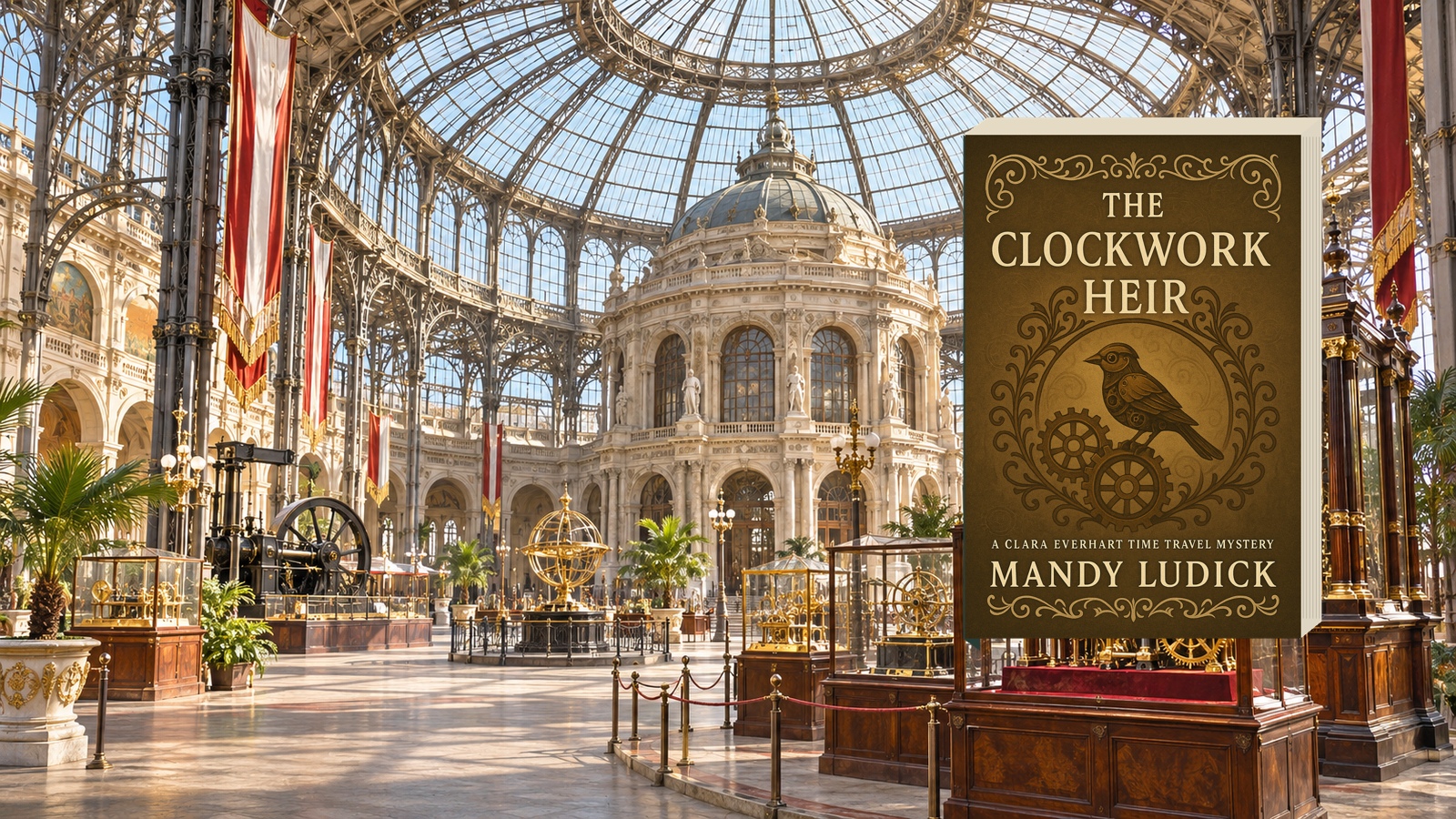
  • Three Historical Mystery Heroines and the Different Ways They Find the Truth

    Three Historical Mystery Heroines and the Different Ways They Find the Truth

    Historical mysteries often begin with the same problem. Something has been hidden, altered, or carefully forgotten. Yet the path to the truth can look very different depending on the woman following the clues. The three historical mystery heroines in Mandy Ludick’s mystery series each bring a distinct strength to an investigation.

    Arabella Grey studies people and their habits. Clara Everhart questions accepted history and tests what seems impossible. Nora Halewell searches archives, maps, and forgotten records for what someone hoped would remain buried.

    Their worlds are different. However, each heroine understands that the truth rarely announces itself. Instead, it waits in a misplaced object, a strange date, a rehearsed answer, or a document filed under the wrong name.

    Why Historical Mystery Heroines Need More Than Courage

    Courage matters in any mystery. Even so, courage alone does not solve a case. A strong investigator must know where to look. She must also understand what a clue means within its own time and setting.

    Modern technology cannot help Arabella test a witness’s claim. Clara cannot simply search the internet for an altered historical event. Likewise, Nora cannot assume that every official record is complete or honest.

    Because of these limits, historical mystery heroines must rely on patience, knowledge, and close observation.

    They also face social rules that shape how they investigate. People may dismiss their questions, restrict their access, or expect them to remain silent. As a result, each discovery requires both intelligence and tact.

    That tension gives historical mysteries much of their appeal. Readers are not only watching a heroine solve a puzzle. They are also watching her find a way to be heard.

    Arabella Grey Finds Truth in Human Behavior

    Arabella Grey solves mysteries by noticing what other people overlook.

    She pays attention to routine, posture, tone, and silence. A witness may offer a perfect answer, but Arabella watches what happens before and after the words are spoken.

    Perhaps a teacup remains untouched during a difficult conversation. A chair may be angled away from the door. Someone might avoid using a particular name. Another person may repeat a phrase that sounds too polished to be natural.

    None of these details proves guilt on its own. Together, however, they reveal pressure, fear, and hidden loyalties.

    Arabella’s strength lies in her patience. She does not rush to fill every silence. Instead, she allows people to reveal themselves.

    This method suits the Victorian households and villages she enters. Many of the people around her value respectability above honesty. They may not tell direct lies, yet they often hide behind manners, rank, and carefully chosen words.

    Arabella understands that appearance can become a form of protection. Therefore, she looks beyond what a household says about itself.

    Her investigations often begin with one quiet question: does this explanation match the way these people actually live?

    When the answer is no, Arabella keeps looking.

    Clara Everhart Finds Truth by Challenging History

    Clara Everhart investigates a different kind of mystery.

    Her cases involve lost manuscripts, dangerous inventions, memory, science, and events that do not fit the accepted version of history. Because time itself can become part of the puzzle, Clara must question facts that others treat as settled.

    A date may be wrong. A document may describe an event before it happened. An invention might appear decades too early. Even more troubling, Clara may find evidence connected to her own life in a period she has never visited.

    These clues force her to think beyond ordinary cause and effect.

    Still, Clara does not abandon logic. She studies patterns, compares records, and tests each theory against the evidence. The mystery may be impossible, but her reasoning remains disciplined.

    That balance makes her one of the most unusual historical mystery heroines. She is willing to accept that history may have changed, although she refuses to accept an explanation simply because it sounds dramatic.

    Clara also understands that official history is incomplete.

    Books preserve major events, but personal objects often preserve the truth. A diary may record fear that never reached the public record. A letter can expose doubt behind a famous decision. Meanwhile, a small handwritten correction may challenge an entire accepted story.

    For Clara, the past is not a fixed display behind glass. It is a living trail of choices, omissions, and consequences.

    Her central question is simple but powerful: what happened before history decided what to remember?

    Nora Halewell Finds Truth in Records and Omissions

    Nora Halewell is drawn to evidence that looks dull to almost everyone else.

    Archive boxes, catalog cards, survey maps, old labels, and official files may appear harmless. Yet Nora knows that records can be manipulated just as easily as witnesses.

    A missing file may be an accident. On the other hand, it may show that someone wanted a name forgotten.

    An incorrect date might be a copying error. However, it could also reveal that an event happened at a different time than everyone claims.

    Nora studies not only what survives but also what is absent.

    This becomes especially important when she examines maps. Maps appear objective because they use measurements, lines, and labels. Nevertheless, every map reflects choices about land, ownership, borders, and importance.

    A settlement left off a map has not stopped existing. Instead, someone has decided that it should not be seen.

    Nora’s cases often begin with these quiet forms of erasure. She finds places removed from official records, people filed under the wrong name, or documents hidden inside unrelated collections.

    Unlike Arabella, Nora does not begin by reading a room. Unlike Clara, she does not begin by challenging the laws of time. Instead, she asks who created the record, who controlled it, and who benefited from the way it was preserved.

    Her courage is often reluctant. She would prefer a clear archive and an orderly explanation. Yet once she sees that someone has been erased, she cannot ignore it.

    That choice makes Nora’s investigations deeply personal. She is not simply solving a puzzle. She is restoring something that was deliberately taken away.

    Three Historical Mystery Heroines, Three Kinds of Evidence

    Arabella, Clara, and Nora all seek the truth, but they trust different kinds of clues.

    Arabella reads behavior.

    Clara tests history.

    Nora investigates records.

    These methods often overlap. A document can contain a lie, while a witness can reveal a missing piece of history. Similarly, a map may expose a motive that changes how a character behaves.

    Even so, each heroine has a natural starting point.

    Arabella asks, “What are these people not saying?”

    Clara asks, “What if the accepted version is wrong?”

    Nora asks, “Who decided what should be preserved?”

    Their questions shape the mood of each series. Arabella’s mysteries feel intimate and socially tense. Clara’s cases carry the danger of impossible knowledge. Nora’s investigations unfold through archives, hidden places, and the slow recovery of lost truths.

    Why Readers Connect with Different Heroines

    Readers often choose a favorite investigator because her way of thinking feels familiar.

    Some readers love Arabella’s restraint. They enjoy watching small details gather meaning until a polished explanation begins to fall apart.

    Others prefer Clara’s curiosity. They want mysteries that combine history with science, invention, and impossible questions.

    Meanwhile, archive lovers may feel most at home with Nora. Her world rewards readers who understand the thrill of an old label, a forgotten drawer, or a map that does not match the landscape.

    A favorite heroine may also reflect the kind of truth a reader values most.

    Arabella proves that people reveal more than they intend.

    Clara shows that accepted knowledge should still be questioned.

    Nora reminds us that absence can be evidence.

    Together, these historical mystery heroines offer three different ways to enter a mystery and three different reasons to keep turning the pages.

    Which Historical Mystery Heroine Would You Follow?

    Every mystery begins with something that does not fit.

    Arabella Grey notices the pause before an answer.

    Clara Everhart recognizes that the timeline is impossible.

    Nora Halewell discovers that an important record is missing.

    From that first clue, each woman follows a different path. Yet all three understand the same essential truth: secrets survive because most people accept the easiest explanation.

    These heroines do not.

    They observe, question, compare, and continue searching. Most importantly, they refuse to look away simply because the truth has been made inconvenient.

    Which investigator would you trust?

    Would you follow Arabella into a respectable Victorian household, Clara into a century where history has shifted, or Nora into an archive where someone has carefully removed the truth?

    Whichever path you choose, a mystery is already waiting.

  • Candlelight and Contradictions: How Night Scenes Build Cozy Mystery Suspense

    Candlelight and Contradictions: How Night Scenes Build Cozy Mystery Suspense

    Some mystery scenes do not need thunder, screams, or a chase through the dark. They only need a candle burning low. A quiet room after midnight can do more for tension than a dramatic confrontation. The house settles. Footsteps sound sharper. Shadows stretch across the wallpaper, and ordinary objects begin to look slightly wrong.

    That is where cozy mystery suspense often works best. It grows slowly. It asks the reader to notice the teacup left untouched, the door standing open, the letter placed too carefully on the desk.

    Night does not create the mystery on its own. It simply makes every small detail harder to ignore.

    Why Night Scenes Create Cozy Mystery Suspense

    Night changes the mood of a cozy mystery. During the day, a village or manor house may feel safe. People move through routines. Servants carry trays. Visitors call. Letters arrive, and conversations happen under the rules of polite society.

    After dark, those rules soften.

    A hallway becomes more suspicious. A library feels less like a place of learning and more like a place of secrets. Even a familiar staircase can seem to hold its breath.

    This shift helps build cozy mystery suspense because the setting remains familiar, but the feeling changes. Readers know the house, garden, archive, or village lane. Yet under lamplight, the same place begins to feel uncertain.

    A cozy mystery does not need to become harsh to become tense. It only needs to make comfort feel fragile.

    Candlelight Makes Every Detail Matter

    Candlelight is perfect for mystery fiction because it reveals and hides at the same time.

    A candle may show the edge of a folded note while leaving the rest of the room in shadow. It may catch the shine of a key, the rim of a teacup, or the brass face of a clock. At the same time, it can conceal a person standing just beyond the glow.

    That balance creates tension.

    Readers can see enough to wonder, but not enough to feel certain. The light is warm, yet the uncertainty is sharp. This is one reason candlelit scenes suit cozy mysteries so well. They keep the atmosphere beautiful while letting suspicion grow.

    A candle also gives the sleuth another clue. If it has burned too low, someone stayed longer than they claimed. When fresh wax appears in an unused room, the story changes. A flame in a window may signal a secret meeting, or it may warn that someone has returned.

    Small light can expose a large lie.

    Contradictions Build the Strongest Mystery Scenes

    A contradiction is one of the best tools for suspense.

    Someone says the library was empty, but the fire was still warm. A guest claims to have gone to bed early, yet a candle was seen moving near the stairs. The housekeeper insists that no one entered the study, although the ink on the desk has not dried.

    These small conflicts make readers lean closer.

    Cozy mystery suspense often depends on this kind of mismatch. The official story says one thing. The physical evidence says another. The sleuth must decide which detail refuses to fit.

    That is more satisfying than simple alarm. A contradiction gives the reader a puzzle. It also creates unease because the truth has started to press through the surface.

    A well-placed contradiction does not need to explain itself at once. It only needs to disturb the scene.

    Cozy Mystery Suspense and the Power of Shadows

    Shadows can make familiar objects feel strange.

    A chair becomes a figure. A curtain looks like movement. A coat hanging on a peg seems too much like a person waiting in the dark. These moments do not need to be supernatural. They work because the reader knows how easily the mind fills in what it cannot see.

    In cozy mysteries, shadows should add mood without taking over the story.

    The real danger usually lies in human secrets, not in the darkness itself. A shadow may hide a suspect, but it may also hide a clue. The sleuth needs calm eyes. She cannot trust fear alone.

    This creates a lovely contrast. Other characters may rush to conclusions, while the sleuth studies the room. She notices the candle, the footprint, the moved chair, and the page that should not be there.

    The shadow sets the mood, but the detail solves the mystery.

    Night Makes Sounds More Suspicious

    At night, small sounds become larger.

    A floorboard creaks. A clock ticks too loudly. Rain taps the window. Somewhere beyond the door, a soft step pauses and then moves away.

    These sounds build suspense because they suggest presence.

    Someone may be awake who should be asleep. Another person may be moving through the house unseen. A door may open in a corridor that everyone claimed was locked.

    Sound is useful in cozy mystery suspense because it can stay gentle while still feeling tense. A footstep is not violent. A whisper is not dramatic. Yet both can change the whole mood of a scene.

    A sleuth may not know who made the sound at first. Still, she knows the house has just contradicted someone.

    The Midnight Room

    Every good cozy mystery needs a room that feels different after dark.

    It might be a library, attic, study, archive, conservatory, or sitting room. During the day, people pass through it easily. At night, the same room becomes charged with meaning.

    A desk drawer may be slightly open. One book may stand forward on the shelf. A letter may rest where no one admits leaving it. Perhaps the clock has stopped, or the candle has burned almost to the socket.

    The room becomes a puzzle box.

    This kind of scene works because the reader is invited to inspect it with the sleuth. Nothing needs to happen quickly. Suspense grows from attention. The longer the sleuth looks, the more the room begins to speak.

    Why Cozy Mystery Suspense Should Not Feel Too Heavy

    Cozy mystery suspense needs balance.

    The story should feel tense, but not bleak. It should keep readers curious without draining the warmth that makes cozy fiction appealing. Candlelight, tea, old houses, gardens, libraries, and quiet heroines can all create comfort. The secret lies in letting that comfort tremble.

    A cozy mystery can be eerie without becoming grim.

    The reader may feel a chill when a door opens at midnight, but the story still offers structure, intelligence, and eventual justice. That matters. Cozy mysteries invite readers into danger, but they also promise that truth can be found.

    Night scenes help with this because they create atmosphere without needing constant shock. The mood deepens, the clues sharpen, and the reader keeps turning pages.

    How Heroines Use the Dark Differently

    Different sleuths read night scenes in different ways.

    Arabella Grey might notice household routine. She would ask why a candle burned in a room no one was meant to use. A cold teacup, a shifted chair, or a servant’s hesitation would matter to her.

    Clara Everhart would question time. A clock at the wrong hour, a manuscript opened after dark, or a brass mechanism still warm to the touch could point toward something stranger than a simple lie.

    Nora Halewell would follow records and places. A file removed at night, a light in an archive window, or a map disturbed on a desk would draw her deeper into the truth.

    Each heroine sees something different, but all three understand one thing. Darkness does not hide everything. Sometimes it reveals what daylight made easy to ignore.

    The Best Night Clues Feel Ordinary

    A night clue does not need to be dramatic. A candle stub can matter. So can a warm hearth, a missing key, a damp hem, or a letter left on a chair. These objects feel ordinary, which makes them perfect for cozy mystery suspense.

    Readers enjoy these clues because they feel fair. The evidence sits in the scene, waiting for someone to notice it. When the reveal comes later, the reader can look back and see how the truth was present all along.

    The trick is to make the ordinary object feel slightly wrong.

    A cup belongs in the room, but not on that table. A key belongs on the hook, but not in that hand. A letter belongs in the drawer, but not half-burned in the grate.

    Suspense begins when one small thing refuses to behave.

    Candlelight, Contradictions, and the Reader’s Curiosity

    Cozy mystery suspense works best when it makes the reader ask questions.

    Who lit the candle?
    Why was the study open?
    Which person moved through the hall after midnight?
    What did the witness hear, and what did they choose not to say?

    These questions keep the story alive. They pull the reader forward without needing to rush. A good cozy mystery trusts curiosity. It lets the reader sit with the scene, test the details, and feel the quiet pressure of an answer nearby.

    Candlelight gives the mood. Contradictions give the puzzle. Together, they create the kind of suspense that feels intimate, atmospheric, and hard to put down.

    Final Thoughts

    Cozy mystery suspense does not need to shout.

    It can begin with a candle, a shadow, a sound in the hall, or a room that looks almost right. Night scenes work because they make familiar places feel uncertain. They let small clues shine, and they give contradictions room to breathe.

    A candlelit room can be beautiful.

    It can also be full of secrets.

    That is the charm of cozy mystery fiction. The danger may be quiet, but the truth is waiting in the glow.

  • How to Read a Mystery Object Like a Sleuth

    How to Read a Mystery Object Like a Sleuth

    A good mystery often begins with one small thing. A key rests on a staircase. A glove lies beside a chair. A watch stops at the wrong hour. A pressed flower waits inside a book. At first, the object may seem harmless. Then the sleuth looks closer, and the whole scene changes. That is the power of a mystery object. It does not need to look dramatic. In fact, the quiet objects often matter most. They sit in plain sight while everyone worries about louder clues.

    A good sleuth does not rush past them. She asks better questions.

    Why is it here?
    Who touched it?
    What changed around it?
    Who hoped no one would notice?

    A Mystery Object Is Never Just an Object

    In everyday life, a key opens a door. A note carries a message. A glove keeps a hand warm.

    In a mystery, each object carries a question.

    A key may reveal who had access to a locked room. A glove could show where someone walked. A folded note might seem ordinary until the handwriting, paper, or missing signature feels wrong.

    This is why mystery objects work so well in cozy fiction. They slow the story down in the best way. Readers start to study the room, not just the suspects.

    Objects do not speak, but they do leave evidence.

    Start with Location

    The first question is simple: where did someone find the object?

    Location matters because every object belongs somewhere. A teacup belongs on a table. A key belongs on a hook, in a pocket, or inside a lock. A letter belongs on a desk, in a drawer, or in someone’s hand.

    When an object appears in the wrong place, the mystery sharpens.

    A glove in a garden may suggest a secret meeting. A watch in an archive box may connect two timelines. A note under a rug may point to panic, secrecy, or interruption.

    The object’s location tells the sleuth how it entered the story. It may also show who tried to move it out of sight.

    Study the Condition of the Mystery Object

    Next, look at the condition of the object.

    A clean key, a muddy shoe, a torn page, and a scorched letter all tell different stories. Stains, dust, damage, and wear can reveal how someone used the object.

    A half-burned note suggests panic. A fresh fingerprint on dusty brass means someone touched it recently. A ribbon tied too neatly may show care, while a snapped chain may suggest haste.

    Condition can also expose a lie.

    Someone may claim that no one entered a room for weeks, yet a dust-free drawer handle says otherwise. Another character may insist that a letter stayed sealed, but the broken wax tells another story.

    A sleuth reads the object before trusting the witness.

    Ask About Timing

    Timing can turn an ordinary object into a vital clue.

    A candle burned too low may reveal how long someone stayed in a room. A cold cup of tea can challenge when a visitor left. A stopped watch may mark a moment someone wants forgotten.

    The object does not need to solve the whole case. It only needs to disturb the accepted timeline.

    A note written too early can break a story. A fresh flower may raise questions if the person who picked it has been missing for hours. A key found after everyone claims the door stayed locked can make the official version fall apart.

    A mystery object becomes powerful when it does not fit the time it belongs to.

    Watch Who Reacts to the Object

    People often reveal themselves before the evidence does.

    A character may flinch when someone opens a locket. Another person might dismiss a letter too quickly. Someone may insist that an object means nothing before anyone even asks.

    That reaction can matter as much as the object itself.

    A guilty person may not panic loudly. In cozy mysteries, they may smile, pour tea, and act perfectly calm. Even so, a pause, glance, or sudden change of subject can expose fear.

    The sleuth watches the room when the clue appears.

    Look for What the Object Connects

    A mystery object often links people, places, and secrets.

    A pressed flower may connect a drawing room to a garden path. A catalog card may link an archive to a missing record. A brass gear may connect an invention to a hidden manuscript.

    That connection becomes the clue.

    One object can cross boundaries that characters try to keep separate. It may move from upstairs to below stairs, from past to present, or from a public room to a private drawer. Wherever it goes, it leaves a trail.

    Cozy mysteries use this beautifully because their settings often feel close and intimate. A village, manor, library, archive, or garden becomes a small world. When an object moves through that world, its journey matters.

    A Mystery Object Can Reveal Motive

    Objects do not only show what happened. They can also show why it happened.

    A will may reveal inheritance. A locket may expose love or shame. A ledger may point to debt. A stolen letter may suggest blackmail. A key may show control.

    Motive often hides inside ownership.

    Who wanted the object? Who feared it? Which person had reason to hide, alter, move, or destroy it?

    A plain object becomes dangerous when someone needs it gone.

    Compare the Object with the Official Story

    Every mystery has an official story.

    The family says no one entered the library. The village insists the stranger left before dark. The housekeeper says the room stayed locked. A witness claims that no one saw the note.

    The object tests that story.

    If the key rests in the wrong place, the locked-room explanation may fail. When the cup shows signs of use after the supposed time, the timeline may shift. A letter in the wrong handwriting can turn a simple answer into something much darker.

    A good sleuth does not reject the official story at once. She compares it to the evidence. When the object refuses to fit, she follows the object.

    How Arabella, Clara, and Nora Might Read a Mystery Object

    Each Mandy Ludick heroine would read a mystery object in her own way.

    Arabella Grey would notice the domestic detail. A teacup, glove, household key, or garden tool would matter because it reveals routine, manners, and hidden tension.

    Clara Everhart would study the object through history and time. A manuscript, clockwork part, diagram, or watch might point to knowledge that does not belong where it appears.

    Nora Halewell would follow the archive trail. A file, map, catalog card, old key, or stopped clock could reveal what the official record tried to hide.

    Different heroines notice different things, but the method stays the same. Look closely. Ask why. Trust the detail that refuses to behave.

    Why Readers Love Mystery Objects

    Readers love mystery objects because they make the puzzle feel fair.

    The clue appears on the page. It waits in the room. It gives the reader a chance to notice the truth before the reveal.

    That creates the lovely “I should have seen it” moment.

    A good mystery object rewards attention. It turns setting into evidence and ordinary details into secrets. By the end, the object may feel completely different from how it first appeared.

    The key was never just a key.
    A note was never just a note.
    That watch was never just a watch.

    Each one was telling the truth in its own quiet way.

    Final Thoughts

    A mystery object is powerful because it asks better questions than people do.

    Where did someone find it? Who touched it? Why did it move? What changed around it? Which story does it quietly contradict?

    That is how a sleuth reads an object. She sees evidence where others see decoration.

    In cozy mysteries, the truth often begins with one small thing everyone else overlooked. A key, glove, note, watch, or pressed flower can open the whole case.

    The trick is knowing how to look.