Tag: mystery

  • Clockwork Mysteries: Explore Vienna in 1873

    Clockwork Mysteries: Explore Vienna in 1873

    Clockwork mysteries ask us to look past the face of the clock. We can see the hands move, but the reason for that motion stays out of sight. That gap between what we see and what we know is part of the pleasure of a mystery.

    The Clockwork Heir by Mandy Ludick takes readers to Vienna in 1873. If you like a mystery with a strong sense of place, the city offers a good starting point. The clockwork theme also gives you something small to look for in a world that can feel very large.

    Why Vienna in 1873 draws the eye

    Vienna hosted a world exhibition in 1873. An exhibition invites people to look at things they might never see at home. For a reader, that setting offers a chance to think about what it feels like to see a new machine in motion for the first time.

    Picture the difference between hearing someone describe a mechanism and watching it work. A small movement can make more sense once you see where it starts. In the same way, historical fiction can make a period easier to picture through a few well-chosen details.

    What makes clockwork mysteries so satisfying?

    A clock has a face we can read at a glance. Inside, however, gears and other parts work together in ways we may never stop to think about. A mystery has a similar appeal. Early on, you see what is happening, but you may need time to see how it all fits.

    That is why the image of a clock can do so much with so little. Its steady motion seems familiar. Take a closer look, though, and you find a series of small actions that depend on one another. As a reader, you get a similar reward when a detail you noticed earlier takes on a fresh meaning.

    Bring one question to your reading

    As you start the book, ask what catches your eye first. Perhaps it is Vienna itself. Maybe it is the thought of the parts hidden behind a clock face. Either way, you can enjoy the setting and follow your curiosity at the same time.

    On your next reading break, try recalling one detail that stuck with you. It need not be a clue. Sometimes a small image is simply the thing that makes you want to return to the story.

    Ready to visit Vienna in 1873? Look for The Clockwork Heir by Mandy Ludick on Amazon.

  • Time-Slip Mystery Books: Begin Nora Halewell’s Journey

    Time-Slip Mystery Books: Begin Nora Halewell’s Journey

    Time-slip mystery books give us two ways to escape. We can follow a puzzle. At the same time, we enter an earlier world. The Vanishing at Verdant Hall by Mandy Ludick begins Nora Halewell’s journey with an inherited manor and a library that invites a closer look.

    This post stays with the opening and the reading mood. You can meet Nora without learning how her case ends.

    Start with a house we do not know

    Nora enters Greystone Manor after an unexpected inheritance. Rain, old paper, and a large library create a setting full of questions. A key may open the front door, but it does not explain what Nora has found.

    That is a strong starting point for a mystery. A new house gives Nora good reason to look closely. It gives us that same chance. We notice a doorway, a shelf, or an object since we do not yet know how it fits.

    The pleasure lies in that first act of looking. Instead of rushing toward an explanation, we can enjoy the sense that a quiet room may hold a surprise.

    Meet Nora Halewell at the beginning

    If you are new to Nora, this is the place to begin. The Vanishing at Verdant Hall is the first of her time-slip mysteries, so you can enter her reading journey from its starting point.

    There is no need to learn every later title before opening the book. Begin with Nora in the manor and let the story introduce its own questions. Her discovery draws the past closer than a history lesson ever could.

    A series opening can be especially inviting for that reason. It gives you room to meet a character before you know where the wider journey will lead.

    Why time-slip mystery books make the past feel close

    In a historical mystery, readers often watch events within an earlier setting. Time-slip stories add the experience of crossing into that setting. The past becomes a place to find your way through. It is no longer just a scene to view from afar.

    That change can make familiar details feel strange again. A room, a custom, or a new rule may ask for a second look. Meanwhile, the mystery gives those observations a purpose.

    These are broad reasons to enjoy the genre. They do not give away the book’s twists. They explain why a journey beyond the present can make a quiet setting feel charged with promise.

    Keep your first reading free of spoilers

    Before you begin, choose the question that interests you most. Perhaps it is the old house, the library, or the chance to meet a new mystery heroine. Then give the story space to answer in its own way.

    Afterward, think about which moments made the setting feel real. Did a small detail make you pause? Was there a view you had to change? Such questions can help a book stay with you. The final answer is only one part of the fun.

    Begin at Verdant Hall

    For readers exploring time-slip mystery books, The Vanishing at Verdant Hall lets you meet Nora Halewell and join her trip beyond the present. Bring your curiosity and let the first discovery lead you onward.

    Discover The Vanishing at Verdant Hall by Mandy Ludick on Amazon.

  • Historical Mystery Books: Patience and Mentorship

    Historical Mystery Books: Patience and Mentorship

    Historical mystery books can offer more than a puzzle to solve. They also give us people worth watching as they learn, question, and change. In The Maid of Hawthorne House by Mandy Ludick, patience and mentorship add another layer to Arabella Grey’s world.

    This spoiler-free reflection explores that reading theme. It leaves the case and its answers for you to discover in the book.

    Seeing Clearly Takes Time in Historical Mystery Books

    A quick answer can feel satisfying. However, a thoughtful question often asks more of us. We may need to pause, look again, or admit that our first explanation does not account for everything.

    That tension suits mystery reading. Readers form impressions while characters gather information. Then a different perspective may invite everyone to reconsider what seemed clear.

    Patience creates room for that process. Instead of rushing toward certainty, we can enjoy the experience of careful observation. Small details become more interesting when we give them time.

    The Difference Between Noticing and Guiding

    Being perceptive does not automatically make someone a patient guide. An experienced person may see a connection before another person is ready to recognize it. Explaining the answer is one task; helping someone learn how to think is another.

    Mentorship therefore brings a useful question to fiction: how can one person guide another without taking over? A thoughtful teacher must listen as well as speak. Meanwhile, a learner needs room to ask questions and test an idea.

    The calendar’s focus for The Maid of Hawthorne House is guidance, patience, and mentorship. Those themes invite us to consider Arabella’s growth alongside the mystery itself.

    Why relationships deepen historical mystery books

    For many readers, historical mystery books are memorable because of their characters’ relationships. A case may draw us into the story, while an exchange between two people gives us a reason to stay.

    Guidance can reveal habits that a character might otherwise keep hidden. Perhaps someone finds it easier to work alone than to explain a thought. Another person may need encouragement to slow down before making a judgment.

    These are broad reading questions, rather than claims about a particular scene. They offer a way to notice the human side of a mystery without searching for spoilers.

    Read For The Questions As Well As The Answers

    As you read, pay attention to the questions characters allow themselves to ask. Notice when they listen, when they interrupt, and when they leave room for another point of view. Such moments can be as revealing as an explanation.

    You might also consider how patience changes the pace of your own reading. A pause does not always mean nothing is happening. Sometimes a quieter moment lets an important idea settle into place.

    Although readers naturally want answers, the journey toward them can hold its own pleasure. Reflection gives a mystery space to become a story about people, too.

    Return to Arabella Grey’s world

    If you enjoy historical mystery books with thoughtful character themes, discover The Maid of Hawthorne House. This Arabella Grey mystery invites interest in observation and in the challenge of helping another mind see more clearly.

    Read The Maid of Hawthorne House by Mandy Ludick on Amazon, and explore the story for yourself.

  • Cozy Mystery Books: Manor or Island?

    Cozy Mystery Books: Manor or Island?

    Cozy mystery books invite us to choose more than a puzzle. We also choose an atmosphere. Perhaps a quiet village appeals to you today. Alternatively, an island and its maps might be the setting you want to explore.

    Cozy mystery books: Begin with a village warning

    The Violet Cross Affair introduces Arabella Grey in Wethersby. An anonymous letter reaches her, sealed with a violet cross. Its warning points to the tenth hour at Thornwood Manor. Those opening details create questions without revealing the answers.

    If you enjoy following an observant investigator, this is a useful place to begin. Arabella loves puzzles and notices what others overlook. Read the opening slowly and consider which detail first catches your attention.

    Cozy mystery books: Follow maps and hidden boundaries

    The Cartographer of Stormglass Island offers another reading mood. This Nora Halewell mystery brings maps, hidden boundaries, a locked chart room and the island’s past into focus. These are invitations to curiosity, rather than answers to the mystery.

    Maps are especially appealing objects in fiction. We expect them to help us understand a place. However, their edges and boundaries can also encourage questions. A reader can enjoy that uncertainty without knowing where the story will lead.

    Choose by your reading mood

    When browsing cozy mystery books, consider what you want from your next reading session. Would you rather begin with a letter in a village or follow the questions surrounding an island map? Both starting points offer room to notice, wonder and reconsider.

    Try reading an opening before deciding. Pay attention to the setting, the investigator and the first unanswered question. You do not need a spoiler-filled summary to discover whether a story suits you.

    Your next mystery awaits

    Choose The Violet Cross Affair for Arabella Grey’s encounter with an anonymous warning. Turn to The Cartographer of Stormglass Island for Nora Halewell, maps and hidden boundaries. Look for the full titles by Mandy Ludick on Amazon, and enjoy discovering the answers for yourself.

  • Cozy Mystery Books: When One Letter Changes Everything

    Cozy Mystery Books: When One Letter Changes Everything

    Cozy mystery books often begin with a small disturbance. A letter arrives. Someone asks an odd question. An ordinary room takes on a new meaning. Before long, a familiar place feels full of possibilities. The pleasure lies in noticing that change and wondering what it means.

    For an inviting example, consider The Violet Cross Affair, the first book in the Arabella Grey cozy mystery books series by Mandy Ludick. Its opening takes us to Wethersby, an English village known for its quiet ways. Then an unusual envelope reaches Arabella Grey. That simple arrival gives readers a reason to lean closer.

    A quiet village in cozy mystery books gives the mystery room to grow

    A small setting can make a puzzle feel close. Streets, gardens and cottages offer a sense of daily life. Because those details seem familiar, an unexpected message stands out. We do not need a crowded scene to feel that something has shifted.

    Wethersby provides that contrast at the start of The Violet Cross Affair. Cobblestone streets and ivy-covered cottages establish the village’s calm. Against that background, an envelope with a strange seal draws attention. The setting helps turn a routine delivery into an intriguing moment.

    For readers, this is part of the appeal of village mysteries. Everyday details become worth watching. A peaceful atmosphere leaves space for questions, while the promise of a puzzle encourages us to keep reading.

    One letter opens the door

    An anonymous letter is a wonderfully direct invitation to wonder. Its writer has chosen to speak, yet has also chosen to remain hidden. Even before we consider the message, that choice raises a question: why avoid giving a name?

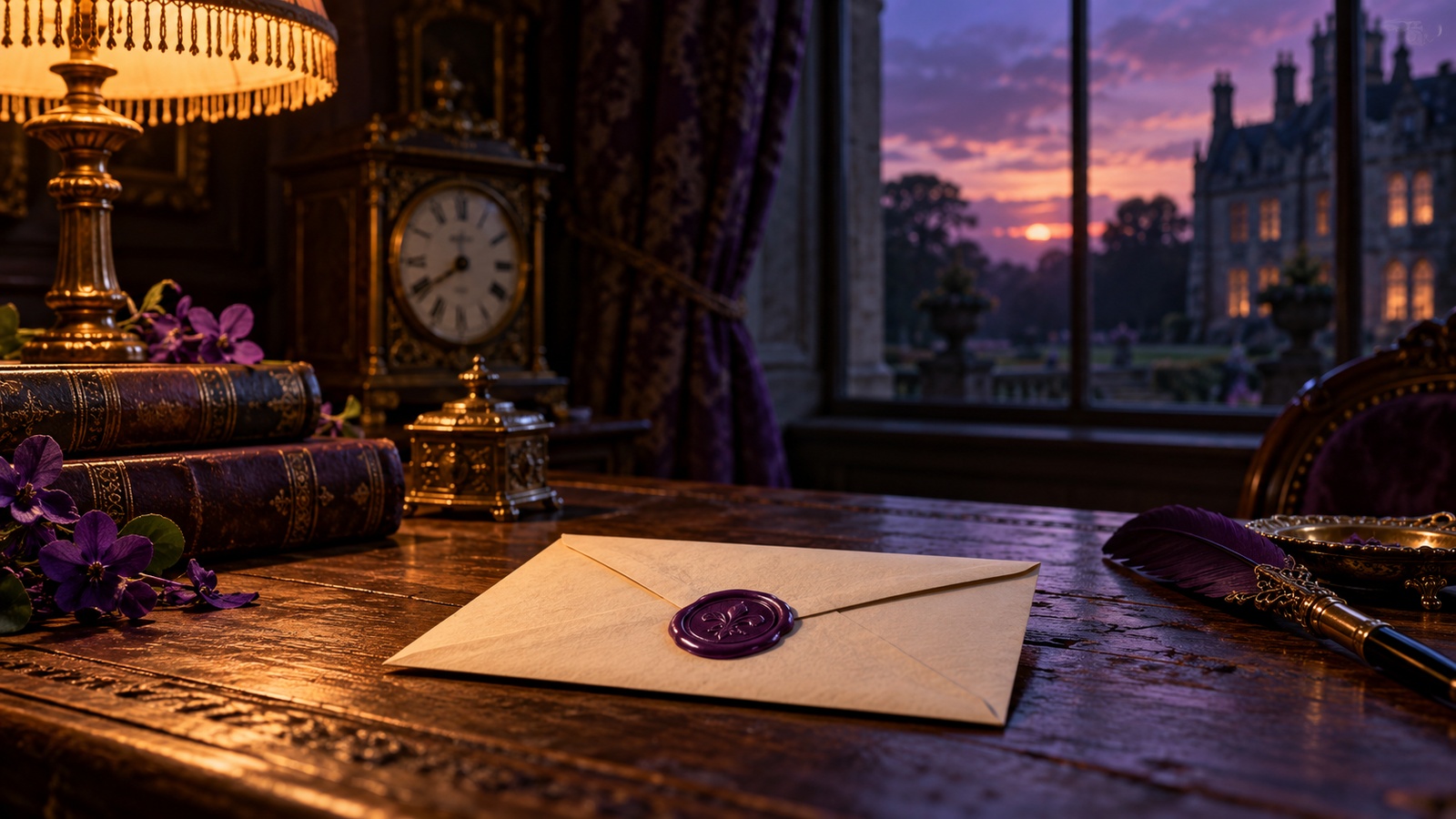
    Arabella’s envelope bears a violet cross seal and no return address. Inside, a brief warning directs her attention to the tenth hour at Thornwood Manor. These opening details establish the invitation without giving away where the story will lead.

    Notice how little is needed. A symbol gives the message a visual identity. An hour adds urgency. Finally, a place gives Arabella somewhere to direct her curiosity. Readers can consider each element without being told what it will mean.

    Why a curious investigator matters

    A mystery needs someone willing to look again. Arabella enjoys puzzles and has a reputation for noticing what others overlook. Those qualities make her response to an unusual letter feel natural. Curiosity becomes the bridge between an ordinary day and an investigation.

    Many readers enjoy following that kind of mind. Rather than receiving every answer at once, we can watch an investigator ask questions. We may share a suspicion, miss a detail or rethink an early impression. The act of paying attention becomes part of the pleasure.

    Of course, a good introduction should leave room for discovery. Knowing why Arabella is curious is enough to begin. The answers belong to the reading experience, so this introduction keeps them there.

    Finding your next cozy mystery books

    When choosing cozy mystery books, think about the experience you want. Perhaps you enjoy a village setting. You might prefer an investigator whose strongest tool is observation. Alternatively, an intriguing object or a puzzling message may be what catches your eye.

    Try reading an opening with three questions in mind. What interrupts normal life? Who notices the interruption? Which detail makes you want to turn the page? These questions can help you find a story that suits your mood without searching for spoilers.

    The Violet Cross Affair introduces a quiet village, an observant woman and a warning tied to a particular hour. That combination offers a clear starting point. Everything beyond it is yours to discover at your own pace.

    Follow the warning into the story

    There is something satisfying about a mystery that starts with a simple object. A letter can be held, opened and read. Yet its meaning may reach far beyond the paper itself. That gap between what we can see and what we still need to understand keeps curiosity alive.

    If you enjoy cozy mystery books with a village atmosphere and an inquisitive lead, consider The Violet Cross Affair. Meet Arabella Grey, notice the violet seal and follow the questions from the beginning. Look for The Violet Cross Affair by Mandy Ludick on Amazon.

  • Cozy Mystery Books: Why First Theories Can Change

    Cozy Mystery Books: Why First Theories Can Change

    Cozy mystery books invite us to join the search for an explanation. A person seems suspicious, an object catches our eye, and soon we have a theory. Yet part of the pleasure comes when another detail makes us pause and ask whether we have decided too soon.

    That moment can be a gift to the reader. We return to what we have noticed and see it in a different light. Instead of simply waiting for an answer, we become more curious about how the story will reach it.

    A first theory gives you somewhere to begin

    It is natural to look for a pattern as a mystery unfolds. A quiet conversation may feel important, while a confident statement may seem less certain than it sounds. These small responses help us form an early picture of the people and places around us.

    The picture does not need to be complete. In fact, a little uncertainty can keep the reading experience lively. We can hold an idea in mind without treating it as the only possible answer.

    For a reading friend, that early stage makes a good conversation. Ask what caught their attention rather than who they think must be guilty. Their reply may show you a detail you passed over, even when neither of you knows what it means yet.

    Notice the difference between a detail and a conclusion

    An object on a desk is something a reader can notice. The reason it is there may still be a question. Keeping those two things apart gives the imagination room to work as the story develops.

    For example, a key beside a closed door can invite several thoughts. Perhaps it belongs there, or perhaps someone has just put it down. These are general reading possibilities, rather than clues from the book.

    The same care applies to conversations. A person may sound certain, but the reader can still wonder what they have seen for themselves. As a result, listening closely becomes as useful as deciding quickly.

    Why cozy mystery books reward a second look

    A new question can change the way an earlier scene feels. We may remember a gesture, a phrase or an ordinary object that now seems worth thinking about again. The pleasure lies in seeing another way to connect what we have already read.

    This does not mean every detail needs a complicated explanation. Some objects give a setting warmth, while others help us understand a person’s habits. A curious reader can enjoy those details without turning every page into a test.

    If you like keeping notes, write down a brief observation and leave a little space beside it. Later, you can add a question or a different idea. That simple habit preserves your first response while allowing the story to surprise you.

    Discover The Maid of Hawthorne House

    For your next historical mystery read, explore The Maid of Hawthorne House by Mandy Ludick. This Arabella Grey mystery offers a book to approach with a curious eye. Today’s reading invitation stays with the pleasure of asking questions and leaves the story’s discoveries for its pages.

    You can look for the full title on Amazon and check the cover before choosing your copy. The original cover shows a grand staircase, a maid’s cap and a ring of keys. Those details offer an atmospheric invitation without asking a promotional article to explain the plot.

    A spoiler-free introduction should help you choose a book while preserving your own experience of it. Therefore, this guide leaves the outcome and the path toward it untouched. Open the story and let your impressions develop as you read.

    Enjoy the moment when your mind changes

    Being wrong about a fictional mystery need not spoil the fun. Sometimes it is the moment that makes a reader most eager to continue. We want to know how the next explanation will fit, and which questions still remain open.

    Try asking yourself what would make you reconsider your current idea. You do not have to abandon it at once. Simply leaving room for another answer can make the next conversation or discovery feel more alive.

    For a book-club discussion, save the final comparison until everyone has finished. Then you can talk about your first impressions and how they changed. Each reader may have noticed a different route through the same pages.

    Explore The Maid of Hawthorne House on Amazon, or save this article for your next reading afternoon. Cozy mystery books can reward both a sharp eye and a willingness to ask one more question.

  • Who Knew the House Best? How Servants’ Knowledge Shapes a Manor Mystery

    Who Knew the House Best? How Servants’ Knowledge Shapes a Manor Mystery

    A grand house may impress us with its sweeping staircase and polished drawing rooms. Yet its daily life depends on people whose work happens beyond the most elegant doors. For readers of historical mysteries, that contrast offers a fascinating question: who truly knows a house?

    Today’s reading inspiration is The Maid of Hawthorne House by Mandy Ludick. Its title invites us to consider a perspective that can easily be overlooked. Rather than offering plot answers, this article explores why knowledge below stairs makes a manor setting so compelling.

    A house is more than its finest rooms

    Visitors usually see the spaces prepared for them. By contrast, those who work in a house become familiar with its practical rhythms. They know how rooms connect, which tasks take time and what an ordinary morning requires.

    That everyday familiarity changes the way a setting feels. A staircase becomes part of a working route, while a closed door raises a practical question about access. Even a quiet corridor may hold interest when we think about who uses it throughout the day.

    For this reason, servants in manor mysteries can add depth to much more than the background. Their perspective encourages us to imagine a whole household rather than a collection of impressive rooms.

    Routine makes small changes visible

    Consider how quickly you notice a change in your own familiar surroundings. Perhaps an object sits somewhere unexpected, or a usual sound is absent. Such observations begin with knowing what normally happens.

    In the same way, repeated work can develop a precise awareness of a place. A person who enters a room every day may notice details that a visitor passes without a thought. Mystery readers enjoy this tension because significance does not always announce itself.

    However, observation and interpretation remain different things. Noticing a detail is a beginning; understanding it requires care. A satisfying reading experience often asks us to resist deciding too quickly what an observation must mean.

    Servants in Manor Mysteries: Who is heard, and who is overlooked?

    A manor setting also gives readers a way to think about social position. Someone may know a household well without having much authority within it. Meanwhile, another person may speak confidently while understanding less about its daily workings.

    This difference can make us more attentive readers. Instead of judging a character’s insight by status alone, we can consider experience, attention and opportunity. Whose work brings them into a space? Which questions might they be able to answer?

    These are useful questions for reading the genre, not promises about a particular plot. They help us appreciate how a household’s structure can shape the information available to different people.

    Let the setting deepen your reading

    Historical atmosphere becomes especially engaging when a building feels lived in. Kitchens require work, stairs connect different worlds and rooms change purpose across the day. Consequently, the setting can feel like a network of relationships rather than a decorative backdrop.

    As you read, pause occasionally to picture how the house functions. Think about the paths people take and the responsibilities that guide them. You need not solve every puzzle immediately to enjoy the richness of those details.

    At the same time, leave room for uncertainty. A mystery invites curiosity, and curiosity grows when we allow the story to reveal its own connections. Careful attention is often more rewarding than a hurried conclusion.

    A fresh question for your next mystery

    Before beginning your next manor mystery, try asking, “Who knows this place through daily experience?” That question can shift your attention towards people and routines you might otherwise miss.

    You could also discuss it with a reading friend. Does the most confident character seem the most observant? How does familiarity with a place affect your expectations? Such conversations enrich the experience without requiring spoilers.

    For today’s reading list, discover The Maid of Hawthorne House by Mandy Ludick on Amazon. Let its title be an invitation to look beyond the grand rooms and approach your reading with patient curiosity.

  • False Confessions in Cozy Mysteries: When the Truth Is Still Missing

    False Confessions in Cozy Mysteries: When the Truth Is Still Missing

    A confession should feel like the end of a mystery, someone finally speaks, the room goes still, the missing piece seems to fall into place. For one brief moment, everyone can breathe again. Yet in a cozy mystery, a confession is not always the truth. Sometimes it is another locked door. That is why false confessions in cozy mysteries are so effective. They give the story a sudden sense of certainty, then quietly take it away. The reader begins to wonder why someone would admit to something they did not do.

    Fear can make a person confess. So can love, guilt, shame, loyalty, or the need to protect someone else. A false confession may sound final, but the best sleuth knows better.

    The case is not over until the truth fits every clue.

    Why False Confessions in Cozy Mysteries Work So Well

    A false confession creates instant tension because it changes the shape of the story.

    Before the confession, everyone is searching for answers. After it, many characters want to stop. They want the comfort of a neat ending. A confession gives them someone to blame and a reason to close the door.

    The sleuth, however, notices what still feels wrong.

    Perhaps the confession arrives too soon. Maybe it explains the main event, but not the small details. A key is still missing. A letter remains half-burned. One witness is still afraid. The timeline still refuses to behave.

    That unease keeps the reader turning pages.

    A good cozy mystery does not use a false confession as a cheap trick. It uses it to reveal character. The person confessing may be hiding something, but not always guilt. Sometimes they are hiding love. Sometimes they are hiding fear.

    When a Confession Says Too Little

    One clue that a confession may be false is that it says too little. A real confession often carries detail. A person who truly knows what happened may remember the room, the time, the object, the words spoken, or the mistake that changed everything. A false confession may sound emotional but vague.

    Someone might say, “It was my fault,” without explaining how. Another person may claim responsibility but avoid the exact moment that matters. A suspect may confess to protect someone else, then stumble when asked about the smaller facts.

    In cozy mysteries, those small facts matter.

    A teacup, glove, key, note, ribbon, or clock can test a confession. If the story does not match the evidence, the sleuth must keep looking.

    False Confessions in Cozy Mysteries and Hidden Loyalty

    Loyalty is one of the strongest reasons for a false confession.

    A mother may protect a child, a friend may protect a friend, a servant may shield an employer, a companion may carry blame because the truth would ruin someone already fragile. This kind of confession can be deeply moving.

    The person who lies may not be cruel or foolish. They may believe they are doing the right thing. They may think the truth would hurt too many people. They may have decided that their own reputation matters less than another person’s safety.

    That makes the mystery more human.

    A cozy mystery often works best when the emotional stakes are as strong as the puzzle. The question is not only who did it. It is also why someone would choose to carry a lie.

    When Fear Sounds Like Guilt

    Fear can look a lot like guilt. A frightened person may avoid questions. They may change their story. If pressure grows too strong, they may confess just to end the danger. In some cases, they may believe no one will believe the truth anyway.

    This is especially useful in historical and village mysteries. Social pressure can be powerful. Reputation matters. A scandal can destroy a future, a household, or a family name.

    A false confession may seem easier than public shame.

    The sleuth must then ask a careful question. Is this person confessing because they did the wrong thing, or because they are afraid of what the truth will expose?

    That difference matters.

    The Confession That Protects a Secret

    Not every false confession protects a person. Sometimes it protects a secret.

    A character may confess to a smaller wrong in order to hide a larger one. They may admit to theft to cover blackmail. Another person may confess to hiding a letter so no one discovers what the letter said.

    This creates a layered mystery.

    The confession is false, but it is not meaningless. It still points toward something important. The sleuth must ask what the confession is trying to distract from.

    A half-burned note may reveal the answer. A missing page may expose a motive. A record filed under the wrong name may show that the confessed story cannot be true.

    A false confession is often a signpost. It points away from the truth, but the direction of the lie can still be useful.

    False Confessions in Cozy Mysteries Need Careful Clues

    For false confessions to feel fair, the clues must already be present.

    The reader should be able to look back and see the cracks. Maybe the confessing character never had access to the room. Perhaps they knew one detail too many, but missed the one detail only the guilty person would know.

    A strong cozy mystery gives the sleuth a reason to doubt the confession.

    That reason does not need to be dramatic. It may be very small. A cup was placed on the wrong side of the table. The wrong key was returned to the hook. A witness remembered a sound after the supposed time of the event.

    These quiet clues are perfect for cozy fiction. They reward attention and keep the mystery grounded.

    Why Readers Love the Unraveling

    Readers love false confessions because they create a second mystery inside the first.

    At first, the reader asks, “Who is guilty?”
    After the confession, the question changes to, “Why would this person lie?”

    That shift gives the story fresh energy. The sleuth must move past the easy answer and look at what remains unsettled.

    This is where cozy mysteries often shine. They do not only chase dramatic reveals. They study behavior, relationships, routines, and silence. A false confession turns the focus toward motive in a deeper way.

    The liar may not be the villain. They may be another victim of the same secret.

    False Confessions and Polite Pressure

    In cozy mysteries, pressure is often quiet.

    No one may threaten a person openly. Instead, a room can become heavy with expectation. A family may prefer one version of events. A village may want the scandal closed. A powerful character may make it clear that the truth is not welcome.

    Under that pressure, someone may confess.

    The confession then becomes part of the social performance. It allows everyone to move on. It protects the appearance of order.

    A good sleuth refuses that easy peace. She understands that politeness can hide fear. She also knows that a neat answer is not the same as a true one.

    How the Sleuth Finds the Missing Truth

    A sleuth sees through a false confession by returning to the evidence.

    She does not rely only on emotion. Tears may be real, but still not prove guilt. A shaking voice may show fear, not confession. A dramatic statement may hide more than it reveals.

    Instead, the sleuth checks the story against the facts.

    Where was the key?
    Who had time to move the letter?
    Why was the candle burned so low?
    What did the witness actually hear?
    Which object still refuses to fit?

    Each answer brings the case closer to the truth.

    In a cozy mystery, the final reveal often comes when the sleuth explains not only who lied, but why the false confession was made.

    Final Thoughts

    False confessions in cozy mysteries remind us that the easiest answer is not always the right one.

    A confession can be brave, fearful, loving, foolish, or carefully planned. It may close a case for everyone else, but a good sleuth listens for what is still missing.

    The truth is not only in what someone admits.

    Sometimes it hides in the detail they cannot explain, the clue they forgot, or the person they are trying to protect.

    A confession may end the conversation.

    It should never end the investigation.

  • Locked Room Mystery Ideas Beyond the Locked Door

    Locked Room Mystery Ideas Beyond the Locked Door

    Locked Room Mystery Ideas Beyond the Obvious

    A locked room mystery is one of the most satisfying puzzle types in fiction. The setup is simple, but the effect is powerful. Something impossible has happened, and the reader wants to know how.

    Most people think of a locked door first. A victim is found inside. No one could enter. No one could leave. The windows are shut, the key is still in place, and every suspect claims innocence.

    That classic structure still works, but it is not the only option. Some of the best locked room mystery ideas move beyond the literal locked door. A mystery can feel impossible because of time, place, evidence, memory, or social rules.

    In cozy and historical mysteries, this opens wonderful possibilities. The “room” may be a garden, an archive, a library, a train carriage, or even a moment in the past that no one can explain.

    Why Locked Room Mystery Ideas Still Fascinate Readers

    Readers love locked room mysteries because they promise a fair puzzle. The question is not only who did it. The deeper question is how it could have happened at all.

    That extra layer gives the story a special kind of tension. Every detail matters. A key, latch, window, candle, clock, footprint, or cup of tea may become important. Nothing can be dismissed too quickly.

    Cozy mystery readers often enjoy this careful style of storytelling. The danger is present, but the real pleasure comes from watching the sleuth think. She must notice what others ignore. She must test the impossible until it becomes possible.

    A strong locked room mystery does not need to rely on shock. It works because the truth is hidden inside the logic of the scene.

    Locked Room Mystery Ideas in a Garden

    A garden can become a locked room without having a door at all.

    Imagine a walled Victorian garden with only one gate. The gate was watched all afternoon, yet something vanished from the flower bed. A letter appears under a rosebush after the gardener swears no one entered. A set of muddy footprints begins in the middle of a path and stops at a locked greenhouse.

    This kind of setting works beautifully in historical mystery fiction. Gardens feel peaceful, which makes the strange detail more unsettling. Readers expect flowers, birds, paths, and sunlight. They do not expect an impossible clue.

    A garden mystery can also use natural details. Rain may erase evidence. Thorns may catch fabric. Freshly turned soil may hide something small. A broken stem may show that someone crossed the border where no one was meant to go.

    The garden becomes a room made of walls, hedges, gates, and habits.

    The Library as a Locked Room Mystery

    An old library is another perfect setting for impossible clues.

    A rare manuscript disappears from a glass case. The reading room was occupied the whole time. No one crossed the librarian’s desk. Every visitor signed the register, and every book was checked before closing.

    Still, the manuscript is gone.

    This version of the locked room mystery works because libraries already feel ordered. Shelves, catalog cards, reading tables, and locked cabinets all create structure. When one thing breaks that order, the whole room becomes suspicious.

    A library also gives the writer many quiet clue objects. A bookmark, torn page, ink mark, dust line, or misfiled volume can reveal what really happened. The solution may depend on knowledge rather than force.

    For a Clara Everhart-style mystery, a library can hold even more tension. A missing manuscript may not only be valuable. It may contain knowledge someone is desperate to hide.

    Locked Room Mystery Ideas with Time

    Time can create a locked room without walls.

    A character could not have committed the crime because she was seen elsewhere at the exact moment it happened. A clock proves the wrong time. A letter was delivered before it was written. A witness hears a sound after the event should have been over.

    These are some of the richest locked room mystery ideas because they turn the timeline into the puzzle.

    In time-slip or time-travel mysteries, this becomes even more intriguing. A clue may appear too early. An object may be found before anyone knows it is missing. A note may refer to something that has not happened yet.

    The locked room is not a place. It is a sequence of events that should not fit together.

    A sleuth must then unlock the timeline. She compares clocks, letters, habits, weather, meals, and witness statements. When the truth emerges, the impossible begins to make sense.

    The Archive as an Impossible Space

    Archives are wonderful for locked room mystery ideas because they are built on order and restriction.

    Only certain people may enter. Files are logged. Boxes are numbered. Records belong in specific places. A sealed document should not move, and a missing file should be easy to notice.

    Yet mystery fiction loves the moment when the system fails.

    A file appears in a drawer that has not been opened in years. A record is found inside the wrong box. A catalog card points to a document no one can locate. The archive log says no one entered, but a folder has fresh fingerprints on it.

    Nora Halewell’s world fits this mood well. Archives in her stories are not passive spaces. They hold memory, pressure, and hidden truths. A locked archive can feel almost alive when the wrong file begins telling the truth.

    The solution may depend on who understood the system well enough to bend it.

    Social Rules as a Locked Room

    In historical mysteries, social rules can create their own kind of locked room.

    A young lady could not have been in the study because no one would expect her there. A servant could not have entered the drawing room without being noticed. A guest could not have crossed a hallway without breaking etiquette.

    These rules may not be physical locks, but they are powerful barriers.

    Victorian settings are especially useful for this type of puzzle. Class, gender, reputation, and household routine can all limit movement. Characters may insist something was impossible because society says it should have been impossible.

    A sharp sleuth knows better.

    People break rules when they are afraid, angry, desperate, or in love. The trick is proving that someone did what everyone assumed they never would. A misplaced teacup, a changed key, or a servant’s quiet observation can unlock the truth.

    Locked Room Mystery Ideas Using Objects

    Sometimes the “locked room” is really an impossible object.

    A sealed letter has been opened and resealed without a mark. A key appears inside a locked drawer. A watch stops in a room no one entered. A locket changes hands although every suspect was searched.

    These objects create small, focused puzzles. They are ideal for cozy mysteries because they invite close attention without needing a large cast or dramatic scene.

    An object-based locked room mystery works best when the item has emotional weight. A key may open a forbidden room. A letter may reveal a family secret. A watch may connect two timelines. A locket may prove that someone’s story is false.

    The reader keeps asking how the object moved, changed, vanished, or appeared. Once that question is answered, the larger mystery often breaks open.

    The Old House Without a Locked Door

    An old house can create impossible movement even when every door is open.

    A sound comes from a sealed wing. A candle is found burning in an unused bedroom. A portrait has shifted, although no one admits touching it. A footprint appears in dust, but there is no matching print leading in or out.

    This type of mystery works because old houses carry history. They have routines, hidden corners, servants’ passages, attics, cellars, and rooms people avoid. The building itself becomes part of the puzzle.

    A locked room does not need one locked door if the house has secrets in its structure.

    Blueprints, household maps, repair records, and servant routes can all become clues. The sleuth must understand not only what happened, but how the house allows things to happen unseen.

    How to Keep Locked Room Mystery Ideas Fair

    A locked room mystery should surprise the reader, but it should not cheat.

    The answer needs to feel clever rather than random. Readers should be able to look back and see that the clues were present. They may not have understood them at first, but the solution should make the earlier details click into place.

    Fairness matters in cozy fiction. The reader wants to feel invited into the puzzle. That means the clue objects, setting rules, and timeline should be clear enough to follow.

    A strong solution often comes from one overlooked assumption. Everyone believed the door was locked from the inside. Everyone trusted the clock. Nobody questioned who had access to the archive. No one thought the garden wall could be crossed.

    The reveal works when the sleuth proves that one “impossible” fact was never quite true.

    Why These Mysteries Suit Cozy Fiction

    Locked room mystery ideas fit cozy fiction because they focus on observation, logic, and atmosphere.

    The suspense does not have to be harsh. It can grow from a cold teacup, a sealed envelope, a quiet corridor, or a library record that makes no sense. The setting remains rich and inviting, even while the mystery sharpens.

    This balance is part of the appeal. Readers get comfort and challenge at the same time. They can enjoy the old house, the garden, the archive, or the library while still wondering how the impossible was done.

    Cozy mysteries also give the sleuth room to think. A heroine like Arabella Grey may notice household habits. Clara Everhart may question history and invention. Nora Halewell may follow records that everyone else overlooked.

    Each path can lead to a locked room puzzle in a different form.

    Final Thoughts on Locked Room Mystery Ideas

    The locked room mystery is bigger than a locked door. It can be a garden no one entered, a file no one moved, a timeline that cannot fit, or a social rule everyone trusted too much.

    That flexibility keeps the puzzle fresh.

    The best locked room mystery ideas make readers doubt what they think they know. They turn ordinary places into impossible scenes. A library, archive, garden, or old house can become a puzzle box with one hidden answer.

    In the end, the pleasure is not only in the reveal. It is in the slow unlocking of the truth.

  • The Chemist’s Refrain: When Science and Suspense Meet in Mystery Fiction

    The Chemist’s Refrain: When Science and Suspense Meet in Mystery Fiction

    Science can seem calm at first.

    It has rules, methods, notes, measurements, and careful results. Everything should make sense. Everything should have a reason.

    But that is exactly why science works so well in mystery fiction.

    When something scientific goes wrong, it feels especially unsettling. A formula does not behave as expected. A laboratory notebook has a missing page. A bottle sits in the wrong place. A result looks too perfect. Suddenly, the calm world of facts becomes a place where secrets can hide.

    That is where science and suspense begin to work together. Science gives the story order. Suspense asks what happens when someone bends, breaks, or hides that order.

    Science and Suspense Create Better Questions

    Every mystery needs good questions. Who lied? Who had a motive? Who knew more than they admitted?

    When science enters the story, those questions become sharper. Now the sleuth must also ask who understood the formula, who had access to the laboratory, and who knew enough to make something suspicious look ordinary.

    That gives the mystery an extra layer.

    A science-based clue does not always look dramatic. It may be a small note in the margin. It may be one changed result. It may be a label that does not match the bottle. But once the sleuth notices it, the whole case can shift.

    This is why science can make a mystery feel so satisfying. The answer is not random. It comes from looking closely.

    A Laboratory Is Full of Possibilities

    A laboratory is a wonderful setting for a mystery because it already feels full of secrets.

    There are bottles, drawers, instruments, notebooks, powders, labels, and locked cabinets. Most of these things look ordinary inside that world. Yet any one of them could matter.

    A moved bottle could reveal that someone entered the room. A torn notebook page could hide the most important result. A locked drawer could hold proof that someone knew the truth long before they admitted it.

    The best part is that a laboratory looks controlled. It feels logical. It suggests that everything has been measured and recorded.

    But in a mystery, that calm surface can hide a lot of disorder.

    Someone may have changed the notes. Someone may have hidden a mistake. Someone may have used scientific knowledge for the wrong reason. That tension between order and secrecy makes a laboratory a perfect place for suspense.

    Scientific Clues Often Whisper

    Some mystery clues are obvious from the start. Scientific clues are usually quieter.

    They often depend on small details. A number is slightly wrong. A stain appears where it should not be. A formula has one odd change. A result appears too neat to be trusted.

    These clues are fun because they reward attention. The reader gets the feeling that the answer was there all along, but it needed the right person to notice it.

    That kind of clue also suits a thoughtful heroine. She does not need to burst into a room and announce the truth. She can find it in a page of notes, a shelf of bottles, or one detail everyone else overlooked.

    In a cozy or historical mystery, that quieter style of discovery can be far more powerful than a dramatic confrontation.

    Experiments Reveal More Than Results

    Science in mystery fiction is not only about facts. It is also about people.

    An experiment can reveal character. A careful scientist may be patient and honest. A reckless one may rush the work. An ambitious one may hide a failure. A desperate one may change results to protect a reputation.

    That is where the emotional part of the mystery begins.

    A discovery can bring fame. A mistake can bring shame. A formula can be valuable. A notebook can prove who really deserves credit.

    So the experiment is not only happening on the table. It is also happening inside the characters. The mystery asks who can be trusted with the truth, and who will twist it for their own gain.

    Chemistry Adds a Quiet Kind of Danger

    Chemistry brings its own special kind of suspense.

    It deals with mixtures, reactions, changes, timing, and transformation. In a mystery, that makes it feel both clever and dangerous.

    A harmless-looking bottle may matter. A faint smell may matter. A residue on glass may matter. Even a note about when something was mixed could change the whole case.

    This works especially well in historical mystery fiction. In an older setting, not everyone understands the science. That means knowledge itself becomes important. Who knows what a substance can do? Who knows what should have happened? Who knows when a result has been altered?

    The danger can sit quietly on a shelf. It does not need to announce itself. That is what makes it so effective.

    Science Can Be Used for the Wrong Reasons

    Science itself is not the villain in these stories. People are.

    A person can hide a result. They can steal another person’s work. They can change a formula. They can use knowledge to gain power or escape blame.

    That gives the story more weight.

    The mystery is not only about what happened. It is about who misused knowledge, and why.

    Readers want the truth restored. They want the hidden motive exposed. They want the person who twisted the facts to be seen clearly.

    That is why science and suspense can create such strong mystery plots. The clues may be technical, but the motives are deeply human.

    Historical Mysteries Make Science Even More Interesting

    Science feels especially rich in historical mysteries because discoveries often carry social pressure.

    A new idea may not be trusted. A clever woman’s work may be ignored. A failed experiment may damage a family name. A notebook may hold proof that someone else deserves credit.

    This creates a strong mix of curiosity and tension.

    The past gives the science context. It shows what people feared, what they valued, and what they were willing to hide. It also raises the stakes for characters who may not have the power or status to make others believe them.

    That makes the mystery more than a puzzle. It becomes a story about truth, reputation, and recognition.

    The Chemist’s Refrain and Clara Everhart

    In The Chemist’s Refrain, science and suspense come together through chemistry, clues, and hidden motives.

    Clara Everhart is the kind of heroine who notices the quiet details. She understands that evidence may not always look dramatic. It may hide in a formula, a notebook, a shelf of bottles, or one small result that does not fit.

    That makes chemistry a natural fit for her world.

    A mystery built around science asks Clara to look closely. It asks her to test what seems true. It asks her to separate fact from fear.

    Most of all, it asks whether knowledge has been used to bring the truth into the light, or to bury it.

    Why Readers Enjoy Science-Based Mysteries

    Science-based mysteries are enjoyable because they offer more than one puzzle.

    There is the human puzzle: who lied, who feared the truth, and who had the strongest motive.

    Then there is the scientific puzzle: what changed, what failed, what was hidden, and what the evidence actually proves.

    When those two puzzles connect, the story becomes very satisfying. A formula may reveal a motive. A lab note may expose a lie. A strange result may show that the official version of events cannot be right.

    The final reveal feels earned because the clues were there. They only needed someone careful enough to read them.

    Conclusion

    Science and suspense make a powerful pair in mystery fiction because they combine logic with danger.

    Science brings order, method, and precision. Suspense brings doubt, pressure, and secrets. Together, they create stories where the smallest detail can matter.

    A formula can expose a lie. A laboratory can hide a secret. A notebook can protect a forgotten truth. A careful observation can change everything.

    In mysteries like The Chemist’s Refrain, science is never just background. It becomes evidence, motive, danger, and sometimes the only path back to the truth.