Author: admin

  • Courage in Cozy Mysteries: Why Heroines Keep Searching for the Truth

    Courage in Cozy Mysteries: Why Heroines Keep Searching for the Truth

    Courage in Cozy Mysteries Is Often Quiet

    Courage in cozy mysteries does not always look dramatic.

    It is not always a chase through the dark, a public accusation, or a fearless speech in front of a room full of suspects. Sometimes, courage is quieter than that. It may be one more question asked with care. It may be the decision to look again at a clue everyone else has dismissed. It may be a woman standing in a polite room and refusing to accept the easy answer.

    That kind of courage suits cozy mysteries beautifully.

    These stories often take place in villages, libraries, archives, old houses, and close communities. People know one another, and secrets have long roots. Because of that, searching for the truth can feel deeply personal. A heroine may not only be solving a puzzle. She may be disturbing peace, challenging reputation, and asking people to face what they would rather keep hidden.

    Arabella Grey, Clara Everhart, and Nora Halewell each show courage in a different way. Their worlds are not the same, yet all three heroines keep searching when silence would be safer.

    Why Truth Takes Bravery

    Truth can be uncomfortable in a cozy mystery.

    A hidden letter may reveal an old wound. A missing record may point to someone respected. A quiet clue may expose a lie that has protected a family for years. Even when the mystery stays gentle in tone, the emotional cost can be high.

    That is why courage matters.

    A heroine who searches for truth must be willing to change the room she enters. She may upset people who want life to continue as before. She may disappoint those who hoped for a simple explanation. Yet without her courage, the wrong story would remain in place.

    In many cozy mysteries, the danger is not only that someone has lied. The deeper danger is that everyone else may find the lie more convenient than the truth.

    A brave heroine refuses that convenience.

    Courage in Cozy Mysteries Begins with Noticing

    Many mysteries begin with a small detail.

    A teacup is cold when it should still be warm. A file sits in the wrong drawer. A clock stops at an odd hour. A letter contains one line that does not fit. To some people, these details seem too small to matter. To a good heroine, they are the beginning of the case.

    Noticing takes courage because it often means standing apart.

    Arabella Grey is especially good at this. She observes quiet clues, strained silences, and small changes in behavior. She does not need to be the loudest person in the room. In fact, her strength often lies in being calm enough to see what others miss.

    That calm is not weakness.

    It takes courage to trust a quiet observation when everyone else insists nothing is wrong. Arabella’s bravery grows from patience, but it is still bravery. She keeps looking until the truth begins to show itself.

    Arabella Grey and the Courage to Question Respectability

    Arabella Grey’s world often looks proper on the surface.

    There are gardens, parlors, old houses, village paths, and families who know how to speak with care. Yet respectability can hide a great deal. It can hide grief, pride, fear, guilt, and secrets that have been polished until they look harmless.

    Arabella’s courage lies in questioning that polished surface.

    She understands that people may call something an accident because the alternative is too painful. They may call something private because they do not want it examined. They may call silence dignified when it is really fear.

    Her work is not reckless. She does not tear through lives for the sake of drama. Instead, she listens, observes, and asks careful questions. Because she values truth over appearance, she becomes dangerous to anyone who depends on being believed without being examined.

    That is a powerful form of courage in cozy mysteries.

    Clara Everhart and the Courage to Follow the Impossible

    Clara Everhart brings a different kind of bravery.

    Her world includes lost manuscripts, strange inventions, time travel, and secrets buried in history. Clara often has to follow clues that do not fit ordinary explanations. Because of that, her courage is tied to curiosity.

    Some people stop when a clue becomes strange. Clara keeps going.

    She is willing to ask whether history has been misunderstood. She is willing to follow a manuscript, a machine, or a clue that seems impossible at first. While that may sound adventurous, it also requires discipline. A clever heroine must not believe everything too quickly, but she must also refuse to dismiss what does not yet make sense.

    Clara’s courage is intellectual as well as emotional.

    She follows evidence across time, but she also carries loyalty and feeling with her. That balance makes her compelling. She does not search for truth only because she is clever. She searches because the truth matters to people who cannot defend it from the past.

    Nora Halewell and the Courage to Open Old Records

    Nora Halewell’s courage grows in the archive.

    Her mysteries often involve old documents, catalog cards, pocket watches, hidden records, vanished places, and time-slip clues. At first, these objects may seem quiet. Yet in Nora’s world, quiet things can be dangerous.

    A missing file may point to a secret. A wrong date may expose a hidden event. An old map may reveal that a place has been removed from memory. Nora’s courage lies in opening what others have left closed.

    That is not always easy.

    Archives can feel safe because they are orderly. Boxes are labeled. Papers are tied. Records sit in rows. However, order can also disguise what has been hidden. Nora must be willing to disturb the arrangement and ask why a record sits where it does.

    Her bravery is not loud. It is steady. She keeps searching through the dust because she knows the past may still be speaking.

    Why Young Heroines and Brave Women Matter

    In fiction, young heroines and brave women often face a world that tells them to be quiet. They may be told they are too curious, too emotional, too bold, or too inexperienced. Yet cozy mysteries show how valuable those voices can be.

    A young woman may notice what older people ignore. A governess may see the strain inside a household because she stands between worlds. A librarian or archivist may understand the meaning of a missing record because she knows how records should behave.

    Courage begins when such a character trusts what she has seen.

    That does not mean she is always right at once. Growth matters too. A strong heroine learns when to speak, when to wait, and when to gather one more clue. Her courage becomes wiser as the mystery unfolds.

    Courage Does Not Mean Being Fearless

    One reason cozy mystery heroines feel relatable is that they are not fearless.

    They may feel doubt. They may worry about being wrong. They may fear hurting someone innocent or exposing a truth that will change lives. However, courage does not mean the absence of fear. It means choosing the right action while fear is still present.

    Arabella may move with calm, but she understands the cost of truth.

    Clara may follow impossible clues, yet she still has to learn patience and judgment.

    Nora may open old records, but each discovery can bring her closer to danger.

    Their courage feels real because it is not effortless. They keep going because the truth matters more than comfort.

    How Courage Creates Better Mysteries

    Courage gives a cozy mystery its emotional shape.

    A puzzle can entertain the mind, but courage gives the story a heart. Readers want to know who moved the letter, who hid the file, or why the clock stopped. Yet they also want to see a heroine grow strong enough to face the answer.

    That is why courage in cozy mysteries works so well. It connects the clue to the character.

    Every question becomes a choice. Every discovery asks the heroine to decide whether she will keep going. When the truth becomes inconvenient, she must decide whether to protect the lie or protect the person harmed by it.

    Those choices make the mystery more satisfying.

    The final answer does not feel like a clever trick. It feels earned because the heroine had to show courage to reach it.

    The Courage to Keep Searching

    Cozy mysteries may be gentle, but they are not empty.

    They often ask important questions in quiet ways. Who gets heard? Who is believed? What happens when a community values peace more than justice? How much truth can a family, village, or archive bear?

    Arabella Grey, Clara Everhart, and Nora Halewell answer those questions in different ways. Arabella observes what respectability tries to hide. Clara follows clues through history and impossibility. Nora opens records that time has tried to close.

    Each heroine shows that courage does not need to be loud to be strong.

    Sometimes, it is one more question.

    Sometimes, it is one more page.

    Sometimes, it is one more step into a room where everyone else has agreed not to look.

    That is the beauty of courage in cozy mysteries. It reminds us that truth often waits for someone brave enough to notice it, patient enough to follow it, and steady enough to bring it into the light.

  • Time-Slip Mystery Books: Why Vanished Moments Make Powerful Clues

    Time-Slip Mystery Books: Why Vanished Moments Make Powerful Clues

    Time-Slip Mystery Books Turn Time into a Clue

    In most mysteries, the question is simple: what happened? In time-slip mystery books, the question often becomes stranger. When did it happen? Did it happen in the past, the present, or in a moment that seems to belong to both?

    That is what makes time-slip mystery books so compelling. Time is not only the setting. It becomes part of the puzzle.

    A missing hour can matter as much as a missing letter. A stopped clock can point to a hidden event. A vanished room, a faded map, or a record with the wrong date can open a mystery that ordinary logic cannot solve.

    This is why Nora Halewell’s world suits time-slip mystery so well. Her stories are filled with archives, clocks, hidden documents, vanished places, and records that refuse to stay quiet. Yet the real tension does not come only from the past. It comes from the way time behaves when something has been hidden too long.

    Why Vanished Moments Feel So Mysterious

    A vanished moment is unsettling because it creates a gap.

    The reader knows something happened, but the story does not reveal it at once. Perhaps a character loses track of time in an old archive. Maybe a clock stops at the same hour recorded in a forgotten diary. A room may seem ordinary until one detail suggests that it looked different a century ago.

    These moments do not need to be loud. In fact, they often work better when they are quiet.

    A time slip can begin with a small disturbance. A page turns by itself. A name appears where it should not. A door opens onto a place that does not quite match the present. Because the change is small, the reader leans closer.

    That quiet uncertainty creates a lovely kind of suspense. Something is wrong, although no one can yet explain it.

    Time Slips Create Clues with Two Meanings

    One of the best things about time-slip mystery books is that a clue can carry two meanings at once.

    In the present, a pocket watch may be an old family object. In the past, it may have marked the final moment before someone vanished. A faded map may look like decoration until Nora sees that one road no longer exists. An archive card may seem misfiled until its date points to an event that has been erased from memory.

    This double meaning gives the mystery extra depth.

    The reader has to ask what the clue means now, but also what it meant then. That makes the investigation feel layered without becoming confusing. Each discovery opens a door into another version of the truth.

    For Nora Halewell, this matters because her cases often depend on records, timing, and hidden connections. A clue may sit in front of her for years, but it only becomes dangerous when time reveals the missing context.

    A Stopped Clock Can Point to a Hidden Event

    Clocks are powerful in mystery fiction because they promise order.

    They tell us that time can be measured, divided, and trusted. Yet in a time-slip mystery, that promise may break. A stopped clock may not only show the time. It may show the moment someone tried to hide.

    That does not mean every clock must be dramatic. Sometimes the most effective clue is simple. An old clock stops at 3:17. A diary entry mentions the same hour. A servant’s record gives a different time. Then Nora has to decide which version of time is lying.

    This kind of clue works well because it feels precise. A time on a clock looks factual, but facts can still be arranged to mislead. Someone may have changed a record, moved an object, or allowed the wrong story to become official.

    When time itself appears unreliable, the whole mystery becomes more tense.

    Old Records Make Time Visible

    Archives are natural homes for time-slip mystery books.

    They hold dates, names, maps, letters, catalog cards, wills, ledgers, and reports. On the surface, these records seem calm and official. They look like proof. However, records are made by people, and people can forget, hide, alter, misfile, or protect the wrong things.

    That is where Nora Halewell’s archive world becomes so useful.

    A wrong date may reveal that someone was present when they should have been gone. A missing record may suggest that a place was removed from history on purpose. A name written in the wrong file may connect two lives across time.

    Because records preserve time, they also expose where time has been bent. A mystery does not need a dramatic chase when one old document can quietly contradict everything the present believes.

    Vanished Places Add Another Layer

    Time-slip mysteries often use vanished places because places remember differently from people.

    A house may be renovated. A village may move. A garden path may disappear beneath later walls. An old map may show a room, bridge, or lane that no one living remembers. When Nora finds that kind of detail, the setting itself becomes part of the clue.

    A vanished place asks practical questions. Where did the old door lead? Why was the road removed from the map? Who benefited when that room was sealed? What happened in the space that no longer exists?

    Those questions make time feel physical. It is not just memory. It is wood, stone, paper, and dust.

    Why Readers Enjoy Time as a Puzzle

    Readers enjoy time-slip mystery books because they offer more than one kind of solution.

    There is the outer mystery, which asks what happened. Then there is the time puzzle, which asks how the past and present connect. Because both puzzles work together, the story feels richer.

    This kind of mystery also rewards careful reading. A small date, a repeated hour, or a forgotten place name may matter later. The reader begins to watch time the way a detective watches suspects.

    That is part of the fun.

    In an ordinary mystery, a locked door may hide the answer. In a time-slip mystery, the lock may be time itself. The key might be an old record, a clock, a memory, or a vanished moment that finally returns at the right point in the story.

    Nora Halewell and the Timekeeper Motif

    Nora Halewell fits this kind of story because she is drawn to the quiet evidence others overlook.

    Her world includes archives, clocks, vanished places, hidden documents, time slips, and reluctant bravery. She is not only chasing a secret from the past. She is trying to understand why time has preserved some clues and buried others.

    That makes the timekeeper motif especially meaningful.

    A timekeeper does more than watch a clock. She notices when time does not behave as expected. She sees when a record is out of order, when a date refuses to fit, or when an old place leaves a trace in the present.

    Nora’s mysteries work because she treats time as evidence. She does not only ask who lied. She asks when the lie began.

    How Vanished Moments Build Suspense

    A vanished moment builds suspense by making the reader wait for the missing piece.

    Maybe a character cannot explain where she was for ten minutes. Perhaps a clock shows a time no one admits matters. An old record may skip the very day when something important occurred. Each gap creates pressure, and that pressure keeps the story moving.

    Even better, vanished moments allow suspense to grow without constant action. The mystery can remain cozy while still feeling tense. A quiet archive, a ticking clock, or a faded document can carry as much weight as a dramatic confrontation.

    This is one reason time-slip mysteries feel so atmospheric. The danger is not always in what appears on the page. Sometimes it is in what time has removed.

    A Different Kind of Mystery Pleasure

    Time-slip mystery books give readers the pleasure of discovery in layers.

    First, we notice that something does not fit. Then we learn that the problem may belong to another time. After that, the present begins to change because the past has finally been read correctly.

    This is different from a general story about old family secrets. It is more precise. The focus is on timing, records, vanished places, and clues that only make sense when two time periods touch.

    That precision keeps the story fresh.

    A clue is not powerful only because it is old. It becomes powerful because it appears at the wrong time, survives in the wrong place, or reveals a moment someone thought had disappeared.

    Why Vanished Moments Matter in Time-Slip Mystery Books

    Vanished moments matter because they remind us that time can hide evidence as neatly as any locked drawer.

    A missing hour may protect a guilty person. A wrong date may bury a truth. A stopped clock may point to the one moment everyone else forgot. In Nora Halewell’s world, these clues are never only decorative. They are part of the mystery’s structure.

    That is what makes the timekeeper motif so strong.

    Time can conceal, but it can also reveal. It can blur memory, but it can preserve evidence in strange and patient ways. When Nora follows a clock, a record, or a vanished place, she is not only looking backward. She is finding the point where the past has left a mark on the present.

    For readers who love archives, hidden documents, old houses, and quiet suspense, time-slip mystery books offer a rich and satisfying puzzle.

    The past may not be the main point of the story.

    The missing moment is.

  • The Maid of Hawthorne House: A New Arabella Grey Mystery Is Out Today

    The Maid of Hawthorne House: A New Arabella Grey Mystery Is Out Today

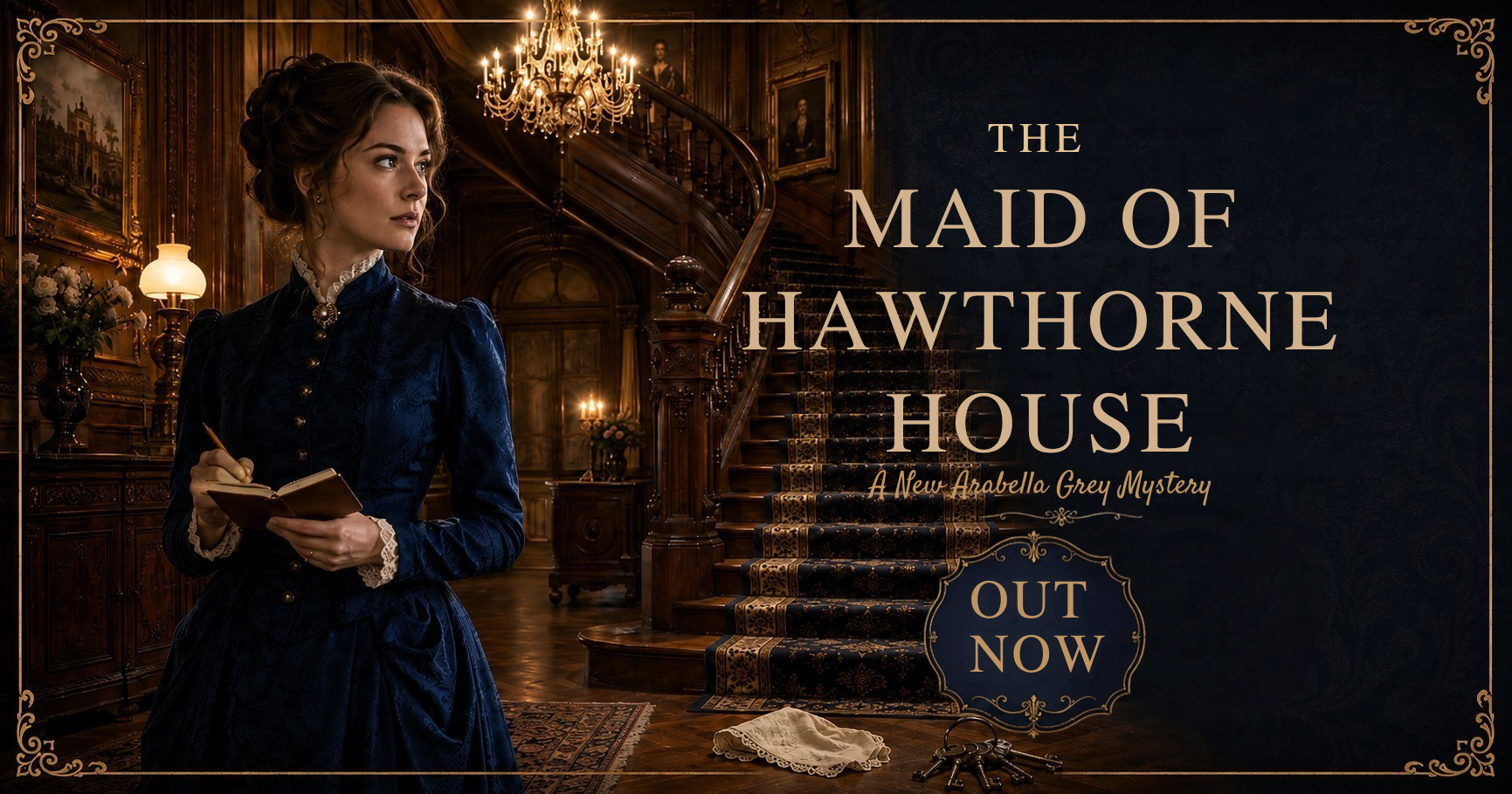
    The Maid of Hawthorne House Is Out Today

    There is a new Arabella Grey mystery waiting for readers today.

    The Maid of Hawthorne House has now been released, and it brings Arabella into one of her most quietly unsettling cases yet. This time, the mystery begins in a grand old house where everything appears polished, proper, and respectable.

    At first glance, Hawthorne House looks like the kind of place that knows how to keep order. The rooms are carefully arranged. The household runs on habit. The family wants discretion. Yet beneath that calm surface, something is wrong.

    A senior housemaid is dead.

    A staircase has been scrubbed too clean.

    And Arabella Grey is asked to discover the truth without disturbing the household more than necessary.

    Of course, truth is rarely that obedient.

    A Death at Hawthorne House

    The mystery begins when Arabella is summoned to Hawthorne House after the death of Martha Bell, the senior housemaid. Martha has been found at the foot of the main staircase, and the first explanation is simple enough. It may have been a tragic fall.

    But Arabella knows that simple answers are not always true answers.

    Martha Bell was not careless. She knew the house, its routines, its stairs, its servants, and its secrets. She was the kind of woman who noticed what others missed, and that makes her death more troubling.

    Why would a senior housemaid use the main staircase at night?

    Why is the household so anxious to keep the matter quiet?

    And why does Hawthorne House feel less like a grieving home and more like a place holding its breath?

    These are the questions that draw Arabella deeper into the case.

    Arabella Grey and the Power of Quiet Observation

    Arabella Grey has never needed noise to find the truth.

    She does not burst into rooms or make grand accusations before she understands the shape of a case. Her strength is quieter than that. She notices what people avoid saying. She studies the way a household moves. She pays attention to small details that others dismiss as ordinary.

    That makes her the perfect sleuth for Hawthorne House.

    This is not a mystery built only on dramatic clues. It is a mystery of rooms, stairs, keys, glances, servants’ duties, family fear, and the invisible lines between upstairs and downstairs.

    Arabella has to ask not only what happened to Martha Bell, but what Martha saw before she died.

    That question changes everything.

    A House Full of Secrets

    One of the pleasures of The Maid of Hawthorne House is the setting itself.

    Hawthorne House is more than a backdrop. It is part of the mystery. Its grand staircase, polished floors, service passages, linen rooms, locked doors, and quiet corridors all carry meaning.

    Above stairs, the family wants calm.

    Below stairs, the servants know the rhythm of the house better than anyone.

    Between those two worlds lies the truth.

    Martha Bell belonged to the working heart of the house. She knew which rooms had been used, which doors had been opened, which papers had moved, and which people were pretending not to know what they knew. Her death threatens more than one family’s reputation. It threatens the carefully managed order of Hawthorne House itself.

    That is where Arabella must look.

    Not only at the obvious clues.

    At the structure beneath them.

    Clara Wren Brings a New Kind of Tension

    This story also introduces Clara Wren, the governess at Hawthorne House.

    Clara is intelligent, observant, and deeply troubled by Martha’s death. She is certain the house is hiding something, and in many ways, she sees more than she is supposed to see. But seeing clearly and judging wisely are not always the same thing.

    Her presence adds a strong emotional thread to the mystery.

    Clara cares about Martha. She cares about the children in her charge. She wants the truth to matter, especially when others seem more worried about scandal than justice.

    Arabella must decide how far to trust Clara’s observations, how far to correct her conclusions, and how to help a clever young woman learn the difference between suspicion and proof.

    That tension gives the book more than a puzzle. It gives it growth, mentorship, and emotional weight.

    Why Cozy Mystery Readers Will Enjoy This Book

    If you enjoy historical cozy mysteries with atmosphere, this story has plenty to offer.

    There is a grand old house with a strained family at its center. There are servants who know more than they can safely say. There are children who have seen and heard more than adults realize. There are keys, papers, staircases, old duties, and quiet clues that grow more important with every chapter.

    The mystery is gentle in tone, but not shallow.

    It deals with truth, responsibility, class, silence, and the cost of keeping a respectable household tidy at the expense of justice.

    That balance is what makes Arabella Grey’s world so satisfying. Her mysteries are cozy, but they are never empty. They invite readers into quiet rooms where a single misplaced object can reveal a whole hidden story.

    A Mystery About Who Gets Seen

    At the heart of The Maid of Hawthorne House is Martha Bell.

    She is not simply a body at the beginning of a case. She is a woman whose work mattered, even when much of that work went unseen. She kept order. She noticed disorder. She understood the house in ways the family did not.

    That is why Arabella’s task is not only to solve the mystery.

    She must also see Martha properly.

    In a house where servants are expected to be useful, silent, and discreet, Martha’s death forces uncomfortable questions into the open. Who gets believed? Who gets protected? Who is asked to keep quiet for the sake of respectability?

    Arabella Grey is not willing to let Martha be made tidy before she is understood.

    And that may be the most dangerous thing she can do.

    Start Reading Today

    The Maid of Hawthorne House is available now.

    If you love Victorian-inspired cozy mysteries, old houses, hidden motives, quiet clues, and heroines who notice what everyone else overlooks, this new Arabella Grey mystery is ready for your Kindle.

    You can buy the book on Amazon today.

    You can also read it with Kindle Unlimited if you are a KU subscriber.

    Step inside Hawthorne House, follow the clues with Arabella Grey, and discover why the most respectable houses often have the most carefully hidden secrets.

  • Next Cozy Mystery: How to Choose Your Next Mandy Ludick Book by Reading Mood

    Next Cozy Mystery: How to Choose Your Next Mandy Ludick Book by Reading Mood

    Find Your Next Cozy Mystery by Mood

    Choosing your next cozy mystery is not always about picking the newest book or the first title you see.

    Sometimes, it is about mood.

    You may want a quiet Victorian mystery with village whispers and hidden grief. You may want a clever time-travel mystery with old manuscripts and dangerous inventions. Or you may want an archive mystery where old records, strange clocks, and missing files pull the past into the present.

    Mandy Ludick’s mystery books offer all three moods.

    Arabella Grey, Clara Everhart, and Nora Halewell each bring a different kind of suspense. Their stories share atmosphere, secrets, and thoughtful heroines, but each series opens a different door.

    So, if you are wondering which Mandy Ludick book to read next, start with the feeling you want from your mystery.

    If You Want Victorian Secrets, Start with Arabella Grey

    If your ideal mystery includes a quiet village, old houses, garden paths, and secrets hidden behind polite manners, Arabella Grey is a natural place to begin.

    Arabella’s stories are built around observation. She notices what others dismiss. A cold teacup, a shifted chair, a missing letter, or a pause in conversation can tell her more than a loud confession.

    For readers who enjoy Victorian atmosphere and slow-building suspense, The Violet Cross Affair makes a strong entry point. It introduces Arabella’s world of quiet clues, village secrets, and truths that sit in plain sight.

    This is a good choice if you like mysteries that feel elegant, thoughtful, and gently unsettling. Arabella’s cases do not need constant drama to hold attention. The tension grows because something ordinary feels just slightly wrong.

    Choose The Engineer’s Silence for a Deeper Arabella Mood

    If you already enjoy Arabella Grey, or if you want a mystery with a more serious emotional edge, The Engineer’s Silence may suit your reading mood.

    This book leans into silence, hidden motives, and the weight of what people do not say. It is still atmospheric and thoughtful, but it has a sharper sense of consequence.

    Choose this book when you want your next cozy mystery to feel quiet on the surface, but more intense underneath. It is ideal for readers who like mysteries where character matters as much as clues.

    Arabella is not the kind of sleuth who storms through a case. She studies people. She lets small details gather meaning. That makes her stories especially satisfying for readers who like to solve the mystery slowly, piece by piece.

    If You Want Time Travel and Lost History, Choose Clara Everhart

    Some readers want their mystery with a spark of the impossible.

    That is where Clara Everhart shines.

    Clara’s world includes time travel, lost manuscripts, old libraries, strange inventions, and secrets buried in history. Her mysteries still have a cozy feel, but they also carry a sense of wonder. The past is not only remembered. It may still be active, dangerous, and waiting to be corrected.

    If that sounds like your mood, start with The Missing Manuscript.

    This is a wonderful choice for readers who love bookish mysteries, historical puzzles, and the idea that one old document can change everything. A missing manuscript is never just a missing book in Clara’s world. It may hold a hidden truth, a dangerous clue, or a story history tried to lose.

    Choose The Clockwork Heir If You Like Inventions and Danger

    If you are drawn to brass gears, strange machines, hidden designs, and the risk of progress gone wrong, The Clockwork Heir may be your best Clara Everhart choice.

    This book suits readers who enjoy mystery with invention, movement, and clever historical tension. Clara’s courage is not loud, but it is steady. She follows the facts even when they lead her into danger.

    The Clara Everhart books are a good fit when you want your next cozy mystery to feel clever, historical, and a little impossible. They bring together old-world atmosphere and the thrill of discovery.

    Choose Clara when you want libraries, manuscripts, clocks, and questions that reach across time.

    If You Want Archive Secrets, Choose Nora Halewell

    Nora Halewell is perfect for readers who love old papers, hidden records, dusty files, and clues that look like mistakes.

    Her mysteries often begin with something small. A name appears in the wrong place. A record does not match. A date feels impossible. A file sits where it should not be.

    At first, these details may seem harmless. In Nora’s world, they rarely are.

    If you want a mystery with archive shadows and time-slip atmosphere, The Mystery of the Mistlethwaite Map is a strong choice. It brings together hidden documents, old records, and the sense that the past has not finished speaking.

    Nora’s stories suit readers who enjoy quiet suspense with a strange edge. The danger does not always arrive loudly. Sometimes, it waits in a drawer.

    Choose Nora When You Like Clues Hidden in Records

    Nora Halewell’s world is different from Arabella’s village and Clara’s library. It feels more shadowed, more archival, and more tied to the strange behavior of time.

    A Nora mystery works well when you want the pleasure of sorting through old clues. Her stories invite readers to ask careful questions. Why was this document filed here? Who changed this date? What happened to the missing name? Why does one place seem to vanish from the record?

    That makes Nora a lovely choice for readers who enjoy time-slip mystery, family secrets, and old documents that carry more meaning than they first appear to hold.

    If Arabella notices the details in a room, and Clara follows clues through history, Nora listens to the records everyone else forgot.

    Match Your Reading Mood to the Right Book

    When you choose your next cozy mystery, think about the kind of atmosphere you want.

    For Victorian village secrets, start with The Violet Cross Affair. For a deeper and more serious Arabella Grey mystery, choose The Engineer’s Silence.

    For time travel, lost books, and historical puzzles, begin with The Missing Manuscript. For inventions, danger, and clockwork intrigue, choose The Clockwork Heir.

    For archive secrets, hidden records, and time-slip clues, try The Mystery of the Mistlethwaite Map.

    Each book offers a different path into mystery, but all of them share a love of atmosphere, hidden truth, and heroines who notice what others miss.

    Why Mood Matters in Cozy Mystery Reading

    Mood matters because cozy mysteries are not only puzzles.

    They are places to enter.

    A good mystery gives you a setting you want to explore, a heroine you want to follow, and a secret you want to uncover. The right book can feel like stepping into a room already full of clues.

    Sometimes, that room is a Victorian parlour with a cold teacup on the table. Sometimes, it is a candlelit library with a manuscript open to the wrong page. Sometimes, it is an archive room where one file has been placed under the wrong name.

    The pleasure comes from choosing the doorway that suits you best.

    Your Next Cozy Mystery Is Waiting

    If you are in the mood for quiet observation, choose Arabella Grey.

    If you want history with a twist of the impossible, choose Clara Everhart.

    If you love old records, strange clocks, and archive secrets, choose Nora Halewell.

    Better yet, choose the book that matches the atmosphere you want tonight.

    A misty village.
    A lost manuscript.
    A misfiled record.
    A hidden map.
    A silence that says too much.

    Your next cozy mystery may already be waiting on the shelf.

  • Small Details in Mystery Fiction: How Arabella Grey Turns Quiet Clues into Suspense

    Small Details in Mystery Fiction: How Arabella Grey Turns Quiet Clues into Suspense

    Small Details in Mystery Fiction Matter

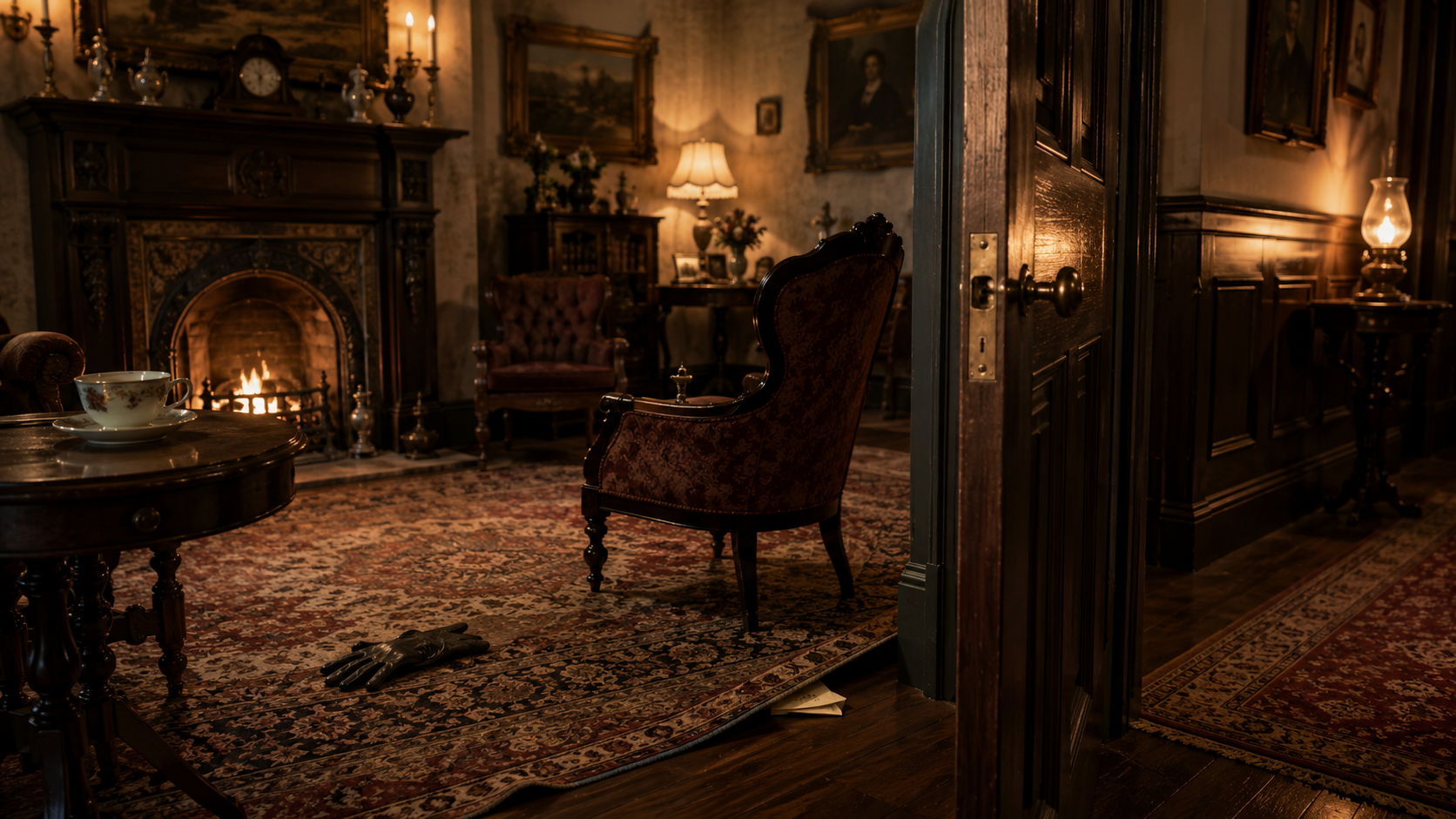
    The best clues are not always dramatic, sometimes, they are almost too small to notice. A cold teacup. A glove left on the floor. A chair turned away from the fire. A door key sitting at the wrong angle. These tiny signs may seem ordinary at first. Yet small details in mystery fiction can change the whole shape of a story.

    That is especially true in an Arabella Grey mystery.

    Arabella does not need noise, panic, or grand gestures to sense that something is wrong. She pays attention to quiet things. She notices what others pass by. In her world, suspense often begins with one small detail that refuses to fit.

    Why Quiet Clues Create Strong Suspense

    A quiet clue works because it feels real.

    Most secrets do not announce themselves. They hide in daily life. They sit among cups, letters, gloves, keys, curtains, and half-finished tasks, that make the mystery feel closer.

    A reader can imagine walking into a room and seeing nothing strange at first. Then one object begins to feel wrong. The teacup is cold, but the person who drank from it left only moments ago. The drawer is almost closed, but not quite. A letter lies beneath the rug, as if someone pushed it there in haste.

    The scene does not need shouting.

    The silence does the work.

    Arabella Grey Notices What Others Miss

    Arabella Grey is a heroine built for quiet clues. She watches people carefully. She listens to pauses. She studies rooms, gardens, hallways, and small changes in routine. Other people may look for obvious evidence. Arabella often finds truth in what seems too ordinary to matter.

    A servant avoids one door. A guest stops using a certain phrase. A family member gives the right answer too quickly. A chair sits in the wrong place.

    Arabella does not rush past these things.

    She lets them trouble her.

    That is what makes her such a satisfying cozy mystery sleuth. She treats small details with respect.

    A Cold Teacup Can Say a Great Deal

    A teacup sounds like a gentle object. It belongs in a sitting room, beside a book, on a garden table, or near a warm fire. It does not seem dangerous but in a mystery, a teacup can become a clue.

    Was it left untouched? Did someone pour it and then leave in a hurry? Has it gone cold because a conversation ended too soon? Does it sit beside the wrong chair?

    The object stays simple, but the questions grow.

    This is one of the pleasures of small details in mystery fiction. A normal item can become suspicious without losing its ordinary shape.

    Arabella’s world works beautifully this way. It lets the reader feel that mystery can hide in plain sight.

    The Power of a Misplaced Object

    A misplaced object can disturb a whole scene. A glove on the floor may suggest a hurried exit, a key turned in a lock may show someone entered a room after they claimed they did not, a note tucked beneath a rug may reveal fear, secrecy, or regret.

    None of these clues need to be large. In fact, their smallness makes them stronger.

    A huge clue demands attention. A small clue waits. It asks the reader and the heroine to notice it properly.

    When Arabella sees a misplaced object, she does not treat it as decoration. She asks why it is there. She asks who touched it. She asks what changed. That kind of questioning creates quiet tension.

    Why Small Clues Suit Cozy Mysteries

    Cozy mysteries often work best when suspense grows slowly.

    The reader does not need harsh action on every page. Instead, the story builds through curiosity, atmosphere, and suspicion.

    Small clues help create that mood.

    They allow suspense to rise inside ordinary places: a garden path can feel uneasy, a hallway can seem watchful, a sitting room can become full of questions.

    This is why Arabella Grey’s world feels so rich. Her mysteries often begin in calm settings, but calm does not mean safe.

    A room may look proper. A family may seem respectable. A village may appear peaceful.

    Then Arabella notices one detail that tells another story.

    Respectability Can Hide a Mystery

    Arabella’s stories often move through polite spaces.

    There are village houses, quiet gardens, drawing rooms, church paths, and family tables. People know how to behave. They know what to say. They know which truths should stay hidden.

    That kind of setting gives small clues even more power.

    When everyone works hard to appear calm, one wrong detail matters.

    A nervous hand, a missing letter, a pause before an answer, a door closed too firmly.

    These details can reveal pressure beneath the surface.

    Arabella understands that respectability can cover fear, grief, pride, and guilt. She does not only ask what happened. She asks what people are trying not to show.

    Readers Enjoy Solving the Small Things

    Small details invite readers into the mystery. They make us feel like detectives too. We begin to watch the room with Arabella. We notice the cup, the key, the glove, and the note. We wonder which object matters and which one simply belongs there.

    This creates a fair and satisfying mystery. The clue sits in front of us, the challenge is to understand it.

    That is why small details in mystery fiction are so effective. They reward attention. They encourage curiosity. They make each scene feel alive with possibility.

    A reader who loves quiet suspense will enjoy this kind of clue because it does not rush the story. It deepens it.

    A Small Detail Can Reveal Character

    A clue does not only reveal what happened, it can also reveal who a person is.

    A carefully folded note may suggest fear or control. A hidden keepsake may point to old grief. A moved chair may show that someone wanted distance. A missing glove may reveal haste.

    Arabella reads objects, but she also reads people through them.

    This gives her mysteries emotional depth.

    The truth is not only about solving a puzzle. It is about understanding why someone hid something, why someone lied, or why someone could not speak plainly.

    Small clues help uncover those hidden motives.

    Suspense Grows When Something Feels Slightly Wrong

    A strong mystery does not always need a shocking moment. Sometimes, it only needs unease.

    The reader senses that something is off, but cannot yet explain why. A scene looks normal, but not quite. A person sounds calm, but not quite. A room feels settled, but one object tells a different story.

    That “not quite” feeling is powerful. It keeps the reader turning pages.

    Arabella Grey’s mysteries use that feeling well. They show how suspense can grow from restraint. The less people say, the more their surroundings may reveal.

    Why Arabella Grey’s Quiet Clues Work

    Arabella’s quiet clues work because they suit her character.

    She is observant, she is patient, she does not force the truth to appear before its time.

    Instead, she gathers details: a glance, a tone, a stain, a habit, or a silence. Then she lets the pattern form. This makes the final answer feel earned. The reader can look back and see how the small details mattered all along.

    That is one of the deepest pleasures of a well-built mystery. The clues were there. We only needed Arabella to show us how to read them.

    The Mystery Hiding in Plain Sight

    Small details in mystery fiction remind us that truth often hides close by.

    It may sit on a table, it may lie under a rug, or It may hang on a hook by the door. It may rest in a teacup that no one bothered to drink.

    Arabella Grey understands this better than most.

    She knows that suspense does not always arrive loudly. Sometimes, it waits in a quiet room, wearing the shape of an ordinary object.

    A cold teacup.
    A turned key.
    A glove left behind.

    In Arabella’s world, the smallest detail may carry the whole mystery.

  • Misfiled Truths: How One Wrong Record Can Change a Mystery

    Misfiled Truths: How One Wrong Record Can Change a Mystery

    Misfiled Truths Can Change Everything

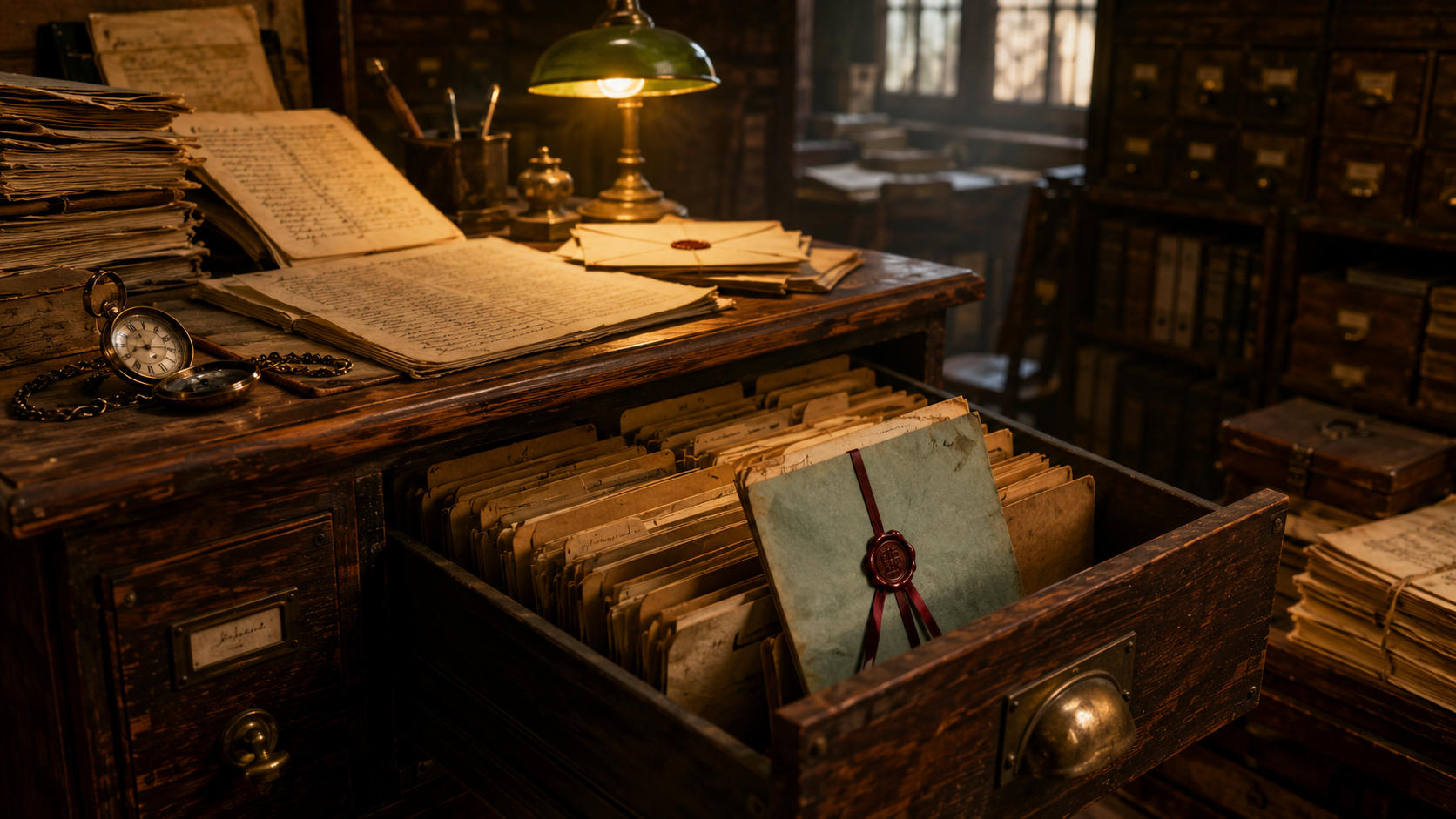
    Some secrets do not need a locked room. They do not need a hidden passage, a buried box, or a sealed door. Sometimes, the most dangerous secret sits in a file drawer under the wrong name. That is the quiet power of misfiled truths. One wrong record can change a whole mystery. A date may not match, a name may appear in the wrong folder, a letter may sit among papers where it does not belong.

    Small mistakes like these can open large questions.

    In Nora Halewell’s world, archives do more than store the past. They protect it, shape it, and, at times, they hide it.

    One misplaced file can make the truth begin to move again.

    Why Misfiled Truths Make Strong Mystery Clues

    A wrong record may look dull at first.

    A file sits in the wrong box, a catalogue card shows the wrong date, a letter appears under the wrong family name.

    Yet these small details create instant tension.

    Was it a mistake? Did someone act in a hurry? Was the truth being hidden? Or did someone place the clue there on purpose?

    That is why misfiled truths work so well in mystery fiction. They do not shout for attention. They wait for someone careful enough to notice.

    For Nora Halewell, a wrong record is never just paperwork.

    It is a warning.

    The Mystery of a Name in the Wrong Place

    Names matter in mysteries.

    A name can connect families, reveal an heir, uncover a witness or it can prove that someone was present when they claimed to be far away.

    So, when a name appears where it should not, the whole story begins to shift.

    A servant’s name may turn up in a family file, a child may appear in an old estate ledger, a woman’s married name may hide who she used to be.

    These details look small, but they can carry the weight of a whole mystery.

    Nora understands this. She knows every name in an archive has a history. When one name refuses to fit, the past asks for a closer reading.

    When Dates Refuse to Behave

    Dates seem firm.

    A birth date. A death date. A date on a letter. A date in a ledger.

    In a mystery, though, one wrong date can cause real trouble.

    A letter dated after someone supposedly left town creates a problem. A record dated before an event suggests someone changed the order of the story. Two documents with different dates for the same moment point to a gap.

    That gap matters.

    A wrong date can expose a lie, reveal a secret meeting or show that someone arranged the official story to protect a hidden truth.

    This gives a simple archive clue real force.

    Archives Are Not Always Neutral

    Archives may look calm and truthful.

    Files have labels. Papers sit in order. Records rest in neat rows. Everything seems official.

    But people handle archives.

    People make mistakes, they protect reputations, they hide shame and they choose which stories survive and which stories quietly disappear.

    That is what makes archive mysteries so rich.

    A neat file drawer can hide a lie, a careful label can make a false story look respectable, an official record can lead everyone away from the truth.

    In Nora Halewell’s stories, the past does not always vanish.

    Sometimes, someone simply puts it where no one thinks to look.

    Why Nora Halewell Notices What Others Miss

    Nora pays attention.

    She does not need noise or drama to sense that something is wrong. A missing card can bother her, a crossed-out line can stop her, a folder that looks too clean can raise questions.

    This makes her perfect for stories about misfiled truths.

    Many people would glance at an old record and move on. Nora looks again. She asks why a document sits out of order. She wonders why one file feels too thin. She notices when a name, date, or place refuses to fit.

    Her strength is not only courage.

    It is patience.

    She gives the past time to speak.

    A Misfiled Letter Can Hold a Whole Story

    Letters make wonderful mystery clues.

    They carry voice, emotion, and intent. A letter may say too much, it may say too little, it may be signed, unsigned, torn, sealed, or tucked between unrelated papers.

    A misfiled letter creates even more questions.

    Who moved it? Why did it land in the wrong folder? Did someone want it lost? Or did someone hope the right person would find it later?

    One letter can change how a reader sees a whole family.

    It may reveal love, guilt, fear, betrayal, or protection.

    That is why old documents carry such strong emotional force in mystery fiction. They do not only reveal facts. They reveal people.

    Misfiled Truths and The Beauty of Slow-Burn Suspense

    Misfiled truths create a gentle kind of suspense.

    There may be no chase, no scream, no dramatic discovery in the first paragraph.

    Instead, the tension builds slowly.

    A record does not match, a name appears twice, a folder looks too new, a letter has already been opened, a date points to the wrong year.

    Each detail feels small. Yet each one moves the reader closer to the truth.

    This kind of mystery rewards attention. It invites the reader to investigate too. Soon, every file begins to look suspicious. Every label seems worth checking.

    That is the pleasure of a Nora Halewell mystery.

    The danger stays quiet, but it is very much alive.

    When Someone Edits the Past

    Archive-based mysteries often ask a chilling question.

    What if someone edited the past?

    Not the real past, of course. The record of the past.

    A page can vanish, a file can gain a new name, a witness statement can move to the wrong drawer, a letter can end up under the wrong estate, a catalogue card can send future readers in the wrong direction.

    This creates a very quiet kind of villainy.

    It does not always look cruel: it may look careful, it may look polite, it may even look helpful.

    Someone can hide the truth with a filing system.

    That thought gives archive mysteries their strange power.

    If the record lies, then everyone who trusts the record may believe the lie too.

    Why Readers Love Archive Secrets

    Archive secrets feel possible.

    Many of us have opened an old box, read an old letter, or found a family paper that raised more questions than answers. The past often survives in scraps.

    A photograph, a certificate, a note, a name in a ledger or a date that does not quite make sense.

    This makes archive mysteries feel close to real life.

    History does not always arrive as a grand discovery. Sometimes it sits folded in a drawer, sometimes it waits in a box, sometimes it hides under the wrong name.

    Then the right person finds it.

    Everything changes.

    Misfiled Truths in Nora Halewell’s World

    Nora Halewell’s mysteries suit this kind of discovery beautifully.

    Her world has archives, clocks, vanished places, hidden documents, and time-slip secrets. Misfiled truths belong there because they can do so much at once.

    They can create a clue, reveal a secret, connect the present to the past and they can make Nora question what everyone else has accepted as fact.

    For Nora, the archive is never just a setting.

    The drawers matter, the folders matter, the cards and labels matter too.

    Every small object may form part of the puzzle.

    The Quiet Power of One Wrong File

    A mystery does not always need a dramatic clue.

    Sometimes, one wrong file is enough.

    One folder sits in the wrong drawer, a name appears where it should not, a date points to a hidden meeting. One letter survives because someone tried to lose it.

    That is the beauty of misfiled truths.

    They show that secrets do not always hide far away. Some survive in plain sight, disguised as ordinary mistakes.

    A careful heroine knows better.

    Nora Halewell knows better.

    When she opens the wrong file, the truth may finally find its way out.

  • Lost Manuscript Mystery: Why Missing Books Make Perfect Cozy Mystery Clues

    Lost Manuscript Mystery: Why Missing Books Make Perfect Cozy Mystery Clues

    There is something instantly intriguing about a manuscript that has disappeared. Unlike a missing modern book, a lost manuscript often feels as though it carries a secret worth protecting. It might contain forgotten history, reveal an uncomfortable truth, or connect long-buried events in unexpected ways. In a lost manuscript mystery, the missing document is rarely just an object—it is the key to a puzzle waiting to be solved..

    A lost manuscript can hide a name.

    It can expose a lie.

    It can change the way people remember the past.

    That is why missing books make such perfect cozy mystery clues. They feel quiet, but they carry weight. They invite the reader to lean closer and ask the most important question in any mystery:

    Why did someone want this hidden?

    In A Lost Manuscript Mystery, A Missing Manuscript Is Never Just a Missing Book

    In a cozy mystery, the best clues often look ordinary.

    A teacup.
    A key.
    A note.
    A book left open on the wrong page.

    A lost manuscript works in the same way. It may not seem dramatic at first. Yet once the story begins, that missing book can become the key to everything.

    Perhaps it proves that someone lied. Perhaps it tells a story no one wanted told. Perhaps it records an event that history forgot or misunderstood.

    This is what makes a lost manuscript mystery so rich. The clue does not only point to what happened. It also points to what someone tried to erase.

    Why Manuscripts Feel So Atmospheric

    Old manuscripts bring instant atmosphere to a mystery.

    They belong in candlelit libraries, locked studies, dusty shelves, and rooms where the air feels thick with memory. They carry the smell of old paper and ink. They suggest hidden knowledge, careful handwriting, and secrets passed from one generation to another.

    That mood matters.

    A cozy mystery needs more than a puzzle. It needs a world the reader wants to step into.

    A missing manuscript gives the story texture. It makes the setting feel lived in. It gives the reader something to picture: a faded page, a broken binding, a margin note, or a book that should be on the shelf but is not.

    And once a reader notices that empty space, the mystery begins.

    Clara Everhart and the Power of Lost History

    Clara Everhart’s world is a natural home for a lost manuscript mystery.

    Her stories are shaped by history, time travel, old libraries, strange inventions, and secrets buried in the past. A lost manuscript fits beautifully into that world because it asks one powerful question:

    What if history is missing a page?

    For Clara, a manuscript is not only an old document. It may be a doorway into another time. It may hold a clue that explains the present. It may reveal that the past was not as settled as everyone believed.

    That is what gives Clara’s mysteries their sense of wonder.

    The past is not silent.

    Sometimes, it is only waiting for the right reader.

    A Lost Manuscript Mystery Creates Gentle Suspense

    A lost manuscript mystery does not need to be loud to be tense.

    The suspense can begin with one small problem. A book is gone from a shelf. A catalogue entry does not match. A chapter ends too soon. A page has been cut out. A handwritten note appears in a place it should never have been.

    These details are quiet, but they are not weak.

    In fact, they are perfect for cozy mystery readers who enjoy slow-building tension. The danger grows through questions rather than shock.

    Who took the manuscript?
    What was inside it?
    Why did it matter enough to hide?
    And who is still trying to keep it lost?

    Each question pulls the reader deeper into the story.

    A Manuscript Can Hold More Than Words

    One reason manuscripts work so well as mystery clues is that they can carry many kinds of secrets.

    The secret may be in the text itself. It may be in a missing paragraph, a strange date, a dedication, or a name written in the margin.

    But the secret may also be physical.

    The paper may be older than expected. The ink may not match. The binding may hide another page. A pressed flower, a letter, or a drawing may be tucked inside.

    A manuscript is not just something to read.

    It is something to examine.

    That gives the heroine a wonderful kind of detective work. She must read carefully, look closely, and think about what should be there but is not.

    Why Readers Love Bookish Mysteries

    Bookish mysteries have a special charm.

    Readers who love books often enjoy stories where books matter inside the plot too. A lost manuscript mystery turns reading itself into an adventure. It makes every page feel important.

    There is also something deeply satisfying about a clue that must be studied rather than chased.

    The heroine does not need to rush through dark streets. She may sit at a desk, turn a page, and discover that one sentence changes everything.

    That kind of scene feels calm, but it can be full of suspense.

    A book can be a hiding place.

    A library can be a crime scene.

    A missing chapter can be a warning.

    The Past Is Full of Missing Pages

    History is never as complete as it looks.

    Some stories were never written down. Some were hidden. Some were changed. Some were preserved by accident. Others were lost on purpose.

    That is why a lost manuscript mystery works so well in historical fiction.

    It reminds us that the past is fragile. What survives may not be the whole truth. What is missing may matter most of all.

    In Clara Everhart’s world, this idea becomes even more powerful. When time travel and lost history meet, a missing manuscript is not only a clue. It may be proof that the past is still moving.

    And if the past is still moving, then the truth may not stay buried for long.

    What Makes a Lost Manuscript a Strong Cozy Mystery Clue?

    A strong cozy mystery clue should feel fair, interesting, and meaningful.

    A lost manuscript does all three.

    It gives the reader something clear to wonder about. It creates a natural path for investigation. It can connect characters, motives, history, and setting. Most of all, it can reveal truth in layers.

    First, the heroine discovers that the manuscript is missing.

    Then she learns why it mattered.

    At last, she discovers who needed it gone.

    That structure is simple, but it is powerful. It keeps the mystery moving while still giving the story a warm, thoughtful tone.

    Why Missing Books Belong in Clara Everhart’s World

    Clara Everhart’s mysteries are full of lost history, hidden clues, and questions that reach across time.

    A missing book belongs there.

    It gives Clara something to follow. It gives the reader something to suspect. It turns history into a puzzle that can be touched, opened, and read.

    A lost manuscript may begin as an object, but it soon becomes much more. It becomes a voice from the past. It becomes a challenge. It becomes a sign that someone, somewhere, wanted the truth to disappear.

    And Clara is exactly the kind of heroine who will not let that happen.

    Step Into a Lost Manuscript Mystery

    If you enjoy old libraries, hidden pages, historical secrets, and cozy suspense, a lost manuscript mystery offers a beautiful place to begin.

    It has atmosphere. It has quiet tension. It has clues tucked into paper, ink, and memory.

    Most of all, it has the promise that the truth still exists, even when someone has tried to hide it.

    A manuscript can be stolen.

    A page can be removed.

    A record can be changed.

    But in a good mystery, the past always leaves a trace.

    And sooner or later, someone like Clara Everhart will find it.

  • Cozy Mystery Heroine Guide: Should You Read Arabella, Clara, or Nora First?

    Cozy Mystery Heroine Guide: Should You Read Arabella, Clara, or Nora First?

    Which Cozy Mystery Heroine Should You Read First?

    Choosing a new series can be part of the fun. Sometimes you want a quiet village mystery with gardens, old houses, and secrets hidden behind polite smiles. Sometimes you want a time-travel mystery with lost manuscripts and history that refuses to stay buried. And sometimes you want an archive mystery filled with old records, strange clocks, and clues filed under the wrong name. That is where the right cozy mystery heroine makes all the difference.

    Arabella Grey, Clara Everhart, and Nora Halewell each bring a different kind of mystery to the page. They all follow clues. They all notice what others miss. Yet each one has her own world, her own strengths, and her own way of searching for the truth.

    So, which one should you read first?

    Let’s find the heroine who matches your current reading mood.

    Choose Arabella Grey If You Love Quiet Clues

    Arabella Grey is the perfect cozy mystery heroine for readers who enjoy stillness, atmosphere, and careful observation.

    She does not rush into a mystery with noise and drama. She watches. She listens. She notices the cup of tea left untouched, the garden gate closed too fast, or the pause before someone gives an answer.

    Arabella’s world is full of Victorian village life. There are old houses, garden paths, church bells, quiet parlors, and secrets that have learned to sit politely in plain sight.

    Her mysteries are gentle in tone, but that does not mean they are simple.

    In fact, Arabella’s cases often turn on the smallest details. A misplaced object may matter. A folded note may change everything. A silence may say more than a confession.

    If you love a mystery that asks you to slow down and notice, Arabella is a lovely place to begin.

    Why Arabella Appeals to Thoughtful Mystery Readers

    Arabella works so well because she understands people.

    She knows that secrets often hide inside ordinary habits. She knows that grief can change a household. She knows that respectability can cover a great deal.

    That gives her stories emotional depth.

    The pleasure of an Arabella Grey mystery is not only in solving the case. It is also in understanding the people around it. Why did someone hide the truth? Who were they trying to protect? What pain has been left unspoken for too long?

    Arabella is ideal for readers who enjoy mysteries with heart.

    Her world is quiet, but it is never empty.

    Choose Clara Everhart If You Love Time Travel and Lost History

    Clara Everhart is a cozy mystery heroine for readers who want history with a twist of impossible.

    Her stories involve time travel, lost manuscripts, strange inventions, old libraries, and secrets buried in the past. Clara’s mysteries often begin with something that should be safely tucked away in history, but is not.

    A missing manuscript.
    A dangerous invention.
    A clue that belongs to another time.
    A truth that history recorded incorrectly.

    Clara’s world has a brighter sense of adventure. Her mysteries still have cozy atmosphere, but they also carry the thrill of crossing time.

    If Arabella’s stories ask, “What did everyone fail to notice?” Clara’s stories ask, “What if history itself is hiding the answer?”

    Why Clara Is Perfect for Curious Readers

    Clara is driven by curiosity.

    She follows facts, but she also has the courage to face what those facts may reveal. She does not accept easy answers. She wants to know what really happened, even when the truth changes how the past is remembered.

    That makes her a wonderful choice for readers who love clever heroines and historical puzzles.

    Clara’s stories suit readers who enjoy old books, coded clues, clockwork details, libraries, and the feeling that one discovery could change everything.

    Her mysteries are not only about solving a crime or uncovering a secret. They are about the power of history and the danger of misunderstanding it.

    If you love stories where the past speaks back, Clara may be the cozy mystery heroine for you.

    Choose Nora Halewell If You Love Archives and Time-Slip Secrets

    Nora Halewell is the heroine for readers who love old archives, dusty files, vanished places, and records that do not quite match.

    Her world is full of hidden documents, catalog cards, clocks, family secrets, and time-slip mystery. Nora’s cases often begin quietly. A file is missing. A name is wrong. A date feels impossible. A place appears in a record where it should not be.

    At first, these things may seem small.

    But Nora knows better.

    In her stories, old records are never just old records. They may hold warnings. They may reveal lost names. They may expose family secrets someone worked hard to hide.

    If you love the idea of opening an archive drawer and finding a mystery waiting inside, Nora is the heroine to follow.

    Why Nora’s Stories Feel So Atmospheric

    Nora’s mysteries have a shadowed, paper-dusted mood.

    They feel like old rooms, low lamps, ticking clocks, sealed envelopes, and shelves full of records that remember too much.

    Her stories are perfect for readers who enjoy slow-burn suspense. The danger does not always arrive loudly. Sometimes it appears as a missing page, a strange file label, or a pocket watch that seems far too important.

    Nora is not a loud heroine. Her strength is attention.

    She respects the past. She knows that history is not always neat. She understands that the smallest gap in a record may point to the largest secret.

    That makes her a strong choice for readers who love archive mysteries and time-slip atmosphere.

    Three Cozy Mystery Heroines, Three Mystery Worlds

    Arabella, Clara, and Nora are very different, but they share one important trait.

    They notice what others ignore.

    Arabella notices quiet clues in village life.
    Clara notices gaps in history.
    Nora notices old records that do not behave as they should.

    Each cozy mystery heroine gives readers a different doorway into suspense.

    Arabella’s doorway opens into a Victorian garden.
    Clara’s doorway opens into a library where time does not sit still.
    Nora’s doorway opens into an archive where the past may still be alive.

    The best choice depends on the kind of mystery you are craving right now.

    Which Cozy Mystery Heroine Matches Your Reading Mood?

    Start with Arabella Grey if you want a thoughtful Victorian mystery with village secrets, gardens, old houses, and quiet clues.

    Start with Clara Everhart if you want a time-travel mystery filled with lost manuscripts, invention, history, and cozy suspense.

    Start with Nora Halewell if you want an archive mystery with old records, clocks, vanished places, and time-slip secrets.

    There is no wrong answer.

    Each heroine brings her own kind of charm. Arabella is quiet and observant. Clara is curious and brave. Nora is careful and drawn to the hidden past.

    Together, they offer three different ways to follow the truth.

    Why Cozy Mystery Readers Love Heroines Like These

    A good cozy mystery heroine does more than solve the case.

    She gives the reader someone to trust.

    That trust matters. Readers return to a series because they want to spend time with the heroine again. They want to see how she thinks. They want to watch her notice what everyone else missed.

    Arabella, Clara, and Nora all offer that pleasure.

    Their worlds are full of atmosphere, but the heroines are the heart of the mystery. They guide the reader through clues, secrets, and uncertainty.

    And because they each solve mysteries in a different way, each series offers a fresh reading experience.

    Start With the Heroine Who Calls to You

    So, which cozy mystery heroine should you read first?

    Choose the one whose world makes you want to open the door.

    A misty village garden.
    A candlelit library.
    A dusty archive room.

    Arabella, Clara, and Nora are all waiting with a mystery to solve.

    All you need to do is choose where to begin.

  • The Mystery of Old Archives: Why Nora Halewell’s Stories Feel So Atmospheric

    The Mystery of Old Archives: Why Nora Halewell’s Stories Feel So Atmospheric

    There is something strange about old archives. They look quiet at first. Rows of boxes. Dusty folders. Faded labels. Old records stacked in careful order. But open the wrong file, and the past may begin to stir.

    That is what makes Nora Halewell’s stories so atmospheric. Her world is not built on loud danger. It is built on silence, paper, shadows, and time.

    In a Nora Halewell mystery, an archive is never just a room full of records.

    It is a place where secrets wait.

    Why Old Archives Feel So Mysterious

    Old archives carry a special kind of tension. They are meant to preserve the truth. Yet they often raise more questions than they answer.

    Why is one file missing?
    Why was a name crossed out?
    Why does one date not match the others?
    Why was a letter hidden in the wrong folder?

    These are small things. But in a mystery, small things matter.

    An archive may seem still. Yet every drawer can hold a clue. Every document may point to a secret. Every label may hide a lie.

    That is why old archives work so well in Nora Halewell’s world.

    They feel calm on the outside.

    But underneath, they are full of unfinished stories.

    Nora Halewell and the Pull of the Past

    Nora Halewell is drawn to the past in a quiet but powerful way.

    She does not rush into danger. She follows the trail one record at a time.

    A page.
    A name.
    A date.
    A strange gap in the file.

    To someone else, these may look like dull details. To Nora, they are signs.

    She understands that records are never only facts. They are also choices. Someone chose what to keep. Someone chose what to hide. Someone chose what story would survive.

    That gives Nora’s mysteries their deep sense of atmosphere.

    The past is not dead in her stories.

    It is waiting to be read again.

    Archives Are Perfect for Time-Slip Mystery

    Nora Halewell’s stories often carry a time-slip mood. That means the past feels close. Sometimes, it feels too close. Old archives help create that feeling.

    When Nora opens an old file, she is not only reading about another time. She is reaching into it. The page becomes a doorway. The record becomes a warning. The missing detail becomes a thread that pulls her deeper into the mystery.

    This is why old archives are so powerful in time-slip mystery fiction.

    They blur the line between then and now.

    One moment, Nora is sitting at a desk.

    The next, she is facing a secret that should have stayed buried.

    The Beauty of Dust, Paper, and Silence

    Some mystery settings are dramatic.

    A stormy cliff.
    A locked tower.
    A dark alley.
    A lonely manor.

    But old archives create a different kind of mood.

    They are quiet. They are still. They ask the reader to lean in.

    There may be no scream. No chase. No sudden crash.

    Instead, there is the soft sound of paper. The smell of dust. The weight of a sealed envelope. The uneasy sense that one document has been waiting for the right person to find it.

    That is the beauty of Nora Halewell’s world.

    The suspense grows slowly.

    And because it grows slowly, it feels real.

    Why Hidden Records Make Strong Mystery Clues

    A hidden record is a wonderful mystery clue.

    It can change everything.

    One old document can reveal a lost name.
    One file can prove someone lied.
    One missing page can explain a family secret.
    One faded map can point to a place no one remembers.

    In Nora Halewell’s stories, records are not boring. They are dangerous. Not because they leap from the page, but because they tell the truth. And truth is often the one thing someone does not want found. That is why old archives create such strong suspense. The danger is not always in what Nora sees. Sometimes, it is in what someone tried to remove.

    The Atmosphere of Nora Halewell’s Mysteries

    Nora Halewell’s mysteries have a quiet, shadowed feel.

    They are built from old rooms, dusty shelves, strange clocks, hidden papers, and places that seem to remember more than they should.

    The setting matters.

    An archive room can feel safe. It can also feel trapped. Shelves rise on every side. Boxes crowd the walls. The air is still. The past presses close.

    That feeling is part of Nora’s appeal.

    Her stories are cozy, but they are not empty.

    They are gentle, but they are not simple.

    They invite readers into a world where time leaves marks, and old records may still have power.

    Why Readers Love Archive Mysteries

    Archive mysteries are perfect for readers who enjoy slow-burn suspense.

    They reward patience. They invite curiosity. They make the reader feel like a detective.

    Instead of asking, “Who ran away?” they ask:

    Who changed the record?
    Who hid the letter?
    Who erased the name?
    Who wanted the past to stay buried?

    These questions are rich with story.

    They suggest old grief, family secrets, lost places, and truths that have waited too long.

    For readers who love atmosphere, old archives offer the perfect setting.

    Every file may matter.

    Every silence may speak.

    Nora Halewell’s World of Time and Secrets

    Nora Halewell belongs in a world of clocks, records, and hidden doors into the past.

    She is not a loud heroine. She does not need to be.

    Her strength is her attention.

    She notices what others ignore. She follows what others dismiss. She takes old records seriously, because she knows the past can still shape the present.

    That makes her stories ideal for readers who love:

    Old archives
    Time-slip mystery
    Hidden documents
    Atmospheric settings
    Quiet suspense
    Clues buried in the past
    Heroines who follow the truth carefully

    Nora’s world is full of mystery, but it is also full of meaning.

    The past is not only a puzzle.

    It is a voice.

    Step Into the Mystery of Old Archives

    If you love old archives, hidden records, and time-slip secrets, Nora Halewell’s stories are a perfect place to begin.

    Her mysteries are full of quiet rooms, faded papers, strange dates, and clues that have waited years to be found.

    They remind us that history is never as still as it looks.

    A file can be moved.
    A name can be lost.
    A truth can be hidden.

    But sooner or later, someone like Nora Halewell may open the right drawer.

    And then the past begins to speak.

  • Time Travel Mystery Books for Readers Who Love Lost History and Cozy Suspense

    Time Travel Mystery Books for Readers Who Love Lost History and Cozy Suspense

    A Time Travel Mystery for Readers Who Love the Past

    Some mysteries begin with a body. Others begin with a book, a clock, a faded map, or a question that history forgot to answer. That is the charm of a time travel mystery. It does not only ask what happened. It also asks when it happened, why it was hidden, and what might change if the truth is found.

    For readers who love cozy suspense, lost history, and clever heroines, a time travel mystery offers something deeply appealing. It takes the comfort of a historical mystery and adds one more delicious twist.

    The past is not only remembered.

    It can be visited.

    It can be questioned.

    And sometimes, it can be dangerous.

    Why Time Travel Mystery Fiction Works So Well

    A mystery is always about hidden truth. Time travel makes that truth even more powerful.

    In an ordinary mystery, the sleuth may search for a witness, a letter, or a forgotten clue. In a time travel mystery, the sleuth may have to face the past itself.

    That creates a special kind of tension.

    What if history recorded the wrong story?
    What if someone was blamed who did not deserve it?
    What if a lost manuscript was hidden for a reason?
    What if changing one small detail could alter everything?

    These questions give the story both wonder and suspense.

    The reader is not only following clues. The reader is stepping into a world where time itself may be part of the puzzle.

    Clara Everhart Time Travel Mystery Stories

    Clara Everhart is a heroine for readers who love history, mystery, and impossible questions.

    Her world is filled with old libraries, lost manuscripts, strange inventions, and secrets buried in time. She does not solve mysteries by luck. She follows clues with courage, thought, and a deep desire to understand the truth.

    Clara’s stories are ideal for readers who enjoy a cozy mystery with a twist. There is atmosphere. There is danger. There is history. But there is also heart.

    She is not only trying to solve a puzzle.

    She is trying to understand what the past still wants to say.

    Lost History Makes the Best Clues

    One reason a time travel mystery feels so rich is that history is never simple.

    Records can be wrong.
    Letters can be hidden.
    Manuscripts can be stolen.
    Names can be erased.
    Inventions can be misunderstood.

    In Clara Everhart’s world, the past is full of gaps. Those gaps matter.

    A missing page may explain a betrayal.
    A forgotten invention may reveal a motive.
    A lost manuscript may hold the answer to a question no one has dared to ask.

    That is why lost history makes such a strong mystery element. It gives the sleuth something more than a clue. It gives her a doorway.

    And once Clara steps through that doorway, the truth can no longer stay buried.

    Cozy Suspense with a Historical Twist

    Not every mystery needs to be dark or harsh to keep readers turning pages.

    Cozy suspense works because it builds tension through questions, atmosphere, and character. A locked room, an old library, a hidden letter, or a strange clock can be just as gripping as a chase through the streets.

    A time travel mystery adds even more depth to that feeling.

    The setting may be beautiful, but something is wrong.

    The library may be quiet, but one book is missing.

    The manuscript may seem harmless, but someone has risked everything to hide it.

    The past may look settled, but Clara knows better.

    That mix of warmth and danger is what makes this kind of story so satisfying. It invites readers into a world that feels rich and mysterious without losing the cozy pleasure of the genre.

    Why Readers Love Clara Everhart

    Clara Everhart appeals to readers who enjoy smart heroines.

    She is curious. She is brave. She asks questions. She does not accept easy answers just because they are convenient.

    That makes her a strong guide through a time travel mystery.

    She understands that the truth is often hidden in details. It may be found in a line of handwriting, a strange date, a missing chapter, or a machine no one fully understands.

    Clara also has emotional courage. She does not only face danger. She faces uncertainty.

    That matters in a story where the past may not be what anyone believed.

    Time Travel Raises the Stakes

    In a normal mystery, solving the case may bring justice.

    In a time travel mystery, solving the case may do even more.

    It may change how a life is remembered.
    It may restore a lost name.
    It may reveal who truly deserves blame.
    It may protect the future from an old mistake.

    That is why time travel raises the stakes so naturally.

    The mystery is not only about the present. It reaches backward and forward at the same time.

    Clara Everhart’s stories use that tension well. Her mysteries are filled with history, but they never feel distant. The past presses close. It asks to be seen clearly.

    And Clara cannot turn away.

    A Good Choice for Historical Mystery Readers

    If you already enjoy historical mysteries, a time travel mystery may be a natural next step.

    It gives you many of the things historical mystery readers love:

    Old buildings.
    Faded documents.
    Hidden rooms.
    Lost books.
    Unsolved questions.
    Secrets shaped by the past.

    But it also adds the thrill of crossing time.

    Instead of only studying history, Clara may have to face it. Instead of only reading about the past, she may need to follow it into places where the truth is still alive.

    That gives the story a sense of wonder, while still keeping the heart of a cozy mystery.

    When the Past Refuses to Stay Silent

    The best mysteries often begin when something refuses to stay hidden.

    In Clara Everhart’s world, the past is not silent. It leaves signs. It sends warnings. It hides clues in books, machines, letters, and memories.

    The challenge is learning how to read them.

    That is what makes Clara such a compelling heroine. She does not treat history as something dead. She treats it as something full of voices.

    Some are honest.
    Some are dangerous.
    Some have been waiting a long time to be heard.

    A time travel mystery gives those voices a way back into the light.

    Discover Clara Everhart’s World

    If you love cozy mysteries, historical secrets, lost manuscripts, and clever heroines, Clara Everhart’s world is worth exploring.

    Her stories offer the pleasure of a puzzle, the beauty of historical atmosphere, and the added wonder of time travel.

    They are perfect for readers who like mystery with imagination.

    So, if you are ready for a story where history hides clues and time itself may hold the answer, step into Clara Everhart’s world.